
ASA filament is the material you reach for when a print has to live outside: garden brackets, car interior clips, drone parts left on the dashboard. The catch is that ASA is fussier than PLA, so the printer and spool you choose matter more than usual. This roundup covers both sides of that equation, pairing weather-resistant spools with enclosed, high-temp machines that keep ASA from warping.
Quick Look At Our Top Picks
The Shortlist At A Glance

FLASHFORGE ASA Filament 1.75mm Black 1kg Spool

FLASHFORGE ASA Filament 1.75mm Natural 1kg Spool
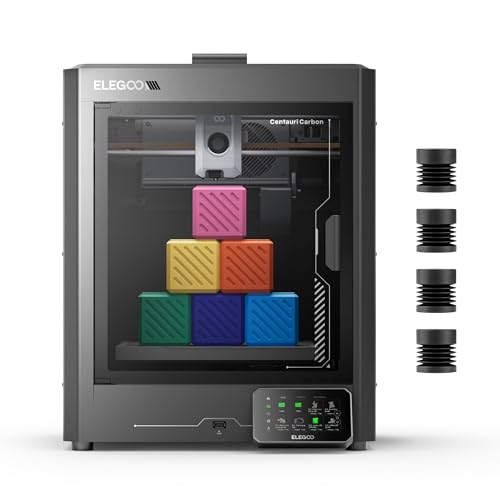
ELEGOO Centauri Carbon CoreXY 3D Printer

Anycubic Kobra X Multicolor 3D Printer

OVERTURE ASA Filament 1.75mm 1kg Black
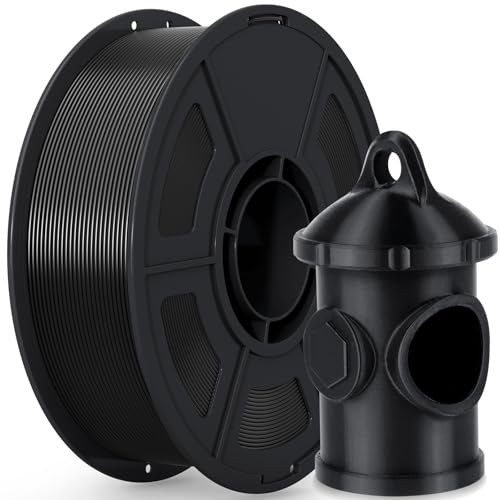
iSANMATE ASA Filament 1.75mm Black 1KG

iSANMATE ASA Filament Bundle 4KG Four Colors

ELEGOO ASA 3D Printer Filament Deep Black 1KG


Anycubic Kobra X Multicolor 3D Printer Native 4-Color
More Details On Our Top Picks
Black ASA is the workhorse color for outdoor hardware, and this FLASHFORGE spool targets exactly that job. The manufacturer lists dimensional accuracy of plus or minus 0.02mm, which in practice means fewer surprise layer shifts and cleaner fits on snap-together parts.
Owners commonly report steady feeding on standard 1.75mm direct-drive and Bowden setups alike. For anyone printing mailbox mounts or patio fixtures that sit in direct sun for months, UV stability is the whole point here.
Strong Points
- Precise 0.02mm tolerance keeps threaded and press-fit parts consistent across long prints
- UV-resistant formula means garden and exterior prints hold their shape instead of going brittle
- Handles elevated temperatures near 93°C, so a dashboard-mounted bracket won’t sag on a summer afternoon
- Standard 1kg spool size drops into most dry boxes without adapters
Things To Consider
- ASA absorbs moisture over time, so storing the spool sealed with desiccant protects print quality between jobs
- You’ll want an enclosure or at least a draft-free room; open-frame printers can show warping on large flat parts
Key Specs
Who It Suits Best
Anyone running an enclosed printer who needs dependable black ASA for functional outdoor components.
A Better Fit Elsewhere
The iSANMATE ASA Bundle 4KG suits high-volume shops better, since four colors at once beats buying single spools repeatedly.
This is the same FLASHFORGE recipe as the black spool above, just in natural. That translucent off-white tone matters more than it sounds: it takes spray paint and dye beautifully, and light passes through enough to spot voids or delamination inside a part before it fails outdoors.
In our view, natural is the smarter choice for prototype work where you’ll iterate on fit before committing to a final color. The specs carry over unchanged, including the 0.02mm tolerance claim and the same UV-stable chemistry.
What We Like
- Natural finish accepts paint and primers evenly for finished-looking outdoor pieces
- Translucency helps you inspect internal infill quality during slicing checks
- Same durable, heat-tolerant base material as its black sibling
Worth Noting
- Natural filament shows dirt and grime faster than black on frequently handled parts
- Like any ASA, first-layer adhesion improves noticeably with a heated bed and glue stick or similar release aid
Right Fit For
Makers who paint their prints or want visual QC on structural outdoor components.
Where A Sibling Pick Shines
The black FLASHFORGE version suits anyone leaving parts unpainted, since dark finishes hide wear far longer.
CoreXY printers move the print head on both horizontal axes while the bed only drops vertically, which lets them run fast without shaking prints loose. The Centauri Carbon pushes that design hard, quoting speeds up to 500mm/s alongside a 320°C nozzle hot enough for demanding materials like ASA.
It arrives assembled and pre-calibrated, with automatic bed leveling and a built-in camera for monitoring long jobs remotely. The 256x256x256mm build volume handles a week’s worth of bracket replacements in one session. For ASA specifically, the enclosed carbon-style body helps trap heat, which is half the battle against warping.
Highlights
- 500mm/s top speed turns overnight prints into afternoon ones
- 320°C nozzle ceiling leaves headroom for ASA and other high-temp filaments
- Auto calibration removes the manual leveling ritual entirely
- Integrated camera lets you check progress from another room
Small Caveats
- High-speed settings often need tuning per filament; expect some test prints before dialing in ASA profiles
- The touchscreen workflow favors simplicity, so tinkerers may find firmware options limited compared to open-source boards
Feature Snapshot
Made For
Intermediate makers who want speed and ASA capability without building a kit themselves.
Swap It Out When
The Bambu Lab P1S below fits buyers wanting a mature accessory ecosystem and multicolor expansion options.
Most multicolor machines stop at four spools. The Kobra X starts there natively and scales to nineteen colors when you add up to four ACE 2 Pro units, which changes what’s practical for signage, figurines, and educational models.
An adaptive extrusion force compensator adjusts pressure automatically between rigid and soft materials, covering everything from TPU around 68D shore hardness up through standard rigid plastics. One-click printing keeps the day-to-day simple even as the color system grows complex. Compared with the Centauri Carbon reviewed earlier, this machine trades raw speed for creative range.
Upsides
- Expandable palette grows from 4 to 19 colors as your projects demand it
- Automatic force compensation handles flexible TPU without manual fiddling
- One-click operation lowers the barrier for household members who aren’t printing enthusiasts
Points To Note
- Each added ACE 2 Pro unit is a separate purchase, so the full 19-color setup represents a real investment
- Multicolor prints generate purge waste during swaps, which adds up on long production runs
Quick Facts
Who Will Love This
Creative printers producing colorful display pieces, gifts, or small-batch products rather than pure functional parts.
Not Your Match When
Single-material ASA strength work belongs on the ELEGOO Centauri Carbon, which focuses purely on speed and rigidity.
OVERTURE built its reputation on consistent, low-drama spools, and this ASA follows that pattern. The company uses a patented clog-free formulation aimed at keeping extrusion smooth across a full kilogram, which matters because a clog mid-print wastes hours and a chunk of expensive material.
The blend emphasizes UV protection and thermal stability together, so parts meant for year-round exposure keep their mechanical properties instead of slowly degrading. Owners commonly describe it as an easy first ASA, forgiving on machines that already handle ABS well.
Bright Spots
- Clog-resistant formula reduces failed prints and wasted filament
- Weather and heat resistance suit parts that live outdoors permanently
- Consistent winding and spooling reported by regular users, meaning fewer tangles near the spool holder
Minor Gripes
- Vacuum-sealed packaging should stay intact until use; once opened, humidity creeps in within weeks in damp climates
- Color selection centers on basics, so specialty shades require looking elsewhere
Whose Shelf It Belongs On
Everyday hobbyists replacing ABS with something tougher, especially those printing replacement parts for yard equipment.
Reach For A Different Pick When
The ELEGOO ASA Deep Black offers a higher stated heat deflection point, worth considering for parts baking inside vehicles.
iSANMATE positions this spool squarely at functional outdoor work, listing UV, weather, mechanical, and thermal resistance as a package rather than picking one strength. The 0.02mm dimensional accuracy matches the FLASHFORGE spool from earlier in this list, so tolerances stay comparable across brands.
Compatibility is the quiet selling point: the maker states it works with most consumer and industrial printers, which helps if your workshop mixes older Bowden machines with newer direct-drive units. In practice, that flexibility makes it a safe house spool when several people share one supply.
Plus Points
- All-around resistance profile covers sun, rain, impact, and heat in one material
- Runs on a wide range of consumer and industrial machines per the manufacturer
- +/- 0.02mm accuracy supports precise replacement-part printing
- Black finish hides scuffs on tools and hardware
Softer Spots
- Single-color availability limits matching existing equipment colors
- As with all ASA, ventilation matters; printing in a closed room without airflow isn’t advised by most experienced users
Details At A Glance
Who Should Grab It
Workshops running mixed printer fleets that need one dependable ASA stock for everyone.
Consider Something Else When
The iSANMATE 4KG bundle right after this entry costs less per kilogram for anyone burning through multiple spools monthly.
Four kilograms sounds like a lot until you start printing ASA regularly; outdoor parts tend to be chunky, and 30 percent infill eats spools quickly. This bundle splits the total into black, white, red, and blue, covering the colors most repair and utility projects actually need.
The material itself mirrors the single black spool reviewed just above, with the same UV and weather resistance claims and broad printer compatibility. Buying in bulk also means fewer reorders and less chance of running dry mid-project, though it does commit you to storage space and good moisture discipline.
Reasons To Buy
- Four-color spread handles most functional and decorative outdoor jobs without extra orders
- Bulk quantity reduces cost per kilogram compared with singles
- Same proven ASA chemistry as the standalone iSANMATE spool
Honest Caveats
- Unopened spools still age; using oldest-first rotation keeps every kilogram fresh
- Fixed color set won’t suit anyone needing grays, greens, or custom shades
Best Suited To
High-volume makers, school labs, and small shops printing ASA weekly rather than occasionally.
Another Choice May Suit
Occasional users get better value from the single OVERTURE spool, avoiding leftover filament sitting unused for months.
ELEGOO quotes a heat deflection temperature up to 99°C for this deep black spool, the highest figure named anywhere in this list. Heat deflection marks the point where a part starts softening under load, so that number translates directly to confidence for car cabin parts, engine-bay accessories, and anything near a heat source.
The formulation also targets resistance to fading and yellowing under sustained sunlight, with water resistance layered in. Pairing it with the ELEGOO Centauri Carbon reviewed earlier gives you a matched-brand stack, though it feeds happily on any capable 1.75mm machine.
Standout Traits
- Heat deflection up to 99°C outlasts cheaper blends in hot environments
- Resists fading and yellowing through long sun exposure
- Water resistance suits rain-exposed fixtures and marine-adjacent gear
- Deep black pigment stays rich rather than washing out to gray
Areas To Watch
- Maximum performance assumes proper drying; wet ASA foams and weakens regardless of brand
- Only available in this single colorway at present
Spec Overview
The Right Fit
Automotive tinkerers and anyone mounting prints where summer heat would deform ordinary plastic.
Skip It When
General-purpose outdoor brackets don’t need extreme heat ratings, making the less expensive FLASHFORGE black spool plenty.
The P1S earns its place here on one decisive trait for ASA: a fully enclosed body. Trapped chamber heat is the single biggest factor in flat ASA parts staying flat, and this machine provides it out of the box along with serious speed figures of up to 500mm/s and 20000 mm/s² acceleration.
Add the AMS unit separately and the platform expands to sixteen colors or materials. It ships ready to use, and the surrounding ecosystem of profiles and community knowledge is arguably the deepest in consumer printing. The trade-off is cost; this sits well above the Centauri Carbon, and you’re paying for polish as much as hardware.
Positives
- Enclosed chamber dramatically improves ASA first-layer success and part consistency
- High acceleration figures cut wall-clock time on tall prints
- Optional AMS brings multicolor and multimaterial capability later
- Ships ready to print with minimal setup friction
Trade Offs
- Higher purchase price than comparably fast open competitors
- Multicolor requires buying the AMS add-on, not included in the base package
Built With In Mind
Committed hobbyists and small businesses printing engineering filaments daily who want reliability over tinkering.
Where Another Pick Suits Better
Budget-conscious starters get excellent ASA results from the ELEGOO Centauri Carbon at a friendlier entry point.
This variant of the Kobra X packages the same core machine with emphasis on a simpler starting configuration: native four-color support and an easy setup process, no expansion units required on day one. You keep the option to grow toward nineteen colors with ACE 2 Pro modules whenever projects justify it.
Anycubic also highlights reduced purging waste between color changes, addressing the biggest hidden cost of multicolor printing. Against the higher-spec Kobra X listed fourth, this version trades nothing essential; it simply presents a gentler on-ramp for households new to multi-spool workflows.
Best Bits
- Native four-color printing works immediately without accessory purchases
- Streamlined purge system cuts filament waste during swaps
- Clear upgrade path to expanded palettes remains open
Room For Improvement
- Expansion modules remain incompatible across ACE generations, so plan purchases carefully before adding units
- Multicolor focus means fewer tuning resources dedicated to exotic engineering filaments
Perfect Match For
Families and first-time multicolor owners who want colorful results without a steep learning curve.
Look Elsewhere When
Pure ASA functional printing calls for the Bambu Lab P1S, whose enclosed chamber serves that material better.
What Matters Most Before Choosing 3d Printers For Asa
Enclosure And Chamber Heat
ASA warps when cool air hits warm layers, so an enclosed chamber is the closest thing to a requirement. Machines like the Bambu Lab P1S and ELEGOO Centauri Carbon solve this structurally. Open-frame printers can still manage smaller ASA parts with a cardboard windbreak and a heated bed, but expect more failures on wide, flat geometry.
Nozzle Temperature Headroom
ASA typically wants hotter extrusion than PLA, so a nozzle rated to 300°C or beyond gives comfortable margin. The Centauri Carbon’s 320°C ceiling illustrates the kind of headroom that keeps high-temp materials routine rather than risky. Check the rating before buying, not after.
Filament Storage Discipline
All ASA pulls moisture from the air, and damp filament foams, strings, and weakens parts. A sealed container with desiccant packs costs little and preserves every spool in this list. Rotate stock oldest-first, especially with bulk bundles like the iSANMATE 4KG set.
Matching Material To Machine
Pairing a quality spool with an underspecified printer frustrates everyone involved. Match the filament’s temperature demands to your hardware honestly, and start with a smaller calibration part before committing eight hours to a large functional piece.
Key Considerations Across These Picks
Wrong Turns To Avoid
The most common mistake is buying ASA for an open-bedded budget printer and blaming the spool when corners lift. A second slip is ignoring drying: even premium filament degrades in humid garages within weeks. Start with small test prints and store everything sealed.
What Separates Premium From Basic
Higher-tier machines buy you an enclosure, faster motion systems, auto calibration, and monitoring cameras. Those features convert ASA from a finicky experiment into a repeatable workflow. Paying up pays off mainly for frequent printers; occasional users lose little sticking with simpler hardware.
Frequently Asked Questions
Does ASA really resist sunlight better than ABS?
Yes, ASA was formulated specifically for UV stability where ABS yellows and turns brittle. Both handle heat similarly, but ASA holds appearance and strength outdoors far longer.
Can I print ASA without an enclosed printer?
Small parts sometimes succeed with a heated bed and no drafts, but results are inconsistent. An enclosure remains the reliable route for larger ASA pieces.
How should I store ASA filament?
Keep spools in a sealed bag or box with desiccant, away from humid rooms. Dry filament before printing if it has been exposed for months.
Is ASA harder to print than PLA?
Somewhat, mostly due to higher temperatures and warp sensitivity. With an enclosed machine and tuned profile, most intermediate users adapt quickly.
Do I need ventilation when printing ASA?
Yes, general airflow is wise with any styrene-based filament. A ventilated room or filtered enclosure keeps the workspace comfortable.
Closing Thoughts
Choosing between these ten comes down to how often you print and where your parts end up. Frequent makers benefit most from an enclosed machine paired with a bulk spool supply, while occasional users can start with a single kilogram and modest hardware. Whichever direction fits your workshop, match the printer’s temperature range to the filament’s demands and store everything dry. Your outdoor prints will thank you season after season.