
Jewelry casting lives or dies on two things: the detail your printer captures and how cleanly the pattern burns out of the investment. Miss either one and you’re re-casting rings instead of selling them. That’s the problem this list solves, pairing castable resins with machines sharp enough to hold a prong setting at scale.
You’ll find four Siraya Tech casting resins here alongside six printers, from beginner-friendly resin machines to a fast filament workhorse. Studios running daily production will lean toward the high-resolution resin picks, while hobbyists testing the waters can start smaller without wasting money.
The Shortlist At A Glance

Siraya Tech Cast Castable Resin True Blue 500g

Siraya Tech Cast Castable Resin Purple 500g

Siraya Tech Cast Castable Resin True Blue 1kg

Siraya Tech Cast Castable Resin Royal Blue 1kg

ANYCUBIC Photon Mono 4 10K Resin Printer

FLASHFORGE AD5M CoreXY 3D Printer

ELEGOO Saturn 4 Ultra 16K Resin Printer

Phrozen Sonic Mighty 8K Resin Printer
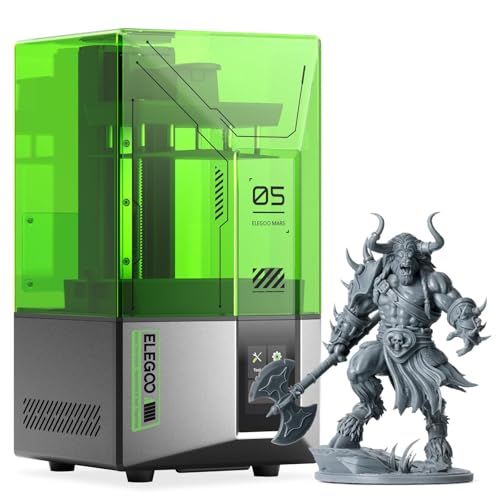
ELEGOO Mars 5 Resin 3D Printer

Bambu Lab A1 mini + LED Lamp Kit
More Details On Our Top Picks
Casting resin is where most jewelry projects quietly fail, usually during burnout. This True Blue formula mixes wax into the photopolymer, which is what lets it exit an investment flask with far less ash than standard resins leave behind.
The 500g bottle suits someone learning the workflow rather than feeding a production line. You’ll go through material quickly while dialing in exposure settings, so starting small keeps waste down until your prints come out right on the first try.
Strong Points
- Wax content means cleaner burnout, so thick pieces like bracelets hollow out properly instead of leaving residue in the mold.
- Lower ash reduces the pitting and surface flaws that force you to re-cast a ring.
- Prints reliably on most open LCD and DLP machines once you lock in exposure times.
- True blue color makes uncured supports easy to spot during cleanup.
Things To Consider
- Wax-blended resins soften in warm rooms, so store bottles somewhere cool or you may fight sagging prints.
- Exposure tuning takes patience; expect a few sacrificial test prints first.
At A Glance
Made For
Jewelers new to lost-wax casting who want a forgiving, low-waste entry into castable resin.
Where A Sibling Pick Shines
Studios printing daily should reach for the Siraya Tech Cast True Blue 1kg instead, since the larger bottle cuts cost per gram considerably.
Where the True Blue formula rewards careful tuning, this purple variant is the one people recommend to friends still nervous about their first pour. It sticks well to build plates, tolerates ordinary workshop humidity, and doesn’t demand additives or a dehumidified room to behave.
That matters more than it sounds. First prints failing at the plate is the number-one reason newcomers quit resin entirely, and good adhesion removes most of that risk. The same wax-bearing chemistry handles burnout cleanly, so nothing about ease of use costs you casting quality.
Highlights
- Strong plate adhesion means fewer failed first layers, which is where beginners lose the most material.
- No special drying environment required, so a spare corner of a studio works fine.
- Wax blend burns out with minimal ash for reliable investment casting.
- Purple pigment makes detail inspection easier under bright bench lighting.
Worth Noting
- Like any castable resin, it needs thorough IPA washing before curing, and skipped cleaning shows up as scaly surfaces after burnout.
Who Should Grab It
Anyone running their first weeks of resin printing who wants results without fighting the machine.
Swap It Out When
Experienced casters chasing maximum detail on delicate filigree may prefer the Royal Blue 1kg formula, which balances precision and burnout for finer work.
This is the same True Blue wax-blend chemistry as the 500g bottle, just doubled. Once your exposure settings are dialed in, buying by the kilogram is simply the sensible move, because casting resin gets consumed fast between failed prints, supports, and washing losses.
Think of it as the version for someone whose bench has become routine. The clean-burnout behavior that makes the small bottle appealing carries over unchanged, which suits chunkier work like signet rings and bangles where incomplete burnout ruins molds.
Upsides
- Kilogram sizing lowers cost per print for anyone casting weekly or more.
- Identical clean-burn performance to the smaller True Blue bottle, so no recipe changes.
- Wax content helps thick cross-sections vent fully during the burnout cycle.
Softer Spots
- Open bottles of wax resins thicken over months, so decant what you need and keep the rest sealed tight.
- Overkill for occasional hobbyists who might take a year to finish a kilogram.
Right Fit For
Semi-professional makers producing castings regularly enough that bottle size genuinely affects their margins.
Another Choice May Suit
Just getting started? The 500g True Blue version lets you learn the same material at half the commitment.
Royal Blue is Siraya Tech’s attempt to merge the best traits of its Purple and True Blue siblings into one formulation. In practice that means you get the approachable print behavior of the former with the low-ash burnout of the latter, in a single kilogram bottle built for serious casting volume.
The pitch that stands out is versatility across geometry. Delicate filigree and solid, heavy sections both survive the burnout cycle, which is rare; most castable resins favor one extreme. Studios juggling engagement rings one day and cufflinks the next will appreciate not swapping materials mid-week.
Bright Spots
- Balanced formulation handles both hair-thin filigree and dense, chunky geometries in the same flask.
- Minimal ash residue protects fine detail during investment burnout.
- Tuned for lost-wax investment casting, the standard professional jewelry workflow.
- Kilogram supply keeps a working studio stocked through multiple projects.
Points To Note
- Being a newer blend, community exposure profiles are less established than for Purple, so budget time for calibration.
- Resin vats and FEP films wear faster with abrasive pigments; inspect the film regularly.
Quick Facts
Whose Shelf It Belongs On
Working jewelers who need one dependable resin across mixed product lines rather than specialty formulas per piece.
Not Your Match When
Total beginners still burning through test prints will find the 500g Purple bottle a cheaper teacher before committing to a kilogram.
Resolution is measured here in microns, and the Photon Mono 4’s screen resolves pixels around 17 microns square across a 9024 x 5120 panel. Translated for jewelry work: stone seats, gallery rails, and engraved lettering come off the plate crisp enough to cast without hand cleanup.
Its Anycubic LighTurbo light matrix keeps exposure uniform across the whole plate, which matters because uneven curing warps thin bands. Compared with the larger Phrozen Sonic Mighty later in this list, this machine trades bed size for pixel density, a trade most ring designers make happily.
Reasons To Buy
- 17-micron XY resolution captures prong tips and milgrain that coarser screens blur.
- Uniform matrix light source reduces layer inconsistency across the build area.
- Compact footprint fits a spare desk or shared studio bench easily.
- Monochrome LCD cures layers quickly, shortening batch turnaround.
Minor Gripes
- The 7-inch screen limits how many rings you can nest per run compared with 10-inch machines.
- LCD panels are consumables; heavy production schedules mean periodic replacement.
Who Will Love This
Solo designers and home studios prioritizing fine detail over raw batch capacity.
Look Elsewhere When
Shops printing dozens of pieces per session should step up to the Phrozen Sonic Mighty 8K, whose larger bed fits far more models per cycle.
One of these things is not like the others, and that’s deliberate. The AD5M is a filament machine, included because every jewelry studio needs one for display stands, custom tooling, molds, and packaging prototypes. Its CoreXY motion system moves both axes on overhead rails, letting it hit speeds up to 600mm/s without the wobble a bed-slinger suffers.
Setup is nearly hands-off thanks to one-click automatic calibration, and the quick-swap nozzle means a clog costs minutes rather than an afternoon. The honest caveat: don’t expect it to print casting patterns. Filament layer lines won’t survive investment burnout the way resin does.
Plus Points
- All-metal CoreXY frame stays rigid at high speed, keeping dimensions predictable on fixtures.
- One-click auto calibration removes the manual leveling ritual entirely.
- Quick-swap nozzle design turns maintenance into a two-minute job.
- 220 x 220 x 220mm volume accommodates bulkier shop aids and displays.
Trade Offs
- Not suitable for direct casting patterns; pair it with a resin machine rather than replacing one.
- High-speed printing amplifies any belt tension issues, so occasional checks keep quality consistent.
Feature Rundown
Best Suited To
Studio owners rounding out a resin setup with a fast, low-maintenance filament workhorse.
Reach For A Different Pick When
Your sole focus is castable patterns; the ELEGOO Mars 5 serves that job directly at a friendlier entry point.
Resin viscosity shifts with temperature, and cold workshops are where winter print failures multiply. The Saturn 4 Ultra attacks that problem directly with intelligent tank heating that holds the vat near 30°C, keeping cure times and layer consistency steady regardless of season.
Its 16K screen delivers the kind of surface smoothness that minimizes post-polish work, a real time saver when you’re finishing twenty rings instead of two. Against the Photon Mono 4 earlier in this list, you give up some compactness and gain both higher resolution and climate independence, which production shops tend to value more.
What We Like
- Heated vat maintains consistent resin temperature for reliable prints in cool rooms.
- Ultra-high 16K resolution produces smooth surfaces straight off the plate.
- Fine texture reproduction reduces finishing labor on detailed pieces.
- Generous build area lets you nest multiple orders in one session.
Small Caveats
- Heating adds power draw, worth factoring in for battery-backed or solar workshops.
- The feature set carries a learning curve; expect a slower first week than simpler machines.
The Right Fit
Professional studios printing client work year-round in spaces without climate control.
Consider Something Else When
Budget-conscious hobbyists in warm climates can skip the heating system and save with the ELEGOO Mars 5.
Batch production changes the math. The Sonic Mighty pairs a 10-inch monochrome LCD with a 28-micron XY resolution and an 8.6 x 4.8 x 9.3-inch chamber, so a single overnight run can hold an entire week’s casting queue rather than a handful of rings.
Detail doesn’t collapse at size, either. Twenty-eight microns still resolves stone seats cleanly, and the reinforced dual linear rails on the Z-axis keep tall builds aligned layer after layer, which prevents the banding that ruins long prints. Owners commonly report this platform holding tolerance through heavy daily schedules, though the larger vat does mean bigger resin pours and longer wash cycles.
Standout Traits
- 28µm XY resolution preserves miniature-level detail across a big plate.
- Dual linear rail Z-axis delivers stable, precise vertical motion on tall models.
- Large 8.6 x 4.8 x 9.3-inch volume fits substantial batch nesting.
- Monochrome LCD keeps per-layer exposure times short even on full plates.
Areas To Watch
- Full-vat runs consume significant resin, so failed large batches hurt more financially.
- The footprint demands dedicated bench space; measure before ordering.
Details At A Glance
Who It Suits Best
Small-batch producers and studios fulfilling wholesale orders who need throughput without sacrificing detail.
Skip It When
Solo designers printing a few pieces weekly will find the Photon Mono 4 cheaper to run and easier to house.
Manual bed leveling is the skill nobody enjoys learning, and the Mars 5 deletes it. One click runs the automatic leveling routine, so unboxing to first successful print becomes an afternoon project instead of a weekend of frustration.
A smart mechanical sensor watches the print process and flags problems early, which saves beginners from returning hours later to find a detached model floating in the vat. Detail capability sits comfortably in hobby territory: plenty for practice rings, pendants, and learning the casting pipeline end to end. It won’t match the Saturn 4 Ultra’s heated vat or 16K screen, but for a first machine, those omissions are exactly what keeps the price sane.
Positives
- One-click automatic leveling eliminates the most common beginner failure point.
- Smart mechanical sensor detects faults mid-print before they ruin a whole vat.
- Compact and light enough to move between a desk and a ventilated workspace.
- Straightforward operation shortens the path from box to finished casting practice.
Honest Caveats
- Smaller build plate limits how many pieces fit per run compared with the Phrozen Sonic Mighty.
- No heated vat, so garage or basement printing in winter may need a space heater nearby.
Built With In Mind
Complete newcomers exploring resin jewelry making at home for the first time.
A Better Fit Elsewhere
Growing studios needing volume and climate resilience should graduate to the ELEGOO Saturn 4 Ultra 16K.
Here’s the gift-shaped option on the list. The A1 mini is a filament printer aimed squarely at first-timers, with automatic calibration handling setup from day one, and the bundled LED lamp kit turns printed shade designs into actual working decorative lights.
Be clear-eyed about its role: like the Flashforge AD5M, it won’t produce castable patterns, since filament layer lines don’t survive burnout. What it does brilliantly is teach 3D design fundamentals, prototype pendant shapes for fit, and make personalized gifts, all with minimal frustration. As a companion machine beside a resin printer, or a confidence-builder before investing in casting gear, it earns its spot.
Best Bits
- Automatic calibration means true plug-and-print operation for total beginners.
- Included LED lamp kit converts printed models into functional decorative lights.
- Compact size suits dorms, apartments, and crowded craft rooms.
- Great for prototyping jewelry forms and fit before committing to resin.
Room For Improvement
- Mini build volume restricts larger projects; check model dimensions against the plate first.
- Filament output isn’t castable, so a resin machine remains necessary for actual metalwork.
Core Details
Perfect Match For
Craft-minded gift makers and design students who want creative output on day one without a steep learning curve.
Where Another Pick Suits Better
Anyone whose goal is metal casting patterns should choose the ANYCUBIC Photon Mono 4 instead.
What Matters Most Before Choosing 3d Printers For Jewelry Making
Resolution Comes First
XY resolution, meaning the smallest horizontal detail a printer can cure, determines whether prong tips and engraving survive to the metal stage. Anything around 30 microns or finer handles typical ring work; below that, expect visible stair-stepping on curved bands. Match the spec to your finest recurring design element rather than chasing the biggest number.
Burnout Behavior Decides Your Resin
A castable resin must exit the investment flask completely during the burnout cycle, leaving little ash behind. Wax-containing blends do this best, especially inside thicker sections like bangles. Non-wax resins often leave residue that pits the casting surface, forcing rework.
Size Versus Throughput
Build volume controls how many pieces nest per run. Solo designers rarely need more than a 7-inch plate, while wholesale producers benefit enormously from 10-inch beds that cut sessions per week roughly in half.
Ventilation And Workspace Reality
Resin printing emits fumes and requires wash-and-cure steps, so plan for airflow, gloves, and IPA storage before the machine arrives. Filament alternatives sidestep this but cannot produce casting patterns directly.
Key Considerations Across These Picks
Traps First Timers Fall Into
The classic mistake is buying a huge printer before mastering exposure settings, then blaming the machine for failed plates. Start with a smaller bed, nail your resin profiles, and scale up only when success rates justify it. Skipping ventilation planning is the second common error; resin odor lingers in closed rooms.
Why Top Tier Costs More
Higher-tier machines pay for heated vats, finer screens, and rigid motion systems, all of which convert directly into fewer failed prints. Over a year of production, avoided failures typically outweigh the price gap, which is why busy studios upgrade early and hobbyists sensibly wait.
Frequently Asked Questions
Can any resin 3D printer be used for jewelry casting?
No, the resin itself must be castable. Any decent LCD printer can print the pattern, but only wax-containing castable resins burn out cleanly from investment flasks.
What resolution do I need for ring-level detail?
Around 30 microns XY or finer keeps prongs, seats, and engravings intact. Coarser resolutions produce visible layer artifacts on small pieces.
Do I still need a filament printer if I have a resin machine?
It’s useful but optional. Filament machines handle display stands, organizational tools, and packaging prototypes that resin handles poorly.
How messy is resin printing really?
Expect sticky gloves, IPA washing, and cured-support disposal as routine. With trays, nitrile gloves, and a wash station, it stays contained to one bench area.
Is the Bambu Lab A1 mini suitable for casting jewelry?
Not directly, since filament prints can’t survive burnout. It excels at prototyping designs and making gifts before you commit to casting equipment.
Closing Thoughts
Match the machine to your current stage rather than your ambitions. Beginners get the most value from the ELEGOO Mars 5 paired with a 500g Siraya Tech resin, while production studios should look hard at the Saturn 4 Ultra and a kilogram of Royal Blue. Whichever direction you take, start small, calibrate patiently, and let your first successful casting tell you what to buy next.