
Nylon has a reputation for chewing up spools and patience alike. Warped corners, soggy filament, brittle first layers: anyone who has pushed polyamide through a desktop machine knows the frustration. That’s exactly why this list exists. Every spool here was chosen because it either tames nylon’s bad habits or pushes its strengths further, whether you’re printing gears that survive a workshop bench or brackets that live under a car hood. You’ll find forgiving blends for your first PA print, carbon-fiber composites for stiff functional parts, and heat-resistant options for demanding environments. Match the spool to your printer and your project, and nylon stops being a gamble.
The Shortlist At A Glance

OVERTURE Nylon Filament 1.75mm Polyamide (PA) 1kg Spool

SUNLU PA6-CF 20% Carbon Fiber Nylon 1.75mm Black 1KG

Polymaker Fiberon PA612-CF15 Filament Black 0.5KG
Polymaker Fiberon PA6-CF20 Filament Black 0.5KG
YXPOLYER Nylon Filament PA6 White Easy PA 1kg

YXPOLYER Nylon Filament PA6 Black Easy PA 1kg

ELEGOO Carbon Fiber PAHT Filament Black 1KG
SUNLU Easy PA Nylon Filament Nylon 6+66 Black 1KG

ELEGOO Carbon Fiber PAHT Filament Black 0.5KG

Polymaker PolyMide CoPA Warp Free Nylon 0.75kg
More Details On Our Top Picks
This black spool is built around a copolymer of Nylon 6 and Nylon 6.6, a pairing that borrows the best trait from each parent material. In practice, that means you get the toughness of PA6 with some of the dimensional steadiness PA6.6 brings, which shows up as flatter first layers on open-frame printers.
The manufacturer also advertises odorless printing and strong resistance to warping, two complaints that keep most people away from plain nylon. A kilogram of filament goes a long way when you’re prototyping brackets or replacement clips around the house.
Strong Points
- Copolymer chemistry balances flexibility and rigidity better than single-grade PA
- Advertised low warping makes flat, wide parts far less stressful to print
- No noticeable fumes, a real plus in shared living spaces or small apartments
- Full 1kg spool keeps cost per part reasonable once your settings are dialed in
Things To Consider
- Nylon still absorbs moisture, so reseal the bag between sessions or expect stringy prints
- You may need an enclosure or brim on bedslinger machines for tall parts
Who It Suits Best
Hobbyists stepping up from PLA who want genuine engineering strength without fighting their printer every run.
Where Another Pick Suits Better
Shoppers chasing maximum stiffness for load-bearing parts will get more from the SUNLU PA6-CF carbon fiber blend.
Where the OVERTURE spool leans on blend chemistry, this one adds muscle: 80% PA6 reinforced with 20% chopped carbon fiber. Carbon fiber doesn’t make parts stronger in every direction, but it dramatically raises stiffness, so printed brackets hold their shape instead of flexing under load.
The reinforcement also helps with layer adhesion and heat tolerance, which matters for parts living near motors or exhaust warmth. One honest note: abrasive fibers chew through brass nozzles quickly, so plan on a hardened steel nozzle before your first spool.
What We Like
- Genuine 20% fiber loading delivers noticeably rigid finished parts
- Improved heat resistance suits engine bays and electronics housings
- Strong interlayer bonding reduces delamination on tall prints
- Matte black finish hides layer lines better than glossy nylons
- Kilogram sizing supports serious production runs of end-use components
Worth Noting
- Abrasive fibers demand a hardened nozzle, an extra purchase many people forget
- Dry storage remains essential since the PA base still drinks moisture
At A Glance
Made For
Makers printing functional brackets, jigs, and fixtures that must resist bending rather than just look good.
Consider Something Else When
Anyone wanting easier, non-abrasive first steps into nylon should start with the SUNLU Easy PA blend lower down this list.
Polymaker’s Fiberon line aims to bring composite materials to ordinary printers, and this PA612 variant is the friendliest member of the family. The PA612 base absorbs noticeably less water than standard PA6, which translates directly into fewer moisture-related failures if your workspace runs humid.
The 15% carbon fiber content sits below the SUNLU PA6-CF’s loading, trading a little stiffness for smoother extrusion and wider compatibility. The half-kilo spool also keeps the entry cost gentle while you validate settings.
Highlights
- Lower moisture sensitivity than typical PA6 composites means fewer dried-out spools
- Optimized for high-speed printing on modern fast machines
- Runs well on mainstream and entry-level hardware without exotic mods
- Smaller spool limits waste during profile tuning
Trade Offs
- 15% fiber content yields slightly less rigidity than 20% competitors
- Still abrasive enough to warrant a hardened nozzle over time
Right Fit For
Printers in damp climates or shared garages who want composite performance without obsessive filament drying routines.
Look Elsewhere When
Maximum stiffness is the goal, in which case the Polymaker Fiberon PA6-CF20 next door carries a heavier fiber load.
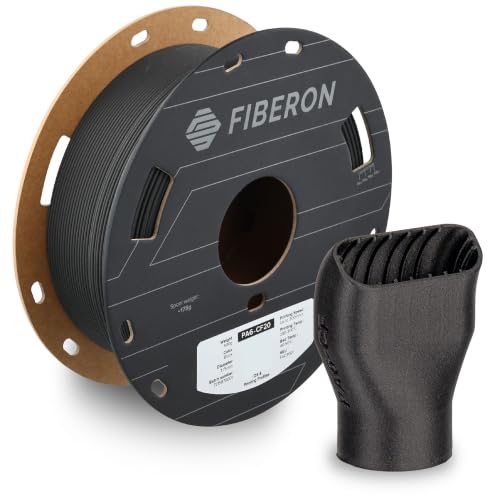
This is the stiffer sibling of the PA612-CF15 above, bumping carbon fiber content to 20% on a PA6 backbone. The result is a filament aimed squarely at structural work: think drone arms, camera mounts, and tool handles that see repeated stress.
Polymaker positions the whole Fiberon range around high-speed printability, so owners of newer fast printers can push speeds without sacrificing surface quality. Compared with the SUNLU PA6-CF, you’re choosing between two similar formulas based on brand preference and spool size rather than dramatic spec gaps.
Upsides
- Full 20% fiber loading produces rigid, dimensionally stable parts
- Heat resistance holds up near warm electronics and machinery
- Tuned for high-speed machines, cutting print times on big jobs
- Broad compatibility with mainstream desktop printers
Minor Gripes
- Half-kilo spools mean reordering sooner on production-heavy projects
- Carbon-filled PA6 still benefits from a drybox during long prints
- Expect faster nozzle wear than unfilled nylon
Best Suited To
Intermediate users with modern printers who want aerospace-flavored stiffness for load-bearing prototypes.
A Better Fit Elsewhere
Humid-environment printers get better moisture behavior from the Polymaker Fiberon PA612-CF15 reviewed just above.
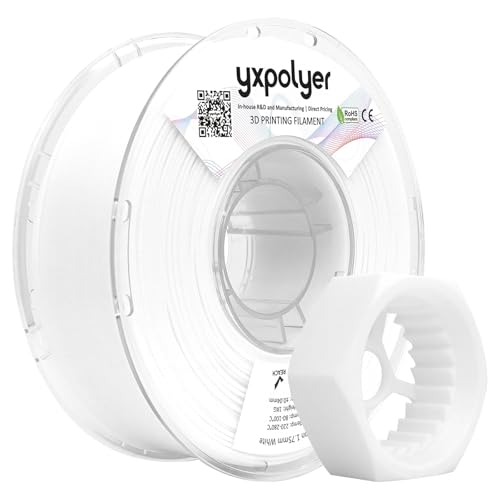
Unfilled PA6 like this white spool is where nylon’s natural talents shine: sliding surfaces. Its low friction coefficient and strong abrasion resistance make it a natural fit for gears, bushings, and anything that rubs against another part, jobs where carbon-filled blends actually perform worse.
The maker claims roughly ten times the impact toughness of PLA alongside a melting point near 194°C, so finished parts shrug off drops and moderate heat. White also takes paint well if appearance matters.
Bright Spots
- Low friction and high wear resistance suit gears and bearings beautifully
- Claimed impact toughness far beyond PLA survives clumsy handling
- Melting temperature near 194°C handles warm environments
- Neutral white color accepts paint and dye cleanly
- Full kilogram supports ongoing mechanical-part production
Room For Improvement
- Plain PA6 is thirstier than composites, so a sealed container with desiccant is close to mandatory
Quick Facts
Who Will Love This
Mechanically minded hobbyists printing gears, sliders, and wear parts that need to move smoothly for years.
Skip It When
Your priority is maximum rigidity rather than toughness, a job better handled by the SUNLU PA6-CF composite.
Same tough PA6 recipe as the white version reviewed earlier, dressed in black. Everything about the material carries over: the claimed tenfold impact advantage over PLA, the 194°C melting ceiling, and the slick, wear-friendly surface that makes it a favorite for functional mechanisms.
The brand markets this one explicitly as beginner-friendly, ready to print straight from the bag with a quick pre-dry. In our view, that framing is fair for a basic PA6, though expectations should stay realistic on unheated-chamber machines.
Reasons To Buy
- Marketed as usable straight from packaging after a short drying cycle
- Same high impact resistance and heat ceiling as its white twin
- Black finish conceals minor surface imperfections on visible parts
Points To Note
- Periodic drying before each session is still recommended by the maker
- Unfilled nylon can warp on large, flat parts without an enclosure
Perfect Match For
First-time nylon printers who want a forgiving, dark-colored spool for clips, brackets, and small mechanical repairs.
Another Choice May Suit
Printers needing abrasion-critical light-colored parts may prefer the YXPOLYER PA6 White for paintability.
PAHT stands for high-temperature polyamide, and that’s the whole pitch here. ELEGOO rates this carbon-fiber blend for ambient temperatures up to 194°C while retaining structural strength, territory where PLA melts and even standard ABS softens. Under-hood brackets, dryer components, and parts near heat guns all fall within reach.
Equally important, the company specifies much lower water absorption than regular PA-CF, addressing the single biggest reliability complaint in this category. Fewer moisture problems means fewer failed overnight prints.
Plus Points
- Rated for sustained exposure near 194°C without losing strength
- Reduced water absorption keeps print quality consistent between sessions
- Carbon fiber addition boosts stiffness and mechanical performance
- Kilogram spool suits ongoing production of technical parts
Softer Spots
- High-temp materials generally want a capable hotend and tuned profiles
- Abrasive fill calls for hardened nozzle hardware
Key Specs
Who Should Grab It
Experienced makers building parts for hot environments, from engine compartments to kitchen appliances.
Reach For A Different Pick When
You’d rather trial the material cheaply first, in which case the half-kilo ELEGOO PAHT later in this list fits better.
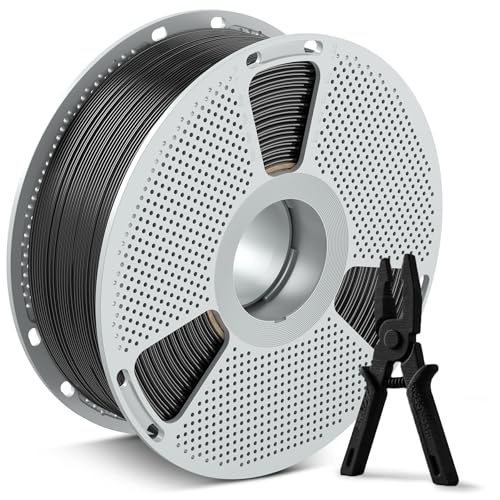
SUNLU covers both ends of the difficulty curve, and this Easy PA sits at the approachable one. Like the OVERTURE spool at number one, it blends Nylon 6 with Nylon 6.6, aiming for tensile and bending strength that outpaces PLA and ABS while keeping shrinkage and warping low.
The standout claim here is drop resistance paired with abrasion tolerance, which maps neatly onto high-stress parts such as gears and bearings. Owners commonly report this style of blend being noticeably quieter in meshing gear trains than stiffer composites, too.
Best Bits
- Strength figures exceed typical PLA and ABS for durable everyday parts
- Low-shrinkage formulation reduces lifted corners on flat prints
- Excellent drop resistance protects fragile-looking parts in daily use
Small Caveats
- Blended nylon still needs sensible dry storage between print sessions
- Bed adhesion usually improves with a glue stick or dedicated adhesive
- Black-only listing limits options for painted or light-colored work
Feature Snapshot
Built With In Mind
Everyday makers replacing broken household parts, from zipper pulls to appliance knobs, with something that lasts.
Swap It Out When
Heat exposure climbs past what a 6/66 blend tolerates, then the ELEGOO Carbon Fiber PAHT becomes the smarter call.
Identical material to the kilogram ELEGOO PAHT at position seven, offered in a half-kilo spool. Same 194°C ambient rating, same reduced water absorption versus regular PA-CF, same carbon-fiber stiffness boost. The only thing that changes is how much commitment you’re making upfront.
That smaller format earns its place honestly. High-temperature nylon rewards careful profile tuning, and burning through a full kilo of test cubes is nobody’s idea of fun. A half spool lets you dial in temperatures, speeds, and cooling before scaling up.
Positives
- Identical high-heat performance to the larger spool at lower commitment
- Ideal quantity for tuning new printer profiles without waste
- Lower absorption rate keeps short-term storage simpler
Areas To Watch
- Cost per gram runs higher than the 1KG version for volume work
- Half spools run out mid-project more often than you’d expect
The Right Fit
Cautious experimenters validating a high-temp workflow before committing to bulk spools.
Where A Sibling Pick Shines
Once your settings are locked, the 1KG ELEGOO Carbon Fiber PAHT delivers better value for production runs.
Polymaker closes the list with its flagship PolyMide CoPA, a Nylon 6/Nylon 6.6 copolymer marketed specifically on warp-free behavior and dimensional stability. Where budget blends promise “low” warping, this one builds its reputation on keeping large, flat parts flat, which is the difference between a usable bracket and a potato chip.
The 0.75kg spool splits the difference between half and full kilos, and the material targets engineering work where mechanical strength and toughness both matter. It’s the priciest habit on this list, and for precision parts, many would argue it earns it.
Standout Traits
- Exceptional dimensional stability keeps wide parts flat without enclosures
- Copolymer strength and toughness handle serious mechanical loads
- Heat resistance suits demanding engineering applications
- Simplified printing process lowers the skill floor for quality results
- Mid-size spool balances cost against availability
Honest Caveats
- Typically costs more per kilogram equivalent than the budget blends here
- Moisture discipline still applies, as with every nylon on this page
Core Details
Whose Shelf It Belongs On
Serious hobbyists and small shops printing precision parts where warped geometry ruins the function.
Not Your Match When
Budget is the deciding factor, then the OVERTURE copolymer offers similar blend chemistry at a friendlier entry point.
What Matters Most Before Choosing Nylon Filament
Match The Material To The Job
Start with the part, not the spool. Gears and sliding components want unfilled PA6 for its natural lubricity, while brackets and structural pieces benefit from carbon fiber’s stiffness. Heat exposure changes everything too: a part sitting near a motor needs a high-temperature grade like PAHT, not a general blend.
Respect The Moisture Problem
Nylon is hygroscopic, meaning it pulls water from the air and turns that humidity into steam bubbles, stringing, and weak layers during printing. Every manufacturer here recommends dry storage, and the composites with lower absorption ratings simply give you a longer leash. A sealed box with desiccant costs little and saves spools.
Know Your Printer’s Limits
An open-frame bedlinger can print forgiving blends like the Easy PA options, but high-temp PAHT and stiff composites reward machines with capable hotends, hardened nozzles, and ideally an enclosure. Honest self-assessment here prevents wasted filament and frustration.
Weigh Spool Size Against Certainty
Half-kilo spools are cheap tuition for learning a new material. Once your profile is proven, larger spools cut the cost per part meaningfully.
Key Considerations Across These Picks
Traps First Timers Fall Into
The classic error is buying carbon fiber filament without a hardened nozzle, then wondering why prints degrade after a few spools. The second is skipping the dryer entirely. Even “easy” nylon benefits from a drying pass before long prints, and ignoring that step accounts for most failed first attempts.
The Case For Spending Up
Premium blends like PolyMide CoPA charge more for consistency: flatter parts, fewer failed runs, tighter tolerances. For occasional hobby prints, budget spools do fine. For parts that must fit precisely the first time, the upgrade pays for itself in avoided reprints.
Frequently Asked Questions
Do these filaments work on any FDM printer?
All ten spools use standard 1.75mm diameter, so they fit most consumer extruders physically. Performance depends on your hotend temperature range, bed adhesion setup, and willingness to tune profiles.
Why does nylon filament absorb moisture?
Polyamide is chemically hydrophilic, drawing water molecules from surrounding air into the filament itself. Wet filament foams and strings during extrusion, so sealed storage with desiccant is strongly recommended.
Is carbon fiber nylon harder to print than plain nylon?
Usually yes, slightly. The fibers add abrasion that demands hardened nozzles, though they can improve dimensional stability. Composites with lower moisture absorption sometimes behave more predictably than unfilled PA6.
What nozzle should I use for carbon-filled spools?
Hardened steel or ruby nozzles resist the abrasive wear that carbon fibers cause to brass. Brass works for a short trial but degrades quickly, enlarging the orifice and ruining extrusion consistency.
How do I store nylon filament between prints?
Keep the spool in a sealed bag or drybox with silica gel, and re-dry it periodically in a filament dryer or a low-temperature oven. Consistent dryness is the single biggest factor in reliable nylon printing.
Closing Thoughts
Nylon rewards preparation more than any other mainstream filament material. Pick the spool that matches your actual parts, keep it dry, and give your printer a weekend of tuning before judging results. Start forgiving with an easy blend, graduate to composites and high-temp grades as your confidence grows, and you’ll wonder why you ever settled for PLA on functional parts. Happy printing.