
A classroom printer lives a rough life: constant handling, curious students, and a teacher who has about four minutes between periods to fix anything. That reality shapes this list. Every machine here either sets itself up automatically, runs quietly enough for a shared room, or shrugs off beginner mistakes. You’ll find big-format multicolor workhorses for high school labs alongside palm-sized starters that elementary students can run themselves. Match the machine to your grade level and supervision budget, and 3D printing stops being a headache and starts being the lesson.
The Shortlist At A Glance

Creality K2 Combo Multicolor 3D Printer with CFS

FLASHFORGE AD5M CoreXY 3D Printer

Entina Tina2C Mini 3D Printer for Kids

Entina Tina2 Plus Fast Mini 3D Printer

FLASHFORGE AD5X Multi-Color 3D Printer with IFS

Entina TINA2S WiFi Cloud Mini 3D Printer

Anycubic Kobra X Multicolor 3D Printer
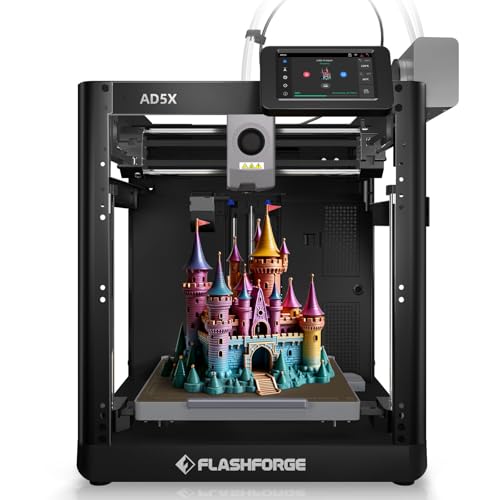
FLASHFORGE AD5X Multi-Color & Material 3D Printer with IFS

HEPHi3D TINA2S 3D Printer for Kids & Beginners

Bambu Lab A1 Combo + LED Lamp Kit
More Details On Our Top Picks
The K2 Combo arrives 95 percent pre-assembled, which matters enormously in a school setting where nobody has an afternoon to spare for belt tensioning. Its 260 x 260 x 260 mm build volume swallows most student projects whole, from topographic maps to articulated robot arms. The bundled CFS unit handles four filament colors at once, and Creality says you can chain up to four units for sixteen colors total.
In practice, that means a history class can print a color-coded Roman aqueduct in one session instead of painting it afterward. Speed tops out around 600mm/s, so overnight queues clear fast.
Strong Points
- Cube-sized build volume fits nearly every classroom project without splitting models into parts
- Four-color printing out of the box removes hours of post-print painting from art and geography lessons
- Smart AI camera watches prints remotely, letting a teacher monitor jobs from their desk
- Auto leveling means students press start instead of fiddling with paper-feel calibration
- Silent mode keeps noise down during lectures held in the same room
Things To Consider
- The CFS adds bulk beside the printer, so plan shelf space before it arrives
- Multicolor swaps consume purge filament, which quietly raises material costs over a semester
Key Specs
Who It Suits Best
High school and college maker labs that want one serious machine to anchor a full program.
Where Another Pick Suits Better
Elementary rooms with younger hands will find the Entina Tina2C far more forgiving and far smaller.
CoreXY is worth explaining here: the print head moves on both horizontal axes while the bed only drops vertically, which keeps motion stable at speed. The AD5M leans on that architecture to hit 600mm/s without the wobble you’d expect from cheaper fast printers. One click triggers fully automatic calibration, so a teacher can hand startup duties to a student monitor without fear.
Compared with the Creality K2 Combo above, you give up the bundled color system but gain a simpler footprint and easier upkeep. The quick-swap nozzle is the quiet hero here; clogged nozzles are the number one classroom killer, and swapping one takes seconds rather than a maintenance afternoon.
What We Like
- One-click auto calibration removes the scariest step for nervous beginners
- All-metal CoreXY frame holds dimensional accuracy through long semesters of use
- Quick-swap nozzle turns a common clog into a two-minute fix
- 600mm/s top speed keeps back-to-back class periods supplied with finished parts
Minor Gripes
- Single-color only, so multi-hued projects need painting or a different machine
- 220mm cube bed limits oversized capstone projects
Right Fit For
Middle and high school STEM teachers who value reliability and speed over color tricks.
A Better Fit Elsewhere
Classes chasing vibrant multicolor output should look at the FLASHFORGE AD5X later in this list instead.
Some machines are built for engineers; this one is built for ten-year-olds. The Tina2C walks new users through setup inside the Poloprint Cloud app, and Entina claims a first print can start roughly eight minutes after unboxing. Auto leveling handles bed alignment invisibly, which is precisely what you want when your operators still lose pencils.
The built-in library of over 3,000 ready-to-print models plus twenty-plus DIY modules gives a teacher instant lesson material with zero CAD skills required. It’s genuinely small, so it tucks onto a classroom counter or even a rolling cart.
Bright Spots
- App-guided onboarding lets kids self-serve their first print safely
- 3,000+ model library means lessons never wait on someone designing files
- Auto leveling eliminates manual bed calibration entirely
- Tiny footprint suits crowded elementary classrooms and mobile carts
Small Caveats
- Mini build area restricts projects to small figurines and parts
- Cloud app dependence means a weak school Wi-Fi network slows everything down
Quick Facts
Made For
Elementary teachers and after-school programs introducing ages eight through twelve to making.
Swap It Out When
Older students wanting faster prints will outgrow it quickly; the Entina Tina2 Plus is the natural next step.
Where the Tina2C leans on its cloud app, the Tina2 Plus opens things up: it’s open source, meaning hobbyists and advanced students can modify firmware and slicer settings freely. That single difference makes it the better teaching tool for computer science classes that want to peek under the hood. It still ships fully assembled with a TF card of preloaded models, so beginners aren’t abandoned either.
Speed jumps to 250mm/s, noticeably quicker than typical mini printers, and the PEI build plate releases finished parts with a gentle flex instead of scraping. Owners commonly report the plate needs an occasional wipe with isopropyl alcohol to keep adhesion consistent, a thirty-second chore.
Plus Points
- Open source platform supports tinkering, custom firmware, and real engineering lessons
- 250mm/s speed shortens waits between class periods
- PEI plate pops finished prints free without tools or scrapers
- Ships assembled with preloaded models on the included TF card
Points To Note
- Still a mini format, so large group projects need part-splitting
- PEI surface loses grip gradually without regular cleaning
Who Will Love This
Computer science teachers and robotics clubs who want beginner ease plus hackable internals.
Reach For A Different Pick When
Pure plug-and-play simplicity for young kids points back to the Entina Tina2C reviewed earlier.
The Intelligent Filament System, or IFS, is Flashforge’s answer to multicolor printing: four spools load into an external unit, and the printer switches between them automatically mid-model. For art and design classes, that changes what’s possible. A student can print a globe with blue oceans and green continents straight off the bed.
Speed reaches 600mm/s like the AD5M earlier, but the headline spec here is the 300°C nozzle ceiling. Hotter nozzles handle advanced filaments beyond basic PLA, opening doors for older students experimenting with stronger materials. Auto leveling rounds out a package that asks very little of its operator.
Highlights
- Four-color automatic switching produces finished multihued models in one run
- 300°C nozzle ceiling supports advanced filaments for senior-level coursework
- 600mm/s maximum speed keeps shared-lab queues moving
- Fully automatic leveling means zero manual calibration sessions
Honest Caveats
- Color changes purge leftover filament, adding waste to every multicolor job
- The IFS unit needs desk space next to the printer itself
Feature Snapshot
Whose Shelf It Belongs On
Art departments and design electives where visual results matter as much as the mechanics.
Not Your Match When
Budget-strapped rooms needing only single-color prototypes will find the FLASHFORGE AD5M does the core job for less complexity.
Cloud printing is the feature that makes this TINA2S variant shine in shared spaces. Students send jobs from Chromebooks or tablets over Wi-Fi, and the teacher approves them from anywhere in the building. No SD card shuffle, no USB juggling between thirty laptops. The printer arrives fully assembled with auto leveling and a TF card loaded with starter models, so day one is genuinely a print day.
It targets the same beginner crowd as the Tina2C from earlier, trading that model’s guided DIY modules for smoother network workflow. In a library makerspace where many users share one machine, that trade usually pays off.
Reasons To Buy
- Wi-Fi cloud queuing fits shared-device classrooms perfectly
- Zero assembly or calibration needed before the first print
- Large online model library supplies endless project ideas
- High precision output suits detailed miniature work
Softer Spots
- Mini build volume caps project size
- Network hiccups interrupt job submission during peak school hours
Best Suited To
School libraries and shared makerspaces managing print requests from many students at once.
Consider Something Else When
Rooms with unreliable Wi-Fi should pick the USB-and-TF-card-friendly Entina Tina2 Plus instead.
Anycubic took a different route to color than Flashforge: the Kobra X carries four colors natively, no external box required, and accepts up to four ACE 2 Pro units to stretch the palette toward nineteen colors. For a school showcase or science fair, nineteen-color prints are the kind of thing that draws a crowd. Anycubic also emphasizes reduced purging, claiming meaningful time and filament savings versus typical multicolor systems.
Setup stays simple per the product framing, which keeps it realistic for a classroom rather than a dedicated lab. Compared with the AD5X’s external IFS, the integrated approach tidies the bench considerably.
Standout Traits
- Native four-color operation with no add-on hardware cluttering the bench
- Expandable path toward nineteen colors for showpiece projects
- Reduced purging cuts both wasted filament and waiting time
- Easy setup keeps adoption realistic for busy teachers
Trade Offs
- Expansion units are separate purchases, so the full palette costs extra
- Newer platform, so long-term classroom durability is less documented than rivals
At A Glance
The Right Fit
Advanced design programs and competition teams that want maximum visual impact per print.
Where A Sibling Pick Shines
Simpler four-color needs with proven support are better served by the FLASHFORGE AD5X covered previously.
This AD5X configuration shares its bones with item five but emphasizes material mixing alongside color. The IFS supports combining different filament types across a single model, and its auto-refill function manages up to 4kg of spooled material without anyone touching the machine. Overnight and weekend prints become practical because the system reloads itself when a spool runs dry.
For schools running long batch jobs, think a full class set of bridge-testing specimens, that unattended capability is the whole argument. The 220mm cubic bed matches the rest of the AD5X family.
Upsides
- Automatic filament refills keep marathon prints running unattended
- Multi-material combinations enable functional, mixed-property parts
- Auto loading and unloading spares staff constant spool babysitting
- Four-color output covers most visual project needs
Areas To Watch
- Stocking 4kg of filament upfront ties up supply budget
- IFS mechanics need occasional cleaning to feed reliably, per owner reports
Who Should Grab It
Vocational programs and engineering electives running long, unattended production batches.
Another Choice May Suit
Classrooms printing short, supervised jobs will find the standard AD5X in slot five covers them with less filament overhead.
HEPHi3D’s take on the TINA2S formula aims squarely at the tightest budgets. It arrives fully assembled with auto leveling done for you, and the company claims a first print within five minutes of unboxing. The Poloprint Cloud app unlocks a library of over 3,000 printable designs, so a teacher without any modeling background still has years of lesson content available.
Functionally it mirrors the Entina TINA2S in slot six: same beginner-first philosophy, same compact size. The differences come down to branding, bundling, and whatever price gap exists at checkout, so compare both listings before committing.
Positives
- Five-minute claimed startup suits single-period intro lessons
- 3,000+ model app library removes design-skill barriers for teachers
- Auto leveling prevents the failed first prints that discourage kids
- Gentle entry cost makes multi-unit classroom deployments feasible
Worth Noting
- Mini scale limits ambitious builds
- Smaller brand means thinner community troubleshooting resources
Built With In Mind
Elementary STEM coordinators equipping several stations on a modest grant.
Look Elsewhere When
Established brand support matters most to you; the Entina TINA2S offers the same concept with a larger user base behind it.
Bambu Lab’s A1 Combo pairs the bed-slinger A1 with the AMS lite, a four-slot filament feeder that enables multicolor printing, then throws in an LED lamp kit for good measure. That last bit sounds gimmicky until you see it used well: students print lampshade geometries, wire in the included LEDs, and walk away with functioning decorative lights. Few projects connect math, design, and electronics that cleanly.
The A1 line is known for high-speed precision and a polished software experience, which shows in how little intervention prints demand. Against the Creality K2 Combo at the top, you trade build volume for refinement and that creative lighting angle.
Best Bits
- AMS lite delivers four-color prints with minimal fuss
- LED kit turns prints into working lamps, blending electronics with design
- Refined speed and accuracy suit detail-heavy student work
- Polished ecosystem reduces troubleshooting time for non-technical staff
Room For Improvement
- Combo pricing sits above single-color classroom staples
- AMS lite units hang off the printer, needing clearance behind it
Details At A Glance
Perfect Match For
Advanced middle and high school programs blending design, electronics, and entrepreneurship units.
Skip It When
Maximum build volume is the priority; the Creality K2 Combo’s larger cube serves big-format work better.
What Matters Most Before Choosing 3d Printers For Schools
Supervision Level Sets Everything
Match the machine to how much adult oversight exists. Fully assembled, auto-leveling minis like the Entina lineup thrive with minimal supervision, while faster CoreXY and multicolor systems assume a teacher comfortable with slicer settings and occasional nozzle maintenance. Overbuying capability for an unsupervised corner just creates downtime.
Noise, Size, And Queue Reality
A printer running beside a lecture needs a quiet mode or a small footprint. Measure your shelf before ordering, including clearance for external filament systems like the IFS or AMS lite. Then estimate weekly print demand: one shared machine serving thirty students needs speed and reliable leveling far more than exotic features.
Filament Economics
Multicolor systems purge material during color changes, and auto-refill setups encourage stocking several kilograms at once. Budget consumables for the full year, not just the purchase order. PLA remains the sensible default filament for schools thanks to low odor and easy handling.
Support And Longevity
Prefer brands with active communities and replaceable wear parts like quick-swap nozzles. Classroom machines work hard, and the ability to fix a clog in minutes determines whether the printer becomes a fixture or a paperweight by spring.
Key Considerations Across These Picks
Traps First Timers Fall Into
The classic error is buying on specs alone and ignoring workflow. A 600mm/s machine still disappoints when calibration eats every class period. The second trap is skipping consumable math: multicolor purging and 4kg refill stock both inflate running costs beyond the sticker. Plan shelf space too, since external filament units add surprising depth.
What Separates Premium From Basic
Higher-tier machines buy automation and throughput. Auto leveling, one-click calibration, camera monitoring, and self-refilling filament systems all convert teacher hours into print hours. Paying up makes sense once usage is daily and shared; for a single intro elective, a budget mini delivers most of the educational value at a fraction of the commitment.
Frequently Asked Questions
Are mini 3D printers powerful enough for real classroom lessons?
Yes, for most introductory work. Their smaller beds limit project size, but figurines, gears, and architectural pieces all fit comfortably.
How noisy are these printers during class?
Modern enclosed and silent-mode machines run quietly enough for nearby instruction. Older open-frame designs are louder, so check for a silent mode listing.
Do multicolor systems waste a lot of filament?
They purge material during every color change, so multicolor jobs cost more per print. Single-color work on the same machine wastes nothing extra.
Can students run these without teacher help?
Beginner-focused minis with auto leveling and app guidance largely yes. Faster professional machines benefit from trained student monitors under staff oversight.
What filament should a school start with?
PLA is the standard starting choice. It prints reliably at low temperatures, produces minimal odor, and works on every machine in this list.
Closing Thoughts
The right choice comes down to honest self-assessment. Younger students and tight budgets point toward the Entina and HEPHi3D minis, which remove nearly every friction point. Busy secondary labs get the most from the FLASHFORGE AD5M or the Creality K2 Combo, and programs wanting a signature creative project should weigh the Bambu Lab A1 Combo seriously. Whichever direction you go, prioritize the machine your staff can actually maintain, because a printer that runs every week teaches more than a spec sheet ever will.