
A full-size dreadnought is a wonderful instrument until you try to wedge it into an overhead bin. That’s the problem a good travel guitar solves, and it’s why these compact acoustics have become staples for commuters, campers, students, and anyone with a small apartment. The right one plays like a real guitar, not a toy, and still leaves room in your bag for everything else.
Below are ten options worth your attention this year, from featherweight headless designs to scaled-down classics. Some come as complete starter bundles, others are bare-bones road tools built for one job. Match the guitar to how you actually travel and play.
The Shortlist At A Glance

Yamaha APXT2 3/4-Size Acoustic-Electric Guitar (Black)

Vangoa 3/4 Acoustic Electric Guitar Kit, Black Matte
Vangoa 36 Inch Cutaway Acoustic Electric Bundle

Traveler Guitar Ultra-Light Acoustic-Electric, Black Gloss

Traveler Guitar Ultra-Light Acoustic-Electric, Mahogany

Traveler Guitar Ultra-Light Maple Headless Guitar

Traveler Guitar Ultra-Light Acoustic-Electric, Vintage Red

Fender FA-25N 3/4 Nylon String Guitar
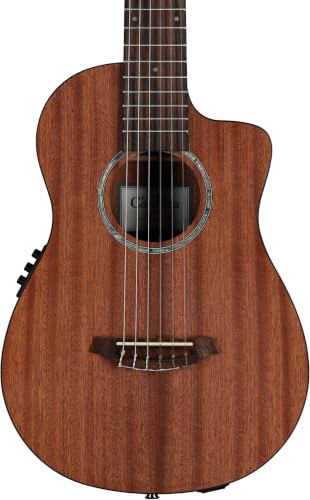
Cordoba Mini II MH-CE Acoustic Electric Guitar

Yamaha FG800J Solid Top Acoustic Guitar
More Details On Our Top Picks
The APXT2 shrinks Yamaha’s hugely popular APX line into a 3/4 body that fits airline overhead bins without drama. A spruce top paired with a rosewood fingerboard gives it a brighter, more articulate voice than most budget travel guitars manage.
Where it pulls ahead of the Vangoa bundles later on this list is the onboard electronics: an ART-based pickup system plus a built-in tuner, so you can plug into an amp at an open mic and tune up silently between songs. A gig bag comes included.
Strong Points
- Plugs straight into an amp or interface thanks to the ART pickup system, useful for coffeehouse sets or home recording
- Built-in tuner means one less accessory rattling around your bag
- Gig bag included, so it’s road-ready out of the box
- Compact 3/4 body suits smaller frames and cramped practice corners
Things To Consider
- Steel strings demand more finger pressure than the nylon models below; expect sore fingertips during the first weeks
- You may find unplugged volume modest in a loud room, which is normal for this body size
Who It Suits Best
Commuting players and gigging beginners who want plug-in capability in a genuinely portable frame.
A Better Fit Elsewhere
Total newcomers who want every accessory bundled should look at the Vangoa 3/4 kit instead.
Starting guitar usually means buying five accessories after the instrument itself, and that’s where this Vangoa bundle earns its spot. The 36-inch cutaway arrives with a padded gig bag, strap, clip-on tuner, picks, capo, spare strings, pickguard, truss rod key, and a quarter-inch cable for amps or recording gear.
The matte black finish hides fingerprints well, something glossy finishes never do. Onboard electronics let you run it through an amp once you’re ready, and the cutaway gives your fretting hand easy access past the twelfth fret.
What We Like
- Everything needed for day one is in the box, no separate shopping trip required
- Pickup system handles both amplification and direct recording
- Truss rod adjustment tool included, so neck relief stays fixable at home
Worth Noting
- Bundle-grade hardware means the tuner and strap are functional rather than premium; upgrades may follow later
- Laminate construction won’t open up tonally over the years the way solid wood does
Made For
Teens and adults buying their first guitar who’d rather unbox one complete setup than piece one together.
Consider Something Else When
Players who already own tuners and cables get better value from the leaner Yamaha APXT2.
This is Vangoa’s Orchestra Model take on the 3/4 format, and the thinner spruce top is the headline difference. Thinner tops respond faster to light strumming, which produces the bright, clear character the brand targets here, and it flatters chord work more than heavy rhythm playing.
Like its sibling above, it ships as a full bundle with gig bag and accessories, plus a pickup for plugging in. Compared with the black matte kit, this one leans toward players who care about acoustic tone first and amplification second.
Highlights
- Orchestra Model body shape sits comfortably across the knee for seated practice sessions
- Thinner spruce top delivers quick response and clear note separation for learners
- Electronics on board for amp or recording use down the line
Small Caveats
- Entry-level build quality means setup work, like lowering string action, is commonly reported as helpful right out of the box
- Bright voicing can sound thin on aggressive strumming compared with the deeper Cordoba further down
Right Fit For
Students and hobbyists who want a complete affordable package with a brighter, snappier voice.
Swap It Out When
Warmth matters more than brightness; the all-mahogany Cordoba Mini II MH-CE is the stronger match.
At 28 inches long and under three pounds, the Ultra-Light is the most aggressively portable instrument here. Traveler Guitar moves the tuning machines into the body, eliminating the headstock entirely, which is what lets the whole thing shrink so dramatically while keeping a standard-scale feel.
In practice, this is the guitar for people whose luggage space is measured in inches. Frequent flyers report stowing it in overhead bins and even larger backpacks. The trade-off is acoustic volume: unplugged it’s quiet, so it leans on its electronics when you want to be heard.
Upsides
- Weighs just 2 lbs 14 oz, roughly a third of a typical dreadnought
- Headless In-Body Tuning System keeps familiar tuning feel despite the tiny footprint
- Acoustic-electric output works with headphone-friendly practice setups in hotel rooms
Honest Caveats
- Unplugged projection is limited; campfire strumming without an amp will feel restrained
- The unusual silhouette draws questions, which some players love and others don’t
Who Will Love This
Air travelers and van-lifers who prioritize weight and packed size above raw acoustic volume.
Not Your Match When
Players wanting fuller unplugged sound should step up to the Cordoba Mini II MH-CE instead.
Same 28-inch, sub-three-pound platform as the Black Gloss version reviewed above, dressed in a natural mahogany finish. Mechanically nothing changes: the headless body-mounted tuners, the compact footprint, the acoustic-electric output all carry over.
The honest difference is aesthetic and slightly tonal. Mahogany’s darker grain suits players who find gloss finishes too flashy, and owners commonly describe the wood’s visual warmth as a nice bonus on an instrument bought purely for practicality. Choose between the two purely on looks; functionally they’re twins.
Bright Spots
- Identical 2 lbs 14 oz weight and 28-inch length make it equally cabin-bag friendly
- Natural mahogany finish resists showing scratches and smudges in daily use
- Headless design keeps the packed profile slim enough for tight storage
Points To Note
- Quiet unplugged, same as every Ultra-Light; plan on amplification for group settings
- Headless layout takes a session or two to feel natural coming from a conventional guitar
Whose Shelf It Belongs On
Practical-minded travelers who prefer understated natural wood over high-gloss styling.
Reach For A Different Pick When
Vintage color appeals more; the Vintage Red Ultra-Light offers the same specs with retro flair.
The Maple variant adds two thoughtful touches the other Ultra-Lights skip: a removable lap rest and a full 24 3/4-inch scale length. The lap rest hooks onto the body so the guitar sits properly on your thigh without a strap, handy for couch practice or a park bench. Detach it and the packed profile slims back down.
Maple’s pale, clean grain also gives it the most distinctive look of the four Ultra-Light finishes. A custom gig bag ships alongside it.
Plus Points
- Removable lap rest enables comfortable strap-free playing anywhere you sit
- Full 24 3/4-inch scale keeps fret spacing familiar for practiced hands
- Custom gig bag tailored to the odd shape comes in the box
Softer Spots
- The lap rest is one more small part to keep track of during packing
- Maple’s bright look shows dirt more readily than the darker finishes
Best Suited To
Practice-focused players who mostly play seated and value the strap-free convenience.
Look Elsewhere When
Strap players get identical portability from the simpler Black Gloss Ultra-Light.
Fourth stop on the Ultra-Light tour, and this one wears a faded vintage red finish that reads more classic than futuristic. Underneath, it’s the same proven recipe: 28 inches end to end, 2 lbs 14 oz on the scale, tuning machines housed in the body, and a pickup for plugging in.
For players torn between the mahogany’s subtlety and the maple’s brightness, this finish splits the difference with some personality. Everything said about the other variants’ quiet unplugged voice applies here too.
Reasons To Buy
- Retro finish stands out among the sea of black travel guitars
- Same featherweight 2 lbs 14 oz build that makes this line famous
- Acoustic-electric output supports silent practice through headphones
Minor Gripes
- Colored finishes can reveal chips more visibly than natural wood if knocked in transit
- No lap rest included, unlike the Maple version
Who Should Grab It
Style-first travelers who want their compact guitar to have a bit of character.
Another Choice May Suit
Seated practice enthusiasts will appreciate the Maple model’s removable lap rest more.
Nylon strings change everything for sore fingers. Where the steel-string Yamahas and Vangoas earlier in this list can leave beginners wincing through the first month, the FA-25N’s nylon set is far gentler, and Fender pairs it with a slim C-shaped neck designed for smaller hands.
The body uses durable all-laminate construction with tonewood layering, which keeps the price sane and shrugs off humidity swings better than solid wood. Note there’s no pickup here; it’s a pure acoustic, which keeps things simple but rules out plugging in.
Standout Traits
- Nylon strings cut finger fatigue dramatically for new players building calluses
- Slim C-shape neck suits shorter fingers and smaller frames
- Laminate body handles temperature and humidity changes without cracking worries
Trade Offs
- No electronics, so amplifying or recording requires an external microphone
- Wide classical-style nut spacing can feel unfamiliar to steel-string players
The Right Fit
Young students and tender-fingered beginners learning at home or in a classroom setting.
Where A Sibling Pick Shines
Players needing plug-in ability should choose the Yamaha APXT2 with its onboard pickup.
Cordoba solved the biggest complaint about mini guitars: they rarely tune properly to standard pitch. The Mini II stretches the scale to 580mm, about 22 7/8 inches, long enough that standard E tuning feels natural rather than rubbery. All-mahogany construction gives it a mellow, rounded voice that many owners compare favorably to full-size nylon instruments.
A deeper body than the original Mini adds low-end warmth, and the CE designation brings electronics for stage or studio use. Among the nylon options here, it’s the more grown-up choice next to the Fender FA-25N.
Positives
- Extended 580mm scale tunes accurately to standard E, unlike many short-scale minis
- All-mahogany body produces warm, soft tones suited to fingerstyle
- Deeper body depth boosts bass response beyond typical travel-guitar limits
- Built-in electronics cover amplified gigs and recording sessions
Room For Improvement
- Mahogany’s dark voicing lacks the sparkle some strummers want; the Vangoa spruce-top kit sounds brighter
- Classical-style setup takes adjustment time for steel-string converts
Quick Facts
Perfect Match For
Fingerstyle players and nylon devotees who refuse to compromise on tone while traveling.
Skip It When
Bright strummers chasing sparkle will prefer the spruce-topped Vangoa bundle.
Yes, it’s the largest guitar here, and that’s the point of including it. The FG800J is Yamaha’s entry full-size workhorse, and plenty of “travelers” discover that a standard dreadnought in a decent gig bag covers most car trips fine. Its solid spruce top, braced with a scalloped pattern, resonates louder and opens up over time in a way laminate bodies can’t match.
Against the compact picks above, you give up cabin-bin convenience and gain genuine volume and depth. For home practice and road trips by car, that trade often makes sense.
Best Bits
- Solid spruce top delivers stronger projection and improves tonally with age
- Scalloped bracing balances strength with responsiveness
- Traditional full-size feel means no adaptation when switching from other guitars
Areas To Watch
- Full-size body defeats the purpose for strict carry-on-only flyers
- Solid wood needs humidity care; a case humidifier is a wise companion in dry climates
Feature Rundown
Built With In Mind
Beginners and songwriters practicing mainly at home who occasionally travel by car.
Where Another Pick Suits Better
Strictly carry-on travelers should stick with the Traveler Guitar Ultra-Light series.
What Matters Most Before Choosing Acoustic Travel Guitars
Size Versus Sound
Every travel guitar is a negotiation between portability and projection. Smaller bodies like the Traveler Ultra-Light vanish into luggage but stay quiet unplugged, while 3/4 models such as the Yamaha APXT2 split the difference. Decide honestly where you’ll play most: hotel rooms forgive small bodies, campfires don’t.
Steel Or Nylon Strings
String material shapes the entire ownership experience. Nylon, found on the Fender FA-25N and Cordoba Mini II, is kinder to uncalloused fingertips and suits classical technique. Steel strings project harder and suit strumming, but expect a few tender weeks early on.
Electronics And Extras
An onboard pickup turns a quiet practice tool into a performable instrument, which is why the APXT2 and Cordoba justify their position. Bundles like the Vangoa kits save beginners a second shopping trip, though experienced players likely own those accessories already.
Build Materials
Solid wood tops, as on the FG800J, age beautifully but demand humidity attention. Laminates cost less and tolerate neglect, a fair trade for a guitar living in a car trunk.
Key Considerations Across These Picks
Traps First Timers Fall Into
The commonest mistake is buying a guitar smaller than you need because “travel” sounded appealing, then fighting its thin unplugged tone forever. Measure your actual travel frequency first. Another slip: ignoring string type until sore fingers arrive. Match the string material to your fingertips and genre before checkout, not after.
What Separates Premium From Basic
Higher-tier models spend money where it counts: solid wood tops, refined bracing, and quality electronics. The Cordoba’s extended scale and the Yamaha’s solid spruce top are exactly that kind of investment. Budget bundles win on completeness, not refinement. Paying up makes sense once you know you’ll play weekly; until then, a laminate starter serves fine.
Frequently Asked Questions
Can a travel guitar really fit in an airplane overhead bin?
Most 3/4-size and headless models fit standard overhead bins comfortably. The Traveler Ultra-Light, at 28 inches, is the safest bet for strict carry-on policies.
Do travel guitars stay in tune as well as full-size guitars?
Quality models do, especially those with normal scale lengths. Very short scales can feel looser, which is why the Cordoba’s 580mm scale matters.
Are nylon strings better for beginners?
They’re gentler on fingertips and easier to press down. Many teachers start students on nylon before moving to steel.
Is a pickup necessary on a travel guitar?
Only if you plan to amplify, record, or practice silently through headphones. Purely acoustic players can skip it and save money.
How do I protect a travel guitar in transit?
Always use a padded gig bag at minimum, and loosen the strings slightly for flights. Solid-wood tops also benefit from a humidifier in dry climates.
Closing Thoughts
The best travel guitar is the one matching your actual journeys, not the smallest one available. Fly often? The Traveler Ultra-Light series earns its reputation. Learning at home with occasional road trips? The Yamaha APXT2 or the FG800J will serve you longer. Whatever you choose, play it regularly; a travel guitar only earns its keep when it leaves the house.
