
Low-end players have a real problem: most acoustic basses either sound thin unplugged or cost more than a used car. This list covers instruments and gear that solve that in different ways, from full-size acoustic-electric basses to a travel-scale option that actually tunes to standard E. You’ll also find a beginner cello kit, a learning guide, and the accessories that keep everything standing.
The Shortlist At A Glance

Fender Acoustic Bass Guitar with Fishman Pickup

Fender CB-60SCE Acoustic Bass (Natural)

Ktaxon Full-Size Cello 4/4 Kit
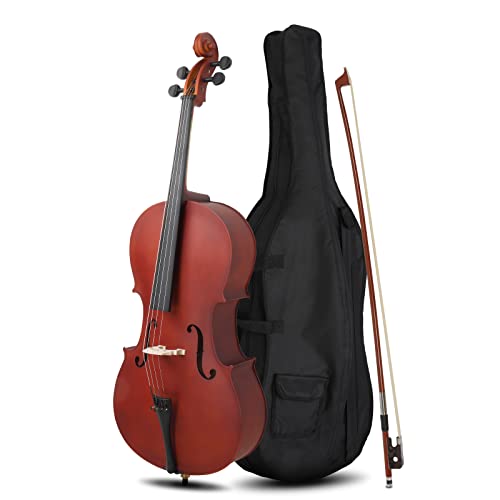
Ktaxon Full-Size Cello 4/4 Kit

Ktaxon Full-Size Cello 4/4 Kit

Ktaxon Full-Size Cello 4/4 Kit

How to Play Upright Bass: Step by Step Guide

MUSO Wood Guitar Stand (Zebra)

Yamaha FG800J Solid Top Acoustic Guitar

Cordoba Mini II Acoustic Electric Bass MHE
More Details On Our Top Picks
The concert body shape is the story here. Smaller than a dreadnought, it pushes a brighter, more even voice that suits fingerstyle playing and solo songwriting far better than a boomy big-body design. A solid spruce top with scalloped X-bracing gives the low strings definition instead of mud.
Onboard, the Fishman pickup system adds a tuner and equalizer, so you can shape your tone at the venue without extra pedals. For anyone who plays coffeehouse gigs or writes at home, that combination covers both worlds.
Strong Points
- Solid spruce top ages into a warmer, more resonant voice over years of playing.
- Rounded walnut fingerboard feels smooth under the left hand during long sessions.
- Mahogany back and sides keep the low end controlled rather than boomy.
- Built-in tuner means one less accessory to pack for gigs.
Things To Consider
- Acoustic basses are quiet unplugged; owners commonly report needing amplification to compete with an acoustic guitar.
- The concert body projects less raw volume than larger bodies in loud rooms.
Who It Suits Best
Songwriters and fingerstyle players who record at home and occasionally plug into a PA will get the most from this one.
Where Another Pick Suits Better
Players wanting a slimmer neck profile for smaller hands should look at the Fender CB-60SCE below instead.
Where the pick above leans bright, the CB-60SCE goes for smooth and articulate. It shares the Classic Design series’ slim-taper neck profile, which is Fender-speak for a neck that tapers thinner toward the body. Players coming from electric bass tend to adapt to it quickly, which matters more than any tonewood spec in your first year.
The solid spruce top over mahogany back and sides sits in a concert-sized body, keeping the low end tidy for unplugged sessions around a table or a campfire. The natural finish looks understated on a stand, too.
What We Like
- Slim-taper neck reduces hand fatigue during long practice blocks.
- Solid spruce top responds well to light touch, rewarding careful playing.
- Two-year manufacturer coverage offers peace of mind in year one.
- Concert body size is easier to maneuver seated than a jumbo bass.
Worth Noting
- Like most acoustic basses, it needs amplification to be heard over drums or multiple guitars.
- Laurel fingerboard requires occasional conditioning in dry climates to stay smooth.
At A Glance
Made For
Beginners stepping up from an electric bass, or acoustic guitarists adding low end to their writing setup.
Consider Something Else When
Gigging players who need onboard EQ controls will prefer the Fishman-equipped Fender at number one.
Not every low-end journey starts with frets. This 4/4 cello kit gives a first-year student everything needed to begin: instrument, bow, and the basics in one box. The basswood front panel keeps weight manageable, which matters when a twelve-year-old is hauling it to school orchestra practice.
The bridge and body are fitted to work together, and Ktaxon claims that pairing produces a fuller, brighter response than mismatched budget cellos typically manage. In our view, expectations should stay realistic at this tier, but as a starter platform it does its job.
Highlights
- Complete kit format means no separate bow purchase before the first lesson.
- Full 4/4 sizing suits teens and adults learning standard technique.
- Lightweight basswood construction eases daily transport to lessons.
Small Caveats
- Budget strings are commonly reported to go dull quickly; many owners upgrade them within months.
- Basswood tops resonate less deeply than spruce as skills advance.
- Tuning pegs may need periodic adjustment as the wood settles.
Quick Facts
Right Fit For
Students starting school orchestra or adult beginners testing their commitment before investing in a step-up instrument.
Look Elsewhere When
Committed players past year two should consider renting or buying a spruce-top cello from a specialist shop instead.
This listing shares the same core recipe as the previous Ktaxon kit: a 4/4 body with a basswood face, matched bridge fit, and a white horsehair bow in the box. The difference comes down to availability and which variant ships fastest to your region, so compare the two directly before ordering.
The aged, dense top wood is the detail worth noting. Denser material tends to transmit vibration more efficiently, which translates into a slightly livelier response for a beginner still learning how much bow pressure to apply.
Upsides
- Dense aged top supports clearer note projection in small practice rooms.
- Horsehair bow offers better elasticity than synthetic alternatives at this level.
- Everything arrives together, so lessons can start the week it lands.
Points To Note
- Expect a professional setup check; budget cellos often arrive needing bridge and peg adjustment.
- Finish care matters, as entry-level lacquer can mark easily if wiped with harsh cloths.
Who Will Love This
Self-taught adults and school-band students who want a complete, no-fuss starting point without shop visits.
Swap It Out When
Players prioritizing the lightest possible instrument for a young child should compare the other Ktaxon kits in this list for current stock.
Third time’s the pattern: this is another configuration of Ktaxon’s 4/4 beginner cello, built around the same basswood front, matched bridge, and horsehair bow. What sets each apart in practice is shipping region and current bundle contents, so the honest advice is to check which variant is in stock near you rather than agonizing over spec sheets that read identically.
For home practice, the formula works. The body produces a reasonably rich voice for the price bracket, and the included bow spares you a second purchase decision during an already overwhelming first month of lessons.
Bright Spots
- Well-fitted bridge and body pairing improves resonance over loose budget builds.
- Full-size layout builds correct posture habits from day one.
- Kit pricing keeps the total entry cost predictable.
Softer Spots
- Owners commonly report rosin and strings need upgrading within the first year of regular play.
- No hard case details are specified, so plan separately for school transport.
Whose Shelf It Belongs On
Adult hobbyists practicing at home a few evenings a week, where volume demands are modest.
Another Choice May Suit
Students needing guaranteed case protection for daily commuting should verify bundle contents against the other Ktaxon listings here.
The last of the Ktaxon quartet rounds out the family with the same fundamentals: 4/4 sizing, a basswood face, a bridge matched to the body for better resonance, and a white horsehair bow. Rather than repeat the whole pitch, think of these four listings as one product with several storefront doors. Pick whichever has the delivery date and bundle that fits your situation.
One practical note worth repeating: whichever variant you choose, book a basic setup with a local tech in month one. It’s the single cheapest way to make a budget cello feel dramatically better under the bow.
Plus Points
- Consistent build formula across variants makes comparison shopping simple.
- Bright, responsive character suits students still developing bow control.
- Everything needed for a first lesson arrives in one shipment.
Areas To Watch
- Peg slippage during seasonal humidity swings is a commonly reported quirk of entry-level cellos.
- Tone ceiling appears once technique advances past intermediate repertoire.
Who Should Grab It
Budget-conscious families equipping a first-year student who may or may not stick with the instrument.
Reach For A Different Pick When
A player already committed to cello long-term will outgrow this quickly; the Yamaha FG800J later in this list shows what a slightly higher tier buys on the guitar side.
An instrument list without instruction is only half a solution. Katie Hirst’s guide walks a true beginner through the upright bass from zero: its history, its parts, and the physical mechanics of holding it both standing and seated. That last part sounds trivial until you’ve spent twenty minutes hunched over a double bass with no idea where your thumb goes.
The book also covers reading tablature and standard contrabass notation, plus sample songs to practice against. For someone who just bought their first instrument and can’t start lessons for weeks, it fills the gap affordably.
Reasons To Buy
- Covers both standing and seated positions, which most quick guides skip.
- Teaches tab and sheet music side by side, building flexible reading skills.
- Sample songs give immediate practice targets instead of abstract exercises.
- History and anatomy sections help beginners talk intelligently with teachers and shop staff.
Honest Caveats
- A book can’t correct your posture the way an in-person teacher can.
- Advanced techniques like bowing fall outside its beginner scope.
Feature Rundown
The Right Fit
Self-taught players between buying an instrument and starting formal lessons.
Where A Sibling Pick Shines
Experienced electric bassists switching over may find video lessons more useful than a written primer.
An instrument left leaning against a wall is an accident waiting to happen. This MUSO stand solves that with hardwood construction instead of tubular metal, giving it a furniture-like presence that doesn’t clash with a living room. The zebra-grain finish reads as decor first, gear second, which is exactly the point.
It folds flat for storage and accommodates guitars, basses, violins, and ukuleles, so one stand can serve a household with mixed instruments. Polished edges protect finishes from scratches, a detail metal stands often overlook.
Standout Traits
- Hardwood build feels sturdier and looks better than wire racks.
- Folds down for easy storage between sessions or travel to rehearsals.
- Smooth contact points reduce finish wear on varnished instruments.
- Versatile enough for bass, violin, and ukulele households.
Minor Gripes
- Wood joints can loosen over time; owners commonly report periodic screw tightening keeps it solid.
- Very heavy double basses may sit awkwardly given its guitar-oriented footprint.
Details At A Glance
Built With In Mind
Home musicians who want their instrument displayed like furniture rather than hidden in a case.
Not Your Match When
Gigging players needing rugged road transport should choose a padded hard case over any open stand.
Why a six-string on a bass list? Because many low-end players double on guitar, and the FG800J is the reference point for what modest money buys. Its solid top, paired with Yamaha’s scalloped bracing, delivers projection and balance that laminate-top rivals struggle to match. Scalloping, briefly, means carving away bracing wood to let the top vibrate more freely.
The traditional styling won’t turn heads, and that’s fine. This is a workhorse for chord practice, songwriting, and campfire duty, with a reputation among owners for surviving years of beginner handling.
Positives
- Solid top improves in tone as it opens up over months of play.
- Scalloped bracing boosts volume without sacrificing structural strength.
- Balanced voicing suits both strumming and fingerpicking styles.
- Simple, durable build tolerates the knocks of a first guitar.
Trade Offs
- No built-in electronics, so amplified use requires an aftermarket pickup.
- Conservative cosmetics offer little visual flair.
Who Should Grab It
First-time guitarists and doubling bassists who want maximum tone per dollar without gimmicks.
Skip It When
Performers needing plug-in capability out of the box should lean toward the electro-acoustic options earlier in this list.
Most short-scale travel basses force you into odd tunings. The Mini II Bass dodges that trap with an extended 580mm scale length, long enough to tune to standard E properly. That single spec changes everything for a traveling player: your muscle memory and chord shapes transfer directly from a full-size instrument.
Its deeper body adds acoustic warmth, and the Cordoba MB103 pickup handles plugged-in duty. Compared with the full-size Fenders earlier in this list, you trade some low-end authority for genuine portability, and for frequent flyers that trade usually pays off.
Best Bits
- Extended scale allows true standard E tuning despite the compact body.
- Deeper body depth rounds out the unplugged tone nicely.
- MB103 pickup makes it stage-ready without external mics.
- Fits overhead bins and small apartments where full-size basses don’t.
Room For Improvement
- Shorter scale means slightly looser string tension; some players report an adjustment period.
- Acoustic volume is modest, as expected at this size.
Core Details
Perfect Match For
Frequent travelers, apartment dwellers, and anyone whose main bass lives too far from the couch.
A Better Fit Elsewhere
Home-based players wanting maximum acoustic depth should stick with the Fender CB-60SCE at number two.
Choosing Between These Low-End Instruments
Body Size And Scale Length
Scale length is the vibrating distance from nut to saddle, and it dictates tuning stability and string tension. Full-size acoustic basses deliver deeper fundamental tone but demand more reach and strength from your fretting hand. Compact options like the Cordoba Mini II sacrifice some volume yet keep standard tuning intact, which preserves everything your hands already know.
Match body size to your living situation first. A concert-sized bass fits a small apartment and a car back seat; a jumbo does neither gracefully.
Amplification Needs
Here’s the uncomfortable truth about acoustic basses: unplugged, they’re quieter than an acoustic guitar. Any ensemble playing beyond a duo practically requires a pickup system. The Fishman-equipped Fender solves this onboard, while the Yamaha FG800J would need an aftermarket solution.
Decide honestly where you’ll play. Bedroom practice favors pure acoustic simplicity; open mics favor built-in electronics with EQ control.
Materials And Longevity
Solid wood tops improve with age as the fibers relax and resonate more freely. Laminate stays consistent but never develops. Mahogany backs warm things up, spruce brightens them, and basswood keeps costs down at the expense of ultimate depth. Buy the best top wood your situation allows, since it’s the component that matures with you.
Accessories That Complete The Setup
A stand, a method book, and a basic setup appointment transform ownership more than any single spec upgrade. The MUSO stand protects your investment between sessions, and Hirst’s guide bridges the gap before formal lessons begin.
Key Considerations Across These Picks
Traps First Timers Fall Into
The classic error is buying purely on price and skipping the setup budget. Entry-level instruments almost always benefit from professional adjustment in the first month, and skipping it makes a decent instrument feel bad. Second trap: ignoring scale length. A short-scale bass tuned oddly will fight every habit you’ve built.
Where The Extra Money Goes
Higher-tier models spend your money on solid wood tops, refined bracing, and name-brand electronics. Those three line items explain nearly all of the price gap between a starter instrument and a serious one. Pay up when you’ll play weekly for years; stay basic when commitment is still unproven.
Frequently Asked Questions
Can an acoustic bass really be heard without an amp?
Alone in a room, yes, though quietly. Alongside drums or multiple guitars, you’ll want the onboard pickup systems found on the Fender and Cordoba models here.
Is a shorter scale bass harder to learn on?
No, it’s generally easier on the hands. The catch is tension and tone differences, not difficulty, and the Cordoba’s extended scale minimizes even those.
Do solid wood tops really sound better over time?
Widely reported owner experience says yes. Solid spruce tends to open up and gain warmth across months and years of regular play.
Are budget cello kits usable for school orchestra?
For a first year, they serve fine. Plan on a professional setup and likely string upgrades, then reassess once technique develops.
Do I need a special stand for a bass?
A sturdy floor stand rated for bass weight works well. The MUSO unit here handles standard basses, though very large double basses deserve dedicated support.
Closing Thoughts
The right choice depends less on specs than on where you’ll actually play. Gigging songwriters should start with the Fishman-equipped Fender, apartment-bound players will love the Cordoba’s portability, and students belong with the Ktaxon kits or the Yamaha depending on their instrument. Whichever direction you take, add a stand and a setup appointment to the cart, and the music starts sooner.
