
Rolling a fence or brushing a cabinet takes hours you probably don’t have. A good spray gun turns a weekend chore into an afternoon task, laying down even coats of acrylic paint on furniture, walls, models, and craft projects. The catch is that the category is crowded: cordless airbrushes sit next to 1200W house-painting machines, and picking wrong means thin coverage or a clogged mess. This shortlist sorts ten options by real use case, from nail art detail work to full-room repaints, so you can match the tool to the job instead of guessing.
The Shortlist At A Glance

crpen Cordless Airbrush Kit With Compressor 48PSI (Black)
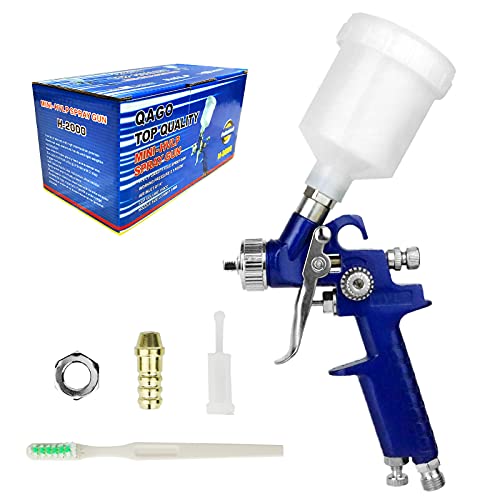
Tosucs HVLP Spray Gun 1.0mm Tip, 125ml Cup

ENDOZER Professional HVLP Spray Gun Set
WIBENTL Electric Paint Sprayer, 3 Modes & 4 Brass Nozzles
ELPIDIO HVLP Paint Sprayer with Cleaning & Blowing Joint

PULENDY Paint Sprayer for House Painting, 4 Nozzles
Tilswall Cordless Paint Sprayer Shark700 (Tool Only)

CBVCBV Handheld Airbrush Kit, 0.3/0.5mm Nozzles (Black)
Cosyjazz 1200W HVLP Spray Paint Gun, 1400ml Container
Tilswall Shark 600 Ultra-Light HVLP Electric Spray Gun
More Details On Our Top Picks
An airbrush is a small spray gun that atomizes paint into a fine mist, and this one carries its own compressor in the handle. That means no hose, no wall outlet, and no dragging equipment to a craft table. The built-in rechargeable battery charges over USB Type-C from a laptop or power bank, so you can work at a market stall, a friend’s kitchen, or anywhere a cord won’t reach.
The 0.3mm nozzle suits fine acrylic work: nail art gradients, cake coloring, model shading, and makeup application. An indicator light shows the pressure level, which helps you avoid mid-session surprises.
Bright Spots
- Cordless design lets you airbrush anywhere without hunting for outlets
- USB-C charging works with laptops and portable power banks
- Pressure indicator light keeps output predictable during long sessions
- 0.3mm nozzle handles delicate detail like nail art and model weathering
Small Caveats
- Airbrushes need thorough cleaning after every session; dried acrylic in a 0.3mm needle is the most common cause of clogging reported by owners
- Battery runtime limits very long painting days compared with a plug-in compressor
Made For
Hobbyists and craft artists who want studio-quality detail work without being tethered to a desk or compressor.
Where A Sibling Pick Shines
The CBVCBV handheld kit adds a second 0.5mm nozzle, so anyone spraying both fine lines and broader color fills will get more flexibility there.
This is a compressed-air gun, not an electric one, so it needs a separate air compressor to run. The trade-off is control: HVLP stands for high volume, low pressure, a design that pushes more paint onto the surface and less into the air around it. The gravity feed cup sits on top of the gun, letting material drain fully instead of pooling at the bottom, which cuts waste on small batches of acrylic or primer.
The 1.0mm tip is on the narrow side for automotive guns, which makes it a sensible match for base coats, furniture surfaces, and wall touch-ups rather than heavy-bodied primers. A filter keeps dirt particles out of your finish, something that matters a lot when spraying glossy acrylic on car panels where every speck shows.
Reasons To Buy
- Gravity feed design reduces leftover paint wasted in the cup
- Included filter screens out debris for cleaner finishes
- Narrow 1.0mm tip gives finer control than typical auto-body tips
- Suits primer, base coat, furniture, and wall work in one tool
Points To Note
- You’ll need your own compressor and air hose; nothing in the box powers it
- The 125ml cup means frequent refills on larger panels
Who Should Grab It
DIYers who already own a small compressor and want an affordable gun for car priming, trim, and furniture refinishing.
Consider Something Else When
Anyone without a compressor should look at the WIBENTL electric sprayer instead, since it plugs straight into a wall outlet.
Where the Tosucs above covers light-duty work, the ENDOZER reads like a shop tool. It ships with three interchangeable stainless steel nozzle-and-needle sets at 1.4mm, 1.7mm, and 2.0mm, so one gun moves from clear coat to thicker primer without buying extra hardware. Stainless resists corrosion from waterborne paints far better than plated alternatives, which matters if acrylics and lacquers share the same gun.
The brass air cap uses a 15-hole pattern designed for even atomization, meaning the paint breaks into uniform droplets instead of spitting. A 600ml (20 oz) gravity cup holds enough material for a car door or a full cabinet face between refills, and the fluid control knob dials the output up or down. The 1/4-inch NPT inlet includes a matching quick adapter for standard shop fittings.
Standout Traits
- Three stainless nozzle sizes cover thin clears through thick primers
- Brass 15-hole cap promotes consistent, even atomization
- Large 600ml cup reduces refill interruptions on bigger panels
- Quick-connect adapter simplifies hookup to shop compressors
Softer Spots
- Compressed-air operation requires a capable compressor most beginners don’t own yet
- Cleaning three nozzle sets after each use adds real cleanup time
Right Fit For
Garage restorers and serious furniture finishers who already run a decent air compressor and want one gun for multiple viscosities.
Swap It Out When
Occasional users doing one small project will find the Tosucs 1.0mm gun simpler and cheaper to live with.
First-time sprayer owners tend to quit because setup feels intimidating. This WIBENTL unit is built around the opposite assumption: everything assembles by hand, the controls are obvious, and the four included brass nozzles (1mm, 1.5mm, 2mm, 3mm) are labeled clearly enough that choosing one isn’t guesswork. Smaller tips suit detailed acrylic work on chairs and cabinets; the 3mm option lays down broad coverage on fences and walls.
Three spray patterns, horizontal, vertical, and circular, let you match the fan shape to the surface instead of fighting it. Being corded, it runs as long as your extension cord does, with no battery anxiety mid-coat. Brass nozzles also hold their shape better than plastic ones when cleaned repeatedly, which extends usable life considerably.
What We Like
- Four brass nozzle sizes span detail work through wide coverage
- Three spray patterns adapt to horizontal, vertical, and curved surfaces
- Beginner-friendly assembly gets you spraying quickly
- Corded power means unlimited runtime on long projects
Trade Offs
- You’re tied to an outlet, so outdoor jobs need an outdoor-rated extension cord
- Paint must be thinned to the right viscosity for best results, a step some first-timers skip
Quick Facts
Who Will Love This
Complete beginners tackling their first sprayed furniture piece or accent wall who want forgiving controls and clear guidance.
Another Choice May Suit
Shoppers wanting more raw power for whole-house repaints should compare the Cosyjazz 1200W model later in this list.
Cleanup is where most budget sprayers fall apart, and that’s exactly what ELPIDIO addresses here. A dedicated cleaning joint flushes the internal passages with water or solvent, while a blowing joint pushes air through to dry the parts and clear dust off your workpiece before you spray. In practice, that combination can turn a twenty-minute scrub-down into a few minutes of rinsing.
The nozzle lineup mirrors the WIBENTL reviewed earlier: four brass sizes from 1.0mm to 3.0mm across three adjustable patterns. That makes it equally comfortable on cabinet doors, garden furniture, fences, and interior walls. For most home workshops, this balance of features and straightforward maintenance hits a sweet spot.
Plus Points
- Built-in cleaning joint flushes paint residue fast after each session
- Blowing joint doubles as a dust blower for prepping surfaces
- Four nozzle sizes handle furniture, cabinets, fences, and walls
- Three spray patterns give flexible coverage control
Minor Gripes
- Thicker acrylics still need thinning before they flow properly through smaller tips
- Corded design limits reach without an extension lead
At A Glance
Who It Suits Best
Home improvers who value easy maintenance and want one dependable sprayer for rotating furniture and household projects.
Not Your Match When
Anyone needing maximum tank capacity for long uninterrupted sessions will prefer the Cosyjazz with its 1400ml container.
Whole-house projects change the math. Painting a deck, several doors, and a fence with a brush eats entire weekends, and this PULENDY unit exists for exactly that scale of work. Its spec sheet looks familiar next to the ELPIDIO just covered, four nozzles from 1mm to 3.0mm and three spray patterns, but the emphasis here leans toward larger exterior surfaces where speed matters more than mirror finishes.
The cleaning and blowing joints carry over too, which you’ll appreciate after a dusty deck prep. One honest note: on big outdoor jobs, wind and overspray become real factors, so masking and calm conditions matter regardless of which gun you choose.
Highlights
- Four nozzle sizes suit fences, decks, doors, and garden furniture
- Three patterns adapt to flat panels and rounded edges
- Cleaning joint simplifies post-project flushing
- Blowing function clears debris before coating
Things To Consider
- Outdoor use demands careful masking; overspray travels farther than most people expect
- Smaller cup size means more refills on large fence sections compared with the Cosyjazz
The Right Fit
DIY homeowners working through multi-surface refresh projects around the house and yard.
Reach For A Different Pick When
For extended sessions on very large areas, the Cosyjazz 1200W with its 1400ml container reduces refill stops noticeably.
Already own DeWalt 20V tools? Then this Tilswall Shark700 is almost a cheat code: it accepts those same slide-on batteries, so there’s no new charger, no new cells, and no outlet hunt on a ladder or in the backyard. Note that it ships as a bare tool, meaning the battery itself is sold separately unless your collection already has spares.
Cordless freedom changes how you work. Ceiling edges, stairwells, and shed interiors all become reachable without extension cords snaking across wet floors. Tilswall includes a viscosity cup for checking whether your acrylic has been thinned correctly, a small accessory that prevents the majority of clogging complaints owners report with any sprayer. Prompt cleaning within about fifteen minutes of finishing is the habit that keeps these units healthy long term.
Upsides
- Runs on common DeWalt 20V batteries you may already own
- Genuine cordless mobility for ladders, stairs, and yards
- Included viscosity cup takes the guesswork out of thinning
- Same battery platform means fewer chargers cluttering the garage
Worth Noting
- Battery not included, so total cost depends on what’s already in your toolbox
- Runtime per charge is finite; large rooms may need a swap mid-coat
Whose Shelf It Belongs On
DeWalt platform owners who want spray capability without adding another charging ecosystem to their workshop.
Look Elsewhere When
If your toolkit holds no DeWalt batteries, the corded WIBENTL delivers similar results without the platform commitment.
Two nozzles beat one, especially in the airbrush world. The CBVCBV pairs a 0.3mm tip for hairline detail with a 0.5mm option that flows slightly heavier mixes for broader color fills, covering nails, cookies, model kits, temporary tattoos, and cosmetic work in one kit. Like the crpen opener, it’s rechargeable and cordless, so it travels easily between craft stations.
What genuinely separates it is the video guidance: the brand provides tutorials covering clog clearing, startup adjustment, dripping nozzles, stiff valves, and full disassembly cleaning. Airbrush troubleshooting is famously opaque for newcomers, and having those walkthroughs on hand removes much of the early frustration.
Strong Points
- Dual 0.3mm and 0.5mm nozzles cover fine lines and fuller fills
- Video tutorials demystify cleaning and clog troubleshooting
- Cordless rechargeable body works anywhere a craft table sits
- Versatile across nails, baking, models, tattoos, and makeup
Honest Caveats
- Small cups mean frequent refills during longer gradient sessions
- Needle-tip airbrushes demand disciplined cleaning; skipping it leads to the clogs the videos describe
Who Should Grab It
Newcomers to airbrushing who want guided support plus two tip options for mixed detail and fill work.
Where Another Pick Suits Better
Those prioritizing maximum battery life over dual tips may find the crpen single-nozzle kit the simpler companion.
Step up to serious capacity and this Cosyjazz earns its place. The 1200W motor drives faster, more even material flow than the smaller electric units earlier in this list, and the 1400ml (47 oz) detachable container holds roughly triple the paint of a typical budget cup. On a full fence line or a set of kitchen cabinets, fewer refills translate directly into fewer streak-matching problems.
Five nozzles, one more than most rivals here, widen the viscosity range you can tackle, while adjustable flow control lets you dial output down for furniture-grade finishes. Cleaning tools ship in the box, which matters given how much material passes through a machine this size.
Best Bits
- Powerful 1200W motor speeds up large-area coverage
- 1400ml detachable container supports long uninterrupted sessions
- Five nozzle sizes handle nearly any acrylic viscosity
- Adjustable flow control refines output for delicate pieces
- Included cleaning tools simplify end-of-day maintenance
Areas To Watch
- Added weight and bulk make overhead work tiring versus the lighter Tilswall Shark 600
- More nozzles mean more parts to wash thoroughly after each use
Details At A Glance
Perfect Match For
Homeowners repainting fences, exteriors, or multiple rooms who want capacity and power over featherweight handling.
Skip It When
Anyone with lots of overhead trim work will appreciate the ultra-light Tilswall Shark 600 far more.
Weight rarely makes the spec sheet conversation, yet it decides whether your shoulders survive a ceiling session. Tilswall built the Shark 600 around that insight, keeping the body ultra-light for extended overhead and vertical work where heavier guns like the Cosyjazz wear you down. It’s corded, so runtime never becomes a question.
Like its cordless sibling reviewed earlier, it ships with a viscosity cup for checking paint thickness and benefits from the same fifteen-minute cleaning habit. HVLP efficiency keeps overspray down, which is welcome indoors where every stray mist lands somewhere you didn’t plan.
Positives
- Ultra-light build reduces fatigue during ceilings and tall walls
- Viscosity cup included for accurate paint thinning
- Corded power delivers steady output all day
- HVLP design limits overspray in indoor spaces
Room For Improvement
- Lighter construction suggests gentler treatment on rough job sites
- Requires prompt cleaning after use to avoid dried-acrylic clogs
Built With In Mind
Renters and DIYers doing indoor repaints, ceilings, and trim who value comfort over raw capacity.
A Better Fit Elsewhere
Big exterior jobs with heavy material loads belong to the Cosyjazz 1200W and its larger container.
Choosing Between These Acrylic Paint Spray Guns
Match The Tool To The Surface
Detail work and house painting need completely different machines. Airbrushes with 0.3mm tips excel on nails, models, and cakes, while 1200W electric sprayers chew through fences and walls. Buying a precision airbrush for a deck, or a house sprayer for miniature work, ends in frustration either way.
Power Source Decides Your Workflow
Corded units deliver unlimited runtime but chain you to an outlet. Cordless models free you to climb ladders and cross yards, though battery life caps each session. Compressed-air guns offer the finest professional control but require owning a suitable compressor, often the hidden cost people forget to price in.
Nozzle Size Is The Real Spec
Tip diameter determines what materials flow well. Narrow tips around 0.3mm to 1.0mm suit thin acrylics and fine finishes; wider 2mm to 3mm openings handle thicker primers and broad coverage. A kit spanning several sizes, like the ENDOZER’s three stainless sets, replaces three single-purpose purchases.
Plan For Cleanup Before You Buy
Every sprayer needs flushing soon after use, or dried paint ruins internal passages. Features such as dedicated cleaning joints, blowing functions, and included washing tools shorten that chore dramatically. Skipping this consideration is how otherwise good sprayers end up clogged within weeks.
Key Considerations Across These Picks
Wrong Turns To Avoid
The classic error is ignoring viscosity. Most acrylic paints need thinning before they spray cleanly, and the included measuring cups exist for a reason. Another slip: buying a compressed-air gun without a compressor, then discovering the real cost doubled. Check what’s actually in the box before committing.
The Case For Spending Up
Higher-tier models buy motor wattage, tank capacity, and metal components. A 1200W motor with a 1400ml container finishes large jobs in half the sessions, and brass or stainless nozzles outlast plastic through years of solvent cleaning. Frequent painters recoup that difference quickly; once-a-year users usually don’t.
Frequently Asked Questions
Do I need to thin acrylic paint before spraying?
Yes, in most cases. Thinner consistency flows through narrow nozzles without clogging, and many kits include a viscosity cup to check it.
Can one spray gun handle both crafts and house painting?
Not really. Airbrushes lack the volume for walls, and house sprayers lack the finesse for nail art. Match the tool to the scale.
How soon should I clean my sprayer after use?
Ideally within fifteen minutes. Dried acrylic hardens inside passages and needles, becoming far harder to remove later.
Are cordless sprayers powerful enough for real projects?
For furniture, fences, and touch-ups, absolutely. Very large continuous jobs favor corded or higher-wattage models instead.
Why does my spray gun spit or drip?
Usually a partially clogged nozzle, incorrect thinning, or a loose needle seat. Disassembling and flushing the tip resolves most cases.
Wrap Up
Picking the right acrylic paint spray gun comes down to honesty about your projects. Craft artists should start with the crpen or CBVCBV airbrushes, DeWalt owners get obvious value from the Shark700, and whole-house painters belong with the Cosyjazz or PULENDY. Whatever you choose, thin your paint properly and clean promptly, and any of these ten will serve you well for seasons ahead.
