
Scoring a clean line in acrylic or glass sounds simple until your first snap goes sideways and cracks a whole sheet. The right cutter changes that, whether you’re framing a print, building a sign, or trimming panels in a home workshop. This roundup covers ten tools and sheet options that handle scoring, snapping, and finishing work without a shop full of equipment.
The Shortlist At A Glance

Red Devil 102370 Professional Glass Cutter

CHENYAOAI Clear Acrylic Sheet Plexiglass 8 x 12″ (2 Pack)

UoYu Acrylic Cutter with 11 Pcs Blade Set
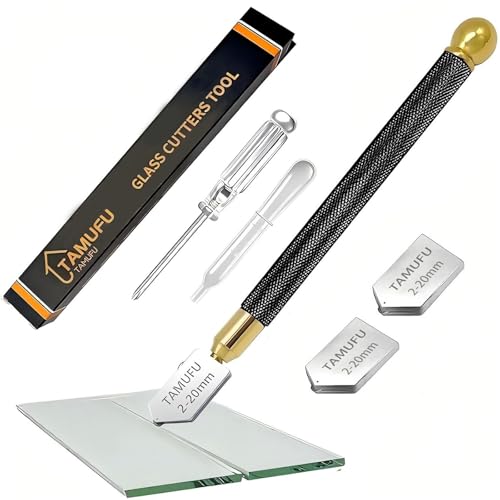
TAMUFU Glass Cutter 2-20mm with Automatic Oil Feed

Fletcher Terry 05-111 Scoremate Plastic Cutter

Camdios Pencil-Style Glass Cutter 2mm-20mm
KERTLOU 16″ x 20″ Clear Plexiglass Sheets (2 Pack)

YouU Acrylic Cutter and 10 Pcs Blade Set (Upgraded)

NT Cutter M-500P Multi-Use Plastic Cutter

Logan Acrylic Plastic Cutter 709-1
More Details On Our Top Picks
This little steel-wheel scorer has been a staple in glass shops for decades, and the reason shows up the first time you pull a straight score across a pane. The wheel sits at an angle tuned for single- and double-strength glass from roughly 1/8 to 1/4 inch thick, which covers most window glass and thinner picture frames.
The flat spot near the wheel gives your index finger a stable rest, so pressure stays even along the line. A ball-shaped end on the handle then taps under the score to start the snap, which saves you from hunting for a second tool.
Strong Points
- The angled steel wheel produces a consistent score line on standard window glass.
- A finger rest near the wheel helps you keep steady leverage across long cuts.
- The ball end doubles as a tapping tool for breaking the score cleanly.
- Small enough to live in a kitchen drawer or toolbox without taking up room.
Things To Consider
- It’s built for glass first, so very thick acrylic sheets may need repeated passes or a plastic-specific tool.
- No oil reservoir means you’ll want to keep the wheel dry-cleaned between sessions to avoid dulling.
Who It Suits Best
Occasional glass cutters replacing a pane or trimming mirror stock will get years of use from this one.
Where A Sibling Pick Shines
For thicker material up to 20mm, the TAMUFU Glass Cutter with its carbide tips and oil feed handles jobs this scorer can’t.
Not every project starts with a cut, sometimes it starts with the sheet itself. These two 8 x 12 inch panels come in at 1/8 inch (3mm) thick, a sweet spot that scores and snaps easily with any hand cutter on this list while staying rigid enough for signs and shelf inserts.
Acrylic like this runs about half the weight of glass yet resists impact far better, which matters once a finished piece hangs on a wall or travels to a craft fair. The clarity reads close to real glass, so display work keeps that polished look.
Bright Spots
- Two sheets per pack give you a spare panel for practice cuts or a matching pair of pieces.
- The 3mm thickness snaps predictably after scoring, ideal for your first attempts.
- Lighter-than-glass handling makes large finished pieces easier to mount safely.
- Works indoors or out for signage, since acrylic tolerates weather better than many plastics.
Worth Noting
- Laser cutting isn’t recommended for these sheets, so plan on saw or hand-tool methods only.
- Protective film should stay on until final assembly to keep the surface scratch-resistant during handling.
At A Glance
Made For
Craft sellers and DIY sign makers who want ready-to-cut material matched to hand tools rather than a full workshop.
Swap It Out When
Larger display panels call for the KERTLOU 16″ x 20″ sheets instead, which suit poster frames and bigger signage.
Blades wear out faster than handles, so a kit that ships eleven spares alongside the cutter solves the most annoying part of acrylic work. The stainless blade scores smoothly enough that owners commonly report skipping the sanding step on lighter sheets, which trims real time off a weekend project.
The technique here is scoring repeatedly from light to deep passes, then snapping along the groove. That gradual approach suits anyone nervous about cracking a sheet on the first hard push, and it works well on the 3mm CHENYAOAI panels covered earlier.
Reasons To Buy
- Eleven replacement blades mean months of hobby use before you shop again.
- Stainless construction resists corrosion in humid garages or damp basements.
- Light-to-deep scoring technique gives beginners a forgiving learning curve.
Small Caveats
- Repeated scoring takes longer than a single deep pass, so impatient users may find the pace slow on thick stock.
- Blade storage matters, loose spares can dull against each other in a crowded drawer.
Right Fit For
First-time acrylic cutters who want a low-commitment kit with plenty of backup blades while they learn the scoring rhythm.
Another Choice May Suit
Anyone wanting a refined version of the same concept should look at the upgraded YouU set later in this list, which pairs ten blades with an improved handle.
Thick glass, mirrors, and mosaic tile punish cheap wheels, and that’s where this cutter earns its place. An automatic oil feed lubricates the cutting head as you score, reducing heat and chatter so the line stays crisp on dense material. Oil-fed scoring is simply what professional glaziers rely on for repeatable breaks.
Three interchangeable carbide tips extend the working life considerably, since a chipped tip no longer retires the whole tool. The ergonomic grip also matters on long mosaic sessions where wrist fatigue creeps in around the tenth tile.
Highlights
- Automatic oil feed keeps scores smooth on mirrors, stained glass, and tile without manual dripping.
- Three carbide tips provide backups, stretching the tool across many projects.
- The 2-20mm range covers everything from thin panes to chunky glass blocks.
- An ergonomic handle reduces wrist strain during extended mosaic or tiling work.
Points To Note
- You’ll need to supply cutting oil over time, a small recurring cost worth budgeting for.
- It’s aimed at glass-family materials, so pure acrylic sheets are better served by the UoYu or Logan scorers.
Feature Snapshot
Who Will Love This
Mosaic artists, tile setters, and anyone regularly cutting mirror or thick glass will appreciate the oiled, multi-tip setup.
Reach For A Different Pick When
Acrylic-only users get more value from the Logan 709-1, whose scoring head is designed specifically for plastic sheet work.
Fletcher Terry has supplied framing shops for generations, and the Scoremate reflects that heritage in a deliberately narrow purpose: scoring plastic sheeting cleanly. There’s no glass pretense here, the tool exists to put a controlled groove in acrylic and similar plastics so the sheet snaps where you want it.
In a busy craft room, that single-mindedness pays off. Compared to the multi-blade UoYu kits, this one trades versatility for a simpler, lighter body that fits comfortably in a pencil cup. Owners commonly describe it as durable for its size, holding up to years of occasional framing and hobby cuts.
Plus Points
- Purpose-built for plastic, so scores land consistently on acrylic and styrene alike.
- Compact body stores anywhere, from a desk drawer to a portable craft tote.
- Backed by a brand long associated with framing and mat-cutting tools.
Softer Spots
- No spare blades ship with it, so heavy users will eventually need replacements.
- It won’t tackle glass, keeping a separate scorer handy makes sense for mixed-material workshops.
Whose Shelf It Belongs On
Hobbyists and picture framers who mostly cut thin plastic sheets and value a dedicated, no-fuss scorer.
Consider Something Else When
Detail trimming and edge deburring matter more than raw scoring, the NT Cutter M-500P adds a precision blade for those finishing touches.
Where the TAMUFU relies on an internal feed, this pencil-style kit ships its own bottle of cutting oil, so the complete system arrives together. Carbide heads bite into glass from 2mm up to 20mm, and the anti-skid alloy handle is shaped to hold a comfortable 45-degree angle against the surface, the posture that produces clean edge-to-edge scores.
For stained-glass hobbyists working at a bench, that angle guidance matters more than it sounds. Wrist fatigue is the usual complaint with cheap pencil cutters, and the weighted alloy body here is designed to let gravity do part of the pressing for you.
Standout Traits
- Included cutting oil means smoother scores from the very first session.
- Three cutting heads give you spares for different thicknesses and wear.
- The anti-skid alloy handle supports the correct 45-degree scoring angle naturally.
- Weighted pencil form suits curved and freehand stained-glass patterns.
Honest Caveats
- Pencil-style tools take practice, expect a few wobbly lines before your hand learns the pressure.
- Like its TAMUFU rival, it’s glass-oriented, acrylic sheets respond better to the plastic-specific scorers here.
Quick Facts
Who Should Grab It
Stained-glass beginners and mosaic hobbyists who want a complete oiled kit without buying accessories separately.
Look Elsewhere When
Straight-line production cutting on big panes favors the Red Devil 102370, whose fixed-angle wheel excels at long, ruler-guided scores.
Poster frames, table protectors, and sneeze-guard style dividers all start with a big, thin panel, and these two 16 x 20 inch sheets fit that bill directly. At 1mm thick they’re flexible enough to trim with ordinary hand tools, yet clear enough that photos and prints behind them look sharp.
Because the stock is thin, scoring once with the Fletcher Terry Scoremate or the UoYu kit usually produces a clean snap. Power tools work too, jigsaws, band saws, and drills all handle it, though laser engraving is off the table for this material.
What We Like
- Large 16 x 20 format covers poster frames and tabletop protection in one purchase.
- Thin 1mm stock snaps easily after a single score, friendly for newcomers.
- Crystal-clear finish keeps displayed artwork looking vivid.
- Compatible with saws, drills, and CNC engravers for shaped cuts.
Trade Offs
- At 1mm the panels flex, so structural uses like shelving need the thicker CHENYAOAI 3mm sheets.
- Large thin sheets can arrive with edge scuffs if packaging gets rough transit, inspect on arrival.
Details At A Glance
The Right Fit
Home decorators and craft fair vendors needing affordable, crystal-clear cover panels in bulk-friendly pairs.
Not Your Match When
Projects demanding rigidity belong with the CHENYAOAI 3mm pack, which stands up to handling far better.
This is the refined sibling of the UoYu kit reviewed earlier, same scoring philosophy with an updated handle and fresh blades. Ten spares still come in the box, and the upgraded build aims at the friction points owners mention with basic models, mainly grip comfort and blade seating.
For anyone cutting acrylic weekly, say a teacher prepping classroom materials or a seller batching sign blanks, the difference shows up over dozens of sheets. The scoring approach stays the same: several progressively deeper passes, then a snap along the groove.
Positives
- Upgraded handle improves comfort across long batch-cutting sessions.
- Ten spare blades keep production moving without reordering mid-project.
- Quality control on the refreshed version is reported as tighter than earlier runs.
Room For Improvement
- It remains a scoring tool, so curves and intricate shapes still need saws or a CNC.
- Buying both this and the original UoYu would be redundant, choose one based on how often you cut.
Built With In Mind
Regular craft cutters who liked the UoYu concept but want a sturdier daily driver for repeated sheet work.
Where Another Pick Suits Better
Occasional users cutting a handful of sheets a year save money with the standard UoYu 11-piece set instead.
Most cutters stop at the snap, leaving you with a rough edge to fix afterward. The Japanese-made M-500P carries two blades in one body: a hook-shaped scraper that digs a deep enough channel to break the sheet apart, plus a long precision blade for trimming and deburring the freshly cut edge. That second job is what sets it apart.
In practice, model builders and acrylic sign makers use it as a two-step tool, score and snap, then shave the burr off for a finished look. One tool covering both stages keeps a small workspace tidy.
Best Bits
- Dual-blade design handles scoring and precision edge trimming in one tool.
- The hook blade reaches snap depth faster than shallow multi-pass scoring.
- Long sharp blade excels at deburring, giving cut edges a clean, professional finish.
- NT Cutter’s utility-knife heritage shows in the solid blade-locking mechanism.
Minor Gripes
- Replacement blades are model-specific, so stock up before the originals dull.
- Scraping to depth takes some muscle on thicker sheets compared to wheeled scorers.
Core Details
Perfect Match For
Scale-model builders and sign fabricators who care about edge quality as much as the cut itself.
Skip It When
Long straight scores on big glass panes are the priority, the Red Devil 102370 does that job with less effort.
Framers know Logan for mat cutters, and the 709-1 extends that ecosystem to acrylic glazing. It’s a handheld scorer meant to run against any suitable straight edge, and it slots into Logan’s own Team Systems, Compact, Artist Elite, and Simplex rigs for guided cuts. That integration is the selling point for anyone already owning Logan equipment.
On its own, it handles quick sizing of acrylic sheets for general framing, the kind of trimming you do when a print needs custom glazing. Compared to the Fletcher Terry Scoremate, it leans toward system users rather than standalone hobbyists.
Upsides
- Compatible with most Logan cutting systems for guided, repeatable straight cuts.
- Handheld format sizes acrylic quickly for framing without power tools.
- Works with any quality straight edge, adding flexibility outside the Logan ecosystem.
Areas To Watch
- Freehand use demands a firm straight edge, wobbly guides show up immediately in the score line.
- Its focus is plastic sheeting, glass work calls for the Camdios or TAMUFU cutters from earlier.
Who It Suits Best
Picture framers and Logan system owners who need dependable acrylic sizing integrated into their existing bench setup.
A Better Fit Elsewhere
Standalone hobbyists without Logan gear may prefer the Fletcher Terry Scoremate, which works well as an independent pocket scorer.
Choosing Between These Cutters Without Guesswork
Match The Tool To The Material
Glass and acrylic behave differently under a blade. Glass wants a hard-wheeled score, often lubricated with oil, followed by a sharp tap. Acrylic prefers a scraped or repeatedly scored groove that ends in a snap. Buying a glass specialist for plastic work leads to frustration, so confirm the intended material before anything else.
Thickness narrows the field further. Sheets around 1mm to 3mm snap easily with basic scorers, while stock approaching 20mm demands carbide tips and oil, as on the TAMUFU or Camdios kits.
Think About Blade Life And Spares
Blades are consumables, and running out mid-project stalls everything. Kits like the UoYu and YouU sets ship ten or eleven spares, which suits frequent cutters. Single-body tools such as the Scoremate cost less upfront but need replacement purchases down the road.
Factor In Your Workspace
A cramped apartment table favors compact handheld scorers used with a clamped straight edge. Anyone with a bench and existing Logan equipment gains accuracy from system-integrated tools. Storage, noise, and cleanup all favor hand scoring over saws for small batches.
Don’t Skip Edge Finishing
A snapped acrylic edge carries a burr that catches dust and looks unfinished. Tools with a second precision blade, like the NT Cutter M-500P, remove that extra step. Otherwise, plan on a fine file or sanding block as a companion purchase.
Key Considerations Across These Picks
Wrong Turns To Avoid
The most common slip is buying a glass-only wheel cutter and expecting clean acrylic results, then blaming the tool. Another is ignoring thickness ratings, pushing a 3mm-rated scorer onto 10mm stock and cracking the sheet. Check the stated range first, and keep protective film on sheets until cutting day to avoid surface scratches.
The Case For Spending Up
Higher-tier kits bundle carbide tips, cutting oil, and spare blades, which spreads cost across many projects instead of one. For anyone cutting weekly, that durability and convenience justify the higher tier. Occasional users rarely notice the difference and do fine with basics.
Frequently Asked Questions
Can one cutter handle both glass and acrylic?
Some multi-tip tools manage both, but results improve with a material-matched blade. Wheeled oil-fed cutters excel on glass, while scraping or multi-pass scorers suit acrylic best.
How thick can hand tools realistically cut?
Most handheld scorers handle up to about 3mm of acrylic with clean snaps. Beyond that, carbide-tipped glass cutters rated to 20mm or power saws become the practical choice.
Do I need cutting oil for acrylic?
Oil matters far more for glass than plastic. Acrylic scores fine dry, though a lubricated wheel never hurts on harder stock.
Why did my sheet crack past the score line?
Usually the score was too shallow or uneven, letting stress wander. Use a straight edge, apply consistent pressure, and tap gently along the line before bending.
How do I get smooth edges after cutting?
A precision trimming blade, fine file, or sanding block removes the burr left by snapping. Working wet with fine grit gives the clearest polished result on visible edges.
Wrap Up
Your material and workload decide this list, not hype. Glass-heavy work points to the Red Devil, TAMUFU, or Camdios, while acrylic crafters get the most from the UoYu, YouU, Fletcher Terry, or Logan depending on volume and existing gear. Pair whichever cutter you choose with the right sheet thickness, and most projects go smoothly from the first score onward.
