
Anyone who has watched a router wander off a pencil line knows why templates exist. A clear acrylic guide turns freehand guesswork into repeatable cuts, whether you’re lettering a sign, shaping charcuterie boards, or flattening a panel with a trim router. This roundup covers ten accessories that make template routing easier, from base plates and bushings to ready-made jigs and the tape that holds everything down. Each pick suits a different kind of woodworker, so match the item to your projects rather than buying blindly.
The Shortlist At A Glance

POWERTEC Clear Acrylic Base Plate 6-1/2″ w/Centering Pin (71369)
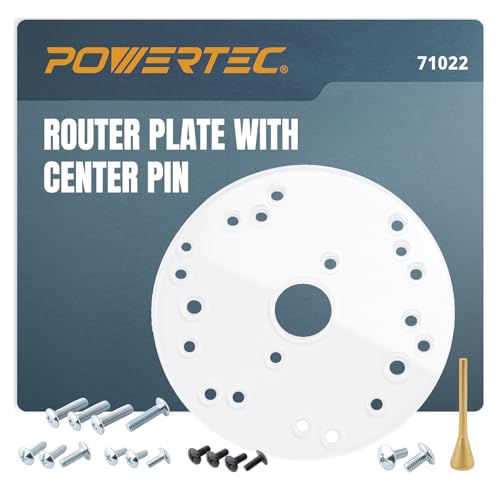
POWERTEC 6-1/2″ Clear Acrylic Router Base Plate (71022)

POWERTEC Dual Grip Router Base Plate 6″ x 11″ for DeWalt
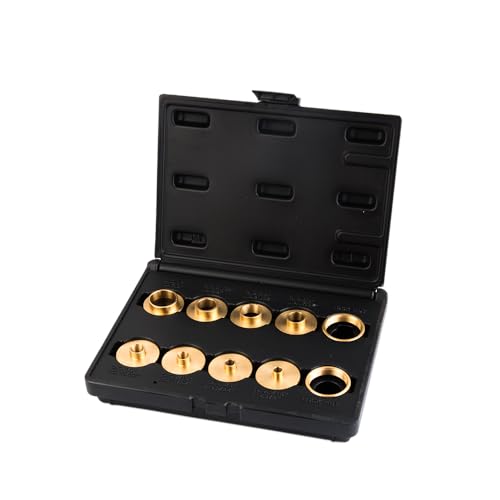
O’SKOOL Brass Template Guide Bushings, 10-Piece

SICCOMA Double Sided Woodworking Tape 1 inch x 82 feet

Rockler Router Letter Template 2.25 Inch, 99-Pc Set

Rockler Router Letter Template Set, 4 Inch

TOTOWOOD Dish Carving Router Bits, 3Pcs 1/4 Inch Shank

soimuk 13-in-1 Circle Inlay Router Jig Templates

Frienda 6 Pcs Charcuterie Board Template Acrylic
More Details On Our Top Picks
This is the newer revision of POWERTEC’s popular sub-base, and the headline change is practical: every predrilled hole carries a letter marking that lines up with the compatibility chart. That means less squinting and fewer wrong-screw moments when you swap the plate between a Bosch, DeWalt, Ryobi, Porter Cable, or Makita body.
The 5/16-inch thick clear acrylic gives you a wider footprint than most stock plates, which steadies the router along edges and over templates. A centering pin and mounting screws come in the box, so alignment is handled before your first cut.
Strong Points
- Letter-marked holes cut setup time dramatically when switching routers
- Clear acrylic lets you see the bit and layout marks underneath while cutting
- Thicker plate resists flex better than thin stock sub-bases
- Centering pin ensures the bit runs concentric with the plate edge
Things To Consider
- Acrylic scratches over time; owners commonly report haze after heavy shop use
- Compatibility is model-specific, so check the chart against your exact router
Key Specs
Who It Suits Best
Woodworkers who own several router brands and want one plate that moves between them without guesswork.
A Better Fit Elsewhere
DeWalt DWP611 or DCW600B owners doing dovetails will get more from the POWERTEC Dual Grip plate further down this list.
The original in POWERTEC’s sub-base line, and still the one many shops reach for first. Its predrilled hole pattern covers Bosch, DeWalt, Milwaukee, Makita, Porter Cable, and Craftsman bodies, which makes it a safe bet if your tool collection grew piecemeal over the years.
Where it earns its keep is versatility: trimming, grooving, inlay work, edge shaping, and template routing all benefit from the larger clear base. Compared to the 71369 above, you give up the letter-marked holes but gain a long track record of fit across brands.
Highlights
- Fits an unusually wide spread of major router brands
- Clear material keeps your pencil lines visible mid-cut
- Works for template routing, inlays, and edge profiling alike
- Centering pin and screws arrive with the plate
Minor Gripes
- Unlabeled holes mean matching screw positions by eye takes patience
- Acrylic edges can chip if the plate gets knocked around a busy bench
Made For
General-purpose woodworkers running mixed-brand routers who want one dependable oversized sub-base.
Consider Something Else When
If quick multi-router swaps matter most, the letter-marked POWERTEC 71369 at number one saves real time.
Compact routers are nimble but tippy, especially when riding a narrow template. This plate answers that with two ergonomic handles bolted to a generous 6-by-11-inch acrylic deck, spreading your grip and keeping the tool flat through long dovetail or inlay passes.
It’s engineered specifically for the DeWalt DWP611 and DCW600B fixed bases, with predrilled mounting holes matched to those models. The honest caveat: plunge bases and combo kits like the DWP611PK are not supported, so confirm your configuration before ordering.
Upsides
- Dual handles give noticeably better balance on large panels
- Oversized footprint bridges gaps and stabilizes template passes
- Purpose-drilled holes mean a clean, aligned mount on supported models
- Clear acrylic shows your layout throughout the cut
Softer Spots
- Fixed-base DeWalt routers only; plunge setups need another solution
- The 11-inch length asks for more bench space in storage
Feature Snapshot
Right Fit For
Dovetail and inlay enthusiasts running a DeWalt compact router who want flatter, more confident template work.
Swap It Out When
Multi-brand shops should stick with the universal POWERTEC 71022 instead of this DeWalt-specific plate.
A guide bushing is the brass collar that rides inside your template opening while the bit cuts inside it, and without a good set, half the acrylic templates on this list simply won’t work. O’SKOOL ships eight bushings plus two lock nuts, covering sizes from 5/16-inch upward so you can pair collar and bit offsets to different template openings.
Brass is the traditional choice here because it slides smoothly along template edges without chewing up the acrylic. For anyone building their first template-routing kit, this set fills the gap between the base plates above and the shaped templates below.
Bright Spots
- Eight diameters handle most common template-and-bit combinations
- Brass construction glides along template walls with minimal wear
- Spare lock nuts keep swaps between sizes quick
- Keeps cuts tracking the template for repeatable results
Points To Note
- You’ll need a sub-base drilled for Porter Cable-style bushings on some routers
- Collar offset math trips up beginners; expect a scrap-board learning curve
At A Glance
Who Will Love This
Joinery-focused woodworkers pairing bushings with dovetail jigs and letter templates for consistent, guided cuts.
Another Choice May Suit
Sign makers already using Rockler’s dedicated kits may find the bundled bit guidance there simpler than mixing collars.
Nobody brags about tape, yet every template job depends on it. Clamps get in the router’s way, so double-sided tape is how acrylic guides stay put on curved or awkward workpieces. This roll runs 82 feet on a 1-inch width, which translates to months of typical hobby-shop use before you think about a replacement.
The PVC backing with adhesive on both faces peels cleanly, and the yellow carrier paper makes short strips easy to tear and position. It also handles heat reasonably well, useful near friction-heavy CNC spoilboard work.
Plus Points
- 82-foot roll outlasts smaller hobby packs several times over
- Removes without leaving residue that ruins a finish-ready surface
- 1-inch width gives solid hold for heavier acrylic templates
- Yellow backing tears cleanly by hand at the bench
Trade Offs
- Adhesive strength fades on dusty or oily surfaces; wipe first
- Very delicate veneers may still lift slightly on removal, so test scraps
Built With In Mind
CNC hobbyists and hand-tool woodworkers who constantly tack down jigs, templates, and spoilboard sacrificial pieces.
Reach For A Different Pick When
Your bottleneck is cutting shapes rather than holding them; the Frienda charcuterie set below delivers actual geometry.
Hand-routed lettering usually looks homemade in the wrong way. Rockler’s redesigned signmaker kit fixes that with 99 interlocking pieces covering letters, numbers, and symbols at 2.25 inches tall, plus kerning spacers that keep spacing even without measuring each gap.
The pieces lock together into a stable word-length pattern, so the whole message routes as one rigid unit. You’ll need a 3/8-inch signmaker’s carbide bit, sold separately, along with guide bushings. Compared to the 4-inch set below, this one suits smaller plaques, drawer fronts, and gift items where space is tight.
Reasons To Buy
- Kerning spacers deliver even letter spacing automatically
- Interlocking design keeps long words rigid during routing
- Full alphabet, numerals, and symbols cover nearly any message
- Compact 2.25-inch height fits small project surfaces
Small Caveats
- Bit sold separately, adding to the true cost of entry
- Small characters demand careful bushing alignment on first use
Quick Facts
Whose Shelf It Belongs On
Hobby sign makers and gift crafters who want professional-looking routed text on smaller wooden surfaces.
Look Elsewhere When
Outdoor signs and house numbers read better with the 4-inch Rockler set reviewed next.
Scale up the same idea and you get this 4-inch version, built for signage people actually see from a distance: address boards, welcome signs, market stall displays. The letters share the interlocking construction of the smaller kit, snapping into a stable run so a full word doesn’t shift mid-pass.
Routing calls for a 5/8-inch carbide bit with appropriate bushings, and the larger characters forgive minor alignment errors far better than the 2.25-inch set. The trade-off is bench real estate; a four-letter word spans well over a foot once assembled.
Standout Traits
- 4-inch letters stay legible across a yard or driveway
- Interlocking pieces form one solid pattern per word
- Larger channels tolerate beginner-level bushing wobble
- Consistent font style across every character
Areas To Watch
- Demands a bigger bit investment than the smaller kit
- Assembled words take up significant layout space on small blanks
The Right Fit
Woodworkers producing exterior signs, address plaques, and booth signage where visibility matters most.
Not Your Match When
Drawer labels and small gifts suit the 2.25-inch Rockler kit far better than these oversized characters.
Templates shape the outside of a project; these bits shape the inside. TOTOWOOD’s three-piece dish carving set uses ball-bearing pilots, meaning the bearing rides directly on your template or previously cut surface and the cutter follows its profile without a separate guide bushing.
All three bits carry a 1/4-inch shank, so they drop straight into trim routers and most standard collets, with a 5/8-inch cutting height suited to shallow bowls, coin trays, jewelry boxes, and tackle box lids. For beginners, bearing-guided bits remove much of the setup anxiety that bushing-based work involves.
What We Like
- Ball-bearing pilot tracks templates without extra hardware
- Three profiles cover bowls, trays, and recessed lids
- 1/4-inch shank fits common compact routers
- Beginner-friendly compared to bushing-offset setups
Worth Noting
- Bearings collect pitch and dust; regular cleaning keeps cuts smooth
- Shallow 5/8-inch depth limits deep-recess projects
Who Should Grab It
Newer woodworkers making small serving pieces and keepsake boxes who want guided results without complex jig math.
Where A Sibling Pick Shines
Decorative circular inlays call for the soimuk circle jig set coming up next, not carving bits.
Cutting a clean circle freehand is close to impossible, and thirteen circles in one flat set is a lot of capability for the storage space they take. These laser-cut acrylic rings measure 10 by 7.8 inches overall and nest at a quarter-inch thickness, light enough to tape down with the SICCOMA roll earlier in this list.
Transparency matters more than it sounds: you can center each ring over grain patterns or existing features before committing to a cut. Decorative inlay work, coaster sets, and recessed medallions are the natural fits here.
Positives
- Thirteen graduated sizes cover most decorative circle needs
- Laser-cut edges produce smooth, accurate template walls
- See-through material aids precise centering over grain
- Quarter-inch thickness stores flat in a drawer
Honest Caveats
- Thin rings flex slightly under heavy lateral pressure; ease into cuts
- Pairing with the right bushing size is on you to work out
Details At A Glance
Who Should Grab It
Box makers and decorative woodworkers adding circular inlays, coasters, and medallion details to their repertoire.
Where Another Pick Suits Better
Freeform board shapes belong with the Frienda charcuterie templates below rather than fixed circles.
Serving boards sell at craft fairs precisely because their curves look hard to make. This six-piece set quietly removes the difficulty: five templates around 9.84 by 7.87 inches plus one at roughly 7.68 by 8.43 inches, giving you a handful of classic silhouettes to trace and rout.
Three marking pens come bundled, so you can outline each shape on your blank before any cutting starts. That trace-first workflow suits scroll saw users as much as router owners, which broadens the set’s usefulness beyond template routing alone.
Best Bits
- Six distinct shapes keep your product line varied
- Included pens eliminate hunting for a suitable marker
- Traceable outlines work for saws and routers alike
- Clear acrylic shows wood grain beneath each shape
Room For Improvement
- Shapes are fixed designs; custom curves still require DIY templates
- Pen ink needs sanding off finished edges, so mark inside cut lines
Perfect Match For
Weekend sellers and gift makers producing charcuterie boards in small batches with consistent, attractive shapes.
Where A Sibling Pick Shines
Routed lettering on those same boards pairs naturally with the 2.25-inch Rockler letter kit from earlier.
What To Weigh Before Choosing Acrylic Router Templates
Match The Accessory To Your Router First
Base plates live or die on fitment. The POWERTEC plates cover broad brand lists, but the Dual Grip model only accepts specific DeWalt fixed bases. Check your exact model number against the compatibility chart before anything else, because a beautifully made plate that doesn’t mount is shelf decoration.
Think In Systems, Not Single Items
A template alone rarely completes a job. Letter kits need matching carbide bits and guide bushings; circle jigs need tape or clamps to stay put. Sketch the full workflow for your next project, then buy the missing links rather than accumulating parts that never meet.
Weight, Thickness, And Visibility
Quarter-inch acrylic is easy to handle but flexes under aggressive lateral pressure, while thicker stock like POWERTEC’s 5/16-inch plate stays rigid. Clear material earns its keep by letting you verify alignment mid-cut, which matters most on detailed lettering and inlay work.
Storage And Care Realities
Acrylic scratches, and hazy templates hide your pencil lines. Store them flat, away from abrasive dust, and wipe with a soft cloth rather than paper towels. Owners who treat templates gently report years of service; rough handling shows up quickly in cut quality.
A Few Things Worth Knowing Before You Order
Traps First Timers Fall Into
The most common mistake is buying a template without checking bushing and bit requirements, then discovering the project stalls halfway. The second is assuming universal fitment on base plates. Read the compatibility details closely, and budget for the supporting hardware the listing doesn’t include.
The Case For Spending Up
Higher-tier items justify their cost through engineering rather than materials alone. Labeled hole patterns, dual-handle ergonomics, and laser-cut edges all save setup time and reduce scrapped workpieces. For occasional hobby use, basic options serve fine; production-minded woodworkers recoup the difference fast.
Frequently Asked Questions
Do acrylic router templates work with any router?
Most do, provided your sub-base accepts guide bushings or the template is designed for bearing-guided bits. Always confirm the compatibility list for base plates before purchasing.
What is a guide bushing and why does it matter?
A guide bushing is a brass collar mounted in the router’s sub-base that rides along the template’s inner edge. It keeps the bit tracking the template accurately, which is essential for letter kits and shaped jigs.
How do I stop templates from sliding during a cut?
Double-sided woodworking tape is the standard answer, since clamps interfere with router travel. Clean both surfaces first so the adhesive grips properly.
Can I make my own acrylic templates?
Yes, many woodworkers cut their own from sheet stock using a bandsaw or scroll saw, then sand the edges smooth. Ready-made sets simply save that layout and finishing time.
How long do acrylic templates last?
With flat storage and gentle handling, quality acrylic holds accurate edges for years of hobby use. Bushing contact gradually polishes the edges, so inspect high-use areas occasionally.
Closing Thoughts
Start with the piece that solves your current bottleneck: a labeled base plate for multi-router shops, a letter kit for signage, or shaped templates for board work. Add the supporting bits, bushings, and tape as your projects demand them. Match each accessory to the router and workflow you actually have, and template routing stops being intimidating and starts being routine.
