
Whether you’re building a display case, replacing a cracked window pane, or feeding a laser cutter on a weekend craft binge, picking the right plastic panel matters more than most people expect. The wrong thickness cracks under a drill bit, and the wrong material yellows after one summer outside. This roundup sorts ten solid options by real project needs, from tiny badge blanks to full 4×8 sheets.
The Shortlist At A Glance
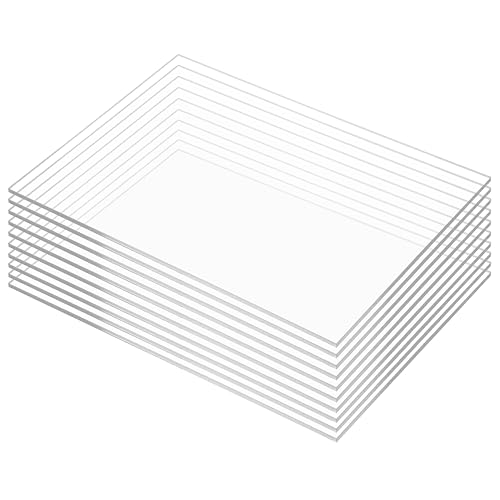
KAITELA Clear Cast Acrylic Sheet 4″ x 6″ x 1/8″ Pack of 10
Roowest Clear Acrylic Sheet 18 x 24 Inch, 3/16 Inch Thick

Robosource Polycarbonate Sheet 48″ X 96″ X 1/16″ EasyRuler

KAITELA Clear Cast Acrylic Sheet 8″ x 12″ x 1/4″ Pack of 4

BESARME Colored Acrylic Sheets 8 x 12 Inch, 8 Colors

Robosource Polycarbonate Sheet 48″ X 96″ X 1/32″ EasyRuler

Robosource Polycarbonate Sheet 48″ X 96″ X 1/8″ EasyRuler

Gdhwxcl 8 x 8 inch Acrylic Sheets 4 Pack, Brown

Maitys 24 Pcs Opaque Colored Acrylic Sheets 8 x 8 Inch

HARFINGTON Clear PVC Sheets 8″ x 4″ x 0.01″, 20pcs
More Details On Our Top Picks
Ten identical 4-by-6 blanks at 1/8-inch thick is the kind of batch that keeps a small sign business or laser workshop running without constant reordering. Cast acrylic like this carries glass-like optical clarity while weighing far less than actual glass, so finished pieces stay easy to hang or ship.
The panels arrive laser-cut, which owners commonly report means smooth edges with no chipping along the perimeter. For anyone running repeated engraving jobs, that consistency from piece to piece saves setup time.
Strong Points
- Glass-like clarity at a fraction of the weight, so wall-mounted signs need lighter hardware.
- Laser-cut edges tend to arrive smooth enough to use without sanding or polishing.
- Cast acrylic resists yellowing over long-term indoor use, keeping displays looking fresh.
- A ten-pack covers multiple projects or spares for practice cuts.
Things To Consider
- At 4 x 6 inches, the format suits small work only; larger signage calls for bigger stock.
- Keep the protective film on until final assembly to avoid surface scratches during handling.
Made For
Engravers, badge makers, and small-sign sellers who want uniform blanks ready for the machine.
Where A Sibling Pick Shines
For thicker structural panels, the KAITELA 8″ x 12″ x 1/4″ four-pack later in this list handles shelving and stands better.
Poster frames, painting palettes, and sketching surfaces all live comfortably at 18 x 24 inches, and this two-pack gives you a spare without committing to a bulk order. The 3/16-inch gauge sits in a useful middle zone: rigid enough to lie flat on an easel, still light enough to tape up temporarily.
Compared with the small KAITELA blanks above, these panels trade quantity for working area, which matters once your project outgrows a clipboard. Artists often use them directly as mixing surfaces since dried paint peels off cleanly.
What We Like
- Generous poster-format area fits standard artwork and print sizes.
- Two panels mean one for the current job and one held in reserve.
- Clear finish works well behind framed prints as lightweight glazing.
Worth Noting
- Large flat panels can flex slightly at the corners depending on how they’re supported.
- Shipping large acrylic always carries some scuff risk, so inspect on arrival.
At A Glance
Who Should Grab It
Hobby painters, framers, and DIY decorators who need clear coverage over large flat areas.
Swap It Out When
Anyone needing a full-room window replacement should look at the Robosource 4×8 polycarbonate sheets instead.
Polycarbonate is the tough cousin of acrylic: where plexiglass can crack under stress, this material bends, drills, and takes abuse without shattering. Robotics teams and garage workshops lean on it for guards, windows, and chassis plates precisely because a dropped wrench won’t end the project.
The 1/16-inch gauge stays flexible enough to cold-bend around gentle curves, and the EasyRuler film printed on the surface lets you mark cut lines before peeling everything away. Robosource ships the exact stated dimensions rather than nominal sizing, a detail that matters when fitting into pre-cut frames.
Highlights
- Shatter-resistant construction survives impacts that would crack cast acrylic.
- Cuts with snips, hacksaws, or power saws using ordinary blades.
- EasyRuler film doubles as a marking guide and scratch shield.
- Exact 48 x 96 sizing avoids the undersized-sheet frustration common with nominal stock.
Small Caveats
- Polycarbonate scratches more readily than acrylic, so handle the exposed face carefully.
- Long-term outdoor UV exposure can haze the surface faster than UV-stabilized acrylic.
Right Fit For
VEX robotics builders, shop teachers, and DIYers covering windows or machinery in high-traffic areas.
Another Choice May Suit
For thin template work you’ll cut with hand snips, the 1/32-inch Robosource version below is easier to manage.
Quarter-inch stock is where acrylic starts feeling structural. At 6mm thick, these 8 x 12 panels hold their shape as shelf risers, cake stand tiers, or small display bases without the flex you’d get from thinner material. Four panels give a weekend builder enough to complete a multi-tier project in one go.
Like the smaller KAITELA pack earlier, these arrive laser-cut with clean edges, and cast acrylic keeps its clarity year after year indoors. Drilling and tapping works well at this thickness too, which opens the door to bolted assemblies.
Reasons To Buy
- 1/4-inch rigidity supports real loads for shelves and stands.
- Four-panel pack suits multi-piece builds without leftover waste.
- Cast formulation resists yellowing through years of indoor display duty.
- Thickness accepts drilling and edge polishing nicely.
Points To Note
- Heavier per panel than 1/8-inch stock, so shipping damage is worth checking immediately.
- Overkill for simple picture-frame glazing where thinner sheets cost less.
Quick Facts
Who Will Love This
Home bakers building tiered stands and crafters making sturdy tabletop signage.
Not Your Match When
Lightweight badge work is better served by the KAITELA 4 x 6 ten-pack reviewed first.
Color changes everything in acrylic work, and this set hands you eight translucent shades plus one clear panel in a single purchase. Backlit signs, sun catchers, and layered wall art all benefit when light passes through tinted material instead of sitting on painted surfaces.
Each panel measures roughly 8 x 12 inches at 1/8-inch thick, matching the working format of the clear KAITELA packs but trading transparency for hue. One honest note: the black sheet is opaque rather than translucent, so plan backlighting designs around that.
Plus Points
- Eight distinct colors cover most decorative palettes in one box.
- Translucent panels glow attractively under LED backlighting.
- Color runs through the material, so scratched edges don’t show white.
- Cuts cleanly with standard craft tools into custom shapes.
Softer Spots
- The black panel’s opacity limits light-passing designs.
- One sheet per color means mistakes eat your whole supply of that shade.
Who It Suits Best
DIY decorators and gift makers who want colored accents without buying full-size stock.
Look Elsewhere When
Bulk classroom projects fit the Maitys 24-piece opaque set better, thanks to its higher piece count.
At roughly 0.8mm thick, this full 4×8 polycarbonate panel behaves more like heavy-duty film than rigid sheet, and that’s exactly the point. Tin snips slice through it like cardstock, it cold-bends around curves, and it thermoforms under a heat gun for vacuum molding work.
Where the 1/16-inch Robosource sibling offers more stiffness, this ultra-thin gauge wins on workability. Window storm inserts, dust shields, and pattern templates are natural fits. The EasyRuler film again helps you mark straight lines before cutting, then peels away to reveal a clear surface.
Bright Spots
- Cuts with plain tin snips, no saw required.
- Handles heat-gun forming and vacuum molding for shaped parts.
- Exact 48 x 96 dimensions fit pre-built openings accurately.
- Drills with standard bits without cracking or fracturing.
Trade Offs
- Too floppy for freestanding panels; it needs a frame or backing.
- Thin gauge dents and creases if stored rolled or stacked carelessly.
Details At A Glance
Built With In Mind
Modelers, vacuum-forming hobbyists, and homeowners lining window openings on a budget.
Reach For A Different Pick When
Structural machine guards call for the 1/8-inch Robosource panel coming up next.
This is the beefiest polycarbonate in the lineup, and it earns its place wherever impact resistance is non-negotiable. Table saw blade guards, greenhouse panels, and robot chassis plates all benefit from a material that flexes under strike instead of fracturing like cast acrylic would.
The 1/8-inch gauge holds flat across the full 4×8 span with minimal sag, unlike the thinner gauges in this same brand family. You lose the snips-only convenience of the 1/32 version, gaining instead a panel that behaves like proper glazing.
Standout Traits
- Impact performance well beyond what acrylic offers at equal thickness.
- Stays rigid across the full sheet span for glazing applications.
- Works with circular saws, jigsaws, and CNC equipment using suitable blades.
- EasyRuler film protects the surface through layout and cutting.
Honest Caveats
- Requires power tools for clean cuts; hand snips won’t manage this gauge.
- Full 4×8 sheets are awkward to store and transport without a truck or van.
Whose Shelf It Belongs On
Robotics mentors, woodworkers adding machine guards, and anyone glazing outbuildings.
Consider Something Else When
Indoor decorative work where scratch resistance matters more than impact strength suits the KAITELA cast acrylic packs better.
Square blanks are the bread-and-butter format of laser crafting, and this brown four-pack feeds keychain, coaster, and badge production nicely. The warm brown tone reads especially well with gold or cream engraving fills, giving finished pieces a wood-adjacent warmth without wood’s grain unpredictability.
Owners report these cut smoothly on diode and CO2 lasers with minimal residue, and the material tolerates table saws, routers, and drills too. At 1/8-inch thick, finished items feel substantial in the hand without straining small hardware.
Positives
- Laser cuts leave smooth edges with little cleanup residue.
- Brown tone hides fingerprints better than clear stock on handled items.
- Four squares support a small production run or gift batch.
- Compatible with saws, drills, and routers beyond laser work.
Minor Gripes
- A single colorway limits design variety compared with mixed-color sets.
- Protective masking should stay on during cutting to prevent smoke staining.
The Right Fit
Laser hobbyists producing badges, coasters, and engraved gifts in consistent batches.
Skip It When
Multi-color product lines are easier to run with the BESARME eight-color assortment above.
Twenty-four panels across twelve opaque colors is serious volume, the kind of supply that turns a craft corner into a small production line. Orange, purple, pink, greens, blues, white, red, and yellow cover school projects, party signage, and layered laser art with room for do-overs.
Unlike the translucent BESARME set, these boards block light completely, which suits solid-color signs and cutout silhouettes where see-through panels would look washed out. Rigidity sits at a practical middle thickness that holds shape through sawing and drilling.
Upsides
- Twelve colors let you match almost any theme or brand palette.
- Twenty-four pieces absorb mistakes without derailing a project.
- Opaque finish delivers bold, saturated cutouts and lettering.
- Handles laser cutting, table saws, and drill work reliably.
Areas To Watch
- No clear or translucent option in the mix for backlit designs.
- Stacked storage can scuff faces, so keep the films on between uses.
Core Details
Perfect Match For
Teachers, camp leaders, and sign makers burning through colorful stock weekly.
Where Another Pick Suits Better
Backlit or stained-glass-style work belongs with the translucent BESARME color set instead.
Technically these aren’t acrylic at all, and that’s worth knowing upfront: they’re flexible PVC film at about 0.3mm thick, closer to stiff cellophane than plexiglass. For frame overlays, stencil material, and protective covers over printed signs, that flexibility is a genuine advantage since the sheets conform and lie flat without cracking.
Each of the twenty panels ships with protective paper, and the waterproof, wipe-clean surface suits kitchen splatter guards or reusable painting masks. Compared with every rigid pick above, this is the low-commitment option for trial layouts and disposable applications.
Best Bits
- Twenty panels make experimentation nearly consequence-free.
- Flexible film lies flat inside frames without cutting pressure cracks.
- Waterproof surface wipes clean for reusable stencil or guard duty.
- Protective paper keeps faces scratch-free until use.
Room For Improvement
- Far less rigid than true acrylic; unsuitable for standing structures.
- Thin film creases permanently once folded, so store sheets flat.
Feature Snapshot
Who Should Grab It
Casual crafters protecting artwork, making stencils, or lining picture frames on a tight budget.
A Better Fit Elsewhere
Anything structural or load-bearing points you back to the Robosource polycarbonate family.
What Matters Most Before Choosing Acrylic Sheet 8×4
Material First, Everything Else Second
Acrylic and polycarbonate look similar but behave differently. Acrylic stays clearer longer outdoors and resists scratches better, while polycarbonate absorbs impacts that would crack acrylic outright. Match the material to the threat your project faces: sunlight favors acrylic, flying debris favors polycarbonate.
Thickness Dictates What’s Possible
Thin stock under 1/16 inch cuts with scissors and bends by hand, but it needs backing to hold shape. Quarter-inch panels stand on their own and accept drilled fasteners. Most home projects land happily in the 1/8 to 3/16 range, which balances rigidity against easy cutting.
Size Versus Storage Reality
A full 4×8 sheet covers big jobs cheaply per square foot, yet it won’t fit in a sedan or lean neatly in a closet. Pre-cut blanks cost more per panel but eliminate both problems. Honest self-assessment about your workspace prevents regret.
Finish And Color Choices
Translucent colored stock glows under backlighting, opaque stock delivers bold graphics, and clear stock disappears behind whatever it protects. Decide the visual role before ordering, because color runs through the material and can’t be changed later.
Key Considerations Across These Picks
Traps First Timers Fall Into
The classic error is ordering nominal sizes assuming exact dimensions, then discovering a sheet runs a quarter inch short inside a tight frame. Measure your opening, confirm the listing states exact sizing, and leave a hair of clearance. Another frequent stumble: removing protective film before cutting, which invites scratches and smoke stains you can’t undo.
When Paying More Pays Off
Higher-priced cast acrylic buys optical clarity, UV stability, and edges that polish beautifully, which matters for display and signage work. Thicker premium polycarbonate earns its cost anywhere safety is involved, since impact performance scales with quality. Basic thin stock remains fine for templates and temporary covers, so spend where the panel does real work.
Frequently Asked Questions
Can I cut acrylic sheets at home without special tools?
Yes, thinner sheets score and snap with a utility knife along a straightedge. Thicker stock needs a fine-tooth saw run slowly to avoid melting the cut line.
Does clear acrylic yellow over time?
Quality cast acrylic resists yellowing for years indoors. Constant direct sunlight eventually causes some hazing, though far slower than with cheaper extruded stock.
Is polycarbonate stronger than acrylic?
For impact resistance, yes, considerably so. Polycarbonate bends under strikes that would fracture acrylic, which is why it dominates safety glazing and robotics use.
How do I remove scratches from an acrylic panel?
Light scratches often buff out with a dedicated plastic polish and a soft cloth. Deep gouges usually require wet sanding through progressively finer grits, then polishing.
Can acrylic sheets be used outdoors?
Many can, and cast formulations handle weather exposure well. Check whether the specific sheet carries UV stabilization, since unprotected polycarbonate in particular will haze faster outside.
Closing Thoughts
The right panel comes down to matching material, thickness, and size to the job actually in front of you. Small engraving runs thrive on the KAITELA blanks, big protective installations belong to Robosource polycarbonate, and colorful creative work lives with the BESARME and Maitys assortments. Start with your project’s demands, not the other way around, and any of these ten will serve you well.
