
Adhesive foam sheets solve a deceptively simple problem: sticking soft cushioning or colorful craft material exactly where you need it, without glue mess or drying time. Maybe you’re lining a toolbox drawer, quieting a rattling cabinet door, or cutting out shapes for a classroom project. The right sheet makes the job take minutes instead of an afternoon.
This roundup covers both sides of the category. You’ll find thick neoprene sheets built for gaskets, weatherstripping, and vibration damping, plus thin EVA craft foam in every color a scrapbooker could want. Each pick below breaks down what it does well, where it falls short, and who should actually spend their money on it.
The Shortlist At A Glance

NATGAI Sponge Neoprene Adhesive Foam Rubber Sheet
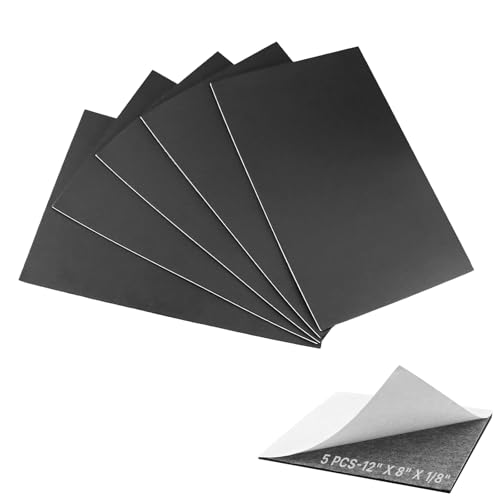
Storystore Thin Closed Cell Foam Padding Sheets 5 Pcs

MEARCOOH Self Adhesive Foam Sheets 10 Colors 9×12 Inch

MEARCOOH Self Adhesive Foam Sheets White 9×12 Inch

MEARCOOH Self Adhesive Foam Sheets Black 9×12 Inch

Outus Double Sided Sticky Craft Foam Sheets 12 Pack

YUNFOOK Neoprene Insulation Foam Pads 1/4 Inch 4 Pack

ALLWIN Neoprene Foam Padding Squares 22 Pcs 1/16 Inch

MEARCOOH Black Sticky EVA Foam Paper 20-Pack

MEARCOOH White 1mm Sticky EVA Foam Paper 20-Pack
More Details On Our Top Picks
This is the workhorse of the list, sold in generous rolls rather than small pads. Neoprene, a closed-cell sponge rubber, resists water absorption and holds its shape under compression, which is why mechanics and DIYers reach for it when sealing gaps around hatches, doors, and equipment enclosures.
In practice, you’d unroll it, mark your shape with a marker, and slice through with a sharp utility knife. Owners commonly report clean cuts along a straightedge, and the peel-off backing exposes an adhesive that grips painted metal and wood well at room temperature.
Strong Points
- Half-inch thickness gives real compression for sealing uneven gaps
- Large sheet area means one purchase covers multiple projects
- Cuts cleanly with a utility knife and straightedge
- Doubles as drawer liner, sound deadening, or anti-vibration padding
Things To Consider
- The adhesive prefers moderate temperatures, so cold garages can weaken initial bonding; press firmly and let it cure
- Rolling during shipping can leave memory curves that need weighting flat overnight
Key Specs
Who It Suits Best
Home workshop owners tackling gasket replacement, weatherproofing, or tool chest lining who want serious material rather than hobby-grade sheets.
A Better Fit Elsewhere
Anyone needing slim, low-profile padding will get more mileage from the Storystore Thin Closed Cell Foam Padding Sheets instead.
Where the NATGAI roll goes thick, this five-pack stays deliberately slim. At an eighth of an inch, closed-cell foam like this adds cushion without swallowing clearance, which matters inside camera cases, jewelry boxes, and drawers where lids still need to close.
The twelve-by-eight-inch sheets are a friendly middle size: big enough to line a small toolbox tray whole, easy to trim down for corner pads. Scissors handle them fine, so there’s no knife work required for most jobs.
What We Like
- Thin profile protects contents without adding bulk
- Peel-and-stick backing speeds up lining projects considerably
- Five sheets give enough stock for several small jobs
Worth Noting
- An eighth of an inch won’t fill larger gaps; deep-seal jobs need something thicker
- Black only, so visible installations lack color options
Made For
Organizers and hobbyists lining cases, drawers, and shelves who want discreet protection that disappears once installed.
Swap It Out When
Heavier sealing or insulation work calls for the quarter-inch YUNFOOK Neoprene Insulation Foam Pads further down this list.
Classroom teachers and craft-session hosts, this one’s aimed squarely at you. Ten basic colors in a single pack means no last-minute trips when a project suddenly needs orange alongside blue, and the standard nine-by-twelve size drops straight into most paper storage trays.
EVA foam, a soft flexible plastic foam, cuts easily with scissors and holds die-cut shapes well. The two-millimeter thickness sits comfortably between flimsy and bulky, giving card toppers and photo frame borders a bit of dimension.
Highlights
- Ten distinct colors cover nearly any themed project
- Low-porosity surface takes markers and paint without bleeding through
- One-sided adhesive peels cleanly for quick kid-friendly assembly
- Flexible enough to wrap around curved shapes
- Two-millimeter body adds gentle dimension to cards and frames
Small Caveats
- Only ten sheets total, roughly one per color, so large groups may run short fast
Quick Facts
Right Fit For
Teachers, parents, and camp counselors running mixed-color group activities where variety beats quantity.
Reach For A Different Pick When
High-volume black-only projects suit the MEARCOOH Black Sticky EVA Foam Paper 20-Pack better, doubling the sheet count in one color.
White is the quiet hero of craft foam. Snowflakes, wedding cards, cloud shapes, polar animals: a surprising share of popular projects start from a blank white sheet, and having ten of them ready saves the coloring step entirely.
Same recipe as the multicolor version above, just in one shade: two-millimeter EVA with adhesive on the back, dense enough that markers sit on top rather than soaking in. Scrapbookers often layer these over colored backgrounds for contrast.
Upsides
- Neutral base suits seasonal and formal card designs alike
- Odorless material is comfortable for long crafting sessions
- Soft touch and easy cutting make it approachable for younger kids
Points To Note
- White shows dirt and handling marks, so store sheets flat and covered until use
- Single-color packs limit spontaneous rainbow projects
Who Will Love This
Card makers and holiday crafters whose designs lean on snow scenes, weddings, and clean monochrome layouts.
Consider Something Else When
Projects needing bold outlines and contrast pair better with the MEARCOOH Self Adhesive Foam Sheets Black 9×12 Inch pack.
Flip the white pack’s logic and you get this one. Black foam reads as silhouette art: bats at Halloween, penguin bodies, shadow-box lettering. Against light cardstock, cut shapes pop immediately without any decorating.
You’re getting the same two-millimeter, low-porosity EVA construction as its siblings, with the adhesive limited to one side so the face stays smooth for drawing chalk-style details. Gift-craft fans often keep a pack on hand for Mother’s Day and Valentine’s pieces.
Bright Spots
- Strong contrast against white and pastel backgrounds
- Hides fingerprints better than lighter shades during handling
- Cuts crisply for detailed silhouettes and lettering
Softer Spots
- Chalk dust and lint show up readily on the matte surface, so finished pieces need careful storage
Whose Shelf It Belongs On
Halloween enthusiasts, silhouette artists, and anyone building bold graphic layers into scrapbooks and greeting cards.
Not Your Match When
Delicate layered paper crafts benefit more from the thinner MEARCOOH White 1mm Sticky EVA Foam Paper 20-Pack near the end of this list.
Most foam sheets stick on one side only. This Outus set flips that convention with adhesive on both faces, which turns each six-by-four-inch sheet into a spacer: sandwich it between two layers of cardstock and you’ve instantly built the raised cavity shaker cards depend on.
Stampers use the same trick to mount rubber stamps onto acrylic blocks at a custom height. The smaller footprint is genuinely handy here, since full-size sheets waste material on these precision jobs. Twelve sheets go further than the number suggests.
Plus Points
- Dual adhesive eliminates glue entirely for layered builds
- Ideal dimensions for shaker card windows and stamp mounting
- Protective film on each face keeps tack fresh until use
- Twelve-sheet count supports repeated card-making sessions
Minor Gripes
- Peeling two films per piece adds fiddly seconds; tweezers help with corners
- Small sheets limit coverage on larger collage work
Feature Snapshot
Who Should Grab It
Papercrafters building shaker cards, dimensional scrapbook pages, or custom stamp mounts where spacing is the whole point.
Another Choice May Suit
General coloring and shape-cutting projects fit the MEARCOOH 10-color pack better, thanks to its larger sheets and wider palette.
Quarter-inch neoprene hits a sweet spot between the half-inch NATGAI roll and the thin liner sheets earlier in this list. Four four-by-four-inch squares arrive pre-cut, so small jobs like furniture foot pads, speaker isolation, and cabinet-door bumpers need zero cutting at all.
The manufacturer emphasizes a stronger adhesive layer than typical foam pads, and that tracks with how these get used: under vibrating appliances and frequently opened doors, weak glue is usually the first thing to fail. A blade trims them into any shape when needed.
Reasons To Buy
- Pre-cut squares skip measuring and cutting for small fixes
- Reinforced backing resists peeling under vibration
- Closed-cell neoprene handles damp environments reasonably well
Honest Caveats
- Four squares cover little area; bigger jobs mean buying multiples
- Surface prep matters: dusty or oily surfaces commonly cause early lift-off regardless of adhesive strength
Best Suited To
Renters and apartment dwellers silencing furniture legs, appliance feet, and slamming cabinet doors without tools.
Look Elsewhere When
Long continuous runs, such as weatherstripping a door frame, favor the full-length NATGAI Sponge Neoprene roll instead.
Twenty-two squares changes the math entirely. Where the YUNFOOK pack covers four spots, this one handles a whole bookshelf’s worth of glass shelves, picture-frame backs, or electronics feet before you think about reordering.
The trade-off is thickness: at one-sixteenth of an inch, these are spacers and scratch guards, not cushions. That slimness is exactly what you want under glass tabletop clips or behind wall-hung frames, where anything thicker would create visible gaps.
Standout Traits
- High square count supports many small pads from one purchase
- Ultra-thin profile fits tight clearances invisibly
- Strong adhesive keeps pads seated on smooth surfaces
- Cuts easily into strips or circles with a blade
Areas To Watch
- Too thin for impact cushioning or gap filling; match the task to the thickness
- Small squares are easy to misplace between projects, so reseal the bag after use
Details At A Glance
The Right Fit
Detail-oriented homeowners padding glass shelves, frames, and electronics across many spots at once.
Where A Sibling Pick Shines
Jobs demanding real compression and shock absorption belong with the thicker YUNFOOK 1/4-inch pads instead.
Take the ten-sheet black pack from earlier and double it. For scout troops, art rooms, and families that burn through craft supplies, twenty sheets of the same two-millimeter black EVA removes the rationing instinct that makes kids hesitant to experiment.
Scissors and craft knives both slice it cleanly, and the sheets flex enough to wrap around cylinders for lantern and costume work. The listed metric dimensions confirm the familiar letter-plus sizing, so standard storage trays still apply.
Positives
- Twenty sheets sustain weeks of group crafting
- Consistent density across the pack for predictable cutting
- Wraps around curved forms without cracking
Room For Improvement
- All-black supply limits palette; pair it with a colored pack for variety
- Sheets ship stacked, so flattening under books helps before precise cutting
Built With In Mind
Leaders of youth groups, art teachers, and busy parents stocking a craft bin that sees weekly use.
Where Another Pick Suits Better
Occasional crafters needing just a few sheets save money with the smaller MEARCOOH Self Adhesive Foam Sheets Black 9×12 Inch ten-pack.
Halving the thickness to one millimeter sounds minor until you stack layers. Card makers know the pain of a card that won’t close because three foam layers pushed it past envelope depth; this thinner stock keeps dimensional builds mail-friendly while twenty sheets keep experimentation cheap.
It pairs naturally with the two-millimeter packs above: use the thick foam for base shapes and this for fine top layers. The same low-porosity, odorless EVA carries over, along with the single-sided adhesive.
Best Bits
- One-millimeter gauge keeps layered cards within mailing limits
- Twenty-sheet volume invites trial and error without guilt
- Flexible enough for rolled flowers and delicate flourishes
- White base accepts ink and pencil detailing cleanly
Trade Offs
- Thin stock offers little standalone cushioning for non-craft uses
- Edges can curl slightly on older sheets, so rotate stock oldest-first
Core Details
Perfect Match For
Avid card makers and paper artists who build multi-layer designs and mail their finished pieces regularly.
Skip It When
Structural dimension and chunky 3D effects call for the two-millimeter MEARCOOH 20-pack black sheets instead.
What Matters Most Before Choosing Adhesive Foam Sheets
Match Thickness To The Job
Thickness decides everything in this category. Half-inch neoprene compresses to seal gaps; eighth-inch liners protect without bulk; one-millimeter craft foam keeps cards mailable. Measure the actual gap or clearance first, then buy the closest match rather than guessing upward.
Know Your Foam Families
Neoprene and EVA behave differently. Closed-cell neoprene shrugs off moisture and springs back under pressure, which suits gaskets and padding. EVA is softer, takes color well, and cuts like paper, which is why every craft pick here uses it. Mixing them up leads to soggy gaskets or stiff crafts.
Surface Prep Beats Adhesive Strength
Even strong backings fail on dust, oil, or textured surfaces. Wipe the target area with rubbing alcohol, let it dry fully, then apply with firm even pressure. Cold rooms slow curing, so give bonded pieces a day before stressing them.
Buy For Your Real Volume
A teacher running weekly sessions burns through ten sheets in a month; a homeowner fixing one rattling door needs four squares, tops. Oversized packs only pay off when the shelf life of unused sheets doesn’t bother you.
Key Considerations Across These Picks
Traps First Timers Fall Into
The classic error is buying craft-thin foam for a sealing job, or industrial neoprene for a greeting card. The second slip is skipping surface cleaning, which causes most complaints about adhesive failure. Read the thickness spec twice before checkout.
The Case For Spending Up
Higher-tier packs earn their cost through consistency: uniform density, cleaner die-cutting, adhesives that survive temperature swings. Volume packs also drop the per-sheet cost sharply, which matters once crafting becomes a habit rather than a one-off.
Frequently Asked Questions
Can adhesive foam sheets be removed without damage?
Usually yes from smooth, sealed surfaces if you peel slowly at a shallow angle. Painted or wallpapered walls may lose finish, so test a corner first.
Do these sheets work outdoors?
Neoprene tolerates moisture and moderate temperatures far better than craft EVA. For exposed outdoor use, expect shorter adhesive life regardless of brand.
What cuts adhesive foam sheets cleanly?
Sharp scissors handle thin EVA easily, while a utility knife against a straightedge suits thick neoprene. Dull blades drag and tear the foam.
How long does the adhesive stay tacky?
Sealed sheets keep their backing tack for years in cool, dry storage. Once applied, most bonds strengthen over 24 hours as the adhesive cures.
Are craft foam sheets safe for kids’ projects?
EVA craft foam is soft, lightweight, and widely used in classrooms. Adult supervision still applies for scissors and any cutting tools.
Wrap Up
Your best choice comes down to the job in front of you. Seal a drafty hatch with the NATGAI neoprene roll, silence furniture with YUNFOOK or ALLWIN pads, and stock the craft table with whichever MEARCOOH pack matches your color and volume needs. Match thickness to task, prep your surfaces, and any of these picks will hold up exactly as promised.
