
Anyone who has watched a hot glue gun melt straight through a sheet of craft foam knows the frustration. The right adhesive makes the difference between armor pieces that survive a convention weekend and seams that split on day one. This list covers ten options across three styles: liquid foam-safe glues, self-adhesive foam rolls, and construction-grade caulk, so you can match the product to your project instead of guessing.
The Shortlist At A Glance

DAP Foamboard Construction Adhesive, White, 10.3 Oz

uxcell 25mmx4mm Sponge Tape Foam Glue Strip, 3 Meters

BENECREAT 78.7×11.8inch Adhesive EVA Foam Roll, 2mm Black

BENECREAT 78.7×12 inch Self-Adhesive EVA Foam Roll, 5mm Thick

BENECREAT 78×12 Inch Dark Gray Self Adhesive Foam Roll, 2mm
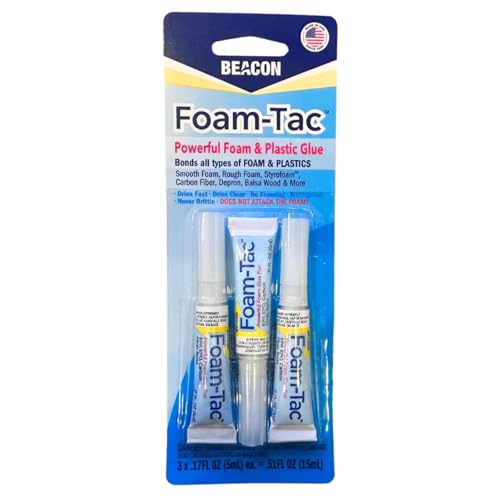
BEACON Foam-Tac Minis Powerful Glue.17-Ounce, 3-Pack

Ceoighe 4 OZ Foam Glue with Brush Cap for RC Airplanes

Hzutloer 4OZ High Strength Clear Foam Adhesive with Brush

OverZyn Foam Glue for Porous Materials, Waterproof, 4.06 Oz

Hzutloer 120ML Clear Foam Glue with Brush
More Details On Our Top Picks
This is the one to reach for when your project involves full sheets of insulation board rather than costume parts. It comes in a standard 10.3 oz caulk tube, so it loads into any dripless caulking gun you already own, and the white color blends in against most foam paneling.
The formula is built for construction sites: it grabs instantly, which means fewer braces and clamps holding panels in place while the bond sets. Contractors installing foamboard against concrete, wood, or drywall tend to favor this style of adhesive for exactly that reason.
Strong Points
- Instant grab cuts down bracing time dramatically during panel installs
- VOC-compliant formulation suits indoor work where fumes matter
- Standard caulk tube fits common caulking guns, no special tools needed
- Bonds foamboard to a wide range of construction surfaces
Things To Consider
- A whole tube is overkill for small cosplay or craft projects; leftovers can skin over once opened
- You’ll want gloves and ventilation, since construction adhesives are messier than hobby glues
Key Specs
Who It Suits Best
Homeowners and contractors hanging insulation panels who need a fast-grabbing, code-conscious adhesive rather than a hobby glue.
Where A Sibling Pick Shines
For delicate EVA craft foam, the Hzutloer 120ML Clear Foam Glue applies thinner lines without the bulk of a caulk gun.
Sometimes the smartest adhesive is already stuck to the foam. This uxcell strip is a 25 mm wide, 4 mm thick polyethylene sponge tape with an acrylic pressure-sensitive backing, sold as a single 3-meter roll. Peel, press, done.
In practice, people use strips like this everywhere from car doors to electronics enclosures, because the compressible foam core absorbs vibration while the adhesive holds firm. Around the house, it doubles as a draft sealer along window frames and cabinet doors.
What We Like
- No cure time at all; the bond is immediate once pressed into place
- The 4 mm thickness bridges uneven gaps a flat tape simply can’t
- Acrylic adhesive resists water and dust, so it holds up outdoors too
Minor Gripes
- Removal can leave adhesive residue on painted or varnished surfaces
- One narrow roll goes quickly on larger weatherstripping jobs
Made For
DIYers sealing gaps, mounting lightweight components, or damping rattle in cars and workshops without touching a glue bottle.
Swap It Out When
Larger coverage areas call for the BENECREAT 78.7×12 inch Self-Adhesive EVA Foam Roll, which gives you far more width per dollar.
Cosplayers, take note: this roll solves the problem of gluing thin foam layers together by shipping the adhesive pre-applied. You get roughly two meters of high-density black EVA, 11.8 inches wide and just 2 mm thick, with a sticky backing that stays put instead of peeling away over time.
Because the sheet is thin, it layers beautifully for armor edging, strap padding, or scrapbook dimension without adding visible bulk. Cut shapes with scissors or a craft knife, peel the release liner, and press; there’s nothing to clamp or wait on.
Bright Spots
- Pre-applied backing removes an entire gluing step from layered builds
- High-density foam damps vibration and muffles sound under hard surfaces
- Cuts cleanly into custom shapes for cosplay trim and craft accents
- Non-slip surface works well as drawer or shelf lining
Small Caveats
- At 2 mm thick, it won’t fill deeper gaps or add real cushioning
- Black only; paint or cover it if your build needs another color
Feature Snapshot
Right Fit For
Cosplay builders and paper crafters who need thin, ready-to-stick foam layers for detail work.
Consider Something Else When
Projects needing genuine padding should step up to the 5 mm BENECREAT roll later in this list.
Where the 2 mm BENECREAT roll handles finesse, this sibling brings muscle. The same roughly two-meter length comes 12 inches wide and a substantial 5 mm thick, which changes what you can do with it entirely: chair-seat cushioning, toolbox drawer inserts, packing protection for fragile shipments.
The dense EVA structure absorbs shock and insulates against both heat and noise, and owners commonly report it forms a dependable weather seal around doors and hatches. Like its thinner cousin, the strong backing means no separate glue, though pressing firmly across the full surface helps the bond last.
Reasons To Buy
- 5 mm thickness delivers real shock absorption under weight
- Works as gap filler, packing material, and upholstery padding in one roll
- Insulates against sound and temperature swings in sheds and vehicles
- Cuts to size with ordinary scissors for custom-fit applications
Points To Note
- The thicker sheet is stiffer, so tight curves and rounded corners take patience
- Surface dust reduces adhesion; wipe the mounting area clean first
Who Will Love This
Workshop organizers, campers, and anyone padding furniture or cases who wants stick-on convenience with real substance.
Another Choice May Suit
Tight-radius cosplay curves are easier with the 2 mm BENECREAT Adhesive EVA Foam Roll reviewed just above.
This third BENECREAT entry trades color for context. At 2 mm thick and about 78 by 12 inches, it matches the black roll’s specs almost exactly, but the dark gray tone hides scuffs and dust better in utility settings like garage drawers, tool chests, and shelving.
The adhesive backing is described as non-slip and resistant to de-gumming, meaning the sheet stays flat instead of curling at the edges over months of use. As a liner, it quiets rattling tools and protects finishes; as a craft material, it glues down instantly with zero mess.
Plus Points
- Gray finish conceals wear better than black in high-touch areas
- Backing resists peeling, so liners stay flat long-term
- Dense foam insulates and absorbs shock under stored items
Softer Spots
- Nearly identical to the black 2 mm roll, so owning both is redundant for most people
- Thin gauge limits it to light-duty lining and craft use
Whose Shelf It Belongs On
Garage and workshop organizers who want a durable, low-visibility liner that also serves occasional craft duty.
Look Elsewhere When
Real cushioning depth matters more than color, and the 5 mm BENECREAT roll is the smarter spend.
RC pilots have kept Foam-Tac in their field boxes for years, and this mini three-pack explains why. Each .17-ounce tube carries an improved formula with UV blockers, so joints left in sunlight don’t yellow or weaken the way some adhesives do after a summer of flying.
The maker also added an adhesion promoter to boost joint strength, and the glue bonds across an unusually broad material list: EPP, EPO, and Depron foams, balsa wood, carbon fiber, even 3D-printed parts. Motor mounts, control horns, servo trays, mid-flight crack repairs, all fair game.
Standout Traits
- UV blockers keep outdoor bonds from yellowing or degrading
- Bonds foam, wood, carbon fiber, and printed parts in one bottle
- Fast-drying formula suits quick repairs between flights
- Three small tubes stay fresh longer than one large bottle
Trade Offs
- Tiny tubes run empty fast on big builds or frequent repairs
- Precision nozzle takes a light touch; over-application gets stringy
Quick Facts
Who Should Grab It
RC builders and flyers who need a proven, sun-stable foam glue they can toss in a pocket.
Not Your Match When
Large-volume craft work suits the 4 oz Ceoighe brush-cap glue better, since it offers far more glue per purchase.
Compared with the Beacon minis, this Ceoighe bottle trades pocketability for capacity: four ounces of foam-safe glue with a brush built right into the cap. That brush matters more than it sounds, because spreading a thin, even coat on a wing spar beats dabbing from a tiny nozzle every time.
The formula targets the same materials RC folks care about, including EPP, EPO, EPS, balsa, and carbon fiber, so it handles both fresh assembly and crash repair. In our view, the brush design also makes it friendlier for younger modelers working on school projects.
Highlights
- Integrated cap brush spreads precise, controlled coats
- Four ounces covers many builds before a refill is needed
- Compatible with the full range of common RC foam types
- Suits both assembly and post-crash field repairs
Areas To Watch
- An open brush cap can dry out if not sealed tightly after each session
- Brush application is slower than a fine-tip nozzle for tiny parts
Built With In Mind
Hobbyists who assemble and repair foam aircraft regularly and want generous volume with controlled application.
Reach For A Different Pick When
Backpack portability wins, and the BEACON Foam-Tac Minis three-pack slips into any field box corner.
Not every foam project stays within the foam family. This Hzutloer adhesive is pitched at mixed-material builds, bonding EVA sponge alongside rubber, pearl cotton, plastic sheet, and light wood, which makes it a reasonable single-bottle answer for prop makers juggling several substrates.
The manufacturer emphasizes high bonding strength, claiming joints hold up under considerable tensile and compressive load. Translation for real projects: glued seams resist being pulled apart or crushed, which is what you want on bag straps, handle mounts, and anything that gets handled daily.
Upsides
- Bonds five-plus material types, reducing the glue collection you maintain
- High tensile strength suits load-bearing joints like straps and handles
- Waterproof cured line stands up to damp basements and outdoor props
- Brush included for controlled application on irregular shapes
Honest Caveats
- Full cure takes patience compared with instant-grab tapes
- Clear finish can show slight sheen on matte foam surfaces
Details At A Glance
The Right Fit
Prop makers and DIYers combining foam with wood, rubber, or plastic who need one dependable multi-surface glue.
Skip It When
Your work is pure foam-on-foam aircraft repair, where the Ceoighe brush-cap glue is more purpose-built.
Here’s the beginner’s safety net. Ordinary superglues and solvent-heavy adhesives can dissolve soft foam plastics on contact, leaving a melted crater where your seam used to be. OverZyn built this 4.06 oz formula specifically for porous materials, so it grips gently instead of eating through the substrate.
The process is forgiving too: clean the surfaces, spread an even coat, wait about ten minutes, then press the pieces together. Full strength develops over 24 hours, which sounds slow until you realize it means you can reposition parts during that window instead of committing instantly.
Positives
- Gentle formula won’t melt or damage delicate foam plastics
- Ten-minute tack window allows repositioning before final press
- Waterproof bond suits bathroom crafts and outdoor decor
- Simple steps make it approachable for first-time crafters
Worth Noting
- The 24-hour full-cure schedule tests impatient project timelines
- Surfaces must be cleaned first, or the bond suffers
Perfect Match For
Newcomers to foam crafting who want a forgiving, foolproof-feeling glue while they learn the basics.
Where Another Pick Suits Better
Experienced builders needing faster handling times will prefer the fast-drying BEACON Foam-Tac Minis.
The second Hzutloer entry earns its spot on one specific promise: flexibility. Where rigid glue lines crack when foam bends, this 120 ml adhesive cures soft and impact-resistant, staying intact on moving parts like hinged armor plates, flapping wing sections, and squeezed cushion seams.
It also dries completely transparent with no yellowing, so visible seams on display pieces stay clean. The built-in fine brush reaches into narrow channels, and the maker lists compatibility with foam, EVA, and pearl cotton without melting or damage, echoing the gentle chemistry of the OverZyn option above.
Best Bits
- Cures flexible, so bending joints don’t crack the glue line
- Dries fully clear with no yellowing on visible seams
- Fine built-in brush reaches tight corners and detail work
- Waterproof and impact-resistant for handled, worn pieces
Room For Improvement
- 120 ml runs smaller than the 4 oz siblings despite similar pricing tiers
- Brush tip needs prompt cleaning to avoid stiffening between uses
Core Details
Who It’s Made For
Cosplayers and model builders whose finished pieces flex, bend, or get worn rather than sitting on a shelf.
A Better Fit Elsewhere
Rigid, high-load mixed-material joints get more support from the Hzutloer 4OZ High Strength Clear Foam Adhesive.
What Matters Most Before Choosing Adhesives For Eva Foam
Match The Adhesive To The Foam Chemistry
EVA, EPP, EPO, and EPS foams all react differently to solvents. Some liquid glues contain carriers that literally melt soft foam on contact, ruining the part before you notice. Products labeled foam-safe, like the OverZyn and Beacon options here, use gentler chemistry designed for porous cellular materials. Always check compatibility before applying anything to a visible or expensive piece.
Think About Application Style
A brush cap gives you control on curved seams; a fine nozzle suits tiny servo mounts; a caulk tube covers square meters of insulation board. Tapes and pre-adhesive rolls skip curing altogether, which matters on deadline projects like convention costumes. Your workspace and typical project size should drive this choice more than brand loyalty.
Flexibility Versus Rigidity
Rigid bonds crack when foam flexes; flexible cures survive movement but may feel slightly tacky longer. Wearable builds and anything that bends need a flexible-cure formula such as the Hzutloer 120ML. Static displays and structural mounts benefit from harder-setting options.
Cure Time And Working Window
Instant-grab products let you move on immediately but allow little repositioning. Slower formulas with a ten-minute tack window forgive mistakes. Honest self-assessment helps here: patient builders get stronger results from slow-cure adhesives, while fast-paced workshop sessions favor grab-style products.
Key Considerations Across These Picks
Traps First Timers Fall Into
The classic error is grabbing a general-purpose superglue and watching it dissolve the foam. The second is skipping surface cleaning; dust and mold-release residue quietly undermine otherwise good bonds. A third trap is buying one huge bottle of a niche glue you rarely use, only to find it thickened in the drawer a year later. Small tubes or multi-packs keep hobby adhesives fresher.
When Paying More Pays Off
Higher-tier formulas earn their cost through additives: UV blockers that prevent yellowing, adhesion promoters that strengthen joints, flexible-cure chemistry that survives bending. Casual crafters rarely need those extras. Anyone building wearable costumes, flying models outdoors, or making load-bearing joints will find the premium formulas pay for themselves in avoided rebuilds.
Frequently Asked Questions
Can regular superglue be used on EVA foam?
Often it can bond the surface, but cyanoacrylate can also stiffen foam and, with some formulations, cause melting or brittleness. Foam-specific glues are the safer default.
How long does foam glue take to fully cure?
Most liquid foam adhesives set enough to handle within minutes to half an hour. Full strength typically develops over about 24 hours, so treat bonded pieces gently on day one.
Is self-adhesive foam roll as strong as liquid glue?
For lining, padding, and light-duty attachment, yes, and it’s far faster. Structural or load-bearing joints still call for a proper liquid adhesive.
Do I need to sand or prime foam before gluing?
Usually no; a clean, dry, dust-free surface is enough for most foam-safe formulas. Heavily sealed or painted foam may need light scuffing for grip.
What’s the best way to store leftover foam glue?
Seal the cap tightly, wipe threads clean, and store upright at room temperature. Brush-cap bottles last longest when the brush is rinsed or the cap seats fully airtight.
Closing Remarks
Picking the right adhesive comes down to honest questions about your projects: how big, how flexible, how fast. Match the chemistry to your foam, the applicator to your workflow, and the cure time to your patience. Any of these ten will hold, as long as it’s the right ten for the job in front of you.
