
Fiberglass punishes shortcuts. A hull seam sealed with the wrong tube will weep within a season, and a cracked panel bonded with a brittle glue will crack again right along the old line. Whether you’re rebedding deck hardware, patching a transom, or gluing FRP panels inside a shop build, the adhesive you choose decides whether the repair outlives the boat or the project.
This roundup sorts ten well-regarded options into plain categories: permanent marine sealants, flexible structural epoxies, fast-cure repair adhesives, and panel-bonding construction glue. Each entry covers where it shines, where it fights back, and who should reach for something else.
The Shortlist At A Glance

Berkland 5200 Fast Cure Marine Adhesive Sealant 10 oz

West System 655-8 G/flex Epoxy Adhesive (White)

Gorilla Epoxy Ultimate Waterproof 0.85oz Syringe Black

TotalBoat Thixo Structural Marine Epoxy Glue 185ml

SIKA Sikaflex-291 LOT Black Marine Adhesive & Sealant
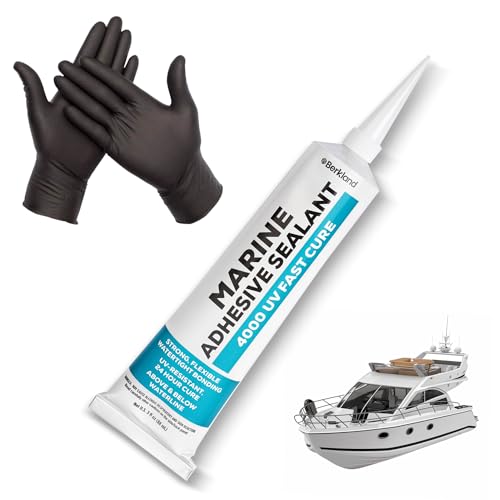
Berkland Marine Adhesive Sealant 4000 UV, 3 oz White

West System G/Flex 655-1 1 oz Syringe

3M SMC/Fiberglass Repair Adhesive-35, 08219 Green

TotalBoat Thixo Fast Cure Marine Epoxy Glue 185ml
Titebond GAL FASTGRB FRP Adhesive
More Details On Our Top Picks
This is the kind of sealant you commit to. Berkland’s 5200-style formula builds a permanent, watertight bond on fiberglass, gelcoat, and wood, which makes it the go-to choice for through-hull fittings, seams, and any joint that sits below the waterline. The fast-cure chemistry shortens the wait before your boat can go back in the water.
The bond keeps a touch of flexibility after curing, so vibration and hull flex don’t tear the seal apart. That balance of strength and give is what separates a proper marine sealant from generic caulk.
Strong Points
- Creates weather-resistant, UV-resistant seals that hold up season after season on exposed hardware
- Fast cure means less downtime between repair and launch
- Bonds gelcoat without attacking the finish, a common worry with aggressive adhesives
- Permanent hold suits joints you never plan to open again
Things To Consider
- Permanent means permanent: removing a fitting bedded in this stuff takes real effort and often a heat gun
- Cure speed varies with temperature, so cold-weather work needs patience
Who It Suits Best
Boat owners tackling below-waterline joints, thru-hulls, and other fittings they want sealed once and forgotten.
Where Another Pick Suits Better
Shoppers who may need to remove hardware later will prefer the Berkland 4000 UV lower down this list, which bonds semi-permanently.
Standard epoxy is strong but brittle, and brittle fails on a flexing hull. West System’s G/flex is toughened, meaning it bends slightly under load instead of cracking, yet stays far stiffer than a rubbery sealant. That middle ground is exactly what structural fiberglass repair demands.
This twin-tube kit gives you two 4.5 fl oz batches, enough for a decent repair session on a keel shoe, a cracked bulkhead tab, or a delaminated area. It also grips damp and notoriously difficult woods, which matters when you’re bonding new material to an older transom.
What We Like
- Makes waterproof structural bonds on fiberglass, ceramics, metals, plastics, and problem woods
- Flexibility absorbs impact and hull movement that would shatter standard epoxy
- Two tubes mean you can stage a larger repair without running dry mid-job
Worth Noting
- Two-part epoxy requires careful ratio mixing; sloppy measuring weakens the cure
- Stiffer than a sealant, so it won’t bridge large gaps the way polyurethane does
At A Glance
Made For
Diyers comfortable with mixing ratios who need load-bearing bonds on hulls, stringers, and transoms.
Consider Something Else When
For small one-off crack fills, the 1 oz syringe version of G/flex later in this list wastes far less product.
Not every fiberglass job happens on a boat. A chipped shower base, a cracked garden ornament, a broken bracket: these call for something cheap, quick, and strong. Gorilla’s Ultimate syringe fits that bill, setting in ten minutes and curing to a hard black finish rated at 4250 PSI, the brand’s strongest epoxy formula.
The dual-barrel syringe dispenses resin and hardener together, so even first-timers get a usable mix. Compared with the marine epoxies above, it’s a hobbyist tool rather than a structural one, but for small household fixes involving fiberglass, PVC, ceramic, metal, or concrete, it earns its drawer space.
Highlights
- Waterproof cured bond survives sinks, tubs, and outdoor exposure
- Ten-minute set lets you clamp briefly and move on with your day
- Syringe design minimizes mess and waste on tiny repairs
Minor Gripes
- Black cure color stands out on white or light-colored fiberglass
- Small 0.85 oz volume runs out fast on anything bigger than a hand-sized patch
Right Fit For
Homeowners and renters handling occasional small repairs across mixed materials without buying trade-size quantities.
Not Your Match When
Larger hull or panel work calls for the TotalBoat Thixo cartridge system, which offers far more working volume.
Anyone who has hand-mixed epoxy knows the ritual: gloves, cups, stir sticks, and a prayer over the ratio. Thixo deletes all of it. Resin and hardener live in one 185 ml cartridge, and the included mixing tips meter a correct 2:1 blend automatically as you pull the trigger on any standard caulking gun.
The thixotropic formula, a fancy term meaning it thickens under low shear, stays put on vertical surfaces and overhead fillets instead of sagging away. Yet it still wets out fiberglass cloth properly, which is rare for a non-sag adhesive. At room temperature you get roughly 50 minutes of working time, then a 24-hour full cure.
Upsides
- Zero-mix dispensing removes the most common source of failed epoxy bonds
- Non-sag viscosity handles overhead and vertical fillets cleanly
- Cured epoxy can be drilled, sanded, and painted like the surrounding laminate
- Fully waterproof once cured, suitable for wet environments
- Generous working window leaves time for fit-up adjustments
Trade Offs
- Mixing tips clog once cured, so unused tips must be capped or replaced between sessions
- Slower than the Fast Cure sibling reviewed further down
Quick Facts
Who Should Grab It
Boat restorers and serious DIYers doing fillets, bonding, and filling who value clean dispensing over raw speed.
A Better Fit Elsewhere
Working against a weekend deadline? The Thixo Fast Cure version cuts that timeline dramatically.
Sikaflex has been bedding deck hardware for decades, and the 291 LOT shows why. This black polyurethane adhesive-sealant stays elastic after curing, so it moves with a flexing deck instead of cracking loose. It’s also non-corrosive, a genuine concern when stainless fittings meet aluminum tracks or lead keels.
The long skinning time, roughly four hours, works in your favor on big bedding jobs: you can position, adjust, and clean squeeze-out without racing the clock. Once skinned, it accepts paint, which helps blends on finished surfaces. Fresh and saltwater use are both fair game.
Bright Spots
- Elastic cure accommodates hull flex and thermal movement year-round
- Non-corrosive formula is safe around dissimilar metals
- Paintable surface after skinning keeps repairs visually quiet
- Long working window suits multi-fitting bedding sessions
Points To Note
- Cool temperatures stretch the cure period considerably, so winter projects test patience
- Uncured polyurethane is messy; keep solvent and gloves close during application
Details At A Glance
Best Suited To
Sailors and powerboaters rebedding cleats, stanchions, and hatches where some future removal flexibility matters.
Look Elsewhere When
Truly permanent, rigid structural bonds belong with the West System G/flex epoxy covered earlier.
Here’s the honest truth about most marine sealants: half the things you bed them with eventually need to come off. The 4000 UV answers that reality with a medium-strength, semi-permanent bond that still seals watertight against fiberglass, gelcoat, and wood. Think electronics mounts, trim strips, and fittings you’ll upgrade in a few seasons.
It skins tack-free in about twenty minutes, which beats both Sikaflex-291 and its own big brother, the 5200, by a wide margin. UV resistance keeps the bead from yellowing or chalky failure on sun-exposed decks.
Reasons To Buy
- Semi-permanent hold releases fittings without destroying the substrate
- Tack-free in roughly twenty minutes speeds up same-day projects
- UV-stable formula resists sun degradation on open decks
- Handles vibration and shock better than rigid adhesives
Softer Spots
- Medium strength rules out structural or below-waterline duty
- Three-ounce tube covers only modest projects
Who Will Love This
Weekend boaters mounting removable accessories and anyone who values future serviceability over maximum grip.
Skip It When
Thru-hulls and permanent seams demand the full-strength Berkland 5200 from the top of this list.
Same toughened G/flex chemistry as the twin-tube kit earlier in this list, packaged for people with one crack to fix. The 1 oz syringe dispenses pre-measured resin and hardener side by side, so you squeeze out equal beads, stir, and apply. No scale, no leftover mixed epoxy hardening in a cup.
It bonds plastic, fiberglass, ceramics, metals, and damp woods with a permanent waterproof result. The modulus of elasticity sits around 150,000 PSI, technical language for a bond that flexes slightly under stress rather than snapping. That trait makes it a favorite for repairing stress cracks near fittings.
Plus Points
- Syringe format delivers accurate proportions with almost no waste
- Adheres to damp and difficult-to-bond woods that defeat ordinary epoxies
- Small footprint stores easily in a dockside toolkit
Honest Caveats
- One ounce goes quickly; bigger repairs need the 655-8 twin-tube set
- Hand-mixing in a cup still required after dispensing
The Right Fit
Kayak owners, dinghy sailors, and tinkerers making targeted crack and joint repairs in small batches.
Swap It Out When
Multi-hour structural layups justify stepping up to the larger West System 655-8 kit reviewed second.
Body shops trust 3M for a reason. This green two-part urethane exists specifically to bond SMC (sheet molded compound) and FRP body panels to each other and to metal frames, replacing welding in modern collision repair. Corvettes, trucks with composite beds, and kit cars all live in its territory.
Beyond panel replacement, it excels at backside reinforcement: bonding backup strips behind cracked plastic components to restore lost strength. The 200 mL cartridge feeds a standard dual-cartridge gun, keeping the workflow familiar for anyone who has run construction adhesive before.
Standout Traits
- Purpose-built for automotive composite panel bonding, not a general-purpose compromise
- Backside reinforcement technique restores structural integrity to cracked parts
- Cartridge system dispenses consistently mixed adhesive bead after bead
Areas To Watch
- Requires a dual-cartridge applicator gun, an extra purchase for casual users
- Overkill for household-scale fiberglass fixes
Core Details
Whose Shelf It Belongs On
Restoration hobbyists and DIY mechanics repairing composite body panels on vehicles with fiberglass or SMC construction.
Another Choice May Suit
Marine-focused users will find the TotalBoat Thixo line better matched to hull and deck work.
Everything good about the original Thixo, minus the waiting. This Fast Cure version uses the same point-and-shoot 185 ml cartridge and automatic 2:1 mixing tips, but the chemistry gels roughly three times quicker. A repair started Saturday morning can be sanded and painted Sunday.
The trade-off is a shorter working window, so complex multi-piece assemblies get harder to align before setup. For straightforward bonds on wood, metal, or fiberglass, though, that speed is pure upside. Two mixing tips ship with each tube, covering a couple of sessions if you cap them promptly.
What We Like
- Cures about three times faster than standard Thixo for weekend-turnaround repairs
- Cartridge and tips guarantee an accurately mixed bead every trigger pull
- Thickened body still suitable for gap filling and vertical work
Small Caveats
- Shortened pot life punishes slow, fussy assembly work
- Warm weather accelerates the gel further, tightening your margin
Feature Snapshot
Built With In Mind
Time-pressed DIYers finishing boat or shop projects on tight schedules who still want structural-grade bonds.
Reach For A Different Pick When
Intricate assemblies needing long alignment windows favor the slower-curing original Thixo reviewed fourth.
Commercial kitchens, restrooms, and utility rooms wear FRP (fiber-reinforced plastic) wall panels, and this gallon pail is what installs them. Titebond formulated FASTGRB specifically for gluing FRP sheets over porous surfaces: drywall, untreated plywood, green board, concrete, and cement backer board.
The name tells the story. Its fast grab holds panels in place almost immediately, sharply reducing the bracing and propping that lesser construction adhesives demand while the bond develops. VOC-compliant formulation also keeps it acceptable on regulated commercial job sites. One gallon covers serious square footage compared with the tubes elsewhere here.
Best Bits
- Fast grab dramatically cuts bracing time during panel installation
- Gallon quantity suits whole-room FRP projects economically
- VOC-compliant formula meets common commercial building requirements
- Bonds reliably across drywall, plywood, concrete, and backer board
Room For Improvement
- Designed for porous substrates only, not smooth gelcoat or metal
- Trowel application is messier than cartridge dispensing
Perfect Match For
Contractors and remodelers hanging FRP wall panels in washable commercial or utility spaces.
Where A Sibling Pick Shines
Boat and hobby applications belong with the marine epoxies and sealants higher up this list.
What Matters Most Before Choosing Adhesives For Fiberglass
Match The Chemistry To The Job
Polyurethane sealants like Sikaflex stay rubbery and seal gaps; epoxies cure hard and carry structural loads. Bonding a cleat and rebuilding a stringer are different problems wearing similar clothes. Decide first whether the joint needs to move, seal, or bear weight, then buy accordingly.
Surface Prep Decides Everything
Fiberglass arrives from the factory with mold release wax still on it, and wax kills adhesion. Scuff the bonding area with abrasive pads or sandpaper, wipe with a compatible cleaner, and let it dry. Even premium adhesive fails on shiny gelcoat. Ten minutes of prep saves a redo.
Working Time Versus Cure Speed
Fast-cure products suit small repairs and impatient schedules. Long-working epoxies reward complex assemblies where alignment takes time. Read the stated pot life honestly and compare it to how long your task actually takes, including cleanup.
Volume And Storage Realities
Two-part epoxies die once mixed, so batch size matters. Cartridge systems with mixing tips reduce waste; syringes suit occasional use. Sealants store longer but still have shelf lives, so buy what a realistic project consumes.
Key Considerations Across These Picks
Traps First Timers Fall Into
The classic error is grabbing a household tube for a marine job, or the reverse. Below-waterline work genuinely requires marine-rated sealants, and structural repairs genuinely require epoxy. The second trap is skipping abrasion: no adhesive listed here bonds well to glossy, unwaxed-free gelcoat. Budget for sandpaper and solvent before budgeting for glue.
What Separates Premium From Basic
Higher-tier products earn their cost through consistency. Automatic mixing tips remove human error, toughened epoxy formulas survive flexing that snaps cheap resin, and established marine chemistries resist UV and saltwater aging. Paying up pays off whenever failure is expensive, which describes anything attached to a floating hull.
Frequently Asked Questions
Can regular epoxy be used on fiberglass?
Yes, for small non-structural repairs it works fine. Flexing areas benefit from toughened formulas designed to bend slightly under load.
How do I prepare fiberglass before applying adhesive?
Sand the area until the gloss disappears, then wipe away dust and residue with a suitable cleaner. Clean, dulled surfaces accept adhesive far better than shiny ones.
Which adhesive works below the waterline?
A permanent marine sealant such as the Berkland 5200 is the appropriate category. Household caulks are not rated for continuous submersion.
Is silicone safe for bonding fiberglass parts?
Silicone seals but barely bonds, and nothing sticks to cured silicone afterward. Use it for gaskets, never for structural attachment.
How long do these adhesives take to fully cure?
It ranges widely, from about twenty minutes to tack-free for fast sealants up to twenty-four hours for full epoxy cure. Always check the specific product’s stated timeline before loading the joint.
Closing Thoughts
Match the adhesive to the job and most fiberglass frustrations disappear. Permanent sealants for fittings you’ll never reopen, flexible epoxies for structure, fast-cure cartridges for weekend deadlines, and panel glue for walls. Prep the surface properly, respect the cure times, and whichever option you choose from this list will likely outlast the thing it’s holding together.
