
Hard plastic breaks in the most annoying ways: a cracked bumper clip, a snapped toy axle, a split garden chair leg. Grabbing any old tube from the drawer usually ends with the joint popping open again a week later. The right adhesive depends on the plastic type, the stress the joint faces, and how much working time you need. This roundup sorts ten proven options into everyday super glues, hobby-grade thin formulas, and two-part structural systems so you can match the glue to the job instead of guessing.
The Shortlist At A Glance

J-B Weld SuperWeld Extreme Superglue – 15g

3M Scotch-Weld PR100 Instant Adhesive, Clear, 20 Gram
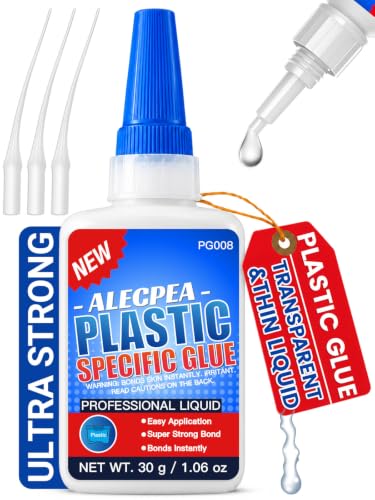
ALECPEA Plastic Glue 30g Thin Formula for ABS, PVC, PS
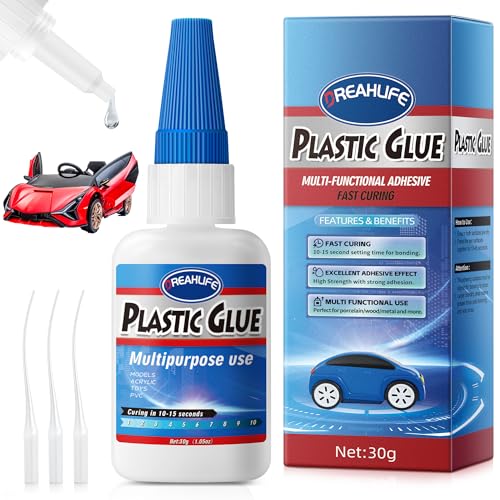
DREAHLIFE Super Glue for Plastic 30g Heavy Duty

LOCTITE 406 Super Glue Instant Adhesive 20G
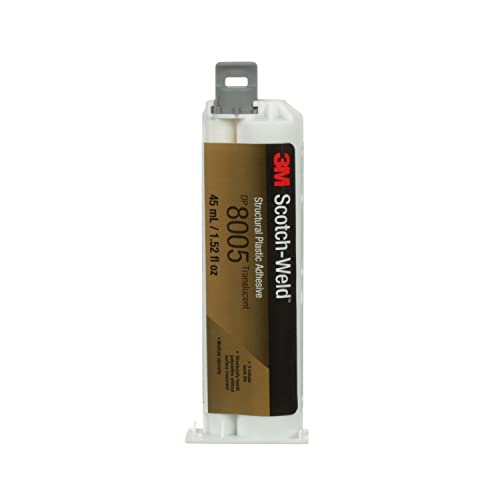
3M Scotch-Weld DP8005 Structural Plastic Adhesive, Black, 45 mL

3M Scotch-Weld Epoxy DP100 Plus, Clear, 48.5 mL

3M Scotch-Weld DP8010 Structural Plastic Adhesive, Blue, 45 mL
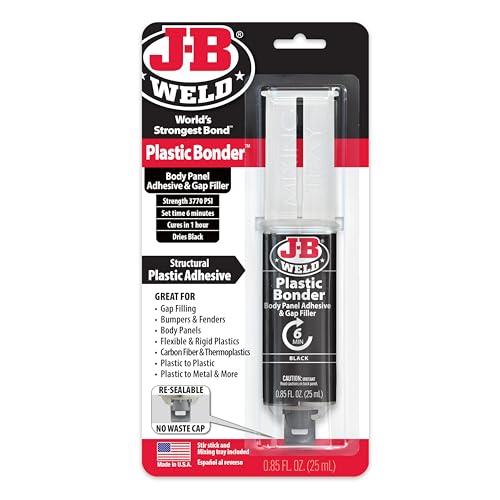
J-B Weld 50139 Plastic Bonder Body Panel Syringe, Black, 25 ml
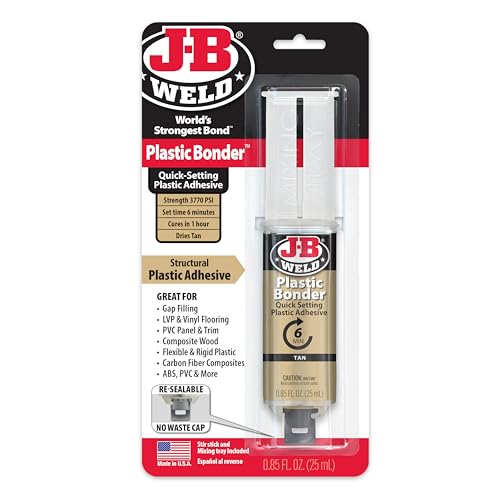
J-B Weld 50133 Plastic Bonder Structural Syringe, Tan, 25 ml
More Details On Our Top Picks
Most cyanoacrylate glues (the chemistry behind ordinary super glue) cure rock-hard and brittle, which is why repaired phone cases and toy parts snap again under a knock. SuperWeld Extreme takes a different route: its gel formula stays slightly flexible after curing, so the bond absorbs impact instead of shattering. That single difference makes it the most forgiving all-rounder here.
The no-drip gel also earns its keep on awkward jobs. Squeeze a bead onto a vertical chair leg or an overhead trim piece and it stays put, while the precision tip keeps lines tidy around small parts.
Strong Points
- Flexible cured bond resists knocks that crack standard super glues
- Gel body clings to vertical and overhead surfaces without running
- Precision tip gives you control on small, fiddly parts
- Works across plastic, rubber, leather, glass, and metal
Things To Consider
- Like most cyanoacrylates, it dislikes thick gaps; pair it with a filler-type bonder for wide cracks
- Keep the nozzle wiped after each use or owners commonly report tip clogging between jobs
Who It Suits Best
Anyone who wants one dependable tube in the kitchen drawer for mixed household repairs rather than a shelf of specialty bottles.
A Better Fit Elsewhere
For hairline seams in model kits, the ALECPEA thin formula wicks deeper than this gel can reach.
Rubber and certain plastics are notoriously slippery customers for adhesives, and this is where 3M’s PR100 earns its industrial pedigree. It was formulated specifically for difficult substrates such as EPDM rubber, polypropylene, and polyethylene, materials that shrug off ordinary super glue. With a suitable primer, bonds on those surfaces become genuinely durable rather than temporary.
The handling window matters too: roughly twenty seconds of positioning time before it grabs, then a full cure over twenty-four hours. Compared with the grab-instantly J-B Weld gel above, you trade a little speed for noticeably higher overlap shear strength once cured.
Highlights
- Engineered for hard-to-bond rubbers and polyolefin plastics
- About twenty seconds of repositioning time reduces misaligned joins
- Cured bond delivers high shear strength for load-bearing repairs
Worth Noting
- Tricky plastics need a compatible primer first, an extra step and purchase
- Full strength takes a day, so plan around the wait
At A Glance
Made For
Makers and maintenance folks repairing rubber seals, gaskets, and polypropylene parts where cheap glue has failed before.
Where Another Pick Suits Better
Quick cosmetic fixes on common ABS plastic are faster and simpler with the DREAHLIFE heavy-duty glue further down.
Hobbyists know the frustration: a hairline split in a model car body looks sealed, but weak contact underneath lets it pop open again. This thin, water-clear formula solves that through capillary action, meaning the low-viscosity liquid wicks deep into tight seams and close-fitting joints instead of sitting on the surface. Settling happens in about fifteen seconds, quick enough to hold parts by hand.
The included precision tips deserve a mention too. They put a fine bead exactly where you want it, which matters when a stray drop would fog a painted miniature or mar a visible housing seam. Against the thicker J-B Weld gel, this is the specialist’s tool rather than the generalist’s.
Reasons To Buy
- Capillary action pulls glue into hairline cracks for full-depth contact
- Roughly fifteen-second set keeps assembly moving
- Precision tips protect finishes from stray drops
- Clear cure leaves no cloudy residue on display pieces
- Suits ABS, PVC, and polystyrene, the plastics most models use
Small Caveats
- Thin formula offers almost no gap-filling, so loose joints need clamping or a thicker adhesive
- Fast wicking means glue can travel further than intended on porous-looking seams
Quick Facts
Right Fit For
Scale modelers, miniature painters, and anyone fixing toys or small housings with tight, well-mated seams.
Swap It Out When
Wide gaps or load-bearing auto trim call for the gap-filling J-B Weld 50139 syringe instead.
Not every broken plastic needs an industrial system. When a sunglasses arm snaps or a storage bin lid cracks, you want something that grabs in seconds, dries clear, and costs little enough to keep a spare tube around. DREAHLIFE’s 30-gram bottle fits that brief squarely, bonding within roughly ten to thirty seconds depending on how snugly your parts mate.
The larger volume is the quiet advantage here. Standard single-use tubes hold a fraction of this amount, so a household that goes through glue regularly gets better value per gram. In our view it sits comfortably below the 3M PR100 in raw performance but above it in sheer convenience for casual fixes.
Upsides
- Grabs in ten to thirty seconds for quick, clamp-free repairs
- Generous 30 g supply outlasts typical mini tubes many times over
- Dries to a seamless, near-invisible finish on visible parts
Points To Note
- Standard cyanoacrylate behavior means slick polyethylene and polypropylene remain difficult without surface prep
- Once opened, the bottle needs a tight seal and cool storage or the contents thicken over months
Who Should Grab It
Households that break small plastic things often and want one inexpensive bottle that handles most of them.
Reach For A Different Pick When
Structural repairs on car panels or outdoor furniture deserve the two-part J-B Weld Plastic Bonder instead.
Loctite built the 406 around one idea: extremely low viscosity for extremely fast fixturing. Fixturing just means the moment parts stop sliding relative to each other, and with this glue that happens almost immediately on plastics and rubber. Production lines love it for that reason, and home users benefit the same way when a part must not shift during the bond.
It shares DNA with the 3M PR100 reviewed earlier, including the option of pairing with Loctite’s cyanoacrylate primers to tackle stubborn low-surface-energy plastics. The honest read is that this is a speed-first adhesive; where you need gap filling or flex, the J-B Weld options handle those better.
Bright Spots
- Near-instant fixturing holds parts in place without clamps
- Very low viscosity spreads into an even, thin bond line
- Primer pairing extends it to otherwise unglueable plastics
- Handles both rigid plastics and elastomeric rubber parts
Softer Spots
- Runny consistency can drip on vertical work, unlike gel formulas
- Minimal gap-filling ability limits it to close-fitting joins
Feature Snapshot
Whose Shelf It Belongs On
Workshop tinkerers and light-production users who value speed and thin bond lines over gap filling.
Another Choice May Suit
Vertical or overhead repairs suit the no-drip J-B Weld SuperWeld Extreme gel far better than this liquid.
Here’s where the list shifts from consumer tubes to genuine structural engineering. Low surface energy plastics such as polyethylene and polypropylene normally refuse to bond without flame treatment or chemical etching. The DP8005 skips all of that: wipe the parts with isopropanol to strip mold release agents, dispense, and you get a structural bond with no priming step at all.
The 45 mL Duo-Pak cartridge is designed for 3M’s metering and mixing dispensing guns, which blend the two components evenly as you apply. That setup costs extra, though it removes the hand-mixing errors that weaken DIY epoxy joints. Compared with the syringe-based J-B Weld bonder coming up, this is the more professional route.
Plus Points
- Bonds low-energy plastics with no etching, flaming, or priming
- Simple isopropanol wipe replaces elaborate surface prep
- Duo-Pak cartridge meters and mixes consistently with matching guns
- Structural-grade strength suits load-bearing assemblies
Trade Offs
- Requires separate 3M dispensing equipment, adding upfront cost
- Black cure color shows on light-colored repairs
- Larger cartridge format is overkill for a single small fix
Core Details
Best Suited To
Automotive restorers and fabricators joining polyethylene tanks, bumpers, or enclosures that must carry real loads.
Consider Something Else When
Occasional home repairs without dispensing gear fit the self-contained J-B Weld 50133 syringe much better.
Epoxy usually means rigid, yellowing, slow. The DP100 Plus breaks that stereotype with a fast-setting, two-part formula that cures crystal clear and stays flexible, letting joints survive vibration and impact that would crack a brittle bond. Think speaker cabinets, appliance brackets, or anything mounted on equipment that hums and shakes.
Its self-leveling, low-viscosity body flows into place neatly across metals, ceramics, glass, and many plastics, making it the most versatile substrate coverage on this list. Like the DP8005 acrylic before it, it uses the Duo-Pak cartridge format, so budget for a 3M dispensing gun if you don’t already own one.
What We Like
- Cures clear, keeping glass and decorative repairs invisible
- Flexible cured layer absorbs vibration and shock loads
- Self-leveling flow produces tidy joints with minimal finishing
- Adheres to metal, ceramic, glass, and a broad range of plastics
Minor Gripes
- Needs the matching Duo-Pak dispensing gun for accurate mixing
- Low viscosity won’t bridge large voids on its own
Technical Sheet
The Right Fit
DIYers and technicians bonding mixed materials where the joint will see movement, heat cycling, or visible surfaces.
Look Elsewhere When
Pure plastic-to-plastic automotive work gets better results from the dedicated DP8005 acrylic system.
The DP8010 is the DP8005’s sibling with a different working character, aimed at production-style assembly where consistent, repeatable bonds matter more than raw speed. It achieves structural bonds on low surface energy plastics with nothing more than an isopropanol wipe, skipping priming, plasma, flame, and corona treatments entirely. For anyone building enclosures or repairing polyolefin parts repeatedly, that simplicity compounds quickly.
You’ll notice the blue cure color, which some shops actually prefer because a bonded seam becomes easy to inspect visually. Same Duo-Pak cartridge story as its siblings, so the dispensing gun requirement applies here too.
Standout Traits
- Structural bonds on difficult plastics without priming or surface treatment
- Blue cure line makes quality inspection straightforward
- Cartridge metering keeps mix ratios consistent batch after batch
Areas To Watch
- Dispensing gun is a necessary companion purchase
- Blue color stands out on natural or white plastics
- Cartridge size suits ongoing projects more than one-off fixes
Who Will Love This
Small-batch builders and serious restorers who bond low-energy plastics regularly and want inspection-friendly joints.
Not Your Match When
One-time household repairs are simpler and cheaper with the DREAHLIFE heavy-duty bottle.
Cracked bumpers and trim panels rarely break cleanly; they leave gaps, chips, and missing slivers. This two-part urethane adhesive doubles as a gap filler, which is exactly why body-shop-minded DIYers keep it around. Mix the two chambers at a simple 1:1 ratio right on the syringe tip, apply, and it sets in about fifteen minutes, ready for sanding after thirty.
With a tensile strength around 3770 PSI, it cures to a hard, permanent black finish that takes paint well. Unlike the 3M cartridges, everything you need ships in one self-contained package, no gun required.
Best Bits
- Fills gaps and rebuilds missing material, not just edge-to-edge joins
- Sandable thirty minutes after mixing for smooth painted finishes
- 3770 PSI tensile strength handles real mechanical stress
- Works on thermoplastics, composites, coated metals, even concrete
Honest Caveats
- Fifteen-minute set demands dry-fitting and taping before you commit
- Black color limits invisible repairs on light plastics
- Opened syringes have limited reuse life compared with bottled glues
Details At A Glance
Built With In Mind
Weekend mechanics patching bumper covers, splitters, and interior trim where gaps need rebuilding before paint.
Where A Sibling Pick Shines
Light-colored parts look cleaner with the tan-curing J-B Weld 50133 version of this same bonder.
This is the tan sibling of the black 50139 just covered, sharing the same quick-set urethane chemistry, 1:1 mixing ratio, and 3770 PSI tensile strength. The lighter cure color blends far better with beige dashboards, cream appliances, tan garden furniture, and most OEM interior plastics, which is reason enough for it to exist alongside its darker twin.
Application follows the same friendly pattern: press the plunger to dispense equal parts, stir on a scrap surface, apply within the working window, and sand after half an hour. It grips thermoset plastics, carbon fiber composites, thermoplastics, coated metals, and concrete alike.
Positives
- Tan cure color disappears against common beige and cream plastics
- Same 3770 PSI strength as the black version
- Self-contained syringe eliminates buying dispensing equipment
- Broad substrate range from composites to concrete
Room For Improvement
- Working time is short, so complex multi-part assemblies get stressful
- Partially used syringes tend to cure in the tip if not cleaned promptly
Feature Rundown
Who Should Reach For It
Anyone repairing light-colored car interiors, appliances, or patio furniture where a black bond line would glare.
Skip It When
Deep, wicking repairs in model seams belong to the ALECPEA thin formula instead.
What Matters Most Before Choosing Adhesives For Hard Plastic
Know Your Plastic First
Plastic type decides everything. Polypropylene and polyethylene, common in bottles, tanks, and car interiors, are low surface energy plastics that repel most glues; they demand either a primer-and-cyanoacrylate combo like the 3M PR100 or a structural acrylic like the DP8005. ABS, PVC, and polystyrene, found in models, housings, and pipe, bond readily with standard super glues. Check for a recycling code stamped into the part before spending money.
Match The Bond To The Stress
A decorative repair and a load-bearing one need different chemistries. Brittle cyanoacrylates excel on small, static parts but crack under flex, which is why flexible options like SuperWeld Extreme exist. For joints facing vibration, impacts, or weight, two-part epoxies and urethanes with thousands of PSI tensile strength are the honest answer.
Respect Working Time And Prep
Fast set times feel convenient until you misalign a part with no way back. Fifteen-second formulas reward practice; fifteen-minute urethanes forgive adjustment. Whatever you choose, clean surfaces with isopropanol first, since mold release agents and skin oils cause more failed bonds than bad glue ever will.
Factor In Tools And Volume
Cartridge systems like the 3M Duo-Paks deliver professional consistency but require a dispensing gun. Syringes and bottles cost nothing extra and suit occasional users. Buying the bigger format only pays off when repairs are frequent.
Key Considerations Across These Picks
Wrong Turns To Avoid
The classic mistake is assuming one tube does everything. Slapping standard super glue on a polyethylene kayak or a flexible bumper usually fails within days. Another trap is skipping surface cleaning; a ten-second isopropanol wipe routinely doubles bond reliability. Lastly, don’t judge a glue by its grab speed alone, since fast fixtures can still cure weak.
The Case For Spending Up
Higher-tier products earn their cost through chemistry, not marketing. Structural acrylics and epoxies bond plastics that cheap tubes physically cannot touch, and their cured joints survive heat, moisture, and vibration. For a one-off toy fix, stay budget. For a bumper, tank, or anything safety-relevant, the premium system pays for itself the first time the cheap repair would have failed again.
Frequently Asked Questions
Will regular super glue work on all hard plastics?
No. Common plastics like ABS and polystyrene bond well, but polyethylene and polypropylene resist standard cyanoacrylates. Those need a primer or a specialized structural adhesive.
How long should I wait before stressing a repaired joint?
Instant adhesives typically need several hours to reach practical strength, with full cure around 24 hours. Two-part epoxies and urethanes usually specify their own windows, so follow the packaging.
Can I sand and paint over these adhesives?
Two-part urethane bonders like the J-B Weld Plastic Bonder are designed to be sanded and painted once cured. Standard super glues generally aren’t paint-friendly and stay glossy.
Do I really need a dispensing gun for Duo-Pak cartridges?
Yes, for proper results. The gun meters and mixes the two components in the correct ratio as you dispense, which hand mixing struggles to match consistently.
How do I stop my glue bottle from drying out?
Wipe the nozzle clean, cap it tightly, and store it upright in a cool, dry spot away from sunlight. Some people refrigerate opened cyanoacrylates to extend shelf life.
Bottom Line
Matching the adhesive to the plastic and the stress is ninety percent of a successful repair. Keep a flexible gel like the J-B Weld SuperWeld Extreme for everyday breaks, a thin formula for model work, and a two-part urethane or structural acrylic for anything load-bearing. Clean the surfaces, respect the cure times, and your fixes will outlast the original part’s warranty period, whatever that may be.
