
Mosaic work lives or dies by the bond. A tile that lifts off a coaster or a stepping stone after a month of humidity means redoing the whole piece, and nobody wants that. This roundup covers adhesives for mosaics across the full range: craft glue for indoor art, tile mastic for real installations, and mesh backing for large panels you build flat and mount later. Whether your project is a kids’ afternoon craft or a bathroom wall, there’s a fit here.
The Shortlist At A Glance

DAP Weldwood Multi-Purpose Ceramic Tile Adhesive 1 Quart
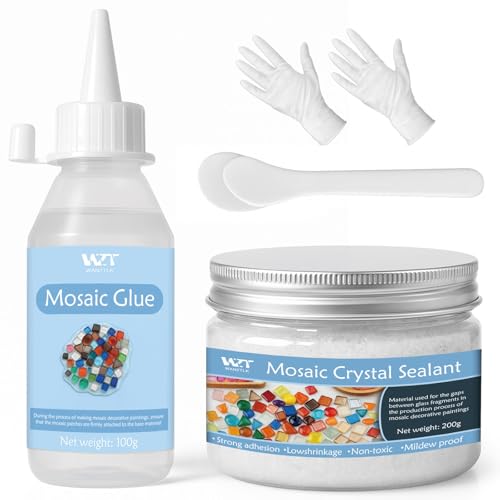
WAN2TLK Mosaic Craft Kit with Glue and Grout

Weldbond Non-Toxic Glue 60 ml / 2 fl.oz
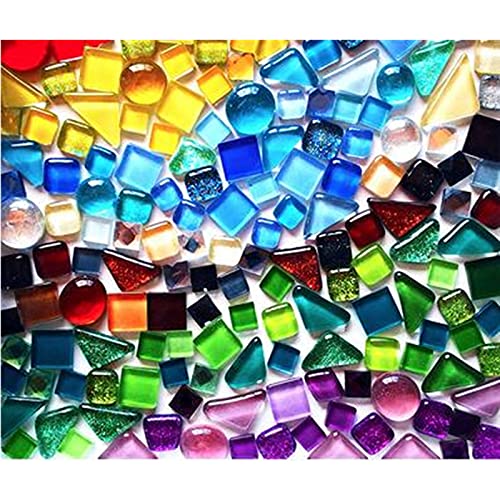
BTMIEY 500g Irregular Tiny Mosaic Tiles Mixed Color

Custom Building Products ARL4000QT AcrylPro Tile Mastic 1 Quart

Weldbond Glue 3L /101 oz Non-Toxic Adhesive Gallon

Mosaic Mercantile ADH-8 8-Ounce Adhesive
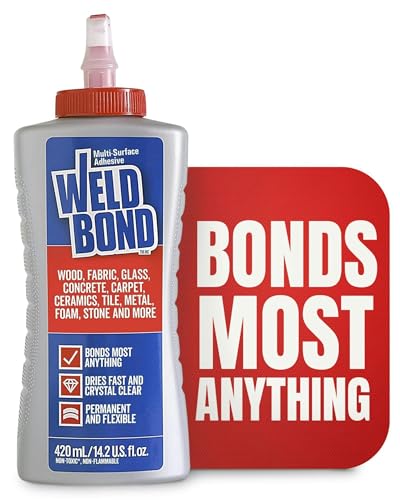
Weldbond Multi-Surface Adhesive 14.2oz / 420ml

Sticky Mesh for Back Mounted Mosaic 12 x 12 Ten Sheets

Uni-Green Mosaic Mesh Back 12X12 (11pcs/Pack)
More Details On Our Top Picks
This is the serious option in the lineup, aimed at people tiling actual surfaces rather than decorating coasters. A quart of ceramic tile adhesive covers a meaningful patch of backsplash or a small floor repair, which is why it sits at the top of this list for home improvement work.
DAP is a household name in building supplies, and the Weldwood line has been around long enough that installation guidance is easy to find. Plan the layout before you spread anything, since mastic sets faster than craft glue and repositioning tiles gets messy.
Strong Points
- Formulated specifically for ceramic tile, so bond strength matches the material instead of hoping a craft glue holds
- A quart goes further than hobby bottles, enough for a kitchen backsplash section or several planters
- Trusted building-supplies brand with widely available usage instructions
Things To Consider
- Overkill for coasters and kids’ crafts; cleanup involves more than water and a rag
- Check local requirements before larger jobs, since some tile work falls under permit rules
Who It Suits Best
Homeowners tackling genuine tile installations who want a dedicated ceramic adhesive rather than an all-purpose compromise.
Where A Sibling Pick Shines
Craft-focused makers will get more value from the WAN2TLK Mosaic Craft Kit, which bundles glue and grout sized for decorative work.
Most first-timers discover halfway through a project that they bought glue but forgot grout. This kit solves that by shipping both together: 100ml of clear-drying adhesive, 200g of white grout, an applicator, and gloves, so nothing extra is needed to start.
The glue dries transparent, which matters enormously with glass tiles where a milky bond line would show through. The grout uses fine crystal particles that leave a subtle glitter finish once cured, a nice touch on coaster art. Allow two to three hours of setting between gluing and grouting so tiles don’t shift under the scraper.
What We Like
- Everything arrives in one box, removing the guesswork for beginners
- Clear adhesive keeps glass mosaic looking clean rather than cloudy
- Gloves included, so sticky fingers stay out of the equation
- Glitter-finish grout adds polish to finished pieces without extra cost
Trade Offs
- The 100ml glue volume suits small projects only; bigger panels will drain it fast
- Grout residue needs wiping off tile faces promptly or it hardens in place
Key Specs
Made For
Beginners working on coasters, small glass tile art, and home decoration pieces who want a complete setup from day one.
Consider Something Else When
Larger tile installations call for the DAP Weldwood Ceramic Tile Adhesive, built for construction-grade bonding instead of craft scale.
This little bottle is the gateway pick of the Weldbond family, and it earns its spot through sheer versatility. It’s a PVA adhesive, meaning a water-based glue that cures by evaporation, and it bonds wood, ceramic, glass tile, fabric, styrofoam, and most porous surfaces.
For mosaic makers, the headline traits are a crystal-clear finish once dry, no fumes, and non-flammable chemistry. That combination makes it comfortable to use at a kitchen table with kids nearby, something solvent-based adhesives can’t claim. Cleanup happens with plain water while it’s still wet, and owners commonly report it sands and paints well on woodworking side projects.
Highlights
- Dries transparent, keeping glass and ceramic joints invisible
- Non-toxic and fume-free, friendly for indoor crafting spaces
- Bonds an unusually wide range of materials from one bottle
Small Caveats
- The 60ml size runs out quickly on multi-tile projects; heavy users should look at the larger Weldbond bottles below
- Water resistance doesn’t equal submersion-proof, so aquarium decor is a gamble
Right Fit For
Casual crafters and households doing occasional small mosaic pieces who value safe, low-odor chemistry over raw volume.
Another Choice May Suit
Anyone gluing daily should step up to the Weldbond 14.2oz Multi-Surface Adhesive, which carries the same formula in a far more economical bottle.
Strictly speaking these are tiles rather than an adhesive, but no mosaic supply list is complete without them, because every glue here needs something to stick. This 500g bag delivers crystal glitter tiles in squares, triangles, circles, and irregular shapes across a mixed color series.
Pieces come in roughly 0.39-inch and 0.59-inch square sizes at about 0.16 inches thick, chunky enough for small hands to place without tweezers. That makes them a natural pairing with the WAN2TLK kit’s clear glue for school projects, photo frames, flower pots, and DIY lamps. One honest note: irregular cuts mean edges vary piece to piece, which is part of the charm for freeform designs and part of the frustration for precise patterns.
Bright Spots
- Half a kilogram of tiles supports many sessions before restocking
- Multiple shapes and colors encourage creative layouts without buying separate packs
- Works on frames, vases, trays, mirrors, and stepping stones alike
- Size suits children’s handmade craft activities
Points To Note
- Irregular shaping means expect variation between pieces rather than uniform geometry
- Sort shapes before starting; mixing mid-project slows placement noticeably
At A Glance
Who Should Grab It
Parents, teachers, and hobbyists stocking up for group craft activities where variety and quantity matter more than precision cutting.
Swap It Out When
Precise geometric designs suit the uniform sheets paired with the Uni-Green Mosaic Mesh Back better than loose irregular tiles.
Tile mastic is the premixed organic adhesive pros trowel onto walls before pressing tile into it, and AcrylPro is one of the most recognizable names in that category. Unlike thin-set mortar, mastic comes ready to use straight from the tub, no mixing or slaking required.
For a weekend backsplash, that convenience is real: spread with a notched trowel, comb ridges, set tile, done. The white color also disappears behind light grout lines. The trade-off worth knowing is that organic mastic is generally recommended for dry interior walls rather than wet areas like shower floors, so match it to the right room. Compared with the DAP Weldwood quart earlier in this list, this one leans on ease of application over brand familiarity.
Upsides
- Premixed formula eliminates measuring and mixing errors entirely
- Trowels on smoothly, a friendlier learning curve than thin-set for first-time tilers
- Quart sizing fits small wall projects without leftover tub waste
Softer Spots
- Best reserved for interior dry-wall applications; steamy zones deserve different chemistry
- Open tubs need sealed storage or the mastic skins over
Best Suited To
DIY tilers installing kitchen backsplashes and interior accent walls who want pro-style results with minimal equipment.
Look Elsewhere When
Decorative craft surfaces are better served by the Mosaic Mercantile ADH-8, which is formulated for hobby-scale tesserae work.
Same trusted Weldbond PVA chemistry as the 60ml bottle reviewed earlier, scaled all the way up to a 3-liter jug. Classrooms, community studios, and anyone producing mosaic art in volume will burn through small bottles fast, and this size ends that cycle.
The formula stays true to the family traits: non-toxic, fume-free, non-flammable, and made without animal by-products. It bonds wood, tile, glass, foam, fabric, stone, cement, and concrete, which makes it genuinely useful beyond mosaics for general workshop repairs. Decanting into a squeeze bottle keeps the jug sealed and extends its working life, a habit experienced users tend to adopt quickly.
Reasons To Buy
- Bulk volume dramatically lowers cost per project for regular makers
- Identical clear-drying, low-odor performance as the smaller bottles
- Handles stone and cement, opening the door to garden mosaic work
- Eco-conscious formulation without formaldehyde or toxic metals
Areas To Watch
- A gallon jug is awkward on a craft table; plan on transferring portions to smaller containers
- Overkill for someone completing one or two coasters a year
Quick Facts
Who Will Love This
Art teachers, workshop leads, and prolific mosaic artists who treat adhesive as a consumable rather than an occasional purchase.
Not Your Match When
Occasional hobbyists will find the 14.2oz Weldbond Multi-Surface Adhesive a saner commitment with identical results.
Where Weldbond markets itself as a universal glue, Mosaic Mercantile builds its whole business around tesserae, the small tiles used in mosaic work. That focus shows in an adhesive designed specifically for the materials and bases mosaic artists actually use.
It’s a water-based white glue that applies opaque and dries clear, so you can see exactly where you’ve placed beads of adhesive during assembly and still get invisible joints afterward. The maker lists compatibility with wood, metal, plastic, glass, and masonry, covering nearly every common mosaic substrate. One limitation to respect: it’s recommended for indoor use only, so outdoor stepping stones and garden pieces belong with a weatherproof alternative.
Plus Points
- Purpose-made for mosaic materials rather than adapted from general crafting
- White-to-clear drying lets you track coverage while placing tiles
- Water-based cleanup keeps brushes and fingers manageable
Minor Gripes
- Indoor-only recommendation rules out exterior mosaic projects
- Eight ounces is a middle ground; big projects may prefer the gallon Weldbond
The Right Fit
Dedicated mosaic hobbyists working indoors on framed pieces, mirrors, and tabletop art who want a specialist product.
Reach For A Different Pick When
Outdoor durability points toward the Weldbond 3L gallon, whose weather-resistant bonding suits garden and patio pieces.
This is the sweet spot in the Weldbond range for most home crafters: the same permanent, flexible, water-resistant PVA as its siblings, in a 420ml bottle that lasts months of weekend projects without demanding shelf space like the gallon jug.
The bonding list reads like a mosaic maker’s wish list: wood, glass, ceramic, porcelain, stone, metal, concrete, fabric, and foam. Water resistance and weatherproofing give it a leg up on the indoor-only Mosaic Mercantile ADH-8 for covered outdoor pieces, though submerged applications remain outside any PVA’s comfort zone. No fumes and non-flammable chemistry keep it table-friendly, and it cleans up with water before curing.
Standout Traits
- Versatile mid-size volume balances economy against storage practicality
- Weatherproof bonding expands usable projects beyond indoor-only glues
- Crystal-clear cure preserves the look of glass and glazed tile
- One bottle handles furniture repairs alongside mosaic work
Honest Caveats
- Full cure takes patience; handle bonded pieces gently in the first day
- Cap threads can gum up if wiped clean after each session isn’t a habit
Whose Shelf It Belongs On
Regular home crafters splitting time between mosaics, repairs, and mixed-media projects who want one dependable adhesive.
Skip It When
Production-volume users should jump straight to the Weldbond 3L gallon for meaningfully lower cost per ounce.
Back-mounting changes how large mosaics get built. Instead of placing hundreds of tiles directly on a wall, you lay them face-down onto sticky fiberglass mesh sheets at your table, then transfer the whole finished panel to its final surface. This ten-sheet pack makes that method accessible.
The fiberglass construction is rated strong enough for glass, porcelain, ceramic, stone, quartzite, and cement tesserae, and each sheet measures 12 by 12 inches with a 4.5 oz weight rating. Sheets arrive cut slightly oversized to absorb serrated edge loss, separated by plastic to prevent sticking in transit. Interior and exterior use are both listed, which pairs naturally with a weatherproof adhesive for outdoor panels.
Best Bits
- Enables flat-table assembly, far easier on the back than vertical tiling
- Fiberglass basecoat reinforcement adds structural strength to finished panels
- Suitable for both interior and exterior installations
- Oversized cutting compensates for ragged sheet edges
Room For Improvement
- Sticky surfaces attract dust; keep sheets covered until the moment of use
- Technique takes a practice panel before tackling a showpiece
Feature Rundown
Built With In Mind
Mosaic artists scaling up to wall panels, table tops, and architectural pieces who want professional back-mount workflow.
Where Another Pick Suits Better
Small decorative projects don’t need mesh at all; the WAN2TLK Craft Kit’s direct-glue approach is simpler at coaster scale.
Uni-Green’s take on mosaic mesh ships eleven pre-glued 12-by-12 sheets per pack, one more than the Stone Deals pack above it, with adhesive already applied to the surface. Each sheet is sized to hold a full standard mosaic tile sheet, which simplifies planning for sheet-based installations.
The pre-applied adhesive is the practical difference here: press your tile sheet onto the mesh and it holds immediately, no separate gluing step. For DIY installers working with factory-mounted mosaic sheets in kitchens and bathrooms, that speed adds up across a wall’s worth of sheets. Handmade crystal craft projects benefit too, since the mesh stabilizes loose arrangements during transport to the final surface.
Positives
- Factory-applied adhesive removes a whole preparation step
- Eleven sheets per pack slightly outpaces comparable ten-sheet packs
- Standard 12×12 sizing aligns with common mosaic sheet dimensions
Worth Noting
- Pre-glued surfaces lose tack once dust settles on them, so timing matters
- Sheet-based workflow suits mounted tiles more than loose irregular pieces
Core Details
Perfect Match For
DIY installers laying standard mosaic tile sheets in bathrooms and kitchens who value speed and straightforward handling.
A Better Fit Elsewhere
Artists mounting loose hand-placed tesserae will appreciate the Stone Deals Sticky Mesh, whose bare sticky surface accepts individual pieces freely.
What Matters Most Before Choosing Adhesives For Mosaics
Match The Adhesive To The Surface
PVA craft glues like Weldbond excel on porous bases such as wood and terracotta, while ceramic tile mastics from DAP and Custom Building Products are engineered for walls and floors. Bonding glass to glass demands a clear-drying formula, since anything opaque will haunt the finished piece. Always confirm the manufacturer lists both your tile material and your base material.
Indoor Versus Outdoor Durability
Water-based adhesives clean up easily but vary widely in moisture tolerance. Several picks here are explicitly indoor-only, and using them on a garden stepping stone invites delamination within a season. Outdoor work calls for weatherproof formulations or proper back-mounted mesh with appropriate setting materials.
Volume And Project Scale
A 60ml bottle covers a few coasters; a classroom semester eats through a gallon. Buying too small means constant repurchasing, while overspending on bulk wastes money for occasional crafters. Estimate your tile count honestly before choosing bottle size.
Workflow: Direct Gluing Or Back Mounting
Small decorative pieces go together fastest with direct glue. Panels above roughly two square feet reward the mesh-backing method, letting you assemble flat and install in one piece. Your workspace and project size should drive that decision more than price does.
Key Considerations Across These Picks
Traps First Timers Fall Into
The most common mistake is grabbing a general-purpose glue without checking whether it dries clear, then finding cloudy seams under glass tiles. Another frequent slip is ignoring indoor-only labels on products headed for patios. Read the surface list twice before committing, and buy grout at the same time as glue so projects never stall halfway.
The Case For Spending Up
Higher-tier options earn their cost through volume economics and specialized chemistry. A gallon of quality PVA costs less per project than repeated small bottles, and purpose-built mosaic adhesives save failed pieces that generic glue causes. Paying up also buys peace of mind on visible work, where a bond failure means starting over.
Frequently Asked Questions
Can I use regular craft glue for mosaic tiles?
Yes, provided it’s a PVA formula that dries clear and lists your tile and base materials as compatible. Standard school glue often lacks the water resistance mosaics need.
What adhesive works best for glass mosaic?
Clear-drying PVA adhesives such as Weldbond are popular for glass because they cure transparent and won’t show through the tile. Avoid opaque-drying glues on translucent materials.
Do I need grout along with my mosaic adhesive?
Grout fills the gaps between tiles and strengthens the finished piece, so most durable projects use both. Kits like the WAN2TLK bundle include grout for beginners.
How long should mosaic glue dry before grouting?
Many craft adhesives recommend a few hours of initial setting, with the WAN2TLK kit suggesting two to three hours before grouting. Always follow the specific product’s stated cure times.
What is mosaic mesh used for?
Mesh lets you assemble tiles face-up on a flat table, then transfer the completed panel to a wall or floor as one unit. It’s the standard method for large-format mosaic installations.
Closing Thoughts
Choosing among these adhesives for mosaics comes down to matching three things: your surface, your environment, and your project size. Start small with a kit or compact bottle, graduate to bulk and mesh as your ambitions grow, and always respect the indoor-versus-outdoor line. The right bond is the one you stop thinking about once the piece is finished.
