
A chipped mug or a cracked vase doesn’t have to mean a trip to the trash. The right adhesive can pull a broken piece back together so cleanly that guests never notice the repair. This guide walks through ten ceramic glues suited to different jobs, from hairline cracks in heirloom teacups to snapped handles on everyday dinnerware. Whether you’re mending one sentimental bowl or tackling a box of thrift-store pottery finds, one of these picks should fit your bench.
The Shortlist At A Glance

ALECPEA Ceramic Repair Glue 20g Thin Formula

Viomis 30g Instant Ceramic Super Glue
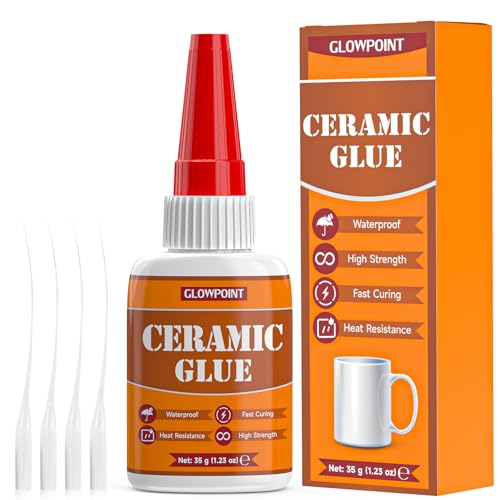
GLOWPOINT 35g Ultra Strong Ceramic Glue

ATLASBOND Food Safe Ceramic Repair Kit

GH1200 Ceramic Glue with Brush & Nozzle (20g)

LOOCTOT 30g Porcelain and Pottery Repair Glue

LEENEXUS 5g Gel CA Adhesive for Ceramic

WOUSEDO 30g Waterproof Pottery Adhesive

Adhesive Guru Ceramic Glue (0.7 oz)

ENMEMO 2-in-1 Ceramic Glue Brush & Nozzle
More Details On Our Top Picks
Most glue sits on top of a hairline fracture like snow on a sidewalk. This cyanoacrylate formula takes the opposite approach: its thin viscosity lets capillary action, the natural pull of liquid into narrow gaps, draw the adhesive deep into tight seams on porcelain mugs, bowls, and glazed pottery.
For anyone rescuing a cracked teacup or a figurine with a barely visible split, that wicking behavior matters more than raw strength. You may find the runny consistency takes a little practice to dose, though the trade-off is a bond that reaches where thicker glues simply can’t.
Strong Points
- Thin formula penetrates hairline cracks instead of bridging them, which makes repaired seams far less visible on glossy glazes.
- Sets in roughly 15 seconds, so you can hold pieces together briefly rather than clamping for minutes.
- Cures clear and water-resistant, meaning a mended mug handle survives sink rinses without turning cloudy.
- The 20g bottle covers dozens of small repairs around the house.
- Works across porcelain, pottery, tile, and ceramic sinks, giving one bottle several household roles.
Things To Consider
- Because it flows freely, excess glue can spread onto glaze before you notice; keep paper towels within reach and wipe the nozzle after every use.
Key Specs
Who It Suits Best
Anyone repairing delicate pieces with fine cracks, especially collectors of porcelain and glazed pottery who care how the seam looks.
Where Another Pick Suits Better
Shoppers fixing chunky stoneware or filling wider gaps will get better coverage from the GLOWPOINT 35g Ultra Strong Ceramic Glue.
Where the ALECPEA above chases precision, this Viomis bottle plays the volume game. At 30g, it holds roughly half again as much adhesive as the slimmer pick, which adds up when you’re reassembling a dropped planter or working through a pile of chipped tiles.
The clear, slightly oily body spreads evenly across break surfaces and grabs quickly, and owners commonly report finished joints standing up to repeated dishwashing. In our view, that combination of capacity and durability makes it a sensible default for busy kitchens where something breaks every few months.
What We Like
- Heat-resistant and waterproof once cured, so repaired dishes tolerate hot coffee and the dishwasher cycle alike.
- Clear finish blends into white, colored, and patterned ceramics without leaving a milky line.
- Fast-drying behavior means most household breaks are handled in a single sitting.
- Bonds beyond ceramics too, covering tiles and DIY craft projects with the same bottle.
Worth Noting
- The standard viscosity won’t wick into hairline cracks the way a thin formula does, so very fine splits may show a faint seam.
- Like most instant adhesives, the open bottle has a limited shelf life once air gets in; store it sealed and upright.
Made For
Households that want one dependable, generously sized bottle for routine mug, plate, and tile repairs.
Consider Something Else When
Fine china restoration calls for the thinner ALECPEA Ceramic Repair Glue 20g Thin Formula, whose capillary action suits delicate seams better.
This is the biggest bottle on the list, and the spec sheet backs it up with real numbers. The manufacturer rates initial set at 30 to 45 seconds under light pressure, with full bonding strength arriving at the 24-hour mark, a two-stage cure worth respecting before you load a repaired bowl with leftovers.
Precision application nozzles come included, which helps when you’re tracing a zigzag fracture across a garden pot. One honest caution from the maker itself: apply a thin layer, because excess glue can actually weaken the joint. Patience pays off here more than generosity.
Highlights
- 35g capacity handles multi-piece reconstructions, like a shattered planter or a figurine broken into five parts.
- Waterproof and heat-resistant cured bond suits kitchenware that faces steam, hot water, and daily handling.
- Included precision nozzles give you a controlled bead along long or irregular cracks.
- Clear cure keeps repairs discreet on mugs, tiles, and decorative pieces.
Trade Offs
- The 24-hour full-cure window means a repaired dish needs a day of rest before real use, longer than some impatient households will like.
- Over-application weakens the bond, so first-timers may waste glue learning the thin-layer technique.
Feature Snapshot
Right Fit For
DIYers rebuilding multi-fragment pieces, or anyone who keeps breaking terracotta pots and wants stock on hand.
Not Your Match When
You need food-safe certification for items touching meals directly; the ATLASBOND Food Safe Ceramic Repair Kit addresses that concern explicitly.
Most ceramic glues leave an awkward question hanging over a mended mug: is the rim still safe for drinking? ATLASBOND answers it directly with a food-safe adhesive formula aimed squarely at cups, plates, and cutlery, which removes the hesitation that stops many people from repairing kitchenware at all.
The kit framing fits its versatility claim, since the same adhesive bonds wood, glass, plastic, and shoe materials. Depending on your project mix, that cross-material range can replace two or three separate tubes in a drawer. The trade-off is a generalist character; it isn’t tuned specifically for wicking into ultra-fine porcelain seams.
Upsides
- Food-safe formulation makes repaired mugs and bowls usable again without second-guessing every sip.
- Bonds ceramics alongside wood, glass, plastic, and shoe repairs, consolidating several glue jobs into one product.
- Clear cure keeps the mend visually quiet on patterned dinnerware.
- Kit packaging gives casual users everything needed for a first successful repair.
Minor Gripes
- Generalist chemistry means it lacks the specialized penetration of dedicated thin ceramic formulas on hairline fractures.
- Owners commonly report needing careful surface prep, cleaning and drying both edges thoroughly, for the strongest result.
Who Should Grab It
Home cooks and parents repairing everyday eating and drinking ware, plus crafters who want one tube for mixed materials.
Look Elsewhere When
Your priority is maximum structural strength on large breaks; the GLOWPOINT 35g Ultra Strong Ceramic Glue carries more capacity and a heavier-duty rating.
Applicator design separates good repair experiences from frustrating ones, and this GH1200 bottle ships with two ways in. A built-in brush handles controlled, paint-like strokes along a crack, while the anti-clog nozzle dispenses beads or covers broader surfaces when a chip needs filling.
That dual setup shines on decorative work, think mending a painted figurine where a stray drip would ruin the glaze. Compared with the single-nozzle GLOWPOINT, you gain finesse at the cost of a smaller 20g reservoir. For detail-oriented restorers, most people agree that’s a fair swap.
Bright Spots
- Brush applicator lays down thin, even lines, ideal for visible seams on decorated pieces.
- Anti-clog nozzle resists the dried-plug problem that ruins many glue bottles between uses.
- Waterproof, clear, smooth finish keeps mended pottery presentable on open shelves.
- Fast-drying formula shortens the hold-and-wait portion of each repair.
Points To Note
- The brush tip needs prompt cleaning after each session; dried adhesive on bristles is the most common complaint among long-term owners.
- At 20g, heavy users will empty it faster than the 30g and 35g bottles elsewhere on this list.
Quick Facts
Perfect Match For
Crafters and hobbyists restoring painted, glazed, or decorative ceramics where placement precision outranks raw volume.
A Better Fit Elsewhere
Bulk repair sessions suit the ENMEMO 2-in-1 Ceramic Glue Brush & Nozzle, which pairs similar applicators with a larger 30g fill.
Instant adhesives have a reputation for sharp fumes in small rooms, and this LOOCTOT bottle pushes back with a no-smell-after-cure promise. Once the joint has fully hardened, the repaired piece carries no chemical odor, which matters for vases and decor displayed in bedrooms or nurseries.
The working numbers are competitive too: adhesion kicks in within 10 to 30 seconds, and the manufacturer claims roughly 30 percent higher strength than standard super glue. Gloves are strongly recommended during application, a sensible note given how aggressively this stuff grabs skin.
Reasons To Buy
- Odor-free after curing, so mended decor can sit on a nightstand without any chemical scent.
- Grabs in 10 to 30 seconds, keeping repair sessions quick and frustration low.
- Transparent cure works on ceramics of any color, from white porcelain to dark stoneware.
- Anti-clogging cap preserves the nozzle between projects and cuts wasted glue.
Softer Spots
- Full waterproofing only arrives after 24 hours of complete adhesion, so keep the piece dry on day one.
- The brand itself advises gloves; bare-handed use risks bonded fingers, a widely reported mishap with fast-set adhesives.
Whose Shelf It Belongs On
Apartment dwellers and indoor crafters sensitive to fumes, working in small, poorly ventilated rooms.
Swap It Out When
Food-contact safety tops your checklist; the ATLASBOND Food Safe Ceramic Repair Kit is built for that specific worry.
Every other bottle here is a liquid; this one is a gel, and that changes what you can fix. Cyanoacrylate gel stays exactly where you place it, which makes vertical repairs, a snapped mug handle, a crack running up a vase wall, dramatically less messy than fighting gravity with a runny formula.
The 5g tube is deliberately small, closer to a precision tool than bulk supply. Drying leaves a transparent, waterproof line, and the side-squeeze bottle gives you thumb-level dosing control. You may find the tiny volume limiting for big projects, but for targeted fixes it’s hard to beat.
Plus Points
- No-drip gel body holds position on vertical surfaces, solving the classic sliding-glue problem on handles and curved walls.
- Dries transparent and waterproof for seamless-looking repairs on porcelain, stoneware, and clay.
- Ergonomic side-squeeze bottle offers precise, thumb-controlled dispensing.
- Heavy-duty instant bond suits load-bearing joints like reattached handles.
Small Caveats
- Only 5g of material, so large reconstructions or repeated household repairs will exhaust it quickly.
- Gel texture means it sits on the surface rather than wicking into hairline cracks; thin formulas do that job better.
Details At A Glance
The Right Fit
Anyone reattaching handles or repairing upright surfaces, where a non-running adhesive saves the whole job.
Reach For A Different Pick When
Hairline porcelain cracks are your target; the ALECPEA Ceramic Repair Glue 20g Thin Formula penetrates those seams far more effectively.
Half-empty glue bottles are a quiet annoyance nobody talks about much. WOUSEDO attacks it at the packaging level, shipping each 30g bottle with intentional headspace so nothing leaks or cures shut in transit, meaning the full volume actually arrives usable.
The adhesive itself targets ceramics’ reputation as a notoriously difficult surface to bond, aiming for high-strength, waterproof joints on pottery and dishware. Owners commonly report solid results on dense, glazed bodies where cheaper all-purpose glues peel away. It’s a straightforward workhorse without extra applicator hardware.
Standout Traits
- Leak-proof packaging with deliberate headspace ensures the bottle arrives full and uncured.
- High-strength formulation tackles dense, glazed ceramics that defeat general-purpose adhesives.
- Waterproof cured bond stands up to sinks, planters, and humid bathrooms.
- 30g supply supports multiple repairs over months of occasional use.
Areas To Watch
- No brush or specialty nozzle included, so fine-line application depends on your own steady hand or a separate tool.
- As with most instant adhesives, storage upside-down or uncapped shortens usable life noticeably.
Best Suited To
Practical homeowners who value dependable bonding strength and intact packaging over applicator extras.
Another Choice May Suit
Detail workers wanting built-in precision tools will prefer the GH1200 Ceramic Glue with Brush & Nozzle (20g).
This 0.7 oz bottle reads like a specialist’s answer to the category’s usual complaints. It’s specified as non-toxic and odorless after curing, temperature resistant for pieces that live near ovens or radiators, and waterproof once fully set, a tidy checklist for household repair.
The standout detail is compatibility with an aerosol activator, a spray that instantly cures cyanoacrylate on contact. Hobbyists who already own activator systems can snap joints together and move on in seconds. Without one, the standard fast-set behavior still applies, just with a slightly longer hold time.
Positives
- Odorless after cure and non-toxic specification make it comfortable for indoor display pieces and homes with kids around.
- Temperature resistance suits repairs near heat sources, from kitchen shelves to sunny windowsills.
- Aerosol activator compatibility enables near-instant curing for experienced hobbyists.
- Waterproof bond handles washed dishware and bathroom ceramics.
- Sets in seconds for efficient, single-session repairs on figurines and vases.
Honest Caveats
- The activator is sold separately, so the fastest cure mode costs extra unless you already own one.
- At 0.7 oz, it’s among the smaller supplies here; frequent repairers may want a backup bottle.
Core Details
Built With In Mind
Model builders and careful restorers who already use activator systems and want a refined, low-odor ceramic adhesive.
Skip It When
Volume matters most; the Viomis 30g Instant Ceramic Super Glue delivers far more adhesive for routine household use.
Think of this as the GH1200’s bigger sibling. ENMEMO pairs the same two-way applicator idea, a brush for fine lines and a nozzle for beads and fills, with a fuller 30g bottle, splitting the difference between precision and supply.
Working specs mirror the practical end of this list: adhesion begins within 10 to 30 seconds, the cured joint turns waterproof after a full 24 hours, and the transparent finish suits any color of porcelain or pottery. An anti-clogging cap protects the nozzle between sessions, addressing the dried-tip failure that quietly kills most glue bottles.
Best Bits
- Brush and nozzle together cover both delicate seams and broader chip fills without switching products.
- 30g fill outlasts the 20g applicator bottles while keeping the same control advantages.
- Anti-clogging cap extends usable life and reduces wasted adhesive.
- Clear cure disappears against white, glazed, and colored ceramics alike.
Room For Improvement
- Waterproofing takes a full 24 hours to develop, so freshly repaired items need a patient day off duty.
- The brush still demands prompt post-use cleaning, a maintenance step some owners skip until it’s too late.
Who Will Love This
Mixed-task repairers juggling fine decorative touches and sturdier structural fills in one ongoing project.
Where A Sibling Pick Shines
Pure precision on small painted pieces favors the lighter GH1200 Ceramic Glue with Brush & Nozzle (20g), which trades capacity for finesse.
What Matters Most Before Choosing Adhesives For Repairing Ceramics
Match Viscosity To The Break
Viscosity simply means how thick or thin the glue flows, and it decides whether your repair succeeds. Thin formulas wick into hairline cracks by capillary action, while gels stay put on vertical surfaces like mug handles. Diagnose the break first: a barely visible split needs a runner, a snapped handle needs a non-drip body. Choosing backwards is the most common way a repair fails.
Check Cure Times And Resistance
Most picks here grab in seconds but reach full strength in 24 hours, and loading a joint early is how seams reopen. Look past the headline set time to the full-cure figure, then respect it. Equally, confirm waterproof and heat-resistant ratings match where the piece lives, since a repaired planter outdoors faces tougher conditions than a shelf figurine.
Think About Safety And Smell
Cyanoacrylate, the chemistry behind instant glues, bonds skin almost as eagerly as ceramic, so gloves aren’t paranoia. Fumes vary widely between formulas; odorless-after-cure options such as the LOOCTOT and Adhesive Guru bottles suit bedrooms and small apartments. For anything touching food or drink, prioritize a food-safe specification rather than assuming all ceramic glues qualify.
Weigh Applicators Against Capacity
Brush tips and precision nozzles cost you volume, plain 30g and 35g bottles buy staying power. Casual households fixing one mug a season rarely need hardware; serial restorers and crafters find applicators pay for themselves in saved mess. Honest self-assessment here prevents both wasted glue and wasted money.
Key Considerations Across These Picks
Traps First Timers Fall Into
The biggest mistake is buying on bottle size alone and ignoring viscosity, ending up with a thick glue smeared across a hairline crack. Second is skipping surface prep; dust and grease on a break edge weaken any bond, so clean and dry both sides first. Third, people test the joint too soon, before the 24-hour full cure, then blame the glue.
The Case For Spending Up
Higher-tier options justify their cost through refinement rather than raw power: dual applicators, anti-clog caps, odorless cures, activator compatibility. Those features save glue, reduce mess, and make delicate repairs achievable for average hands. Occasional fixers won’t miss them, but anyone restoring valued pieces regularly will feel the difference within a few projects.
Frequently Asked Questions
Can glued ceramics go in the dishwasher?
Many of these adhesives specify waterproof cured bonds that tolerate washing. Even so, hand-washing extends the life of any repair, and the 24-hour full cure should pass before the first wash.
How long does ceramic glue take to fully cure?
Initial set typically runs 10 to 45 seconds depending on the formula. Full bonding strength generally arrives at the 24-hour mark, so keep the piece unloaded until then.
Is ceramic glue safe for repairing mugs and dishes?
Some formulas, like the ATLASBOND kit, are explicitly marketed as food safe for tableware. Standard cyanoacrylates vary, so verify the food-safety claim on the listing before repairing anything that contacts food.
Can I use regular super glue on ceramics?
Standard cyanoacrylate does bond ceramic, but it often lacks the waterproofing, heat resistance, and gap-filling behavior of purpose-built formulas. Dedicated ceramic glues also tend to cure clearer and survive washing better.
How do I remove excess glue from glazed surfaces?
Fresh excess wipes away with a cloth before it sets. Cured residue usually yields to gentle scraping with a plastic edge or acetone applied carefully to unglazed areas only, since acetone can dull some glazes.
Closing Remarks
A broken favorite mug shouldn’t end its story, and none of these ten adhesives costs much to prove it. Match the formula to the break, respect the cure time, and most household ceramics come back stronger than you’d expect. Start with the profile that sounds like your situation, and let the repair speak for itself.
