
Computerized sewing machines used to cost a small fortune, and that kept a lot of new sewists stuck on clunky mechanical models. Today you can get push-button stitch selection, automatic needle threaders, and speed control without draining your craft budget. This roundup covers ten machines that balance price against real capability, from beginner-friendly basics to quilting workhorses. Whether you’re hemming pants on a kitchen table or piecing quilts in a dedicated craft room, there’s a fit here for your projects and your wallet.
The Shortlist At A Glance

Brother XM3700 Sewing Machine
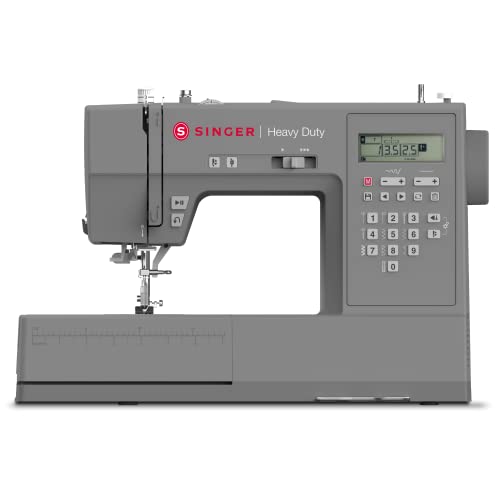
SINGER 6700C Heavy Duty Computerized Machine

Janome JW8100 Computerized Sewing Machine

Brother CP100X Sewing and Quilting Machine

Brother CS7205 Computerized Machine White

SINGER Quantum Stylist 9985 Computerized Machine

Juki HZL-F600 Computerized Sewing Machine

Janome Sewing Machine White 16-Inch

SINGER 4411 Pink Heavy Duty Sewing Machine

Janome 2030DC-G Computerized Sewing Machine
More Details On Our Top Picks
The XM3700 sits at the friendly end of Brother’s lineup, aimed at people moving up from a borrowed or inherited machine. Its 37 built-in stitches cover garment construction, heirloom work, decorative topstitching, and light quilting, which is plenty while you’re still figuring out what kind of sewing you love.
Everything lives on the machine too: five presser feet (zigzag, zipper, blind stitch, buttonhole, and button sewing) plus a built-in storage compartment keep accessories from wandering off in a drawer. In most apartments and shared craft spaces, that tidiness matters more than you’d expect.
Strong Points
- 37 stitches give growing skills room to stretch without overwhelming a newcomer
- All five essential feet ship in the box, so zipper and buttonhole work starts day one
- Built-in storage keeps feet and bobbins organized between sessions
- Lightweight body makes it easy to carry to classes or a friend’s kitchen table
Things To Consider
- Owners commonly report the plastic housing needs gentle handling during transport
- No display screen means stitch selection relies on printed guides rather than menus
Who It Suits Best
A first-time computerized owner who wants real capability at an entry price and doesn’t need hundreds of stitches yet.
Where A Sibling Pick Shines
The Brother CP100X suits quilters better, thanks to its wider table and dedicated quilting features.
Where the Brother XM3700 keeps things simple, the HD6700C goes broad: 411 stitch applications spanning basic utility, stretch, and decorative options, plus a lettering font for simple monogramming. That range means garments, home décor, and personalized gifts all come from one machine.
The heavy duty framing isn’t just marketing either. SINGER positions this model for sewists who push through denim, canvas, and layered quilt sandwiches regularly, and the included accessory kit rounds out the package. You may find the sheer stitch menu takes a few sessions to navigate comfortably, though.
Reasons To Buy
- 411 stitch applications mean you rarely hit a creative wall mid-project
- Lettering font handles basic monogramming without a separate embroidery unit
- Heavy duty build targets thick fabrics that stall lighter machines
- Included accessory kit saves separate foot and notion purchases
Worth Noting
- The large stitch catalog can feel intimidating until you learn the menu layout
- Some owners mention threading takes patience the first week
Key Specs
Made For
Confident intermediate sewists who tackle mixed materials weekly and want one machine that does it all.
Consider Something Else When
Beginners still learning tension basics will find the Brother XM3700 far less overwhelming.
Janome builds this one like a complete starter studio rather than a bare machine. You get 100 stitches, seven styles of one-step buttonhole, a hard cover, an extension table, and 22 accessories, so the box basically contains your first year of sewing support.
Day-to-day conveniences stand out too: a built-in needle threader, auto-declutch bobbin winder, and a backlit LCD screen for navigation. The 7mm stitch width gives decorative work a bit more presence than narrower entry models. Compared with the SINGER 6700C’s massive menu, the JW8100 trades raw stitch count for a calmer, better-equipped experience.
Highlights
- Hard cover and extension table arrive included, protecting the machine and enlarging your workspace
- Seven buttonhole styles handle everything from blouses to outerwear plackets
- Automatic needle threader saves eyes and time on every rethread
- Backlit LCD makes stitch browsing straightforward even in dim rooms
Trade Offs
- At 100 stitches, decorative variety trails the SINGER and Brother flagships here
- The extension table adds bulk to storage on cramped shelves
Right Fit For
Quilters and garment makers who value a complete accessory ecosystem over maximum stitch count.
Not Your Match When
Monogramming enthusiasts will get more mileage from the SINGER Quantum Stylist 9985’s memory functions.
Quilting changes what you need from a machine: throat room, steady feeding, and controls that don’t fight you mid-seam. The CP100X answers with a wide table for larger projects, an adjustable speed slider for precise piecing, and a sharp LCD display that keeps settings visible.
Brother also sweats the small stuff here. The one-step automatic needle threader comes with easy-to-follow threading diagrams printed right on the machine, and the Quick-Set bobbin system drops in without fiddly case threading. For anyone who has ever wrestled a bobbin at midnight, that alone earns goodwill.
Upsides
- Wide table supports bulky quilt sandwiches through the machine body
- Adjustable speed control lets you slow down for curves and precision piecing
- Quick-Set bobbin cuts setup friction on every color change
- On-machine threading diagrams reduce guesswork for newer users
Small Caveats
- Quilting-focused extras add weight compared with the portable Janome 2030DC-G
Who Will Love This
Dedicated quilters working on lap-sized and larger projects who want forgiving, well-labeled controls.
Look Elsewhere When
Thick-fabric garment sewists should lean toward the SINGER 6700C’s heavy duty construction instead.
The CS7205 is the tinkerer’s pick in this lineup. Alongside its 150 built-in stitches, you get a lettering font with 55 alphanumeric characters for basic monogramming, eight one-step auto-size buttonhole styles, and eleven sewing feet covering zippers, blind hems, walking, and more.
A flip chart sits on the machine showing every stitch at a glance, which sounds minor until you stop squinting at a tiny screen. The wide table extends your workspace for quilting, and the white finish blends into most craft rooms. Against the Janome JW8100, this one wins on foot count and monogramming; Janome counters with its hard cover.
Plus Points
- Eleven included feet cover specialty techniques without extra purchases
- Lettering font enables simple personalization on gifts and labels
- Flip chart displays all stitches visibly, speeding up selection
- Eight auto-size buttonhole styles adapt length to each button automatically
Points To Note
- With 150 stitches plus a font, the menu depth may slow down absolute beginners
- Owners commonly note dust collects around the flip chart hinge and needs occasional cleaning
Quick Facts
Perfect Match For
Intermediate sewists who love decorative stitching and want maximum included hardware per dollar.
Skip It When
Total beginners may prefer the simpler Brother XM3700 while they build confidence.
This is the step-up machine for people whose ideas outgrow their equipment. Over 1,000 stitch applications span basic, stretch, and decorative categories, and 60 memory slots let you save custom stitch sequences so a favorite border combination returns with a button press instead of reprogramming.
That memory function is the honest dividing line here. Fashion sewists building signature details and quilters repeating complex borders get genuine workflow value from it. The comprehensive accessory kit mirrors what SINGER bundles with the 6700C, though the Quantum’s software side is clearly the more advanced sibling.
Bright Spots
- Over 1,000 stitch applications remove practical limits on decorative work
- 60 memory slots store custom sequences for instant recall
- Comprehensive accessory kit arrives ready for fashion and décor projects
- Stretch stitches handle knits without puckering frustration
Softer Spots
- The feature depth demands a real read of the manual before fluency clicks
- Some owners report the extensive menu system benefits from periodic firmware-familiar refresher sessions
Whose Shelf It Belongs On
Advanced hobbyists and small-batch makers who repeat complex stitch patterns and want them saved.
Another Choice May Suit
Sewists who rarely stray past utility stitches will find the Janome 2030DC-G easier and cheaper to live with.
Juki made its name on industrial machines, and that DNA shows in the HZL-F600’s stitch consistency. With 255 built-in stitches including basic, stretch, decorative, lettering, and buttonhole options, it covers the full home-sewing map while keeping seams looking factory-straight.
The user-friendly LCD screen pairs with a stitch selector switch, so choosing a pattern is a push-button affair with visual confirmation. Garment sewists who care about how a seamline reads on the finished piece tend to gravitate here. It’s less flashy than the SINGER Quantum 9985, but the emphasis falls squarely on stitch quality over quantity.
Standout Traits
- 255 stitches balance variety with a manageable, logical menu structure
- LCD confirmation reduces second-guessing during long project sessions
- Juki heritage shows in even, reliable feed across fabric weights
- Lettering stitches add functional labeling to quilts and garments
Areas To Watch
- Owners commonly report the machine rewards regular oiling and lint clearing around the bobbin area
- Design language leans utilitarian rather than stylish on a craft-room shelf
Feature Rundown
Who Should Grab It
Detail-focused garment sewists and quilters who judge a machine by seam quality first.
Swap It Out When
Memory-driven decorative work calls for the SINGER Quantum Stylist 9985 instead.
Some machines chase features; this Janome chases predictability. Thirty built-in stitches cover utility, stretch, and decorative needs, and the compact footprint (16 inches wide, 12 tall, 7 deep) slots onto a desk, dining table, or closet shelf without negotiation.
The pitch here is comfort: fabric meets the feed dogs and behaves, session after session. For someone whose sewing life is mostly hemming, mending kids’ clothes, and the occasional tote bag, that steadiness beats a thousand-stitch menu you’ll never scroll past row three. It’s the quiet workhorse of this list.
What We Like
- Thirty stitches cover everyday repairs and simple creative projects cleanly
- Compact 16-inch width fits small apartments and shared tables easily
- Stretch stitches make knit mending far less fussy
- Simple operation keeps momentum on quick alteration jobs
Honest Caveats
- Thirty stitches will feel limiting once decorative ambitions grow
- No extension table means large projects need careful fabric management
Best Suited To
Menders, students, and apartment dwellers who want dependable everyday sewing in minimal space.
A Better Fit Elsewhere
Quilters needing workspace should look at the Brother CP100X with its wide table.
The 4411 plays a different game than the computerized picks above it. Its motor drives up to 1,100 stitches per minute, and a stainless steel bedplate lets heavy fabrics glide smoothly instead of snagging. Denim hems, canvas bags, and upholstery repairs are its natural habitat.
The special pink finish gives it personality without changing the mechanics, and the included accessory set covers basic setup. One thing worth considering: this is a mechanical machine, so you trade the push-button convenience of the Brother CP100X for raw speed and muscle. Straight-stitch-heavy sewists won’t miss the menus much.
Best Bits
- 1,100 stitches-per-minute top speed finishes long seams dramatically faster
- Stainless steel bedplate feeds thick fabric without catching
- Powerful motor holds torque through layered denim and canvas
- Distinctive pink finish stands out in a sea of grey machines
Room For Improvement
- High speed takes practice; beginners commonly report needing the slower settings first
- Mechanical operation means manual dials rather than digital stitch selection
Core Details
Built With In Mind
Confident sewists who mostly run straight seams through tough fabrics and value speed over stitch variety.
Reach For A Different Pick When
Decorative and buttonhole variety matters more; the Brother CS7205 covers that ground far better.
Janome describes the 2030DC series as substance first, and the spec sheet backs that up. Thirty stitches come paired with genuinely useful electronic touches: a locking stitch button that ties off seams without backstitching, a speed control slider, and a needle up/down function for pivoting corners.
Those last two features sound small until you’ve pieced a quilt top or turned a bag corner manually. The sturdy construction and stable feeding give it a planted feel despite its modest size. Compared with the plain Janome white model above, this one adds the computerized conveniences that make repetitive work noticeably smoother.
Positives
- Locking stitch button secures seam ends instantly, no reverse pedaling
- Speed slider caps pace for precision work on tricky curves
- Needle up/down positioning simplifies pivoting at corners
- Sturdy frame delivers stable feeding on everyday fabrics
Minor Gripes
- Thirty-stitch ceiling limits decorative exploration long term
- Owners commonly advise storing it covered to keep dust out of the electronics
At A Glance
The Right Fit
Small-space sewists and quilt piecers who want smart electronic helpers without flagship complexity.
Where Another Pick Suits Better
Heavy fabric specialists will be happier with the SINGER 4411’s motor and steel bedplate.
What Matters Most Before Choosing Affordable Computerized Sewing Machines
Stitch Count Versus Real Skill Growth
Big numbers sell machines, but most sewists live inside twenty favorite stitches. A 37-stitch Brother covers garment construction and mending comfortably, while 411 applications on the SINGER 6700C mainly pay off for decorative enthusiasts. Match the menu to your actual ambitions, not the spec sheet’s biggest figure.
Buttonhole quality matters more than quantity too. Seven or eight one-step auto-size styles, like the Janome JW8100 offers, beat a dozen mediocre ones every time.
Mechanical Muscle And Fabric Range
Denim, canvas, and layered quilts demand torque. Machines marketed as heavy duty, such as the SINGER 4411 with its stainless steel bedplate, hold up where lighter bodies stall or skip stitches. Plastic housings travel well but reward gentle handling.
Consider your dominant fabrics honestly. Knit mending needs stretch stitches; upholstery needs power. Few affordable machines excel at both extremes.
Convenience Features That Earn Their Keep
Automatic needle threaders, Quick-Set bobbins, and speed sliders sound trivial until they save you ten minutes per session. Over a year of weekend sewing, those minutes compound into real project progress.
Extension tables and hard covers deserve equal attention. They protect your investment and expand workspace, which matters enormously in shared living situations.
Key Considerations Across These Picks
Traps First Timers Fall Into
The classic mistake is buying 500 stitches for a wardrobe of straight seams, then feeling overwhelmed every time the machine powers on. Start closer to your current skill level and upgrade once specific limitations actually block you. Also skip assuming every included foot will matter; check that the two or three you need are present.
The Case For Spending Up
Higher tiers buy memory functions, sturdier frames, and quieter motors. The SINGER Quantum Stylist 9985’s saved stitch sequences, for example, repay the premium for anyone repeating complex decorative work. Casual menders gain little from that jump, so let your project list justify the extra spend.
Frequently Asked Questions
Are computerized sewing machines harder for beginners to learn?
Not really, since push-button stitch selection is often simpler than twisting mechanical dials. Models like the Brother XM3700 ease the transition with straightforward menus and printed guides.
Can these machines handle denim and other thick fabrics?
Heavy duty models like the SINGER 4411 and 6700C are built specifically for layered and dense materials. Lighter machines manage occasional denim but may struggle with multiple layers.
Do I need an extension table for quilting?
It helps considerably, because quilts get heavy and unwieldy as they grow. Several picks here, including the Brother CP100X and Janome JW8100, include one in the box.
How much maintenance do computerized machines require?
Regular lint removal around the bobbin area and occasional oiling where the manual directs keep most units running smoothly. Covered storage protects the electronics from dust between sessions.
Is a lettering font useful without an embroidery machine?
Yes, for simple monogramming, labeling quilt blocks, and personalizing gifts. It won’t replicate dedicated embroidery, but it covers casual personalization nicely.
Closing Thoughts
Your best match depends on what actually lands on your sewing table. Beginners get a gentle start with the Brother XM3700, quilters should weigh the CP100X and JW8100, and thick-fabric specialists belong with the SINGER 4411 or 6700C. Whichever direction you lean, buying slightly below your ambition level leaves room to grow. Happy stitching, and may your bobbins never run empty mid-seam.
