
Learning to sew shouldn’t require a second mortgage or a machine that intimidates you before you’ve threaded a needle. The right starter model handles hemming, mending, and first garment projects without fighting you at every step. This shortlist covers nine budget-friendly options, from full-size mechanical workhorses to palm-sized portables you can stash in a dorm drawer.
The Shortlist At A Glance

Brother XM3700 Sewing Machine with 37 Stitches

Dechow Electric Portable Mini Sewing Machine

Brother FB1757X Mechanical Sewing Machine

Ninonly Mini Portable Sewing Machine with 12 Stitches
Stoigeld SM-725 Portable Sewing Machine Kit

BUXFMHT Mini Sewing Machine with Extension Table

Marirao Portable Mini Sewing Machine Kit
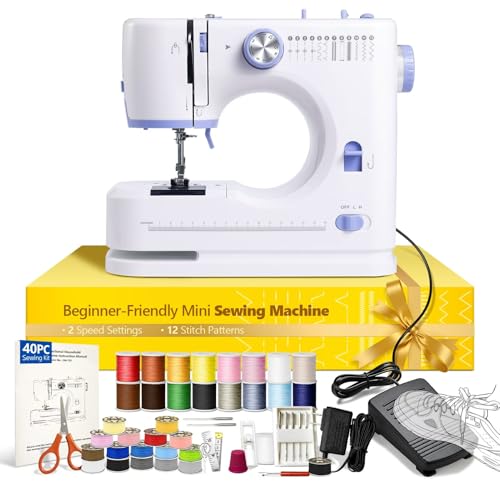
Verdanika Tabletop Mini Sewing Machine

MEGLE FHSM-505 Household Sewing Machine
More Details On Our Top Picks
This is the pick for anyone who suspects sewing will stick. Thirty-seven built-in stitches cover straight seams, decorative flourishes, heirloom work, and quilting, which means the machine that teaches you today can still challenge you two years from now.
Five presser feet ship in the box, including a zigzag foot, zipper foot, blind stitch foot, buttonhole foot, and button sewing foot, so most beginner projects need no extra purchases. A built-in storage compartment keeps those feet from wandering off in a drawer.
Strong Points
- 37 stitches give you decorative, utility, and quilting options as skills grow
- Five included accessory feet handle zippers, buttons, and blind hems out of the box
- Onboard storage compartment keeps small parts organized between sessions
- Built by a brand with widely available tutorials and replacement parts
Things To Consider
- More stitches mean more dials to learn, which can feel busy on day one
- Owners commonly report needing patience with initial threading until muscle memory kicks in
Key Specs
Who Will Love This
Ambitious beginners who already know they want to move past mending into quilting or garment construction.
Where A Sibling Pick Shines
The Brother FB1757X suits cautious newcomers better, since its simpler 17-stitch layout is easier to absorb in a single afternoon.
Half the frustration of starting a new hobby is realizing you need ten more things before you can begin. The Dechow sidesteps that by bundling a foldable storage bag, fabric, and twelve thread colors into one package, so your first session starts the moment the box opens.
Dual power is the other quiet win here. Run it off an AC adapter at your desk, or load four AA batteries (sold separately) and mend a torn backpack seam on the couch. The manufacturer recommends reading the manual and watching their guidance video first, which is honest advice worth following.
Upsides
- Complete kit includes storage bag, fabric, and 12 thread colors, no separate shopping trip needed
- Two power modes let you sew plugged in or untethered on batteries
- Lightweight body moves easily between rooms or travels in a bag
Small Caveats
- Batteries are not included, so plan ahead for cordless use
- Mini machines like this generally struggle with heavy denim or multiple fabric layers
- The setup video matters more than usual here; skipping it invites threading trouble
Right Fit For
First-time sewists who want everything in one purchase and mostly plan to tackle light mending at home.
Swap It Out When
The Stoigeld SM-725 fits better if you want a slightly larger frame with high-low speed control alongside its own generous thread bundle.
Where the XM3700 leans ambitious, the FB1757X keeps things deliberately simple. Seventeen built-in stitches still cover garments, accessories, and home décor, but the dial layout stays approachable enough that a nervous first-timer won’t freeze at the controls.
The details show real thought for learners. A four-step buttonhole walks you through buttonholes gradually instead of automating them into confusion, a reverse button lets you lock stitches securely, and LED lighting over the needle area makes dark thread on dark fabric far less punishing. The free arm also swings out for cuffs and sleeves, the fiddly spots where beginners usually stall.
What We Like
- 17 stitches balance variety against a learnable control panel
- LED work light improves visibility on low-contrast fabrics
- Free arm handles sleeves, cuffs, and small circular seams
- Four-step buttonhole builds skill without overwhelming automation
Worth Noting
- Fewer stitch options than the XM3700, so growth potential tops out sooner
- As with most mechanical models, regular cleaning of lint under the needle plate keeps stitching even
At A Glance
Made For
Hesitant beginners who value a calm, uncluttered machine over maximum features.
Reach For A Different Pick When
Quilting ambitions are real; the Brother XM3700’s 37 stitches and broader foot selection serve that path much longer.
Some sewing happens away from a dedicated craft room. The Ninonly is built for exactly that reality: small enough to sit on a desk corner without crowding it, light enough to carry, and fitted with a built-in handle so hauling it to a dorm, an RV trip, or a friend’s kitchen takes seconds.
Twelve stitch patterns and dual power modes (AC adapter or batteries) round out the package. In our view, this is less a garment-making machine than a quick-fix companion, ideal for reattaching a strap or shortening a curtain hem wherever you happen to be.
Bright Spots
- Built-in handle and featherweight body make true portability possible
- Tiny footprint fits desks, dorm shelves, and RV counters
- Two power modes support both outlet and battery operation
- 12 stitch patterns add flexibility beyond a basic straight seam
Points To Note
- Compact size limits fabric capacity for large projects like curtains or quilts
- Owners commonly report that thick seams demand slow, careful feeding on mini frames
Who Should Grab It
Students, travelers, and apartment dwellers who want emergency mending power in a bag-sized package.
Another Choice May Suit
The Verdanika tabletop model offers a steadier metal-framed base for people who’ll sew mostly at home rather than on the move.
The Stoigeld arrives with 20 pieces of fabric and 32 spools of thread, which turns it into something close to a ready-to-teach kit. That makes it a natural gift for a curious teenager or a classroom-style introduction where supplies matter as much as the machine itself.
Physically it measures about 10.3 by 9.5 by 4.4 inches and weighs roughly 4.2 pounds, so carrying it to a class or stashing it in a closet is painless. Twelve built-in stitches and high-low speed settings keep early projects manageable. One honest limit: the maker specifies thin cotton, linen, and light wovens only, so this isn’t the tool for denim or canvas.
Plus Points
- 20-piece fabric and 32-spool thread bundle removes startup friction entirely
- About 4.2 pounds, easy to carry between rooms or to classes
- High-low speed switch helps newcomers stay in control
- Compact dimensions store easily in small homes
Softer Spots
- Manufacturer states it’s designed for light fabrics only, not heavy materials
- Household-grade build means it won’t replace a heavy-duty machine later
Quick Facts
Whose Shelf It Belongs On
Gift givers and teachers equipping a true newcomer with fabric-friendly, light-weight projects in mind.
Not Your Match When
Denim hems and layered seams are on the agenda; the MEGLE FHSM-505’s adjustable stitch length copes better with varied material weights.
Mini machines usually force a trade-off: portable body, tiny work surface. The BUXFMHT breaks that pattern with a detachable extension shelf you mount when working on pillowcases or sheets and remove again for compact storage. That single design choice widens what a beginner can realistically attempt.
The accessory list reads like a starter studio: 16 thread colors, scissors, a needle threader, a tape measure, assorted needles, and a foot controller. Dual-thread, dual-speed operation with automatic rewind aims at smooth, jam-resistant stitching, though expectations should stay realistic for any machine at this size.
Reasons To Buy
- Removable extension table supports larger flat projects like sheets
- Full tool kit includes scissors, threader, tape measure, and needles
- Foot pedal frees both hands for guiding fabric
- 16 thread colors cover repairs and small color-matched fixes
Honest Caveats
- Extension table adds setup time compared with grab-and-go minis
- Marketing claims of zero jams deserve skepticism; proper threading still matters
Who It Suits Best
Home sewists tackling bed linens, pillowcases, and other wide flat items from a small workspace.
Consider Something Else When
Portability outranks project size; the Ninonly mini with its carry handle travels far more gracefully.
Compared with the Stoigeld’s 20 fabric pieces, the Marirao ships with 50, plus the same 32-spool thread count. For a household with kids experimenting side by side, that extra fabric means fewer arguments over whose turn it is and more actual practice time.
The machine itself follows the familiar mini formula: 12 built-in stitches, two speeds, and a foot pedal for hands-free control. The seller notes each unit is inspected before shipping and may arrive with a small test-cloth trace, and they offer one-on-one guidance if operation questions come up, a reassuring touch for total novices.
Standout Traits
- 50 fabric pieces support group learning and repeated practice
- 32 thread colors enable color-matched mending from day one
- Foot pedal and dual speeds mirror full-size machine habits
- Seller provides hands-on usage guidance for new operators
Minor Gripes
- Improper operation affects performance, so the manual deserves a careful read
- Mini-class machines generally cap out on thick or layered fabrics
Perfect Match For
Families introducing children to sewing, where abundant practice fabric matters more than advanced features.
Look Elsewhere When
You want a recognized brand ecosystem behind your machine; either Brother model on this list brings broader tutorial support.
Most minis wobble under enthusiastic pedaling. The Verdanika answers that with an internal metal frame, a detail rarely spelled out at this price point, and it shows up as steadier stitching on quick repairs and alterations around the house.
Twelve stitch patterns cover seams, hems, edges, and buttonholes, while the two-speed control lets a nervous learner crawl through a first hem and then shift up once confidence lands. The compact footprint stores easily, yet the stable base means it doesn’t dance across the table mid-seam, a common complaint with lighter plastic-bodied rivals like the Dechow.
Highlights
- Internal metal frame adds stability cheaper plastic bodies lack
- 12 stitches span seams, hems, edges, and buttonholes
- Low speed setting keeps early projects controlled and even
- Small footprint tucks into closets or between rooms effortlessly
Areas To Watch
- No bundled fabric or thread kit, unlike the Marirao or Stoigeld packages
- Tabletop format favors stationary use over true travel
Who Should Grab It
Household menders who want a dependable, stay-put machine for alterations and DIY crafts.
Skip It When
An all-in-one starter kit is the goal; the Marirao bundle delivers fabric and threads alongside similar core specs.
The FHSM-505 closes the list with the fullest feature set of the mini-class entries. Adjustable stitch length, forward and reverse sewing, automatic thread rewind, a built-in thread cutter, an LED light, and even a hidden storage drawer pack genuine full-size conveniences into a household frame.
Starting flexibility stands out too: a hand switch or foot pedal gets the needle moving, and two power supply modes suit different rooms. The rotary wheel selects among 12 stitches spanning straight, zigzag, blind, decorative, and buttonhole options, giving this model more range than most portables here.
Positives
- Adjustable stitch length adapts tension of look to fabric weight
- Reverse sewing locks seams without backtracking by hand
- Hidden drawer stores bobbins and needles beside the machine
- Hand switch or foot pedal start suits different comfort levels
- LED light brightens the needle area for evening mending
Trade Offs
- More functions mean a longer manual session before confident use
- Double-thread systems reward careful threading; rushed setups cause tangles
Feature Rundown
The Right Fit
Detail-oriented beginners who want near-full-size functionality without committing to a large machine.
A Better Fit Elsewhere
Total minimalists may prefer the Brother FB1757X, whose stripped-back panel removes decision fatigue entirely.
What Matters Most Before Choosing Affordable Sewing Machines For Beginners
Match The Machine To Your Fabric Plans
Be honest about what you’ll sew. Light cottons, linens, and mending jobs suit nearly every mini on this list, while denim, canvas, and quilt sandwiches demand a sturdier frame like the Brother models. Buying a lightweight machine for heavyweight plans is the fastest route to frustration.
Count The Hidden Costs Of Kits
Bundle deals look generous, and often are, but check whether batteries, needles, or bobbins are excluded. A machine that ships with 50 fabric pieces saves money only if you’d have bought supplies anyway. Solo shoppers with a sewing drawer already stocked may prefer a bare machine at a lower entry point.
Prioritize Controls Over Stitch Counts
Twelve well-labeled stitches beat forty confusing ones for a first year of sewing. Look for clear dials, a reverse function, and speed control you can actually reach mid-seam. These three attributes shape daily satisfaction far more than decorative stitch totals ever will.
Think About Where You’ll Actually Sew
Dorm dwellers and RV travelers need battery power and a carry handle. Kitchen-table sewists benefit from an extension table and a foot pedal. Storage space, outlet access, and noise tolerance quietly decide which machine earns counter space versus closet exile.
Key Considerations Across These Picks
Traps First Timers Fall Into
The classic error is buying for the sewer you hope to become instead of the one you are today. A 37-stitch machine overwhelms someone who just wants to fix a torn seam, and a mini frustrates anyone dreaming of quilts. Read the fabric-weight limits too; several minis here specify light materials only, and ignoring that voids the fun fast.
When Paying More Pays Off
Higher-tier machines earn their cost through metal framing, brand-backed parts availability, and room to grow. The jump from a basic mini to a Brother mechanical typically buys smoother tension, quieter motors, and years of expandability. Pay up once your projects outgrow patches and hems, not before.
Frequently Asked Questions
Can a mini sewing machine handle denim?
Most cannot manage multiple layers comfortably. Stick to light cottons and single-layer repairs, or choose a sturdier mechanical model for heavy fabrics.
Do these machines come pre-threaded?
Generally no, and threading is the first skill every beginner learns. Follow the manual’s diagram carefully and expect a few practice runs.
Is a foot pedal necessary for beginners?
It mirrors how full-size machines operate, building transferable habits. Hand-switch start options work well for very young or hesitant users.
How much maintenance do budget machines need?
Regular lint removal under the needle plate and occasional oiling per the manual keep stitching even. Skipping cleaning causes most skipped-stitch complaints.
Are bundled kits actually good value?
For absolute beginners with zero supplies, yes, since fabric and threads remove startup barriers. Experienced sewists with stocked drawers gain little from them.
Closing Thoughts
The right affordable sewing machine is the one matching your actual projects, not your ambitions. Start with the Brother FB1757X for calm simplicity, the XM3700 for growth headroom, or a bundled mini like the Marirao for family learning. Whichever you choose, read the manual fully before your first seam, and give yourself permission to make crooked lines while you learn.
