
Teen artists burn through supplies fast, and a scattered pile of half-used pencils kills momentum faster than anything. A well-organized kit keeps everything in one place, so the sketching actually happens instead of the searching. This list covers drawing-focused sets, multi-medium boxes, and one hands-on craft project, matched to different skill levels and budgets.
The Shortlist At A Glance

PANDAFLY 80 Drawing Set Sketching Kit with 3-Color Sketchbook

TMOL 194 Piece Deluxe Art Set in Wooden Case

Daerthotk 100 Art Supplies Drawing Kit with 3-Color Sketchbook

Drawdart 76 Pack Pro Sketching Kit

Heshengping 41pcs Sketching Pencil Set

Norberg & Linden 144-Piece Art Set in Wooden Box

HOLA Paint Your Own Moon Lamp Kit

HIFORNY 100 PCS Drawing Set Sketching Kit
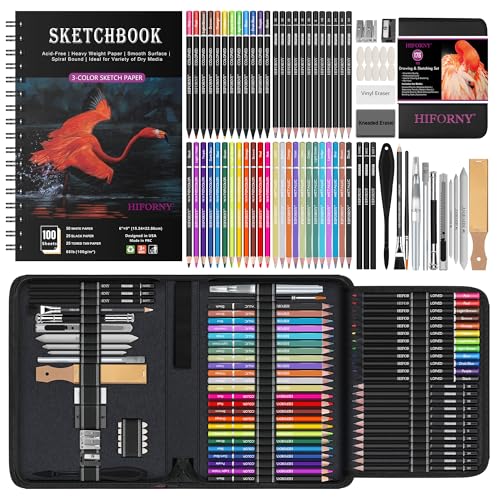
HIFORNY 176 PCS Art Supplies Drawing Set

Kird Barken 70 PCS Art Supply Drawing Set
More Details On Our Top Picks
The PANDAFLY set reads like a drawing course in a box: white charcoal for highlights, black charcoal for drama, watercolor pencils for washes, oil-based and metallic colored pencils for finish work, plus fifteen wooden graphite pencils for everyday sketching. That spread matters because teenagers rarely know which medium will click until they try several.
The bundled accessories round it out nicely. A refillable water brush pen turns those watercolor pencils into paint-like washes, while a kneaded eraser lifts highlights without damaging paper. For a teen working through a sketchbook at the kitchen table or in a bedroom corner, this covers nearly every dry-to-wet technique they’ll encounter in an intro art class.
Strong Points
- Seven distinct pencil families let your teen explore charcoal, graphite, and color without buying separate kits.
- The refillable water brush pen means watercolor effects need no jar of water at the desk.
- A kneaded eraser doubles as a shading tool, teaching blending skills most beginners pick up late.
- White gel pen adds crisp highlights over darker media, a trick that instantly improves finished pieces.
Things To Consider
- With 80 loose pieces, organization depends entirely on whatever case ships with it; expect some re-sorting after heavy use.
- Charcoal pencils smudge easily, so finished pages benefit from a fixative spray or careful stacking.
Who Should Grab It
Teens who already doodle daily and want room to grow into charcoal and mixed techniques without outgrowing the kit.
Where A Sibling Pick Shines
Shoppers wanting paints and pastels alongside pencils will get more range from the TMOL 194 Piece Deluxe Art Set.
Where the PANDAFLY kit leans hard into drawing, this TMOL box spreads its bets across every medium a curious teen might touch: crayons, colored pencils, oil pastels, watercolor cakes, acrylic paints, brushes, palettes, even sandpaper sheets for texture work. The wooden case keeps all 194 pieces visible at once, which cuts down the “where’s my sharpener” problem considerably.
The paper situation deserves attention too. Four A4 drawing pads plus three canvas boards come included, and the fine-grained stock absorbs water quickly enough for smooth blending and clean lines. In practice, that means your teen can move from a crayon sketch to an acrylic painting in the same afternoon without a store run, which is exactly what keeps creative momentum alive during school breaks.
Highlights
- Acrylics, watercolors, pastels, crayons, and pencils coexist in one case, covering virtually every school assignment format.
- Four drawing pads and three canvas boards mean months of practice before any repurchase.
- The quick-absorbing pad paper handles wet media better than standard printer-paper substitutes.
- A color wheel teaches mixing fundamentals, something many starter kits skip entirely.
Trade Offs
- At 194 pieces, restocking individual compartments takes patience once things get shuffled.
- Beginner-grade pigments won’t match artist-brand saturation; serious painters may want upgrades later.
Made For
Teens who bounce between drawing, painting, and pastels rather than committing to a single medium yet.
Another Choice May Suit
Drawing-only students get deeper pencil variety from the PANDAFLY 80 Drawing Set at a tighter focus.
The clever part of this Daerthotk kit isn’t the pencils, it’s the sketchbook. Its spiral-bound pad mixes 30 white pages with 10 toned tan and 10 black sheets, all 80-pound weight at 120 GSM. Toned paper changes how a teen draws: tan sheets suit mid-tone shading studies, black pages make white gel pen and charcoal pop. One book replaces three separate purchases.
At 5.8 by 8.5 inches, the book slips into a backpack for art class or coffee-shop sketching sessions. The surrounding 100-piece kit supplies graphite, colored, charcoal, and watercolor pencils plus a coloring book, so there’s structure available on low-motivation days. For the price bracket, the paper value alone makes this a smart first kit.
Upsides
- The tri-color sketchbook saves money versus buying white, tan, and black pads separately.
- Spiral binding lies flat, which matters for scanning artwork or working across a spread.
- 80-pound paper tolerates light watercolor washes from the included water-soluble pencils.
- A coloring book gives hesitant beginners a low-pressure entry point.
Small Caveats
- Fifty pages vanish quickly for prolific sketchers; budget for refills within a semester.
- The compact page size limits large composition work compared to A4 pads.
Right Fit For
Budget-minded shoppers gifting a first serious kit to a teen still finding their style.
Swap It Out When
Teens needing more pages per book should look at the HIFORNY 176 PCS set with its 100-sheet sketchbook.
Drawdart splits the difference between the pencil-heavy PANDAFLY kit and the paint-heavy TMOL box by pairing a broad pencil collection with both a sketchbook and a dedicated watercolor pad. Graphite, charcoal, watercolor, and metallic pencils cover the main drawing techniques, while the second pad acknowledges that water-soluble pencils behave differently on absorbent stock.
Blending tools, erasers, and sharpeners arrive in the box too, so nothing blocks a first session. The brand also leans visibly into after-sale support, inviting contact when expectations fall short. For a teen splitting time between dry sketching and occasional watercolor experiments, this dual-pad layout removes a common friction point: ruining good sketch paper with wet media.
Reasons To Buy
- Separate watercolor pad protects sketchbook pages from warping during wet techniques.
- Metallic pencils add flair for journal decoration and dark-paper work popular with teens.
- Complete accessory load means zero extra purchases before the first drawing session.
Points To Note
- Two pads take up more desk space than single-book kits like the Heshengping set.
- Pencil grades aren’t itemized publicly, so exact tonal range requires checking the listing.
Who Will Love This
Teens alternating between graphite studies and watercolor-pencil washes in the same week.
Not Your Match When
Minimalists with tiny desks may prefer the Heshengping 41pcs Sketching Pencil Set’s leaner footprint.
Don’t let the 41-piece count fool you; the graphite lineup here is unusually complete. Fourteen sketching pencils span 12B down to 6H, giving your teen the full tonal ladder from near-black soft leads to crisp hard lines. Many pricier kits skip the extreme ends of that scale, which quietly limits shading exercises taught in art class.
Twelve watercolor pencils, three charcoal pencils, three blending stumps, and a 50-page three-color sketchbook fill out the rest, alongside a coloring book, art knife, sharpener, extender, and zip case. Everything fits a small drawer or backpack pocket. The honest trade-off: fewer colored options than bigger kits, so this suits a drawing-first student rather than a color enthusiast.
Bright Spots
- The 12B-to-6H graphite range supports professional-style value scales and technical linework alike.
- Blending stumps teach smooth shading transitions without finger-smudge mess.
- A pencil extender squeezes full life from short stubs, reducing waste over a school year.
Softer Spots
- Blending stump colors ship randomly, a cosmetic quirk worth knowing upfront.
- No metallic or oil-based colored pencils limit decorative and dark-paper projects.
Whose Shelf It Belongs On
Students in formal drawing classes who need precise graphite control in a compact, affordable package.
Reach For A Different Pick When
Color-driven teens will find far more pigment variety in the Kird Barken 70 PCS set’s 36 colored pencils.
This is the kit that looks like furniture. Norberg & Linden packs 144 pieces, including 24 oil pastels, 24 watercolor cakes, 24 colored pencils, and 60 crayons, into a wooden box with a pull-out drawer. Compared to the TMOL 194-piece case, you give up acrylics and drawing pads but gain storage that survives years of use and looks grown-up on a shelf.
Two paint brushes, three palettes, a sharpener, and an eraser handle the basics. The drawer design matters more than it sounds: supplies stay sorted between sessions instead of migrating into desk drawers, a failure mode common to tray-style cases. Households sharing one art station between siblings tend to appreciate that discipline most.
What We Like
- The wooden box with drawer keeps 144 pieces organized long after cardboard cases collapse.
- Oil pastels and watercolor cakes support painterly techniques beyond plain pencil work.
- It presents beautifully as a gift, no wrapping gymnastics required.
- Crayon count alone handles younger siblings who inevitably join in.
Worth Noting
- No drawing pads or canvases are included, so paper needs buying separately.
- Wooden construction adds weight, making it a poor fit for daily backpack transport.
Who It Suits Best
Families setting up a permanent shared art station at home rather than a portable kit.
Consider Something Else When
Teens carrying supplies to classes will find the HIFORNY 100 PCS zippered case far more travel-friendly.
Not every teen wants another pencil set. This HOLA kit flips the formula: paint a moon-shaped lamp yourself, then keep using it as bedroom decor. The updated version charges over USB-C, so there’s no battery-swapping chore, and a remote cycles through 30 light colors with timer settings running from 15 minutes up to 5 hours.
That timer earns its place on nightstands, letting the lamp shut off after lights-out without anyone getting up. As a craft, it’s a single satisfying project rather than an ongoing hobby, which suits teens short on time or patience for open-ended drawing. Pair it with one of the sketch kits above and you’ve covered both the maker and the artist in one gift.
Plus Points
- USB-C charging eliminates disposable batteries and the midnight dead-lamp frustration.
- Thirty remote-controlled colors let the finished piece match any room mood.
- Timer options from 15 minutes to 5 hours suit bedtime routines neatly.
Room For Improvement
- It’s a one-time project; once painted, the creative activity is essentially complete.
- Paint finish quality depends on the painter’s patience, so results vary widely.
The Right Fit
Casual creators and gift-givers wanting a weekend project with a functional, displayable result.
Look Elsewhere When
Teens craving ongoing practice should choose any drawing kit here, starting with the PANDAFLY 80-piece set.
The zippered canvas case is the headline here. Unlike the rigid boxes elsewhere on this list, HIFORNY’s soft-sided organizer holds all 100 pieces in labeled loops, rolls up, and slides into a tote bag. Teens hauling supplies to art class, a friend’s house, or a park bench will notice the difference within a week.
Inside, the graphite selection runs deep: 24 pencils spanning 14B to 5H, plus woodless graphite, willow charcoal sticks, pastel sticks, and graphite and charcoal sticks for broad tonal sweeps. The six-by-nine-inch sketchbook again mixes 30 white, 10 tan, and 10 black pages at 100 GSM. Sticks and stumps do shed dust, so a quick shake-out over a trash bin keeps the case tidy.
Standout Traits
- The durable zippered canvas case organizes 100 items and survives daily bag transport.
- Charcoal and graphite sticks enable expressive broad strokes pencils can’t match.
- A woodless 6B pencil covers large shadow areas fast without constant sharpening.
- Labeled slots rebuild habits of putting tools back where they belong.
Honest Caveats
- Loose charcoal sticks create dust that settles into case fabric over time.
- Smaller 6×9 pages constrain detailed compositions versus larger pads.
Best Suited To
Students commuting to art classes or sketching outdoors who need durability on the move.
Skip It When
Home-studio teens wanting maximum paper will prefer the HIFORNY 176 PCS set’s 100-page book.
Think of this as the HIFORNY 100 PCS kit taken to its logical conclusion: 76 tools and accessories joined by a 100-page three-color sketchbook, totaling 176 pieces. Six pencil categories cover graphite, colored, charcoal, watercolor, and metallic work, and the accessory list reads like a working artist’s checklist, including blending stumps, a sketch wipe scraper, sandpaper block, two sharpeners, and both vinyl and kneaded erasers.
The scraper and sandpaper block deserve a mention since beginners rarely own them; the scraper lifts highlights from toned paper, while sandpaper refreshes stump tips. With 100 pages instead of 50, the sketchbook lasts a full semester of regular use. The trade-off is bulk and cost, so casual doodlers may find it excessive.
Positives
- 176 total pieces mean years of exploration before any supplemental purchases.
- The 100-page sketchbook doubles the runway of smaller kits’ 50-page books.
- Advanced accessories like the wipe scraper support refined toned-paper techniques.
- Metallic and watercolor pencils broaden output beyond grayscale sketching.
Minor Gripes
- The sheer piece count demands disciplined storage habits to avoid losing favorites.
- Overkill for teens who sketch occasionally rather than weekly.
Who Will Love This
Dedicated teen artists drawing most days who want one comprehensive kit instead of piecemeal upgrades.
Where Another Pick Suits Better
Occasional sketchers get everything they need from the lighter Heshengping 41pcs set at lower commitment.
Self-taught teens often stall not from lack of tools but lack of direction, and that’s where this Kird Barken set differs. Alongside 22 graphite pencils spanning 5H to 14B, three charcoal pencils, and 36 colored pencils split evenly between oil-based, metallic, and water-soluble types, the kit includes a tutorial to structure early practice sessions.
Storage comes via two removable trays, which keeps the 70 pieces sorted on a desk and lets you lift out just one tray for travel. A blending brush, erasers, sharpener, and smudge tools complete the picture. Against the PANDAFLY kit, you trade some charcoal depth for stronger color coverage and built-in instruction, a reasonable swap for beginners.
Best Bits
- The included tutorial gives direction to teens learning without a class or teacher.
- 36 colored pencils across three finishes support coloring, metallic accents, and water effects.
- Removable trays make partial packing easy for sleepovers or study halls.
Areas To Watch
- Trays offer less protection than zipped or latched cases during transport.
- Only three charcoal pencils limit deep tonal charcoal work compared to stick-based kits.
Perfect Match For
Independent learners who want guided structure plus a balanced mix of graphite and color.
Where Another Pick Shines
Charcoal-focused students will extract more expressive range from the HIFORNY 100 PCS kit’s sticks.
What Matters Most Before Choosing Art Kits For Teenagers
Match The Medium To Their Actual Habit
Watch what your teen already reaches for before spending. A kid who fills notebook margins with pencil sketches needs graphite depth and toned paper, not sixty crayons. Meanwhile, a teen drawn to bold poster work will get more mileage from pastels and acrylics than from another dozen HB pencils. Buying against their real habit is how kits end up untouched by February.
Paper Quality Deserves More Attention Than Piece Count
Big numbers sell kits, but thin paper frustrates fast. Look for weights around 80 pounds or 100 GSM and up, which tolerate erasing, layering, and light washes without pilling. Toned tan and black pages add technique variety that plain white can’t teach. A 50-page quality book beats a 200-page flimsy pad almost every time.
Storage Determines Whether Supplies Survive
Zippered canvas cases travel well and survive backpack life; wooden boxes protect supplies at home but hate being carried. Trays sit somewhere between. Consider where drawing actually happens in your house, then pick the container shape that matches that spot.
Skill Trajectory Beats Starting Point
A beginner needs breadth to discover preferences; a committed young artist needs depth in one medium. Kits with full graphite ranges, like 14B through 5H, serve developing skills longer than generic assortments, because tonal control is the foundation most art teachers build on first.
Key Considerations Across These Picks
Where Shoppers Go Wrong
The classic mistake is chasing piece counts. A 194-piece box sounds generous until half the contents go unused, and cheap filler items dilute the quality of the pieces that matter. Another trap: ignoring paper specs entirely, then wondering why watercolor pencils buckle the pages. Read the GSM rating before assuming any sketchbook will hold up.
What Separates Premium From Basic
Higher-tier kits spend money where it shows: wider graphite ranges, heavier sketchbook stock, and accessories like kneaded erasers and blending stumps that teach proper technique. Paying up makes sense once your teen draws weekly. Until then, a leaner kit leaves room to upgrade deliberately based on what they actually enjoy.
Frequently Asked Questions
What size sketchbook works best for teenage beginners?
A 6×9-inch book balances portability with enough room for detail work. Larger A4 pads suit home studios, while smaller books fit backpacks and art class desks.
Are watercolor pencils a good starting point for teens?
They’re one of the friendliest entries into painting, since they behave like normal pencils until water touches them. A refillable water brush pen keeps the process tidy indoors.
How many graphite pencil grades does a teen really need?
A spread from roughly 4H to 8B covers classroom exercises and expressive shading alike. Extreme grades like 14B add drama but aren’t essential early on.
Do toned tan and black sketchbook pages help learning?
Yes, because they force mid-tone thinking instead of relying on white paper for highlights. White gel pen or charcoal on black pages teaches contrast control quickly.
How should charcoal supplies be stored to avoid mess?
Keep sticks and charcoal pencils in closed compartments and shake fabric cases out periodically. Finished drawings benefit from fixative spray or careful flat storage to prevent smudging.
Closing Thoughts
The right kit is the one your teen will actually open on a random Tuesday afternoon. Match the medium to their existing habit, prioritize decent paper over inflated piece counts, and don’t be afraid to start lean and upgrade once their style emerges. Any of these ten will get a pencil moving; the rest is up to them.
