
Art supplies multiply fast. Between canvases leaning in corners, marker bins without lids, and posters curled behind the couch, most creative spaces reach a breaking point within a year. This roundup covers ten storage solutions that handle that mess: rolling drawer carts for small tools, mobile cabinets for bigger gear, and zippered portfolio bags for flat work you want protected. Each pick suits a different kind of maker, from apartment painters to classroom teachers.
The Picks In Brief

Winsome Halifax Mobile Storage Cabinet with 5 Drawers (White)

Winsome Halifax Tall Mobile Storage Cabinet, Black

Winsome Halifax Mobile Storage Cabinet with Doors & Drawers

EOOUT 4pcs 24×36 Inches Art Portfolio Bags

EOOUT 4pcs 18.5×24.8 Inches Art Portfolio Bags
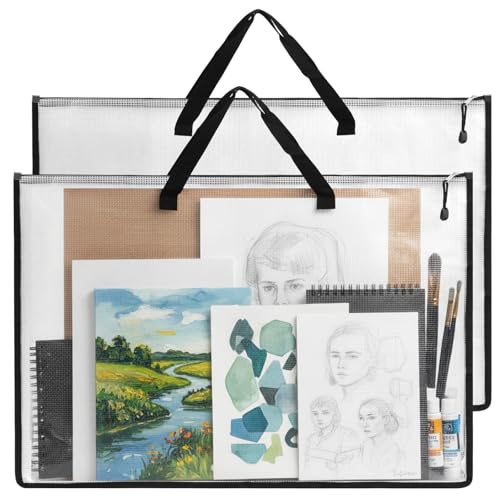
EOOUT 2 Pack 24×36 Inches Art Portfolio Case

LDAILY 15 Drawer Rolling Storage Cart (Gradient Green)

LDAILY 15 Drawer Rolling Storage Cart (Ice Cream Color)

LDAILY 15 Drawer Rolling Storage Cart

Aokitsink 4-Drawer Rolling Cart with Wooden Top
The Details Behind The Selections
The white finish is what sells this one. In a home office or craft corner where everything else is neutral, a bright black cabinet can feel heavy, and this one keeps the room airy while still hiding clutter behind a door and five pull-out drawers.
Because it rolls, you can park it beside a desk during the week and tuck it into a closet before guests arrive. Painters and scrapbookers tend to assign one drawer per medium, which turns cleanup into a two-minute job.
Strong Points
- Five drawers plus a closed door give you both visible and hidden storage in one footprint.
- Castors let a fully loaded cabinet move across hard floors without scraping your back.
- The white finish blends into bedrooms, offices, and rental walls where dark furniture clashes.
- Optional damage-protection coverage is offered at checkout, covering drops, spills, and breakdowns after the return window closes.
Things To Consider
- Assembly is required, and owners commonly report the drawer alignment needs patience during setup.
- Composite construction means you’ll want to avoid soaking the surfaces when cleaning.
Who It Suits Best
Home-based artists and remote workers who want furniture-grade storage that doesn’t look like garage shelving.
A Better Fit Elsewhere
Anyone needing more vertical capacity should look at the Winsome Halifax Tall Mobile Storage Cabinet instead.
Where the white Halifax spreads outward, this tall version climbs. Two doors up top and four drawers below stack a surprising amount of capacity into a slim floor plan, which matters enormously in apartments where every square foot is spoken for.
The black finish reads more contemporary than the white model, so it suits loft-style studios and darker accent walls. Multiple configuration options are listed on the product page, so you can match the variant to your room rather than settling for one layout.
Real Benefits
- Vertical design frees floor space for an easel, drafting table, or second chair.
- Doors conceal taller items like glue guns, paper trimmers, and stacked sketchbooks.
- Rolling base means reorganizing a room takes minutes, not an afternoon.
Worth Noting
- Tall cabinets feel top-heavy until assembled carefully, so anchoring or careful placement is wise.
- Black finishes show dust more readily than lighter tones, especially in sunny rooms.
Made For
Apartment dwellers and studio renters who need maximum capacity from a minimal footprint.
Consider Something Else When
Brighter rooms often suit the white Winsome Halifax five-drawer cabinet better, since its finish hides dust and reflects light.
This third Halifax variant targets a specific life stage: dorms, first apartments, and shared rentals. The mixed doors-and-drawers layout handles both filing folders and bulky supplies, and the whole unit rolls wherever your lease allows.
It also carries optional accidental-damage coverage covering drops, spills, and broken parts, with claims filed online or by phone. For students hauling a cabinet up stairwells, that safety net has genuine appeal.
Advantages To Know
- Door-plus-drawer mix sorts paperwork separately from paints, yarn, or camera gear.
- Damage-protection plans include parts, labor, and shipping at no added repair cost once active.
- Compact enough to double as a nightstand or printer stand in tight quarters.
Small Caveats
- Coverage begins only after the standard 30-day return period ends, so inspect the unit on arrival.
- Flat-pack furniture of this type generally benefits from two people during assembly.
Right Fit For
College students and first-apartment renters who want furniture that survives moves and doubles as everyday storage.
Where A Sibling Pick Shines
Established home studios get more raw capacity from the tall black Winsome Halifax cabinet reviewed above.
Flat artwork dies by corner ding. These four zippered mesh bags measure 24 by 36 inches, sized to swallow 22×34 panels with room to spare, and they slide under a bed or behind a sofa where rigid flat files won’t go.
The see-through weave helps too. You can identify a finished piece without unzipping anything, which sounds minor until you’re hunting one poster among twenty.
What Earns Its Place
- Holds 22×34 panels comfortably, with space for bulletin boards, charts, and puzzles besides.
- Nylon straps and sewn edges anchor the mesh, so seams resist the tearing common in plain plastic sleeves.
- Four bags let you sort by project, client, or season instead of stacking everything together.
Points To Note
- Mesh breathes but isn’t waterproof, so keep bags away from damp basements.
- Oversized bags fold awkwardly in small closets; measure your storage spot first.
Key Specs
Who Will Love This
Painters, poster collectors, and teachers archiving large-format student work at home.
Swap It Out When
Working mainly in 18×24 formats makes the smaller EOOUT four-pack the smarter size match.
Eighteen-by-twenty-four is the workhorse pad size for art students, and these bags are cut precisely for it. At 18.5 by 24.8 inches, they accept a full pad plus loose sheets, and the listing notes capacity for two packs of thick panels per bag.
Compared with the 24×36 EOOUT set, this one stores far more easily: it fits standard closet shelves and most backpacks won’t laugh at it. That portability is why it earns a spot for anyone commuting to class or a figure-drawing session.
The Case For It
- Purpose-sized for 18×24 pads, the most common student format.
- Sewn nylon straps and closed edges hold the mesh securely under daily handling.
- Zippers and carry handles make transporting work to critiques straightforward.
- Four-bag count supports sorting by course, medium, or completion status.
A Few Limitations
- Too small for 24×36 canvases, so check your largest sheet size before ordering.
- Handles are carry straps rather than padded grips; very heavy loads dig into hands.
Quick Facts
Best Suited To
Art students, hobby sketchers, and workshop attendees who carry mid-size work regularly.
Reach For A Different Pick When
Large-format painters should step up to the EOOUT 24×36 four-piece set covered earlier.
Same generous 24×36 dimensions as the four-pack earlier in this list, but sold as a leaner two-bag set. That makes it the natural choice for artists who transport finished pieces to galleries, markets, or clients and don’t need a deep archive system at home.
You still get the zippered closure, carry handle, and sewn-edge mesh build. One bag rides along to the show; the other stays home holding the next batch.
Standout Benefits
- Accommodates 22×34 panels plus bulletin boards, pillows, and chart-sized work.
- Reinforced stitching at straps and edges stands up to repeated loading and unloading.
- Two-bag quantity keeps cost and closet bulk lower than larger sets.
Practical Considerations
- Only two bags, so prolific producers will outgrow this set quickly.
- Large-format bags need wide storage; narrow closets force diagonal leaning.
Who Should Grab It
Market vendors, commission artists, and gallery hoppers moving big pieces on a regular schedule.
Not Your Match When
Archivists building a long-term flat-file system will prefer the four-bag EOOUT 24×36 set for its extra capacity.
Fifteen drawers sound like overkill until you count your supplies. Five large drawers take books, tools, and file folders, while ten shallow ones sort brushes, washi tape, and ink pads into labeled homes. The gradient green finish adds personality without shouting.
The metal frame supports a usable top surface too, and the listing suggests a printer fits there. In a craft room, that surface becomes a staging area for whatever project is open.
Useful Highlights
- Mixed drawer depths separate bulky stock from tiny embellishments.
- Wheels and side handles let the cart follow you between desk and cutting table.
- Top platform doubles as printer stand or project tray.
- Gradient coloring makes drawer contents easier to remember by position.
Details To Watch
- Plastic drawers flex under very heavy loads; distribute weight toward the bottom.
- Owners commonly mention drawer removal for cleaning requires a slight tilt maneuver.
At A Glance
Who It Belongs With
Crafter households juggling several mediums at once, from papercraft to jewelry making.
Another Choice May Suit
Kid-focused rooms often look better in the ice cream colorway of the same LDAILY cart.
Functionally identical to the gradient green LDAILY cart, this version swaps the palette for soft pastel shades. In playrooms and kids’ bedrooms, that difference decides the purchase: crayons, stickers, and puzzle pieces sort neatly into fifteen drawers a child can actually reach.
Teachers like it for the same reason. Color-coded drawers help young students return supplies to the right slot without reading labels.
Reasons It Performs
- Pastel colorway suits nurseries, playrooms, and elementary classrooms.
- Five large plus ten small drawers cover both toys and tiny craft bits.
- Metal frame and handles survive the bumps of busy family spaces better than plastic-only units.
Less Ideal Details
- Light colors show scuffs and marker smudges more than darker carts.
- Shallow drawers tempt overstuffing; teach kids to close drawers gently.
Perfect Match For
Parents and early-years teachers organizing art supplies for children aged roughly three to ten.
Look Elsewhere When
Grown-up studios wanting a subtler look should choose the gradient green LDAILY variant instead.
This is the core LDAILY cart without a named colorway, and that neutrality is its strength. Shared studios, school art rooms, and office supply corners rarely want pastels or gradients; they want dependable drawer storage that matches anything already in the room.
The spec sheet matches its siblings: five large drawers at 14.5 by 11.5 by 5 inches, ten shallower ones beneath, and a metal frame with grab handles. Same wheels, same top surface for a printer or project bin.
A Favorable Mix
- Neutral styling integrates into classrooms and adult workspaces without visual noise.
- Deep-shallow drawer split handles both textbooks and thumbtacks.
- Rolling base lets one cart serve several stations across a day.
Factors To Consider
- Without a distinct color scheme, labeling becomes essential in multi-user spaces.
- Drawers are open-top bins; dust settles on contents in low-use rooms.
Core Details
Whose Shelf It Belongs On
Classroom teachers, office managers, and co-op studio members equipping shared creative zones.
Skip It When
Heavy equipment tops the shopping list; the Aokitsink wooden-top cart later in this list carries more load.
Every other cart here prioritizes drawer count. This Aokitsink prioritizes muscle: a reinforced metal frame rated for up to 150 pounds, capped with a wooden top that works as a genuine work surface rather than a dust shelf.
Four wider drawers trade fine sorting for volume, and the wheels lock, which matters more than it sounds. A cart that stays put while you press, cut, or paint on its own top is a different tool entirely from one that drifts away mid-stroke.
Strengths Worth Knowing
- 150-pound frame capacity supports kiln tools, sewing machines, or stacked stock.
- Wooden top gives you a stable secondary workstation in cramped studios.
- Lockable castors hold position during active work sessions.
- Metal-over-plastic build resists the sagging that affects lightweight carts over time.
Trade Offs To Consider
- Four drawers offer less granular organization than the LDAILY fifteen-drawer carts.
- Heavier construction makes it less convenient to haul upstairs frequently.
Feature Snapshot
The Right Fit
Serious hobbyists and small-business makers running power tools or machines off a single mobile station.
Where Another Pick Suits Better
Papercrafters sorting dozens of small supplies will get more value from the LDAILY fifteen-drawer cart.
What Matters Most Before Choosing Art Storages
Match Storage Shape To Your Medium
Flat work demands portfolio bags or wide drawers; tubes, jars, and tools want divided bins or deep drawers. Buying a tall cabinet for rolled canvases wastes half its interior. Sketch your actual inventory first, then shop.
Measure Twice, Especially Vertically
Cabinet heights and bag lengths defeat careless planning. Check ceiling clearance, doorway widths, and closet depth before committing. A 36-inch portfolio bag needs 38 inches of straight storage somewhere.
Mobility Is A Feature, Not A Gimmick
Wheels earn their keep in multi-use rooms where a craft corner shares space with dining or sleeping. Locked castors matter equally, since a cart that slides while you work gets frustrating fast.
Count Your Categories, Not Your Items
Fifteen drawers help only if you genuinely have fifteen categories. Most makers settle happily into six to eight zones, which a four-drawer cart with dividers can handle just as well.
Key Considerations Across These Picks
Traps First Timers Fall Into
The classic error is buying for the collection you wish you had rather than the one on your table. Oversized cabinets crowd small rooms, and undersized bags crease large work. Also skip guessing on materials: composite furniture dislikes moisture, so damp garages call for metal frames instead.
What Separates Premium From Basic
Higher-tier picks spend their budget on structure: reinforced steel frames, wooden worktops, lockable wheels, and load ratings near 150 pounds. That engineering pays off for anyone mounting machines on top or moving a loaded cart daily. Light users gain little from paying for it.
Frequently Asked Questions
Are rolling carts sturdy enough for heavy art supplies?
Quality varies widely by frame material. Metal-framed models like the Aokitsink cart support up to 150 pounds, while lightweight plastic carts suit papers and notions best.
How do I protect finished paintings in storage?
Zippered mesh portfolio bags shield surfaces from dust and corner knocks. Keep them upright in a dry room away from direct sunlight.
Can a storage cabinet double as a work surface?
Some can. The Aokitsink cart’s wooden top is designed for active use, whereas most laminate cabinet tops suit printers and lamps better than cutting and gluing.
What size portfolio bag fits standard drawing pads?
The ubiquitous 18×24 inch pad fits an 18.5×24.8 inch bag with comfortable clearance. Larger 22×34 boards need the 24×36 size.
Do I need lockable wheels?
You do if the cart doubles as a workstation or holds a machine. For pure supply transport, free-rolling castors are usually sufficient.
Closing Thoughts
Good art storage disappears into your routine. The right cart follows you to the desk, the right bag slides under the bed, and the right cabinet swallows the overflow nobody sees. Start with your messiest category, match the container to it, and let the rest of the system grow from there. Your future self, hunting for that one brush at midnight, will appreciate the effort.
