
A tilted surface changes everything when you draw. Hunching over a flat desk for hours leaves your neck and shoulders aching, and loose paper slides around at the worst moments. The right drawing table fixes both problems with an adjustable angle and a ledge that keeps pencils where they belong. This roundup covers nine options for hobbyists, students, and working artists setting up a home studio.
The Leading Options At A Glance

Yaheetech Adjustable Drafting Table & Stool (Black)

MEEDEN Wood Adjustable Drafting Table 35.5″ x 23.5″

MEEDEN Wood Drafting Table & Stool Set

MEEDEN Wood Adjustable Drafting Table Wooden Art Desk

AOTEMOON Beechwood Tabletop Easel with Papers & Tape
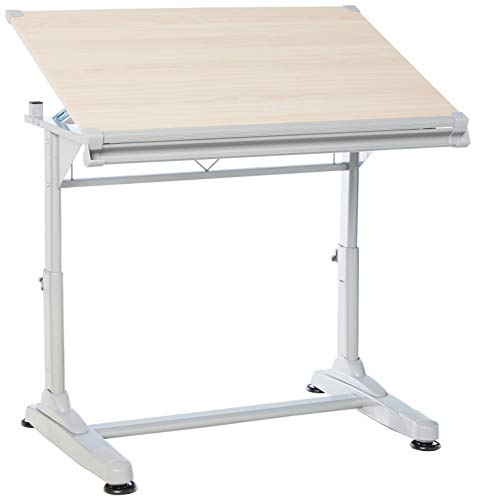
Stand Up Desk Store Drafting Table (Silver Frame/Birch Top)

Stand Up Desk Store Drafting Table (Black Frame/Black Top)
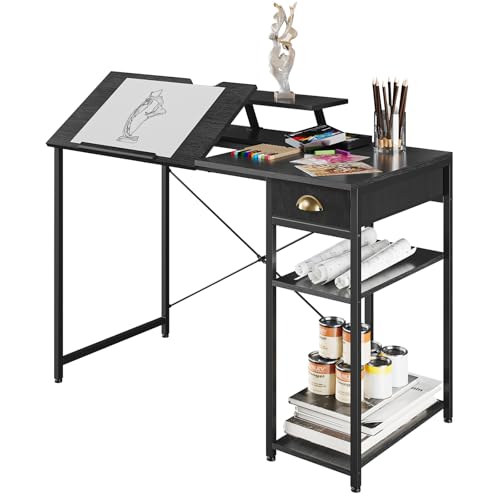
X-cosrack Drafting Table with Storage Shelves

MEEDEN Vintage Wooden Drafting Table
Inside Each Recommended Option
Setting up a first art corner usually means buying a table, then realizing you still need somewhere to sit. This Yaheetech set solves that in one purchase, pairing a tilting tempered glass top with a padded stool rated to hold up to 265 pounds. The black powder-coated steel frame keeps the whole thing looking tidy in a spare bedroom or dorm.
The glass surface wipes clean after ink or paint sessions, which matters more than most people expect until their first marker accident. Side storage sits on a CARB P2 MDF countertop, a low-emission engineered wood standard common in furniture.
Where It Excels
- Stool arrives with the table, so you can start sketching the day it’s assembled
- Tempered glass top resists stains and cleans with a single wipe
- Steel bracket base gives the tilt mechanism a stable foundation
- Compact footprint suits apartments and shared rooms
Things To Consider
- Glass surfaces show fingerprints and dust quickly, so expect frequent wiping
- Assembly takes patience; owners commonly report the instructions need careful reading
Key Specs
Who It Suits Best
Students and first-time studio builders who want a complete seated workstation without piecing together separate purchases.
A Better Fit Elsewhere
Anyone wanting a larger wooden work surface should look at the MEEDEN Wood Adjustable Drafting Table instead.
Where the Yaheetech leans on glass, this MEEDEN goes all wood, with a smooth particle board surface and solid beech legs. The tabletop tilts from flat to 60 degrees, a steeper range than most desks here offer, which watercolor painters tend to appreciate for controlling washes. Height adjusts from roughly 29.7 to 38.4 inches, so it works seated or standing.
A built-in 25-inch pencil ledge runs along the front edge, holding brushes and pens from rolling off while you work. For daily sketchers, that small detail quietly saves more frustration than any headline spec.
Noteworthy Benefits
- 60-degree maximum tilt handles steep angles for detailed linework
- Natural beech legs feel sturdier than all-metal budget frames
- Height range covers both chair-based and standing workflows
- Pencil ledge keeps tools within arm’s reach
Worth Noting
- No stool included, unlike the MEEDEN set version reviewed next
- Particle board surface needs coasters under wet cups to avoid swelling
The Right Fit
Daily sketchers and hobby painters who want a generous wooden surface and don’t mind sourcing their own chair.
Swap It Out When
If seating matters as much as the table, the MEEDEN Wood Drafting Table & Stool Set bundles both for less hassle.
This is the table above with a matching seat added, and for many first setups that combination removes the last excuse to procrastinate. You get the same 35.5 by 23.5 inch particle board top, the flat-to-60-degree tilt, and the height adjustment spanning about 29.7 to 38.4 inches, plus a stool designed to match the natural wood look.
In practice, matching furniture makes a small art corner feel intentional rather than improvised. Students furnishing a dorm or a teenager claiming a bedroom corner will find the whole package lands ready to use.
Points In Its Favor
- Table and stool ship together, cutting setup decisions to zero
- Steep 60-degree tilt supports serious drawing posture
- 25-inch ledge stops pencils migrating off the edge
- Matching wood tones give the corner a cohesive look
- Height adjustment grows with the user, useful for younger artists
Small Caveats
- Two assemblies instead of one, so block out extra build time
- Wood finish benefits from occasional tightening of hardware over months of use
Feature Snapshot
Made For
Art students and beginners furnishing a complete workspace in a single order.
Another Choice May Suit
Working illustrators needing precision tools would get more from the MEEDEN Wooden Art Desk with its included T-square.
Technical drawers and perspective workers live by straight edges, and this MEEDEN variant ships with a 24-inch T-square in the box. That single addition separates it from the brand’s other tables here, since a T-square rides the table edge to produce true parallel lines across a full sheet. The 35.5 by 23.5 inch surface holds oil canvases, watercolor blocks, and brush holders side by side without constant reshuffling.
You keep the familiar MEEDEN formula too: adjustable height, a tilting top, and the built-in 25-inch pencil ledge along the front rail.
Useful Strengths
- Included 24-inch T-square enables accurate parallel guidelines
- Large surface accommodates multiple works in progress at once
- Pencil ledge doubles as a rest for long rulers and brushes
- Suits oil, watercolor, and dry media equally well
Points To Note
- Oil paint spills demand prompt cleanup on any wood surface
- Heavier overall than easel-style options, so plan its spot before assembly
Who Will Love This
Illustrators, design students, and technical artists whose work depends on measured, straight-line accuracy.
Look Elsewhere When
Casual painters who just want a simple angled board will find the AOTEMOON tabletop easel far less commitment.
Not everyone needs a full furniture piece. This AOTEMOON kit is a 24.9 by 17.3 inch beechwood easel that sits on any existing desk or kitchen table, and it arrives stocked: ten sheets of 300 GSM painting paper, ten sheets of lighter 100 GSM sketch paper, and a roll of masking tape measuring 0.78 inches by 65.6 feet. GSM simply means paper weight; 300 GSM is thick enough to handle wet paint without buckling badly.
For someone testing whether painting sticks as a hobby, it’s a gentle entry point. The natural wood also blends into living spaces without shouting.
Good Reasons To Consider
- Paper and tape included, so creativity can start immediately
- Stores flat in a closet between sessions
- Works for painting, sketching, diamond art, even reading
- Minimal footprint fits tiny apartments and shared tables
Honest Caveats
- No height or angle adjustment like a dedicated drafting table offers
- Smaller surface limits canvas sizes compared with the MEEDEN desks
Quick Facts
Right Fit For
Weekend dabblers, kids, and gift-givers who want a complete starter kit rather than permanent furniture.
Reach For A Different Pick When
Serious daily practice calls for the adjustability of the Stand Up Desk Store drafting table instead.
Long sessions change what you need from a desk. This model adjusts height in 2-inch increments using simple tools, running from about 26.5 to 38.5 inches tall, and the desktop locks into 11 angle positions from flat to 45 degrees. Mixed-media artists who alternate between writing notes flat and drawing tilted will use that range constantly.
The birch top spans roughly 39.5 by 26 inches, and a full-length pencil tray runs beneath the front edge. Oversized rubber feet keep the frame planted on hard floors, a small thing that prevents mid-stroke wobble.
Strong Points
- Eleven angle settings fine-tune tilt better than three-position rivals
- Height increments suit both short and tall users
- Rubber feet protect floors and add stability
- Full-length tray swallows pencils, erasers, and markers
- Light birch finish brightens dim corners
Trade Offs
- Angle changes require tools, so it’s set-and-forget rather than quick-flip
- Maximum load tops out lower than heavy-duty studio tables
Details At A Glance
Who Should Grab It
Mixed-media creators and hybrid worker-artists who split time between flat paperwork and angled drawing.
Not Your Match When
Dark, moody studio aesthetics pair better with the black-framed version covered next.
Same skeleton, different wardrobe. This version carries the identical frame as the birch-top pick above: 39.5 by 26 inch surface, 11 tilt settings reaching 45 degrees, 2-inch height steps, and a stated 50-pound maximum load. What changes is the finish, with a black top on a black frame that disappears into modern office decor instead of standing out.
For anyone whose art desk doubles as a computer workstation in a visible room, the darker scheme reads more professional. The full-length pencil tray and oversized rubber feet carry over unchanged.
Useful Highlights
- All-black finish hides scuffs and blends with tech-heavy rooms
- Identical 11-angle mechanism gives precise drawing positions
- 50 lb capacity comfortably handles monitors alongside sketch gear
- Rubber feet stay quiet on hardwood floors
Less Ideal Details
- Dark tops show chalk, pastel dust, and eraser crumbs readily
- Tool-required adjustments mean less spontaneity than crank or pin systems
Whose Shelf It Belongs On
Digital-plus-traditional artists working in shared home offices where the desk must pass as regular furniture.
Consider Something Else When
Storage-hungry users juggling supplies should step up to the X-cosrack table with its shelves and drawer.
Supply clutter is the silent killer of small creative spaces. This X-cosrack tackles it head-on with a 43-inch desktop, built-in storage shelves, a drawer, and even a monitor stand, making it equal parts art station and computer desk. The tilting section adjusts from flat to 45 degrees and locks in place, covering both typing hours and drawing sessions.
Compared with the leaner Stand Up Desk Store frames, you trade some minimalism for genuine organization. In a studio apartment where one desk must do everything, that trade usually pays off.
What Makes Sense
- Shelves and drawer keep supplies off the work surface
- Monitor stand supports dual-purpose computer and drawing use
- 45-degree lockable tilt holds steady during long sessions
- Wide 43-inch top fits dual monitors or large canvases
Factors To Consider
- More components mean a longer, fiddlier assembly than simple frames
- Storage adds bulk, so measure the room before ordering
Best Suited To
Apartment dwellers and students who need one desk to serve study, computing, and creative work simultaneously.
Where A Sibling Pick Shines
Purists wanting a classic artist’s table with vintage character will prefer the MEEDEN Vintage Walnut model below.
Some studios want warmth, not utility gray. This MEEDEN finishes its smooth particle board top in a hand-made walnut tone with visible grain, resting on an H-frame base with thickened beech legs built for high load-bearing. The H-frame design, two uprights joined by a crossbar, is the traditional drafting-table structure because it stays rigid under pressure.
Next to the black X-cosrack, this one feels like furniture you’d keep long after the hobby evolves. The built-in pencil ledge completes the classic silhouette.
What Earns Its Place
- Vintage walnut grain elevates the whole room’s look
- H-frame construction delivers dependable stability while drawing
- Thickened beech legs support heavier equipment confidently
- Smooth surface resists cracking with ordinary care
- Pencil ledge matches the classic draftsman layout
Things To Weigh Up
- Walnut tone won’t suit minimalist white-and-chrome interiors
- Wood finishes appreciate periodic dusting and gentle cleaning products
Core Details
Who It Suits Best
Established hobbyists and professionals curating a studio space where the furniture itself should look considered.
Skip It When
First-timers on a tight budget get everything they need from the Yaheetech table-and-stool combo higher up this list.
What Matters Most Before Choosing Artist Drawing Tables
Tilt Range And Locking
The tilt mechanism defines how a table feels in use. Steeper ranges near 60 degrees suit watercolor and detailed linework, while shallower 45-degree settings cover general sketching and mixed tasks. Check how the angle locks, too: pinned systems flip fast, but tool-adjusted designs hold firmer once set.
Surface Material Trade-Offs
Glass cleans effortlessly but shows every fingerprint and can feel cold under wrists. Particle board and birch tops feel warmer and grip paper slightly better, though they demand quicker cleanup after wet media. Match the material to your messiest medium.
Height And Posture Fit
Measure your seated elbow height before ordering. Tables adjusting from roughly 26 to 38 inches accommodate both chairs and standing stools, which matters for anyone logging multi-hour sessions. A wrong-height table undoes every ergonomic benefit of the tilt.
Footprint And Storage Needs
A 40-inch-wide desk dominates a small room faster than expected. Compact apartments benefit from models with built-in shelving or drawers, while dedicated studios can prioritize pure work surface instead.
Key Considerations Across These Picks
Traps First Timers Fall Into
The most common mistake is buying for looks alone and ignoring tilt mechanics. Another is skipping the tape-measure step, then discovering a 43-inch desk blocks a doorway. Always confirm assembled dimensions against your actual wall space.
What Separates Premium From Basic
Higher-tier tables spend their cost on materials and mechanisms: solid beech legs, H-frame steel, finer angle increments, and finishes that survive years of brush traffic. That durability matters most for daily creators; occasional dabblers rarely notice the difference.
Frequently Asked Questions
What tilt angle works best for drawing?
Most artists settle between 30 and 45 degrees for general sketching. Watercolorists often push steeper, toward 50 or 60 degrees, to control wash flow.
Do I need a special chair for a drafting table?
An adjustable-height stool works well because your position shifts with the tabletop angle. Any sturdy chair functions, though matching sets simplify setup.
Can a drafting table double as a regular desk?
Yes, especially models that tilt fully flat and include monitor stands. The X-cosrack option in this list was designed for exactly that dual role.
How much assembly do these tables require?
Expect straightforward bolt-together construction taking under an hour for most models. Larger storage-equipped desks take longer due to extra components.
Are glass tops better than wood for artists?
Glass wins on cleanup and smoothness for ink work. Wood grips paper better and feels warmer, so the choice follows your primary medium.
Wrap Up
Your best match depends on how often you create and where the table lives. Daily artists should prioritize the MEEDEN wooden range or the Stand Up Desk Store frames for their adjustability, while the Yaheetech set remains the easiest complete starter package. Casual painters can start small with the AOTEMOON easel and upgrade later. Measure your space, pick your tilt range, and the right table will make long creative sessions something to look forward to.
