
A dull pencil can ruin a drawing faster than almost anything else. Whether you sketch daily at a studio desk or color with soft charcoal pencils on weekends, the right sharpener keeps your tips long, clean, and consistent. This roundup covers manual long-point tools, rugged brass classics, and hands-free electric models so you can match one to your actual workflow instead of guessing.
The Main Contenders

KUM AS2M Long Point Sharpener with Lead Pointers

AFMAT Rechargeable Long Point Pencil Sharpener for Artist
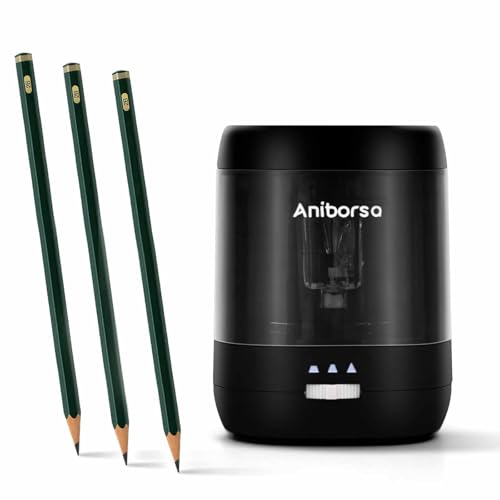
Aniborsa Electric Pencil Sharpener, USB & Battery Operated

Outus 2 pcs Long Point Pencil Sharpener, 4 Hole

Tamaki 8 Pack Handheld Metal Pencil Sharpener with 2 Holes

prolixity Electric Pencil Sharpener for Classroom
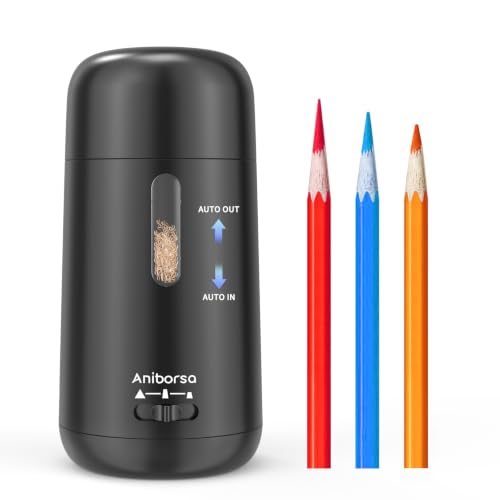
Aniborsa Rechargeable Electric Pencil Sharpener, Auto in & Out

M+R Brass Artists Pencil Sharpener 603 Double Wedge
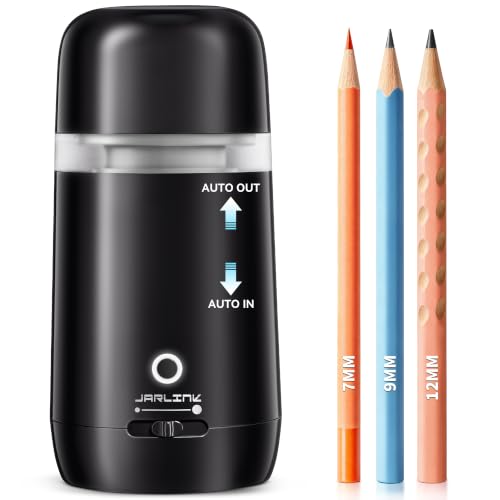
JARLINK Automatic Electric Pencil Sharpener, Rechargeable

Demissle Sandpaper Sharpener Drawing Tool, 9 Pcs
Inside Each Recommended Option
The KUM AS2M works in two stages: first it shapes the wood into a cone, then a second hole hones the graphite itself into an extended point. That two-step approach is why illustrators who need exposed lead for fine linework keep reaching for it. The blue polystyrene body slips into a pencil case without adding weight.
Two spare blades come in the box, along with separate lead pointers sized for 2 mm and 3.2 mm cores. In practice that means you can tailor the tip to a hard drafting pencil or a softer colored core without swapping tools.
Standout Benefits
- Two-step sharpening produces the long, exposed point that shading and detail work demand.
- Included spare blades mean a dull cut never ends your session; you just swap and continue.
- Dual lead pointers adapt the tip length to both standard and thicker cores.
- Pocket-sized body travels easily between home, class, and the studio.
Things To Consider
- Manual two-stage sharpening takes a few seconds longer than an electric model, which matters during high-volume classroom use.
- Blade replacement requires a small screwdriver, so plan ahead before a long drawing day.
Who It Suits Best
Artists working primarily with standard-diameter graphite or colored pencils who want precise, repeatable long points from a tool that fits in a shirt pocket.
A Better Fit Elsewhere
Anyone sharpening thick charcoal sticks will get more mileage from the AFMAT Rechargeable Long Point Pencil Sharpener, whose wider bore handles chunkier barrels.
Where the KUM AS2M asks you to do the work by hand, this AFMAT automates the same long-point result. A rotating knob selects among three sharpening effects, and the finished nib can run anywhere from 8 mm up to a dramatic 25 mm of exposed material. Auto stop protects the tip once the desired length is reached, so there’s no risk of over-grinding a soft charcoal stick.
The bore accepts barrels from 6 to 8.5 mm, covering most sketching, drawing, and colored pencils alongside charcoal. For anyone filling large tonal areas, that extra-long tip is genuinely useful rather than a gimmick.
Notable Gains
- Three selectable point styles let you switch between fine detail and broad coverage mid-session.
- Up to 25 mm of exposed tip supports sweeping strokes without constant re-sharpening.
- Auto stop halts cutting at the set length, protecting expensive artist-grade pencils.
- Rechargeable operation keeps your desk free of cords and battery clutter.
- Handles charcoal, graphite, and colored pencils in one machine.
Small Caveats
- Larger footprint than a pocket sharpener, so it lives on the desk rather than in a case.
- Owners commonly report that very soft charcoal leaves residue inside the chamber, so occasional cleaning keeps performance consistent.
At A Glance
Made For
Charcoal and graphite artists producing large-format work who want long, consistent tips without hand-cranking every pencil.
Reach For A Different Pick When
Budget-conscious students who mostly use standard #2 pencils will find the Tamaki 8 Pack covers their needs at a fraction of the commitment.
This compact black unit runs on either two AA batteries or a USB connection, which makes it flexible about where it lives. Plug it into a laptop at a study session, or go cordless on the kitchen table. You simply insert the pencil downward and the durable blades take over.
Three adjustable point settings handle different needs, from needle-fine writing tips to blunter drawing angles, and a spare blade ships in the box. Compared with the pricier rechargeable models later in this list, it trades battery capacity for simplicity, and for many home users that’s a fair swap.
The Case For It
- Dual power options mean no dead-moment downtime; batteries or USB, whichever is handy.
- Three point settings adapt one machine to writing, sketching, and coloring tasks.
- Spare blade included extends usable life before any replacement shopping.
- Downward-insert design feels natural and keeps shavings contained.
Points To Note
- AA batteries are not included, so have a pair ready on day one.
- You hold the pencil in place manually, unlike fully automatic units such as the JARLINK further down.
Right Fit For
Students and casual sketchers who want affordable electric convenience at a fixed desk spot without committing to a heavy-duty machine.
Swap It Out When
Classroom settings processing dozens of pencils hourly will wear this light-duty motor quickly; the prolixity Classroom model is built for that pace.
Mixed-media artists juggle thick charcoal sticks, medium drawing pencils, and slim mechanical-style barrels, and most sharpeners only serve one of them. This Outus pair solves that with four holes apiece: L for large, fat-core charcoal pencils, M for medium barrels, S for small ones, plus a mini hole for touching up tips. Getting two units means one stays in the kit bag while the other sits at the desk.
Because they’re manual, there’s nothing to charge and nothing to break. The trade-off is elbow grease, though the long-point shaping these holes produce rivals what the electric AFMAT achieves with far more hardware.
Real-World Strengths
- Four hole sizes cover everything from chunky charcoal down to slim colored pencils.
- Two sharpeners per package let you split them between studio and travel kit.
- No power required, so field sketching trips never depend on a charged battery.
- Long-point capability serves artists who need extended exposed core for shading.
Honest Caveats
- Hand sharpening takes noticeably longer than an electric option when prepping a full pencil roll.
- Plastic bodies won’t survive being sat on or dropped onto concrete the way solid brass does.
Quick Facts
Who Will Love This
Sketchbook travelers and mixed-media hobbyists carrying charcoal, graphite, and colored pencils together in one bag.
Another Choice May Suit
Artists wanting heirloom durability in a manual tool should look at the M+R Brass Double Wedge, whose solid brass body outlasts plastic by years.
Eight metal-bodied sharpeners in one purchase changes the math entirely. Toss one in every bag, leave a few in the studio drawer, hand some to classmates, and still have spares when one inevitably wanders off. Each unit carries two holes, one for standard pencils and one for jumbo barrels, so both regular and thick colored pencils are covered.
The steel blades cut uniformly according to the manufacturer’s specs, and the metal construction shrugs off the drops and pocket abuse that crack plastic single-hole sharpeners within weeks. Nothing here is fancy, and that’s precisely the appeal.
Useful Highlights
- Eight units per pack make losing one a non-event rather than a shopping trip.
- Metal bodies and steel blades hold up to daily backpack and classroom handling.
- Dual holes accept both standard and jumbo pencil diameters.
- Lightweight enough for kids to carry without noticing the weight.
Less Ideal Details
- No shavings reservoir, so sharpening over a trash bin is part of the routine.
- Standard cone points only; artists needing long-tip shaping should step up to the KUM AS2M.
Whose Shelf It Belongs On
Teachers stocking a classroom, parents equipping homework stations, and art groups sharing supplies all get maximum utility per dollar here.
Consider Something Else When
Serious illustrators who burn through pencils daily will appreciate the blade quality and long-point control of the KUM AS2M instead.
Classroom sharpening is a contact sport, and this prolixity unit is dressed for it. A helical blade, the spiral-cutting type found in commercial machines, turns a fresh pencil into a point in roughly five seconds and re-points used ones in about three. The fully automatic cycle feeds and stops on its own once the tip forms.
It also sharpens pencils down to 2.4 inches, squeezing extra life out of stubs that lighter machines reject. Standard 6-8 mm wood-cased pencils, including 2B, HB, and colored varieties, all fit the intake.
Strengths Worth Knowing
- Helical blade design delivers fast, even cuts across high-volume daily use.
- Hands-free automatic stop prevents over-sharpening when thirty students line up.
- Accepts pencils as short as 2.4 inches, reducing waste significantly over a school year.
- Wide compatibility spans graphite, colored, and standard classroom pencils.
What To Weigh
- Desk-bound form factor and corded operation limit portability compared with the rechargeable Aniborsa model.
- Shavings bin needs regular emptying under heavy classroom traffic, a chore worth assigning to a rotating helper.
Core Details
Who Should Grab It
Elementary teachers, art room coordinators, and homeschool households running multiple young artists through a shared station every day.
Look Elsewhere When
Solo artists wanting cordless freedom at a drafting table will prefer the rechargeable Aniborsa Auto in & Out unit instead.
This is the sibling to the budget Aniborsa earlier in the list, and the upgrade shows immediately. Auto feed pulls the pencil in and auto eject returns it, so your fingers never touch the mechanism while blades spin. Three nib settings, sharp, medium, and blunt, cover everything from note-taking to loose gestural drawing.
A high-capacity lithium battery paired with USB charging frees the whole setup from wall outlets. The 6-8 mm intake handles standard wood-cased pencils, making it a natural fit for a home office where the outlet situation is awkward.
A Strong Showing
- Touch-free auto feed and eject keeps hands clear of moving parts.
- Three tip settings let one device serve writers and sketchers alike.
- Lithium battery plus USB charging enables true cordless placement anywhere.
- Standard 6-8 mm compatibility suits everyday pencil types.
Practical Considerations
- Rechargeable batteries lose capacity over years of charge cycles, a normal trait owners plan around.
- Fixed point lengths lack the extreme 25 mm reach the AFMAT offers for expressive charcoal work.
The Right Fit
Home-office workers and hobbyist drawers who value cordless convenience and hands-free operation over raw classroom throughput.
Where A Sibling Pick Shines
High-traffic classrooms needing continuous plug-in duty are better served by the prolixity Classroom sharpener’s helical blade endurance.
Solid brass, machined in Germany by a specialist maker, this double-wedge sharpener has the heft of a small ingot. Unlike the plastic KUM AS2M, the body develops a warm patina over years of pocket carry, and the precision-cut steel blades inside produce some of the cleanest shavings you’ll see from a manual tool.
The double-hole wedge layout accommodates thicker pencils and crayons alongside standard barrels, and replacement blades are available separately, so the tool can realistically outlast decades of use. Four shape variants exist if the wedge profile doesn’t suit your grip.
Strong Points
- Solid brass construction survives drops, pocket wear, and decades of daily handling.
- German-made blades deliver clean, even cuts prized by professional illustrators.
- Double-hole design handles both standard pencils and thicker crayon barrels.
- Replacement blades are sold separately, extending service life indefinitely in practical terms.
Trade Offs To Consider
- Brass costs more than plastic alternatives, a real consideration for casual users.
- No shavings catcher, so expect to sharpen over a bin like the Tamaki pack.
Key Specs
Best Suited To
Working artists and designers who sharpen daily and want one manual tool that will still be on the desk in twenty years.
Skip It When
Budget-limited students equipping a whole class will stretch further with the eight-piece Tamaki metal pack.
Drop a pencil in and walk away: this JARLINK handles feeding, sharpening, and ejection on its own, with no pressing or twisting. For households with younger kids, that hands-free loop matters, since small fingers stay away from the cutting zone entirely. Teachers and students get the same mess-reducing benefit at a shared homework table.
The wide 7-12 mm intake is the standout spec here, accepting standard #2 pencils, jumbo art pencils, and hexagonal barrels alike. Where the prolixity targets institutional volume, this one aims at family-scale convenience with rechargeable freedom.
Where It Excels
- Fully automatic feed-and-eject cycle removes all manual effort and mess.
- 7-12 mm compatibility covers jumbo kid pencils through standard adult ones.
- Rechargeable design moves freely between kitchen, craft room, and desk.
- Simple one-action operation suits children and grandparents equally.
Details To Watch
- Jumbo-pencil focus means very slim mechanical-style pencils fall outside its range.
- Automatic mechanisms include more moving parts than manual tools, so gentle treatment around the intake pays off over time.
Perfect Match For
Families with school-age children who burn through jumbo beginner pencils and want a safe, one-handed solution everyone can operate.
Not Your Match When
Artists seeking long-point tips for shading will find the AFMAT’s 25 mm reach far better aligned with drawing goals.
This one doesn’t sharpen in the traditional sense; it refines. Each paddle pairs a handle with a sandpaper pad, letting you taper a freshly cut tip into a needle point or sweep away waxy buildup from colored pencil cores. Nine sheets arrive at once, and each sheet holds twelve tear-off strips, so replacements last a long while.
Used alongside any sharpener in this list, it’s the finishing step that turns a decent point into a precise instrument. Charcoal artists especially rely on this kind of pointer for crisp edges after rough shaping.
Why It Works Well
- Nine sheets with twelve strips each provide a generous supply of replaceable surfaces.
- Handle-backed design gives steady control during fine tip refinement.
- Tear-off strips refresh the abrasive surface in seconds once a section loads up.
- Complements any sharpener here, from the KUM to the JARLINK, as a finishing step.
Worth Bearing In Mind
- It shapes existing points only; a blade-based sharpener remains necessary for removing wood.
- Loose sandpaper dust calls for sharpening over a scrap sheet or bin to keep the desk clean.
Essential Details
Who It Suits Best
Colored pencil portraitists and charcoal detail workers who chase razor-fine tips and clean cores beyond what blades alone achieve.
Where Another Pick Suits Better
Complete beginners needing their first basic sharpener should start with the Tamaki 8 Pack and add this refinement tool later.
What Matters Most Before Choosing Artist Pencil Sharpeners
Match The Tool To Your Medium
Soft charcoal and wax-based colored pencils behave differently from hard graphite. Thick, fragile cores benefit from long-point shaping and gentle cutting, which favors two-stage manual tools or adjustable electric models. Standard #2 pencils tolerate almost anything, so simpler designs work fine there.
Power Source And Placement
Electric sharpeners split into corded, battery, and rechargeable camps. Corded units sustain classroom-level volume without fading. Rechargeable lithium models offer desk freedom but need periodic top-ups. Manual tools never run out of power, which is why traveling sketchers often carry one regardless of what sits at home.
Blade Quality Outlasts Everything
The blade determines the cut more than the body does. Helical blades found in heavier-duty machines slice smoothly and endure high volume, while flat steel blades in manual sharpeners perform beautifully until dulled. Check whether replacement blades exist before committing; the ability to swap blades stretches a tool’s life considerably.
Point Style Shapes Your Work
Cone points suit general writing. Long points expose more core for shading and expressive strokes. Adjustable settings bridge both worlds. Decide what your drawings actually demand before paying for flexibility you may not touch.
Key Considerations Across These Picks
Traps First Timers Fall Into
Many shoppers buy an electric machine rated for standard pencils, then discover their chunky charcoal sticks don’t fit the intake. Measure your widest barrel first. Others skip the maintenance question entirely; shavings chambers and blade housings need occasional cleaning, especially with soft media that leaves residue behind.
When Paying More Pays Off
Higher-tier models earn their cost through blade metallurgy, motor endurance, and adjustability. A helical-blade classroom unit or a precision German manual tool delivers years of consistent results where bargain plastic versions dull within months. Frequent users recoup the difference quickly; occasional doodlers rarely do.
Frequently Asked Questions
Why do artists prefer long-point sharpeners?
Long points expose more of the pencil core beyond the wood, enabling broader strokes and finer detail without constant re-sharpening. Shading work benefits most from this extra exposed length.
Can electric sharpeners handle soft charcoal pencils?
Models with wider intakes and auto-stop features, like those designed for 6-8.5 mm barrels, manage charcoal well. Soft cores do leave residue, so periodic chamber cleaning keeps performance steady.
How often should a sharpener blade be replaced?
Light household use may go years between swaps, while daily studio or classroom volume dulls flat blades within months. Clean cuts turning ragged signal it’s time for a fresh blade.
Are manual sharpeners better than electric ones?
Neither wins outright. Manual tools offer precision, portability, and zero power dependence, while electric models save time and effort at volume. Many artists keep one of each.
What is a sandpaper pointer used for?
It refines and reshapes an already-sharpened tip using abrasive paper, creating needle-fine points or cleaning waxy buildup from colored pencil cores. It complements rather than replaces a bladed sharpener.
Closing Thoughts
Your sharpest drawings start with the humblest tool on the desk. Match the sharpener to your medium, your volume, and where you actually work, then let everything else follow. Any pick on this list will treat your pencils well; the right one simply treats yours best.
