
Watercolour is unforgiving in one way and generous in another: cheap paint fights you, good paint cooperates. Whether you’re sketching at a café table, teaching a classroom of eight-year-olds, or building a serious studio palette, the set you start with shapes how fast you improve. This roundup covers ten options across every budget and skill level, from single professional tubes to gift-ready boxed kits.
A Snapshot Of The Selections

Daniel Smith Extra Fine Watercolor 15ml Tube, Indigo

Winsor & Newton Cotman Watercolor Set, 10 x 5ml Tubes

Kuretake Gansai Tambi Watercolor Set, 18 Colors
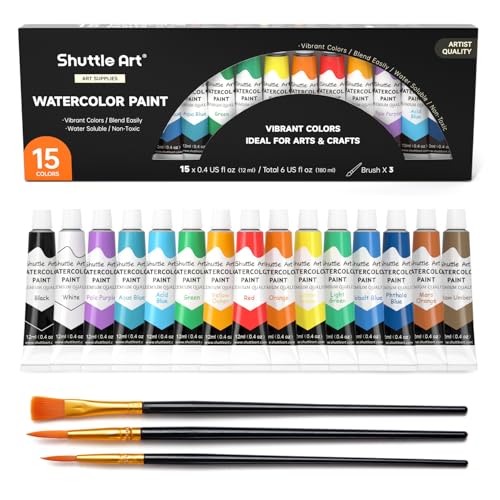
Shuttle Art Watercolor Paint Set, 15 Colors with 3 Brushes

Faber-Castell Washable Watercolor Paint Set, 12 Colors

Daler Rowney Aquafine 12-pc Watercolor Travel Set

Winsor & Newton Galeria Acrylic Paint, 20 x 12ml Tubes

ARTISTRO Deluxe Watercolor Paint Set, 168 Colors

ARTISTRO x HANNAH M.P Watercolor Set, 24 Colors Bamboo Box

Elan Professional Watercolor Paint Set, 24 Tubes
What Each Pick Brings To The Table
A single 15ml tube of Indigo sounds modest next to the boxed sets further down this list, but this is the kind of paint that teaches you what watercolour can do. Daniel Smith’s Extra Fine line is aimed squarely at working artists, and Indigo is one of those colours that earns permanent residency on most palettes: deep enough for shadows, soft enough for moody skies.
The manufacturer describes it as transparent, non-granulating (meaning it dries as an even tone rather than settling into speckled texture), medium-staining, and lightfast, which is the industry term for resisting fading over years of display. It also conforms to ASTM D4236, a standard covering art-material labelling.
What Stands Out
- Excellent lightfastness means finished pieces hold their depth instead of greying out on a sunny wall.
- Transparent, non-granulating behaviour makes smooth glazes and layered washes far easier to control.
- A 15ml tube lasts a long time; Indigo is used sparingly, so one purchase covers months of regular painting.
- Medium staining gives strong colour payoff that survives lifting mistakes less often than you’d like, but rewards confident strokes.
Things To Consider
- Staining pigments are harder to lift once dry, so plan your lights before committing.
- Buying single tubes means assembling a palette yourself, which costs more upfront than a starter set.
Key Specs
Who Will Love This
Intermediate and advanced painters who already own a basic set and want to upgrade individual colours with genuinely professional pigment.
Where A Sibling Pick Shines
Total newcomers will get more immediate value from the Winsor & Newton Cotman set, which delivers ten coordinated colours out of the box.
Where the Daniel Smith tube is a specialist tool, this Cotman set is the sensible first step. Winsor & Newton’s student-grade line keeps the brand’s mixing know-how while trimming cost, and the ten included colours cover the classic warm-and-cool spread a beginner actually needs: yellows, oranges, reds, blues, and earth tones.
The 5ml tubes are small, but that’s arguably right for learning. You’ll mix most of your colours anyway, and small tubes encourage experimentation without the guilt of wasting expensive paint. The formulation is built around high transparency and solid lightfastness, so washes stay clean and finished work holds up reasonably well.
Advantages To Know
- Ten essential colours give you a complete working palette from day one, no separate purchases required.
- High transparency makes it easy to learn proper watercolour technique, where the white of the paper does the shining.
- Good lightfastness across the range means early paintings won’t fade embarrassingly fast.
- The full Cotman line runs to forty colours, so expanding later stays affordable and consistent.
Small Caveats
- Student-grade pigment load is lighter than artist lines, so very dark passages may need extra layers.
- At 5ml each, heavy users will repurchase within a year or so of regular practice.
Made For
Adult beginners, art students, and returning painters who want a reputable brand without a studio-sized investment.
Swap It Out When
Kids under ten will get more joy from the washable Faber-Castell set, which cleans up far more easily after enthusiastic sessions.
Gansai is traditional Japanese watercolour, and it behaves differently from Western pan paints in ways illustrators tend to love. The eighteen pans here lean rich and somewhat opaque, inspired by colours found in nature, and they’re made in Japan by Kuretake, a company with deep roots in Japanese art supplies.
In practice, that opacity changes your technique. Instead of relying purely on paper whiteness, you can layer lighter tones over darker ones, which suits botanical illustration, lettering accents, and the flat, graphic look popular in modern journaling. Each pan is filled smoothly and dries to a subtle sheen without hard edges.
Practical Advantages
- Non-granulating pigment dries evenly, so flat washes come out clean instead of blotchy.
- Rich, nature-inspired hues give illustrations a distinctive look Western palettes don’t quite match.
- With careful layering, the paints build up smoothly for depth without muddying.
- Pan format reactivates instantly with a wet brush, ideal for quick sketchbook sessions.
Points To Note
- The opaque character takes adjustment if you’ve trained on transparent Western watercolours.
- Pans can develop surface texture over time in dry climates; a light mist of water revives them.
Feature Snapshot
Right Fit For
Illustrators, bullet-journal artists, and calligraphers who want saturated, slightly opaque colour with a Japanese aesthetic.
Another Choice May Suit
Painters chasing classic transparent washes will prefer the Daler Rowney Aquafine travel set’s conventional Western behaviour.
This is the set you hand someone who says they might like to try painting. Fifteen 12ml tubes, three brushes included, and a price that removes any pressure to perform. Shuttle Art positions it for kids, students, and beginners, and the spec sheet backs that up: highly pigmented colour with good saturation, transparency, and diffusivity on paper.
The honest read is that this isn’t archival-grade material, and it doesn’t pretend to be. What it does well is dissolve easily in water, blend cleanly, and let a nervous first-timer discover whether watercolour clicks for them before anyone spends real money.
Where It Excels
- Three included brushes mean the kit works straight out of the box, no accessory shopping needed.
- Colours mix readily, so fifteen tubes stretch into dozens of blended shades for practice pieces.
- 12ml tubes offer noticeably more paint than typical beginner pans, forgiving heavy-handed new painters.
Less Ideal Details
- Lightfastness isn’t specified, so display pieces may fade faster than artist-grade alternatives.
- Tube caps can dry out between sessions; wiping threads before storing helps them seal properly.
Built With In Mind
Students, casual hobbyists, and parents stocking a craft shelf who want maximum kit for minimum spend.
Reach For A Different Pick When
Anyone planning to sell or exhibit work should step up to the ARTISTRO x Hannah M.P. professional set instead.
Faber-Castell has been making children’s art supplies since long before “washable” was a selling point, and this twelve-colour set shows that experience. Everything here is designed around small hands and big messes: bright, blendable paints, a brush in the box, and a washable formula rated for ages three and up.
For school projects and rainy-afternoon painting, that washability is the whole game. Spills lift off tables and clothing, and parents stop hovering. The colours are pigmented enough for genuine colour-mixing lessons too, so it doubles as a gentle introduction to how secondary colours happen.
What Works In Its Favor
- Washable formula means paint on sleeves, tables, and floors cleans up without drama.
- Rated for ages three and up, making it one of the few watercolour sets suitable for preschoolers.
- A brush comes included, so there’s nothing else to buy before the first painting session.
- Bright, blendable colours support real mixing practice, not just single-colour dabbing.
Worth Noting
- Washable binders trade away some pigment strength; expect lighter washes than adult-grade sets.
- Not intended for archival or sale-quality artwork, so keep expectations matched to the purpose.
Who Should Grab It
Parents and teachers buying for children roughly ages three through eight, especially for home crafts and classroom stations.
Consider Something Else When
Older kids ready for real technique will outgrow this quickly; the Shuttle Art fifteen-tube set is the natural next rung.
Plein-air painting, meaning work done outdoors on location, lives or dies on portability. This Aquafine travel set packs twelve half pans of transparent watercolour into a compact case that slips into a jacket pocket or the side pouch of a sketch bag. Daler Rowney mills the pans from quality organic pigments with strong mixing ability.
Half pans suit travel well because they reactivate instantly and never leak. Compared with the tube-based Shuttle Art kit, you give up some raw volume but gain a setup you can genuinely carry everywhere, which matters more than capacity when the whole point is painting outside.
Noteworthy Benefits
- Compact case format fits pockets and small bags, so spontaneous sketching stops requiring planning.
- Transparent, well-milled pans handle both delicate washes and bolder dramatic effects.
- Organic pigments mix cleanly, letting twelve colours cover a surprising range of scenes.
- Suits every skill level, from student fieldwork to experienced artists travelling light.
Details To Watch
- Half pans hold limited paint; long studio sessions will have you reaching for tubes instead.
- No brushes are mentioned in the kit contents, so check what you already own before heading out.
Product At A Glance
Whose Shelf It Belongs On
Urban sketchers, hikers, and holiday painters who value a kit that disappears into a daypack.
Not Your Match When
Studio-based painters working large will find the Elan twenty-four-tube set’s liquid volumes far better suited to big paper.
Yes, this one is acrylic, not watercolour, and it’s here deliberately. Plenty of artists split their time between the two mediums, and Galeria is Winsor & Newton’s approachable acrylic line: buttery consistency, silky flow, and twenty colours that behave well thinned down to near-watercolour transparency or laid on thick.
The practical difference worth understanding: acrylic dries permanently and waterproof, so mistakes can’t be reactivated the way watercolour can. That permanence is also its strength for mixed-media work, underpainting, and anything destined for canvas rather than paper.
Points In Its Favor
- Twenty colours give mixed-media artists a broad base for blending, pouring, and spattering techniques.
- Buttery, flowing consistency works equally well for fluid fields and thicker impasto-style application.
- Thins dramatically with water, letting one set serve both acrylic and watercolour-style effects.
- Winsor & Newton’s colour consistency means future tube purchases match what you already own.
Some Limits To Know
- Fast drying leaves little blending time on the surface compared with slow-drying oils.
- It’s not a substitute for true watercolour; transparent layering behaves differently on paper.
The Right Fit
Hobbyists and students experimenting across canvas, paper, and craft surfaces who want one versatile paint set.
Look Elsewhere When
Pure watercolourists should stick with the Cotman set from the same brand, which is formulated specifically for paper work.
One hundred and sixty-eight colours is not a typo. ARTISTRO’s deluxe edition crams an enormous shade range, brush pens, and a built-in mixing palette into a single portable travel case, styled as a limited-edition release aimed at people who want both selection and presentation.
Realistically, nobody needs 168 premixed colours; half the fun is discovering which combinations you’d never have mixed yourself. As a gift, though, the unboxing experience does a lot of work, and the creamy, blendable pans mean the recipient starts painting within minutes of opening it.
Notable Upsides
- 168 shades remove almost any need to mix, great for quick journaling and card-making sessions.
- Brush pens and a mixing palette come built in, so the case is a complete portable studio.
- Everything stores in one compact case, ending the scattered-supplies problem entirely.
- The gift-ready presentation saves wrapping time and lands well for birthdays and holidays.
Potential Sticking Points
- With this many pans, keeping the case organised takes a little discipline after use.
- Breadth comes at the expense of depth; dedicated artists may still want larger single-colour pans.
Core Details
Perfect Match For
Junk-journal creators, card makers, and gift-givers shopping for someone who loves having every colour at hand.
Skip It When
Minimalist painters who work with a curated eight-colour palette will find the Kuretake gansai set a calmer fit.
This collaboration pairs ARTISTRO with Hannah M.P., a professional landscape painter, and her influence shows in the palette logic. Twenty-four richly pigmented colours sit in oversized 6ml pans inside a bamboo wooden box, alongside two brushes, watercolour paper, and a mixing tray, essentially a complete field kit curated by someone who paints landscapes for a living.
The XL pans are the detail that separates this from cheaper boxed sets. More paint per colour means longer life and easier brush loading, which professionals notice immediately. Rich pigment loads also make seamless blending and colour mixing noticeably smoother than budget formulations.
Where It Delivers
- An artist-curated palette takes the guesswork out of choosing which twenty-four colours matter.
- Oversized 6ml pans last substantially longer than standard half pans under daily use.
- Bamboo box, brushes, paper, and mixing tray arrive together, so nothing else is needed to start.
- Rich pigments blend seamlessly, rewarding both beginners learning to mix and pros refining nuance.
Trade Offs To Consider
- The wooden box adds weight versus plastic travel cases, so backpacking sketchers may feel it.
- Being a limited edition, restocking individual favourite colours later could prove tricky.
Best Suited To
Landscape painters and advancing hobbyists who want a serious, complete set that looks as good on the desk as it performs.
A Better Fit Elsewhere
Strictly budget-conscious starters should compare the Shuttle Art kit, which covers fundamentals at a fraction of the commitment.
Elan closes the list with a middle path: twenty-four liquid watercolour tubes at 0.4 fl oz each, pitched at adults doing canvas work and crafts. Liquid tube format gives you full control over paint consistency, something pans can’t quite match, and the set leans on quality pigments designed for intense coverage per stroke.
The thoughtful touch is colour-coded packaging on every mini tube, so identifying the right shade mid-session takes a glance rather than unscrewing caps. In a busy crafting evening, small conveniences like that add up.
The Case For It
- Twenty-four tubes deliver intense colour coverage suited to bold, saturated work.
- Colour-coded tubes make shade selection fast, even in low evening light.
- Liquid format lets you thin paint precisely for washes or apply it thickly for punch.
- Works across canvas and craft surfaces, widening what a single set can tackle.
Factors To Weigh
- Mini tubes hold modest volume; prolific painters will cycle through favourites quickly.
- Tubes need decent storage habits, since neglected caps can dry the paint at the neck.
Quick Facts
Who It Suits Best
Adult crafters and hobby painters who want tube-format flexibility across canvas, wood, and paper projects.
Another Choice May Suit
Artists wanting museum-track pigment standards will find the Daniel Smith Indigo tube a stronger single-colour investment.
Choosing Between These Artist Watercolour Paints
Match The Grade To Your Goal
Student-grade paint, like Cotman or Aquafine, uses extenders to lower cost while keeping workable colour. Artist-grade lines such as Daniel Smith pack higher pigment concentrations, which translates to richer mixes and better lightfastness. Practising weekly? Student grade is plenty. Selling framed originals? The upgrade pays for itself in how the work ages.
Pans Versus Tubes
Pans win for portability and zero waste; you only use what the brush picks up. Tubes suit volume painters and anyone who likes pre-mixing puddles of custom colour on a palette. Many artists eventually run both: tubes at the desk, pans in the travel bag.
Lightfastness And Transparency
Lightfastness describes how well a colour resists fading under light, and it matters most for anything you’ll hang or sell. Transparency determines whether the white of the paper glows through your washes. Transparent paints layer beautifully; opaque ones cover, which suits illustration styles more than classical washes.
Think About Who’s Painting
Children under ten need washable formulas and sturdy brushes, full stop. Teens and adult beginners benefit from a balanced starter palette of ten to fifteen colours. Working artists should prioritise pigment quality over quantity, because twelve excellent colours beat sixty mediocre ones.
Key Considerations Across These Picks
Traps First Timers Fall Into
The most common mistake is buying a huge cheap set and blaming yourself when colours look chalky. Pigment quality, not quantity, drives results. Another trap: skipping paper quality. Decent paint on printer paper disappoints, while modest paint on proper watercolour paper surprises pleasantly.
What Separates Premium From Basic
Higher-tier paints concentrate more pure pigment per drop, skip fillers that dull mixes, and document lightfastness ratings. You notice the difference in how far a small amount travels and how cleanly colours stack in layers. For work meant to last years, that difference justifies the spend.
Frequently Asked Questions
Are expensive watercolour paints really better for beginners?
Modestly priced student-grade sets teach technique perfectly well. Upgrade once you consistently finish pieces worth preserving.
How long do watercolour paints last?
Pan paints can last decades if kept clean and dry. Tubes typically stay usable for several years when capped tightly.
Can I mix brands in one palette?
Yes, watercolours from different manufacturers mix freely. Just note that granulation and opacity may vary between lines.
What paper should I use with these paints?
Choose paper labelled for watercolour, ideally 140lb (300gsm) or heavier. Thinner paper buckles and pills under wet washes.
Do I need to buy brushes separately?
Several sets here include brushes, though they’re usually basic. Most painters upgrade to a quality round brush fairly soon.
Closing Remarks
There’s no single right answer here, only the right answer for how you actually paint. Start where your budget and ambitions meet, whether that’s a washable set for the kitchen table or a single tube of professional Indigo. The best paint is simply the one that gets used.
