
A good at home sewing machine saves you more than money. It turns a torn hem or a popped button into a five-minute fix instead of a trip to the tailor, and it opens the door to quilting, alterations, and weekend craft projects whenever the mood strikes. The catch is that the market is crowded with machines that look similar but behave very differently once fabric hits the needle.
This roundup covers nine options for 2026, from a heavy-duty workhorse to a pocket-sized handheld for emergency repairs. Each entry breaks down what it does well, where it falls short, and who should actually spend their money on it. Match the machine to your projects and skill level, and you’ll avoid the frustration that sends most first-time sewists back to the store.
An Overview Of The Picks

Brother XM3700 Sewing Machine with 37 Built-in Stitches

Drydiet Sewing Machine Mat Pedal Set

Brother FB1757X Mechanical Sewing Machine

Ninonly Mini Portable Sewing Machine 12 Stitches

SINGER 4411 Heavy Duty Sewing Machine (Pink)

StitchMaster Pro Sewing Machine 14 Stitches
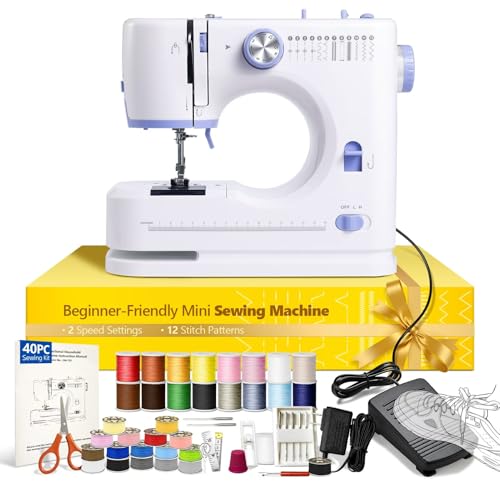
Verdanika Tabletop Mini Sewing Machine for Home Use
Rxmeili 12-Stitch Portable Sewing Machine with 42-Piece Kit
DRAWSKIN Portable Handheld Sewing Machine
The Details Behind The Selections
Thirty-seven stitches is a lot of room to grow. Where most starter machines stop at straight and zigzag, this Brother adds decorative patterns, heirloom-style work, and quilting-friendly options, which means you won’t outgrow it after your first few pillowcases.
The five included presser feet cover the jobs beginners actually hit: zippers, blind hems, buttonholes, and sewing buttons on directly. A built-in storage compartment keeps those feet and bobbins from wandering off your desk, something owners of open-frame machines complain about constantly.
Bright Spots
- 37 built-in stitches support garment sewing, quilting, and decorative work without buying attachments
- Zigzag, zipper, blind stitch, buttonhole, and button feet come in the box, saving separate purchases
- Integrated accessory compartment keeps small parts organized between sessions
- Suits skill growth, so the machine stays useful past the beginner stage
- Optional protection plans add drop and spill coverage beyond the standard warranty period
Things To Consider
- The wider stitch menu takes some dial practice before selections feel automatic
- Like most lightweight home machines, it needs occasional cleaning around the bobbin area to stay smooth
Key Specs
Who Will Love This
Ambitious beginners and intermediate sewists who want one machine to carry them from simple mending into quilting and garment construction.
Where A Sibling Pick Shines
Total newcomers who feel overwhelmed by 37 options will find the simpler Brother FB1757X easier to learn on.
This isn’t a machine, it’s the upgrade nobody thinks about until the foot pedal starts skating across tile mid-seam. The set includes two mats, sized roughly 15 by 20 inches and 9 by 14 inches, so one sits under the machine while the smaller pad anchors the pedal.
The textured top grips the machine base and dampens some of the hum that travels through a table, while the anti-slip underside holds firm on ceramic tile, hardwood, and carpet alike. In an apartment with thin floors, that combination makes late-night sewing far less antisocial.
Key Advantages
- Two-piece sizing covers both the machine and the pedal in one purchase
- Anti-slip bottom keeps the pedal planted on slick surfaces like tile
- Padded surface reduces machine vibration and the noise it transfers to furniture
- Neutral black styling blends into any craft corner
Worth Noting
- It solves noise and slipping only, so pair it with a capable machine rather than expecting it to fix stitching problems
The Right Fit
Apartment dwellers and anyone whose pedal slides on smooth flooring during long sessions.
Another Choice May Suit
Shoppers needing an actual sewing tool should look at the Ninonly mini machine instead, since this mat is purely an accessory.
Seventeen stitches sounds modest next to the XM3700’s 37, but that restraint is the point here. Mechanical dials mean fewer menus to learn, and every control does exactly what the label says, which keeps early lessons focused on fabric rather than settings.
An LED-lit work area helps with dark thread on dark cloth, and the free arm lets you slide sleeves and pant legs around the needle for cuffs and hems. The four-step buttonhole walks you through the process slowly, a gentler introduction than one-step automated versions.
Well-Handled Touches
- 17 essential stitches handle garments, accessories, and home décor without overwhelming new users
- Free arm simplifies hemming sleeves, cuffs, and pant legs
- LED lighting improves visibility on low-contrast fabrics
- Reverse button reinforces seams at the start and end of every line
Small Caveats
- Fewer decorative options than pricier Brothers, so creative sewists may want the XM3700 later
- Four-step buttonholes require patience compared with automated systems
Feature Snapshot
Who Should Grab It
First-time sewists and casual menders who value straightforward dials over a long feature list.
Swap It Out When
Quilters and decorators planning elaborate projects will get more mileage from the Brother XM3700’s broader stitch library.
Dual power is what separates this little unit from the Verdanika tabletop below. Run it plugged in at a desk, or load batteries and take it to a dorm, an RV, or a friend’s kitchen table when a costume emergency strikes mid-trip.
Twelve stitches cover the basics, and the built-in handle plus light frame make it genuinely grab-and-go rather than technically portable. For quick fixes and small craft sessions in tight quarters, it earns its counter space.
Strong Points
- Runs on AC power or batteries, so sewing isn’t tied to an outlet
- Compact footprint fits a dorm desk or RV counter without crowding
- Carry handle makes transport between rooms or locations easy
Honest Caveats
- Mini frames struggle with thick layers like denim seams, a common limitation reported with compact machines
- Battery operation drains quickly on longer projects, so keep spares handy
- Smaller working area demands more fabric maneuvering than a full-size bed
Right Fit For
Students, travelers, and RV owners who need basic stitching away from a dedicated craft room.
Reach For A Different Pick When
Heavy fabric work calls for the SINGER 4411, whose motor and steel bedplate are built for denim and canvas.
Most machines in this list hesitate on eight layers of denim. This one doesn’t blink. The 4411 pairs a strong motor with a stainless steel bedplate, a surface that lets heavy fabric glide under the needle instead of dragging against it.
Speed reaches up to 1,100 stitches per minute, which turns long straight seams on curtains or quilts into quick work. The pink finish is a limited-edition touch that stands out in a sea of white plastic, and the bundled accessories round out the package nicely.
The Good Stuff
- Powerful motor drives through thick fabrics like denim and canvas without stalling
- Stainless steel bedplate reduces friction so heavy material feeds smoothly
- Up to 1,100 stitches per minute speeds up long, repetitive seams
- Accessories included, so you’re stitching sooner after unboxing
- Distinctive pink colorway adds personality to the craft room
Points To Note
- High speed takes practice to control on delicate curves; slow down for precision work
- Owners commonly report a break-in period where tension needs adjusting before stitches settle
Quick Facts
Made For
Confident home sewists tackling denim, upholstery-weight cotton, canvas bags, and big alteration batches.
Not Your Match When
Delicate-fabric beginners may prefer the gentler pace and simpler controls of the Brother FB1757X.
Twin-needle compatibility is rare at this size. That means you can sew two parallel rows at once for professional-looking hems on knits, a trick most budget machines can’t manage. Fourteen stitches cover straight, zigzag, and blindstitch work for garments and crafts.
Dual-speed control matters more than it sounds. Low speed gives you precision on slippery or delicate fabric, while high speed pushes through thicker material like denim. At roughly 4.4 pounds with a built-in handle, it moves between rooms as easily as the Ninonly but offers a bit more stitch flexibility.
The Helpful Details
- Twin/double needle support enables parallel-stitch hems on knitwear
- 14 stitches span straight, zigzag, and blindstitch applications
- Two speed modes adapt to fragile fabrics or heavy layers
- About 4.4 pounds with a carry handle for easy relocation
Details To Watch
- Lightweight build means the machine can shift on a slick table unless anchored, a grip mat like the Drydiet set helps
- Threading a twin needle setup takes patience the first few times
Whose Shelf It Belongs On
Home users upgrading from a basic mini who want knit-hem capability without sacrificing portability.
Consider Something Else When
Shoppers wanting maximum stitch choice should step up to the Brother XM3700 and its 37 patterns.
Teaching a kid to sew goes better on a machine that forgives mistakes. The low-speed setting keeps everything manageable while they learn to guide fabric, and twelve stitch patterns give them room to experiment once confidence builds.
The internal metal frame is the detail worth noticing. Many minis at this level are all plastic, which flexes and wanders at speed; a metal skeleton keeps stitches even and the machine steady on the table. Its small footprint also tucks into a closet easily between sessions.
Reasons It Performs
- 12 stitch patterns handle seams, hems, edges, and buttonholes
- Low/high speed switch lets learners start slow and graduate up
- Internal metal frame adds stability for cleaner, more even stitching
- Compact body stores easily and moves between rooms
Factors To Consider
- Buttonhole work on a 12-stitch platform stays basic compared with dedicated buttonhole feet on larger machines
Perfect Match For
Families introducing kids or teens to sewing, plus adults handling everyday alterations and DIY crafts.
Look Elsewhere When
Anyone wanting a complete starter kit in one box will find the Rxmeili bundle more convenient.
Starting a new hobby usually means three extra shopping trips for scissors, needles, and thread. This bundle skips all that with a 42-piece accessory kit alongside the machine itself, making it the easiest way to go from curious to stitching in one afternoon.
The controls split neatly between two styles. A toggle picks low or high speed for consistent automated stitching, while the included foot pedal gives traditional rhythm-based control once your coordination develops. Twelve stitches, a selection dial, and reverse sewing for reinforcing seams round out a sensible beginner spec.
Practical Pluses
- 42-piece kit supplies thread, needles, and tools so nothing else is needed to begin
- Foot pedal option builds proper sewing rhythm from day one
- Speed toggle delivers steady output for detail work or quick seams
- Reverse function locks seam ends without hand-tying knots
Potential Drawbacks
- Twelve stitches limit decorative ambition versus the Brother XM3700
- Portable-class machines generally need regular lint clearing around the bobbin case to run quietly
- Learning the foot pedal takes a session or two before speed feels natural
Core Details
Who It Suits Best
Budget-minded beginners and gift-givers who want a complete, ready-to-use sewing setup in a single purchase.
Skip It When
Sewists planning heavy denim or multi-layer projects should choose the SINGER 4411 for its stronger motor.
A ripped hem discovered ten minutes before leaving the house is exactly what this gadget exists for. Running on four AA batteries, it sews cordlessly anywhere: hotel rooms, cars, campsites, or the back of a closet where the full-size machine never reaches.
Threading is designed to be painless, so you can patch a curtain or tack down a loose button without a setup ritual. It ships as a complete kit and stores flat in a drawer, though expectations matter: this is a repair tool, not a project machine.
Useful Touches
- Battery power delivers true cordless sewing wherever a fix is needed
- Simple threading gets you stitching right out of the box
- Complete kit format covers hems, patches, and loose buttons
- Drawer-sized body stores without eating craft-room space
Less Ideal Details
- Handheld stitching won’t match the straightness of a tabletop machine, so save it for quick fixes rather than visible seams
- AA batteries add ongoing cost on frequent use
Built With In Mind
Travelers, parents, and anyone who wants emergency clothing repairs handled in minutes without hauling out a full machine.
A Better Fit Elsewhere
For actual projects and longer seams, the Verdanika tabletop mini offers far better control and consistency.
What Matters Most Before Choosing An At Home Sewing Machine
Match Power To Fabric
The single biggest mismatch in this category is buying a lightweight machine for heavy work. Denim, canvas, and layered quilting demand a strong motor and a metal or stainless bedplate, like the SINGER 4411 offers. Cotton shirts and craft felt run fine on almost anything. Be honest about what sits in your mending pile before committing.
Decide Between Dials And Menus
Mechanical machines such as the Brother FB1757X teach fundamentals quickly because every control is physical and predictable. Computerized-style models with wide stitch libraries reward patience with creative range. Beginners usually learn faster on the simpler option, then upgrade once they know what they actually sew.
Think About Where You’ll Sew
Space shapes the decision more than people expect. A dedicated craft table welcomes a full-size machine, while a dorm desk or shared dining table favors a compact model with a handle. Apartment sewists should also factor noise and vibration, where a grip mat under the machine makes evening sessions neighborly.
Count The Hidden Costs
Thread, needles, bobbins, and spare feet add up fast. Bundles like the Rxmeili kit absorb much of that upfront, while bare machines leave you sourcing accessories separately. Budget for maintenance basics too: lint brushes and occasional oiling keep any machine running smoothly for years.
Key Considerations Across These Picks
Traps First Timers Fall Into
The most common mistake is overbuying features you’ll never touch, then feeling intimidated every time you sit down. The opposite error hurts too: grabbing the cheapest handheld for projects that need a real machine, then blaming yourself when seams wander. Read what each model handles well and match it to your actual wardrobe and hobbies.
What Separates Premium From Basic
Higher-tier machines earn their price through motor strength, metal components, and stitch range. A heavy-duty model chews through denim that stalls a mini, and a 37-stitch library outlasts a 12-stitch one as skills grow. Paying more pays off when you sew weekly; casual menders rarely feel the difference.
Frequently Asked Questions
Can a beginner learn on a mini sewing machine?
Yes, especially models with low-speed settings like the Verdanika or Ninonly. Smaller machines are forgiving, though thick fabrics will test their limits.
Do handheld sewing machines replace a regular one?
No, they handle quick repairs and emergencies best. Straight, durable seams on garments still call for a tabletop machine.
How often should a home sewing machine be cleaned?
Light cleaning after every few projects works well for most home users. Clear lint from the bobbin area regularly to prevent skipped stitches.
Is a foot pedal necessary?
It depends on preference. Pedals give finer speed control, while toggle-based machines are easier for absolute beginners to manage.
What fabrics can heavy duty machines handle?
Denim, canvas, upholstery cotton, and multiple stacked layers are their strength. They still sew lightweight fabrics, though delicate materials need slower speeds.
Closing Thoughts
Choosing an at home sewing machine comes down to honesty about your projects, your space, and your patience for learning. Start simple if you’re new, go heavy-duty for tough fabrics, and keep a handheld in the drawer for surprises. Whichever pick fits your life, the best time to fix that pile of alterations is this weekend.
