
A good sewing machine should feel like a helpful partner, not a puzzle. Whether you’re hemming school pants at the kitchen table or running a small embroidery side business, the right machine saves hours of frustration and crooked seams. This roundup covers nine options across every skill level and budget, from pocket-sized menders to a ten-needle commercial workhorse. Each pick below is matched to a specific kind of sewist, so you can skip the guesswork and land on the one that fits your projects.
A Quick View Of The Lineup

Brother XM3700 Sewing Machine 37 Built-in Stitches

Janome JW8100 Computerized Sewing Machine with 100 Stitches

Brother CP100X Computerized Sewing and Quilting Machine

Brother CS7205 Computerized Machine, 150 Built Stitches

Brother FB1757X Mechanical Sewing Machine

Ninonly Mini Sewing Machine for Beginners, 12 Stitches

Smartstitch S-1001 Embroidery Machine with 10 Needles

Xamanabu Handheld Sewing Machine, Dual Speed
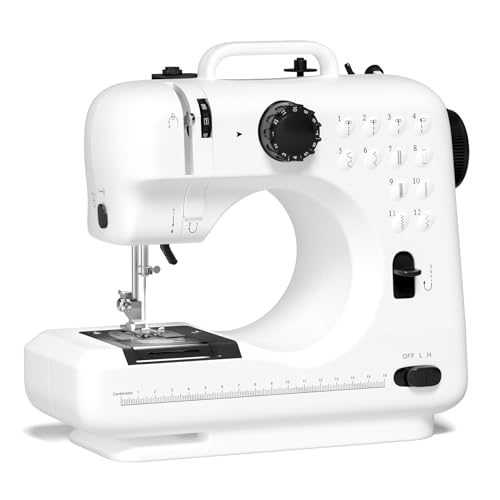
Verdanika Beginner Sewing Machine, 12 Built-in Stitches
More Details On Our Top Picks
The XM3700 sits in that sweet spot where a beginner stops feeling like one. Thirty-seven built-in stitches cover utility work, decorative seams, heirloom details, and light quilting, so you won’t outgrow it after your first tote bag. In a busy craft corner, the built-in accessory compartment keeps feet and bobbins from wandering off.
Five presser feet ship in the box: zigzag, zipper, blind stitch, buttonhole, and button sewing. That’s enough to finish garments properly without buying extras, which matters more than most first-timers expect.
The Upside
- Thirty-seven stitches handle garment construction through decorative topstitching
- All five essential presser feet included, saving separate purchases
- Storage compartment keeps small parts organized between sessions
- Lightweight body moves easily to classes or a friend’s kitchen table
Things To Consider
- No extension table, so large quilt sandwiches may feel cramped
- Owners commonly report dust collects around the bobbin area, so regular cleaning keeps stitches even
Who Will Love This
A confident beginner moving beyond straight seams who wants room to grow without paying computerized prices.
Where A Sibling Pick Shines
Quilters tackling bigger projects will get more workspace from the Brother CP100X and its wide table.
Where the Brother XM3700 keeps things simple, the Janome JW8100 goes fully loaded. One hundred stitches, seven buttonhole styles, and a backlit LCD screen put serious capability under your fingers, and the menu navigation stays friendly rather than fussy. The hard cover alone earns its keep if the machine lives on an open shelf.
An automatic needle threader, auto-declutch bobbin winder, and 7mm stitch width round out a package aimed at people who sew often. Twenty-two accessories and an extension table mean garment makers rarely need to shop twice.
Positive Points
- One hundred stitches plus seven buttonhole styles for varied projects
- Backlit LCD screen makes stitch selection quick and legible
- Hard cover protects the machine during storage or transport
- Extension table supports larger fabric runs like curtains
- Twenty-two accessories reduce add-on spending later
Worth Noting
- The feature depth takes a few sessions to learn comfortably
- Heavier than compact models, so frequent carrying gets tiring
Key Specs
Right Fit For
Intermediate sewists producing garments regularly who want computerized convenience and a complete kit out of the box.
Consider Something Else When
Occasional menders will find the simpler Brother FB1757X easier to live with day to day.
Anyone who has wrestled a king-size quilt through a narrow throat knows why this machine exists. The CP100X ships with a large wide table that gives bulky projects somewhere to rest, and the adjustable speed slider lets you crawl through intricate free-motion curves instead of racing them. Compared to the Janome JW8100’s generalist setup, this one leans clearly toward quilting.
The LCD display, one-step automatic needle threader with printed threading diagrams, and Quick-Set bobbin system cut setup time noticeably. For a craft room that hosts weekend marathon sessions, those conveniences add up fast.
The Good Stuff
- Wide table gives quilts and big seams proper support
- Adjustable speed control helps with precision free-motion work
- Quick-Set bobbin system reduces threading fumbles
- Threading diagrams guide newer users through setup
Small Caveats
- Quilting focus means fewer everyday garment-focused touches than some rivals
- The added table size demands dedicated desk space
Who Should Grab It
Home quilters and patchwork enthusiasts ready to step up from a basic starter machine.
Swap It Out When
Garment-first sewists who want more accessories bundled in will prefer the Janome JW8100.
Stitch libraries don’t get much deeper at this level. The CS7205 carries 150 built-in designs, eight one-step auto-size buttonholes, and a lettering font with 55 alphanumeric characters for basic monogramming, all browsable through a flip chart that shows every option at a glance. Eleven sewing feet come standard, which covers zippers, blind hems, walking layers, and more without extra orders.
Against the CP100X, this model trades some quilting-specific framing for sheer creative range. Decorative seam artists and personalizers get the most out of it.
Where It Excels
- 150 stitches span utility, quilting, and heavy decoration
- Lettering font enables simple monograms and labels
- Eleven presser feet cover nearly every common technique
- Flip chart puts the whole library in view while you choose
- Wide table supports larger fabric handling
Points To Note
- Menu depth can overwhelm someone who only sews occasionally
- Owners commonly suggest keeping the flip chart clean and dry to preserve print legibility
Feature Snapshot
Made For
Enthusiast sewists who love decorative detail, monogramming, and having options on tap.
Not Your Match When
Total newcomers may feel swamped; the Verdanika beginner machine offers a gentler start.
Some people just want dials. The FB1757X skips screens entirely, relying on a mechanical layout with 17 built-in stitches, a four-step buttonhole, and a reverse lever you can find by touch. An LED lamp brightens the needle area, which helps during evening mending sessions when overhead lighting falls short.
The free arm swings out for cuffs, sleeves, and children’s clothing, tasks that trip up bulkier machines. Fewer electronics also means fewer things to malfunction, a quiet advantage over the computerized picks above.
What Earns Its Place
- Mechanical controls are intuitive and quick to learn
- Free arm handles tubular items like sleeves with ease
- LED lighting improves visibility at the needle
- Reverse stitching locks seams without menu navigation
Less Ideal Details
- Four-step buttonhole takes longer than automatic versions
- Seventeen stitches limit decorative ambition compared to the CS7205
The Right Fit
Practical menders and learners who value straightforward operation over digital features.
Reach For A Different Pick When
Quilters needing workspace should look at the Brother CP100X instead.
Dorm rooms, RV counters, and shared apartments rarely have room for a full-size machine. This Ninonly mini occupies barely more desk space than a stack of books, yet offers twelve stitches and two power modes: plug-in AC adapter or batteries. Battery power genuinely changes where you sew, letting you fix a torn backpack strap at a campsite or a costume emergency backstage.
A built-in carry handle makes relocation painless. Setup is deliberately simple, so a nervous first-timer can be stitching within minutes of unboxing.
Advantages To Know
- Runs on AC adapter or batteries for true portability
- Tiny footprint fits crowded desks and dorm shelves
- Twelve stitches cover common repairs and simple crafts
- Carry handle simplifies transport between locations
Details To Watch
- Light build means thick denim or leather may strain it
- Battery mode drains quickly on long sessions, so keep spares handy
At A Glance
Who It Suits Best
Students, travelers, and apartment dwellers handling light repairs in tight quarters.
Another Choice May Suit
Serious garment construction calls for the Janome JW8100’s sturdier frame and wider capabilities.
This is the odd one out here, and proudly so. The Smartstitch S-1001 is a multi-needle commercial embroidery machine, meaning ten needles hold ten thread colors at once and swap automatically mid-design. A 7-inch touchscreen drives the show, and the generous 9.5 by 14.2 inch embroidery field handles caps, flat goods, and finished shirts alike.
Speed reaches 1200 stitches per minute, with auto thread trimming, auto color change, thread break detection, laser positioning, and self-lubrication reducing babysitting time. For a home studio taking paid orders, that automation is the difference between one shirt an evening and a real production run.
Notable Upsides
- Ten needles enable multicolor designs without rethreading
- 1200 SPM max speed shortens production cycles
- Thread break detection prevents ruined batches
- Laser positioning speeds accurate hooping
- Large memory stores extensive design files
Factors To Consider
- Learning curve is steep for anyone new to embroidery software
- Owners commonly note routine oiling and lint clearing are part of weekly upkeep
- Overkill for purely domestic sewing needs
Core Details
Whose Shelf It Belongs On
Small-business owners and ambitious hobbyists producing embroidered goods for customers.
Look Elsewhere When
General sewing and mending users should stay with the Brother XM3700 or similar household machines.
Picture a stapler that sews. The Xamanabu handheld fits in a glovebox or desk drawer and handles the small jobs that never justify dragging out a full machine: a popped seam on pajamas, a loose hem, a stuffed animal needing rescue. Two fixed speed gears give you a fast lane for long runs and a slow lane for careful corners.
The grip shape is designed for comfortable single-hand operation, and it works straight out of the box with minimal setup. Manage expectations though: this is a repair tool, not a project machine.
Well-Handled Touches
- Two speed gears balance efficiency against precision
- Pocket-sized body travels anywhere unnoticed
- Comfortable grip suits extended small-repair sessions
- Ready to use immediately with little preparation
Honest Caveats
- Single-stitch output limits it to basic mending only
- Handheld control takes practice; expect wobbly lines early on
- Thick or slippery fabrics challenge its small motor
Who Should Grab It
Commuters, parents, and travelers who want emergency repairs without owning a full machine.
Where Another Pick Suits Better
Learners wanting structured practice will progress faster on the Verdanika beginner machine below.
First machines live or die on how gently they introduce the craft. The Verdanika pairs twelve built-in stitches with clear printed guides for stitch selection, tension adjustment, and speed control, so nothing feels like guesswork. You can drive it traditionally with the foot pedal or use the direct speed buttons, a flexibility that suits kids and cautious adults equally well.
Two-speed control keeps early practice slow and controlled, and the portable black body tucks into a closet between lessons. Unlike the Xamanabu handheld, this one teaches real machine habits that transfer upward later.
Positive Takeaways
- Foot pedal and button speed options suit different comfort levels
- Clear guides remove tension and stitch-selection confusion
- Two-speed control builds confidence before full pace
- Handles a range of fabrics from light to sturdy weights
Things To Weigh Up
- Twelve stitches will feel limiting once skills advance
- Compact size means less stability on very heavy fabric passes
Product At A Glance
Built With In Mind
Complete beginners, teens, and returning sewists who want low-pressure practice at home.
Skip It When
Experienced sewists chasing stitch variety will serve themselves better with the Brother CS7205.
What Matters Most Before Choosing Auto Sewing Machines
Match The Machine To Your Projects
Garment sewing rewards buttonhole quality and free arm access, quilting rewards throat space and a wide table, and mending rewards simplicity. Write down what you actually made last year, then buy for that list rather than for hypothetical ambitions. Most regret comes from overbuying features that sit unused.
Mechanical Versus Computerized Controls
Mechanical machines like the Brother FB1757X use physical dials, which means fewer failure points and instant familiarity. Computerized models such as the Janome JW8100 offer precise stitch selection, lettering fonts, and automated threaders at the cost of a learning curve. Choose mechanical for reliability and speed, computerized for range and precision.
Portability And Workspace Reality
Measure your actual sewing spot before ordering. Full-size machines with extension tables need permanent desk real estate, while minis like the Ninonly trade muscle for mobility. Frequent class-goers and dorm residents consistently report that weight matters more than they expected.
Support And Long-Term Care
Every machine needs occasional cleaning, oiling where specified, and bobbin-area maintenance. Brands with broad dealer networks make replacement parts and service easier years down the road, which quietly extends the useful life of your purchase.
Key Considerations Across These Picks
Traps First Timers Fall Into
The classic mistake is buying for fantasy projects instead of current ones, ending up with a feature-heavy machine that intimidates rather than invites. Another common slip is ignoring fabric weight: a mini machine that breezes through cotton will struggle with denim layers. Read the stitch list carefully too, since a high count means little without the utility stitches you’ll actually use weekly.
What Separates Premium From Basic
Higher-tier machines earn their cost through automation and capacity. Automatic needle threaders, one-step buttonholes, drop-in bobbins, and larger motors each shave minutes off every session, and those minutes compound across hundreds of projects. Multi-needle embroidery units go further still, replacing manual labor with programmable production. Pay up when sewing is a habit; stay basic when it’s an experiment.
Frequently Asked Questions
Are computerized sewing machines harder for beginners?
They take slightly longer to learn because menus replace dials. Features like automatic needle threaders usually offset that within the first few projects.
Can a mini sewing machine handle denim?
Light single layers of denim are possible on sturdier minis. Multiple layered seams are better left to full-size machines with stronger motors.
How many built-in stitches do I actually need?
Most everyday sewing uses fewer than ten stitches regularly. Extra counts matter mainly for decorative work, quilting, and monogramming.
Do I need an extension table?
Only for large projects like quilts, curtains, or wide garments. Flat, supported fabric produces straighter seams on big pieces.
How often should a sewing machine be cleaned?
Light cleaning after every few projects keeps lint from affecting stitch quality. Deep cleaning around the bobbin case every couple of months is a widely recommended habit.
Closing Thoughts
There’s a machine here for nearly every kind of sewist, from the glovebox mender to the ten-needle studio owner. Start honest about your current projects, pick the option matched to them, and let your skills justify any future upgrade. Whichever you choose, the best machine is simply the one you’ll actually sit down and use.
