A tuner that clips on, reads vibrations, and tells you when a string is in pitch sounds like a small thing until you’re mid-set with a guitar drifting flat. These ten automatic tuners cover every kind of player, from first-time beginners to gigging pros who need strobe-level precision. Each one tunes by sensing string vibration rather than sound alone, so background noise stops being a problem. Here’s what deserves space on your headstock this year.
The Essentials At A Glance
PickWhy We Picked ItBest ForAction

Daily Driver
Fender Flash 2.0 Rechargeable Clip-On Tuner (Black)
Rechargeable with long runtime
Gigging electric players

Dependable Option
Fender FT-1 Professional Clip-On Tuner
Noisy-stage vibration sensing
Live performers

Beginner Friendly
FGBNM Guitar Capo, Tuner, Picks and Holder Kit
Complete starter accessory bundle
New guitar owners
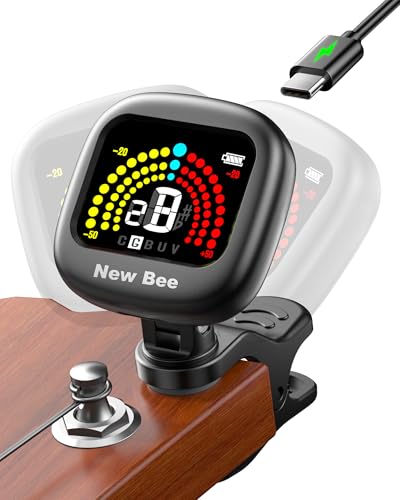
Smart Upgrade
New bee Rechargeable Color Screen Clip-On Tuner
Bright color display clarity
Multi-instrument households

Feature Rich
KLIQ UberTuner-MAX USB Rechargeable Clip-On Tuner (Black)
Octave readout display
Detail-oriented tuners

Convenience Pick
Jowoom T2 Smart Automatic Guitar & Ukulele Tuner (Black)
Motorized string winding
Beginners changing strings

Fan Favorite
Snark SNARK1 Guitar Tuner
Weeks-long quick charge
Casual home players

Multi-Use Pick
Ulumac Aroma 3-in-1 Digital Metronome Tuner
Tuner plus metronome combo
Practice-focused students

Study Space Pick
Sondery Digital Vocal Metronome Tuner
Spoken count-in metronome
Lesson-taking learners

Professional Pick
Peterson StroboClip HDC Clip-On Strobe Tuner
True strobe 0.1-cent accuracy
Serious technicians
More On The Choices That Made The List
Nobody enjoys hunting for a coin-cell battery five minutes before a set, and that’s the exact problem the Flash 2.0 solves. It runs on a built-in lithium-ion pack rated for around 20 hours of use, recharges over micro USB, and shuts itself off after 10 idle minutes so the charge survives between sessions.
The clip format works across six-string electrics, acoustics, and basses, which makes it a sensible single-tuner answer if you own more than one instrument. In our view, that auto shut-off is the quiet hero here; forgetful players rarely think about it until a dead tuner ruins a rehearsal.
A Favorable Mix
- ✓Roughly 20 hours per charge means weeks of typical home practice without plugging in.
- ✓Auto shut-off after 10 minutes protects the battery from accidental drain.
- ✓Micro USB cable comes included, so no extra purchase is needed.
- ✓Handles electric, acoustic, and bass duty from one clip.
Things To Consider
- •Micro USB is older than USB-C, so you’ll keep one extra cable in your gig bag.
- •Owners commonly report the clip hinge needs gentle handling to stay tight over years of use.
Who Will Love This
Gigging electric or bass players who want to stop buying disposable batteries entirely.
A Better Fit Elsewhere
Players who prefer a traditional replaceable-battery design will find the Fender FT-1 more familiar.
Check on Amazon
Where the Flash 2.0 wins on charging convenience, the FT-1 wins on stage manners. Its vibration sensor picks up string movement directly from the instrument’s body, so a chatty bar crowd or a drummer warming up won’t pull the reading off pitch. That matters most between songs, when you have seconds, not minutes.
The display uses an easy-to-read needle indicator, and the backlight shifts green once you hit pitch, which you can confirm at a glance under stage lighting. Dual rotating hinges let you angle the screen toward yourself regardless of headstock shape, and A4 calibration covers ensembles tuned to non-standard reference pitches.
Well-Handled Touches
- ✓Vibration-based sensing stays accurate in loud rooms where mic tuners fail.
- ✓Green backlight confirmation lets you tune fast without squinting at numbers.
- ✓Dual hinges adapt to nearly any headstock angle.
- ✓A4 calibration suits orchestral or alternate-reference playing situations.
Small Caveats
- •It runs on a replaceable battery rather than recharging, so spares belong in your case.
Right Fit For
Working musicians who tune live in noisy venues and value speed over rechargeable extras.
Where A Sibling Pick Shines
Home players tired of battery swaps should reach for the rechargeable Fender Flash 2.0 instead.
View Latest Price
Every new guitarist discovers the same thing within a month: the tuner was only the first accessory on a growing list. This bundle handles several of them at once, pairing a vibration-sensing clip-on tuner with a capo, eight picks, and a pick holder in one package.
The tuner itself responds quickly thanks to its sensitive piezo pickup, which reads string vibration straight from the headstock. You may find the individual components more basic than standalone gear, but for someone holding their first guitar, having everything arrive together removes a lot of decision fatigue.
Positive Points
- ✓One purchase covers tuning, capo work, and pick supply for a new player.
- ✓High-sensitivity vibration response keeps tuning readings quick and steady.
- ✓Eight picks mean losing a few costs nothing emotionally.
Points To Note
- •Component quality sits below dedicated single-purpose accessories, which is the usual trade-off with bundles.
- •The capo tension may need adjusting on some neck profiles, based on commonly reported feedback.
Made For
First-time guitar owners building a starter kit without overthinking each piece.
Skip It When
Experienced players who already own a capo and picks are better served by the focused New bee tuner alone.
Check Latest Price
Most budget tuners make you choose between a readable screen and a fast processor. The New bee refuses that trade-off, combining a high-resolution color display with a digital processor and high-sensitivity piezo sensor, the little contact element that converts string vibration into an electrical signal the tuner can measure.
In practice, that pairing shows up as near-instant needle response and a screen that stays legible everywhere from a dim basement practice room to full sun at a park jam. It also covers violin and ukulele alongside guitar and bass, which earns it real value in multi-instrument homes.
A Few Strong Suits
- ✓Fast processor response shortens the fiddle-and-check loop during tuning.
- ✓Color screen remains readable in both dark stages and bright outdoor light.
- ✓Rechargeable design removes disposable battery costs over time.
- ✓Works across guitar, bass, violin, and ukulele from one clip.
What To Weigh
- •Brand recognition trails Fender and Snark, so long-term support expectations should stay modest.
- •Some owners note the clip grip benefits from occasional tightening checks.
Who Should Grab It
Multi-instrument players who want modern display clarity without paying premium-brand prices.
Swap It Out When
Studio professionals chasing reference-grade precision will get more from the Peterson StroboClip HDC.
View on Amazon
An octave readout sounds like trivia until you’ve tuned a 12-string or a low-tuned baritone and wondered which octave the tuner thinks you’re aiming for. The UberTuner-MAX is the only KLIQ model showing that information in real time on its full-color display, which takes real guesswork out of extended-range instruments.
Power comes from a built-in lithium-polymer cell charged over USB, so there are no CR2032 coins to swap mid-session. Compared with the New bee above, this one leans more toward detail-hungry players than general households, and its black finish keeps things discreet on a dark headstock.
Practical Pluses
- ✓Octave display removes ambiguity on 12-strings, baritones, and drop tunings.
- ✓USB-rechargeable lithium-polymer battery ends CR2032 purchases permanently.
- ✓Full-color screen presents pitch information clearly at a glance.
- ✓Suits acoustic, electric, bass, and ukulele equally well.
Honest Caveats
- •The feature depth goes unused by casual strummers who just want a green light.
- •Like any rechargeable unit, it needs periodic top-ups during long storage stretches.
Whose Shelf It Belongs On
Extended-range and alternate-tuning enthusiasts who want maximum readout information per glance.
Another Choice May Suit
Simplicity-first players will be happier with the straightforward Snark SNARK1 instead.
Check on Amazon
This is the oddball of the list, and proudly so. The T2 doesn’t just tell you a string is out of tune; its motorized winder spins the tuning peg at up to 180 RPM until the string lands on pitch, turning a full restring-and-retune session into something closer to pressing a button.
For anyone whose fingers cramp on tight pegs, or a parent helping a kid restring a ukulele, that automation is genuinely useful. The trade-off is bulk: it’s larger than a plain clip-on like the Snark, and the motor mechanism adds moving parts that deserve careful handling.
Useful Touches
- ✓Motorized peg winding at 180 RPM automates the slowest part of restringing.
- ✓Detects pitch automatically, so there’s no mode-switching between strings.
- ✓USB-rechargeable battery keeps it ready without spare cells.
- ✓Handles both guitars and ukuleles safely.
Trade Offs
- •Larger body than standard clip-ons makes it less pocket-friendly.
- •The winding mechanism warrants gentler storage than solid-state tuners.
- •Players who enjoy manual control may find automation unnecessary.
The Right Fit
Beginners, kids’ parents, and anyone with limited hand strength who restrings often.
Reach For A Different Pick When
Minimalists who want a featherweight clip should stick with the Fender Flash 2.0.
View Latest Price
Snark has been the default answer to “what tuner should I buy?” for over a decade, and the SNARK1 refresh explains why. A quick charge now lasts weeks or even months of normal use, which quietly removes the biggest complaint about earlier models.
The super-bright display stays readable on dark stages, and the package includes a protective case plus a screen cleaning cloth, small touches that show the brand listens to how people actually carry these things. Accuracy is high-precision, matching what seasoned players expect from the name.
Features That Help
- ✓Quick charge holds for weeks or months of typical playing.
- ✓Very bright display cuts through dim venue lighting.
- ✓Protective case and cleaning cloth come in the box.
- ✓High-precision tuning lineage from a category staple brand.
Less Ideal Details
- •Charging cable management still applies, unlike replaceable-battery rivals.
- •Owners occasionally report the swivel joint loosening after heavy use.
Who It Suits Best
Casual and intermediate home players who want a proven, fuss-free daily tuner.
Consider Something Else When
Students needing a metronome too will get double duty from the Ulumac Aroma below.
Check Latest Price
A metronome, a chromatic tuner, and a tone generator packed into one pocket-sized unit changes the math for students. Instead of three devices rattling around a case, the Aroma consolidates them, and its tempo range spans 30 to 260 BPM with ten beat patterns and eight rhythm styles for groove practice.
Being rechargeable helps too, since practice tools left plugged in constantly tend to die at inconvenient moments. Piano, violin, bass, and guitar players all get coverage, making this a natural fit for lesson bags and school music programs.
Advantages To Know
- ✓Three practice tools in one unit save case space and money.
- ✓Wide 30–260 BPM range with multiple beat patterns supports serious timing work.
- ✓Rechargeable power suits daily lesson and practice routines.
- ✓Tone generator aids ear training alongside tuning.
Practical Considerations
- •Button-heavy operation has a learning curve compared with one-button clip-ons.
- •It’s a desktop-style tool, not a headstock clip, so stage tuning isn’t its strength.
Built With In Mind
Music students and teachers who want tuner and metronome functions unified for daily practice.
Not Your Match When
Gigging guitarists needing a clip-on should look back at the Fender FT-1.
View on Amazon
The Sondery’s party trick is a metronome that counts out loud in English, which sounds gimmicky until you watch a beginner finally internalize where beat one falls. Tap tempo lets you set pace by tapping along, and the range runs 30 to 260 BPM with adjustable beat counts.
Beyond the voice, there’s a color screen, loud speaker, microphone plus cable-jack input detection, headphone output, a volume wheel, and a folding kickstand. Like the Ulumac Aroma, it’s a desk companion rather than a headstock clip, but the vocal guidance gives it a distinct teaching edge.
What Pays Off
- ✓English vocal count-ins help beginners lock onto downbeats faster.
- ✓Tap tempo sets pace intuitively without menu digging.
- ✓Headphone output enables silent practice in shared spaces.
- ✓Folding kickstand props it up cleanly on any music stand or desk.
Details To Watch
- •More buttons and modes mean a steeper setup curve than basic clip-ons.
- •Not designed for clipping to an instrument during live play.
Best Suited To
Lesson-taking beginners and self-teachers practicing at a desk or music stand.
Where Another Pick Suits Better
Performers wanting silent on-stage tuning are better matched to the KLIQ UberTuner-MAX.
Check on Amazon
Everything above this point measures pitch in whole cents; the StroboClip HDC resolves to 0.1 cent using true strobe technology, meaning it displays deviations as fine as a thousandth of a fret. Luthiers, session players, and intonation obsessives understand why that matters: guitars tuned this precisely ring cleaner, especially higher up the neck.
Over 65 sweetened tunings compensate for each instrument’s inherent quirks, and the HD color backlight allows assigning colors per tuning for instant visual confirmation. It’s rechargeable, and the price reflects the engineering inside.
Key Advantages
- ✓True strobe accuracy of 0.1 cents reveals pitch error other tuners miss.
- ✓65-plus sweetened tunings correct real-world instrument intonation quirks.
- ✓Assignable display colors per tuning speed up recognition mid-set.
- ✓HD color backlight stays crisp under stage conditions.
Factors To Consider
- •Strobe displays take practice to read fluently for newcomers.
- •The investment only pays off for players who actually chase that precision.
Who Should Grab It
Professional guitar techs, studio musicians, and serious hobbyists setting up instruments to exacting standards.
Look Elsewhere When
Everyday players will find everything they need in the far simpler Snark SNARK1.
View Latest Price
What Matters Most Before Choosing Automatic Guitar Tuners
Sensing Method And Environment
Nearly every tuner here senses string vibration through a piezo sensor, a small contact element that converts physical movement into a signal. That design ignores room noise, which is why clip-ons dominate live settings while mic-based tuners struggle there. Desk units like the Ulumac and Sondery use microphones or input jacks instead, suiting quiet practice rooms better than stages.
Power Style And Charging Habits
Rechargeable lithium packs appear on most of this list, and they suit frequent players best. Replaceable-battery designs such as the FT-1 never need a cable, but they do need spare cells in the case. Honest question to ask yourself: do you remember to charge things, or do you prefer swapping a coin cell once a year?
Display Readability
Stage lighting punishes dim screens. Backlit LCDs with color confirmation, like the green-light cue on the FT-1 or the bright panel on the SNARK1, let you verify pitch in one glance. Outdoor players should favor the high-resolution color screens on the New bee and Peterson units.
Single Tool Versus Combo
A dedicated tuner does one job with minimal buttons. Combination units add metronomes and tone generators, which students genuinely use but gigging players rarely touch. Match the tool count to your actual weekly routine rather than the feature list.
Key Considerations Across These Picks
Traps First Timers Fall Into
The most common mistake is buying a mic-only tuner for loud environments, then wondering why readings drift. The second is ignoring clip compatibility with unusual headstocks, which the dual-hinge FT-1 handles gracefully. Check the sensing method before anything else.
What Separates Premium From Basic
Higher-tier tuners spend their cost on measurement resolution and sweetened tuning databases. The Peterson’s 0.1-cent strobe engine is genuine engineering, not marketing. Casual players won’t hear the difference; recording musicians and techs absolutely will.
Frequently Asked Questions
QDo clip-on tuners work on electric guitars?
Yes, they sense string vibration through the headstock rather than relying on the amp signal. They work whether the guitar is plugged in or not.
QHow accurate are automatic guitar tuners?
Standard chromatic clip-ons resolve to about one cent of pitch deviation. Strobe models like the Peterson StroboClip HDC refine that to 0.1 cent.
QCan one tuner handle guitar, bass, and ukulele?
Most models on this list support all three since they detect pitch ranges common to fretted instruments. Always confirm the supported instrument list before purchasing.
QAre rechargeable tuners reliable long term?
Built-in lithium cells typically hold up well with regular use. Letting them fully discharge during months of storage can shorten lifespan, so occasional top-ups help.
QIs a metronome-tuner combo worth it for beginners?
For students, usually yes, because timing practice matters as much as pitch. Players who already own a metronome app may not need the hardware overlap.
Closing Thoughts
The right tuner depends less on specs and more on where you play. Loud bars favor the FT-1, home practice favors the Snark or New bee, students gain from the combo units, and precision seekers have the Peterson waiting. Whichever direction fits your routine, any of these ten will keep your guitar sounding the way it was built to.

