
Manual pressing wears you out fast, especially once orders stack up or craft night runs long. Automatic heat presses handle the clamping, timing, and release for you, so your transfers come out consistent without babysitting the machine. This list covers everything from pocket-sized mini presses for onesies to full-size 16×24 workhorses built for small shops. Whatever your workspace and workload look like, there’s a fit here.
A Snapshot Of The Selections

Cricut EasyPress Mini LT (Blush Pink)

Cricut EasyPress Mini Heat Press (Raspberry)

HTVRONT Auto Hat Press Machine

VEVOR Heat Press Machine 16 x 24 1700W Clamshell

HTVRONT 3 in 1 Auto Heat Press Machine 12X10

VEVOR Auto Heat Press Machine 15 x 15 (Green)

SCULPFUN H1 Auto Heat Press for T Shirts
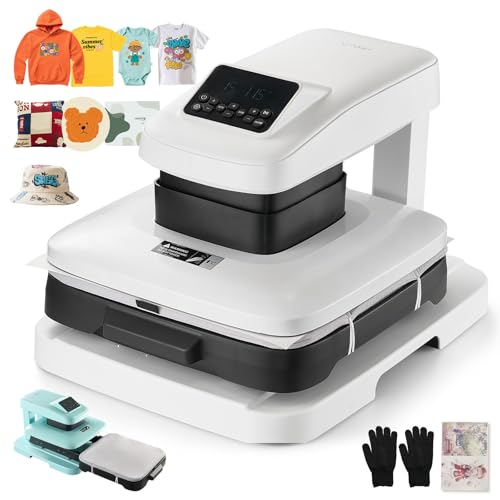
VEVOR Auto Heat Press Machine 15 x 15 (White)

Whubefy Swivel Auto Heat Press 15×15

Delclynee 16 x 24 Slide Out Heat Press
The Picks, Examined More Closely
This little press fits in a desk drawer yet handles the jobs a full-size machine fumbles: collars, seams, pockets, and the area around buttons. The precision tip is the whole point here, reaching curved and awkward spots where a flat platen simply can’t make contact.
It runs on a single setting, which sounds limiting until you realize most popular iron-on projects live in that one temperature range. Crafters working on baby clothes, hats, and small tote bags tend to find that simplicity refreshing rather than restrictive.
A Few Strong Suits
- Pointed tip reaches seams, buttons, and tight curves flat presses miss entirely
- One-setting operation means no fiddling with dials mid-project
- Stores easily in a drawer, so it suits shared crafting spaces
- Light enough to hold comfortably through longer detail sessions
Things To Consider
- The compact surface means larger designs need multiple passes, which slows batch work
- Single heat setting won’t suit specialty materials needing specific temperatures
Who It Suits Best
Casual crafters personalizing baby items, hats, and small garments who value portability over production speed.
A Better Fit Elsewhere
Anyone pressing full-front shirt designs will get faster results from the VEVOR Auto Heat Press Machine 15 x 15 (Green).
Mechanically this is the same mini platform as the blush pink version above, so the choice between them is mostly color preference. Both deliver the same compact heat-transfer performance on small and oddly shaped projects.
Where it earns its own spot is as a first press for someone testing the waters of iron-on crafts. There’s no learning curve to speak of, and the price of entry stays low while you figure out whether pressing becomes a hobby or an obsession.
Everyday Wins
- Handles small designs on shirts, socks, and accessories without setup fuss
- Curved base works around buttons, zippers, and seams
- Heats quickly, so short crafting sessions stay productive
Minor Gripes
- You’ll hold it manually throughout each pass, unlike the automated machines further down this list
- Not practical for anything beyond roughly chest-pocket-sized graphics
Made For
Beginners and occasional crafters who want a low-commitment tool for small iron-on projects at home.
Another Choice May Suit
Shoppers wanting automation from day one should look at the HTVRONT Auto Hat Press Machine instead.
Hats are notoriously awkward to press because their curved crowns fight every flat platen ever made. This machine solves that with a dedicated curved form plus automatic lowering and lifting, so each cap gets identical pressure and timing without you leaning on a handle.
For anyone selling embroidered-look HTV caps at markets or online, that consistency matters more than raw power. One touch starts the cycle, and the machine handles the rest from there.
The Upside
- Automatic lower-and-lift cycle removes guesswork from pressure and dwell time
- Curved pressing form matches hat crowns far better than flat platens
- Frees your hands during each cycle, useful when fulfilling multiple orders
- Repeatable results help keep a product line uniform
Points To Note
- It’s a single-purpose tool, so flat garment work still needs a separate press
- Owners commonly report a break-in period while learning placement on different cap styles
Right Fit For
Small businesses and market vendors producing decorated caps in repeatable batches.
Where A Sibling Pick Shines
Crafters who also want mug capability in one unit should consider the HTVRONT 3 in 1 Auto Heat Press Machine 12X10.
Step up to serious production territory. A 16 by 24 inch platen swallows oversized transfers, full-back prints, and even two standard designs side by side, while the 1700W element brings the surface to temperature noticeably faster than smaller machines.
Note this is a manual clamshell rather than a fully automatic model, but its sheer capacity makes it the volume pick here. Shops churning out team jerseys or event shirts will appreciate the headroom.
What Makes Sense
- Large platen accommodates full-back designs and multi-item layouts
- High wattage supports quicker heat-up between batches
- Soft heating liner adapts to varied material thicknesses
- Teflon-style coating on the surface helps resist residue buildup
Some Limits To Know
- Manual clamshell operation demands physical effort across long runs
- The big footprint needs a sturdy table and dedicated floor space
- Draws significant power, worth confirming your circuit can handle it
Key Specs
Who Will Love This
Volume sellers and school or team apparel producers who prioritize platen size above automation.
Swap It Out When
Operators wanting automatic release on a similar large format should weigh the Delclynee 16 x 24 Slide Out Heat Press instead.
Most multifunction presses make you wrestle with screws and alignment plates to swap attachments. This one uses quick-change mug and hat attachments that swap in about a second, which turns a three-product shop into a realistic one-person operation.
The 12×10 platen covers most standard shirt graphics, and adjustable pressure lets you tune settings across fabrics. Compared with the single-purpose HTVRONT hat press earlier in the list, this trades some hat-specific ergonomics for genuine versatility.
Strong Points
- Near-instant attachment swaps eliminate tedious mold changes
- One machine covers shirts, mugs, and caps
- Adjustable pressure accommodates different material thicknesses
- Automatic operation reduces fatigue during mixed-product runs
Worth Bearing In Mind
- Attachment-based design adds parts to store and maintain between sessions
- The 12×10 platen is smaller than the 15-inch and 16×24 options here
Who Should Grab It
Etsy sellers and hobbyists offering shirts, mugs, and hats who want one machine instead of three.
Look Elsewhere When
Shops focused purely on caps get better dedicated results from the HTVRONT Auto Hat Press Machine.
Load your garment, close the lid, hit start, and walk away. This press adjusts its own pressure, counts down, and releases automatically, cutting manual effort roughly in half according to the manufacturer’s figures.
Dual-tube heating spreads warmth more evenly across the 15×15 plate, and the substantial clamping force handles fabric, wood, and ceramic blanks alike. In our view, this is the sweet spot for home studios stepping up from entry-level machines.
Where It Excels
- Full auto cycle: place, close, start, and the machine does the rest
- Dual-tube heating promotes even temperatures edge to edge
- Strong clamping force suits sublimation blanks beyond fabric
- Digital display simplifies repeat settings across batches
Details To Watch
- Auto pressure tuning may need a few test runs to dial in for thin fabrics
- Heavier build than clamshells, so plan your bench accordingly
At A Glance
Best Suited To
Home studio owners running regular sublimation and vinyl orders who want automation without industrial bulk.
Reach For A Different Pick When
DTF-focused printers wanting adjustable upward pressure should examine the SCULPFUN H1 Auto Heat Press for T Shirts.
Every other press here pushes down. The SCULPFUN H1 flips the convention: the heated plate rises from below and clamps upward, applying pressure from the bottom up. That geometry keeps your transfer film visible and stationary during the cycle, which DTF printers in particular tend to appreciate.
Three pressure levels scale up to 176 lb, letting you match force to fabric weight rather than trusting a fixed spring. The touch panel rounds out a genuinely modern control experience.
Real-World Strengths
- Upward clamping holds transfers flat and visible throughout pressing
- Three selectable pressure levels adapt to light and heavy fabrics
- Touch panel controls feel precise for repeat settings
- Handles DTF, sublimation, HTV, and vinyl workflows
A Few Limitations
- The unusual mechanism takes a session or two to feel natural
- Fixed 176 lb ceiling is lower than the VEVOR’s rated force
Quick Facts
Who It Suits Best
DTF and sublimation printers who want visible, tunable pressure rather than a fixed downward clamp.
Consider Something Else When
Users preferring conventional downward auto pressing will be more comfortable with the VEVOR Auto Heat Press Machine 15 x 15 (White).
Same proven platform as the green version at number six, finished in white for brighter workspaces. You get the identical hands-free sequence: position the blank, close the lid, press start, and the machine manages pressure, countdown, and release on its own.
Rapid dual-tube heating and up to 231 lb of force carry over too, along with compatibility across fabric, wood, and ceramics. Choose this finish if the darker housing would disappear into a dim corner of your studio.
Advantages To Know
- Complete auto cycle trims manual effort significantly per piece
- Dual-tube elements shorten wait times between presses
- Adjustable pressure plus digital display support repeatable output
Practical Considerations
- Identical internals to the green model, so pick purely on appearance
- Like all auto presses, the hinge assembly benefits from occasional cleaning of lint and residue
The Right Fit
Busy home crafters who want set-and-forget reliability in a lighter-colored machine.
Not Your Match When
Anyone needing oversized 16×24 capacity should step up to the VEVOR Heat Press Machine 16 x 24 1700W Clamshell.
What sets this Whubefy apart is configuration choice: a single-workstation version for cramped benches, or a dual-workstation layout that lets you prep one shirt while the other side presses. Growing shops rarely get that kind of flexibility at this tier.
The swiveling arm keeps hot surfaces away from your loading area, and the smart controls cover sublimation, DTF, and HTV vinyl without complaint. For a two-person operation, the dual setup effectively doubles throughput.
Practical Pluses
- Dual-workstation option enables prep-and-press workflow in parallel
- Swivel design moves the heating element clear during loading
- Handles sublimation, DTF, and HTV vinyl interchangeably
- Single-station variant fits tighter workshops
Trade Offs To Consider
- The dual configuration demands considerable bench length, measure first
- Less widely documented than VEVOR or SCULPFUN, so community troubleshooting resources are thinner
Core Details
Who Will Love This
Two-person studios and growing side hustles that need parallel prep and pressing without buying two machines.
Where Another Pick Suits Better
Solo crafters with limited counter space will find the HTVRONT 3 in 1 Auto Heat Press Machine 12X10 easier to house.
The slide-out drawer is the feature worth understanding here. The lower platen extends up to 12.25 inches toward you, so arranging a transfer happens well away from the open heating element. That single design choice addresses the biggest safety complaint about traditional clamshells.
Underneath sits industrial-grade hardware: a 16×24 platen, 1400W element, a wide 32 to 455 degree Fahrenheit range, and timer settings out to 999 seconds. An adjustable pressure knob tunes force for everything from delicate poly blends to dense canvas.
Useful Strengths
- Slide-out drawer keeps hands clear of the hot upper platen
- Wide temperature span covers standard and specialty materials
- Long timer range suits slow-press applications like thick substrates
- Adjustable knob gives fine control over clamping force
Factors To Consider
- Drawer extension adds depth requirements beyond a standard clamshell footprint
- Manual operation still requires closing the handle yourself each cycle
Feature Rundown
Whose Shelf It Belongs On
Production operators and serious sellers who want large-format capacity with safer loading mechanics.
Skip It When
Beginners wanting push-button automation are better served by the VEVOR Auto Heat Press Machine 15 x 15 (Green).
What Actually Matters Before You Buy
Match The Platen To Your Real Projects
Platen size dictates what you can press in one pass. A 12×10 plate handles most chest logos, while 15×15 covers typical adult front designs and 16×24 opens the door to full-back prints. Measure your most ambitious planned design before committing, then buy slightly larger than that.
Automation Level Vs. Physical Effort
Fully automatic models adjust pressure, count down, and release on their own, which matters enormously across a fifty-shirt run. Manual clamshells demand a firm squeeze every cycle. Honest self-assessment helps here: weekend crafters cope fine with manual, daily producers rarely regret paying for automation.
Pressure Control And Material Range
Sublimation on ceramics, DTF on cotton, and HTV on polyester each want different force and temperature. Adjustable pressure knobs or selectable levels give you that range in one machine. Fixed-pressure units limit you to whatever the factory spring decided.
Power And Workspace Reality
Larger presses draw serious wattage and weigh enough to require sturdy tables. Confirm your circuit, measure your bench including drawer extensions or swing arms, and leave ventilation room. A press that doesn’t fit your room never gets used.
Key Considerations Across These Picks
Traps First Timers Fall Into
The classic error is buying tiny for a big ambition, then upgrading within months. The opposite mistake is grabbing a 16×24 machine for a dorm-room desk with no outlet nearby. Also check whether attachments, mats, or sheets ship included, since those add-ons affect total cost.
What Separates Premium From Basic
Higher-tier machines spend their extra cost on even heating, stronger and tunable pressure, durable coatings, and safety-minded mechanics like slide-out platens. Casual users won’t feel those differences weekly. Anyone pressing daily will, usually within the first month of ownership.
Frequently Asked Questions
Do automatic heat presses work with all transfer types?
Most handle HTV vinyl, sublimation, and DTF within their temperature and pressure ranges. Always confirm the specific materials listed for your chosen model before ordering films or blanks.
How much space does a 15×15 auto press need?
Plan for roughly two feet of width plus clearance behind the lid and around the body. Heavier units belong on a solid table near a dedicated outlet.
Are mini presses like the Cricut EasyPress Mini worth owning alongside a big press?
Many crafters keep both, since minis reach seams, collars, and curved areas flat platens cannot touch. They complement rather than replace a full-size machine.
Is higher wattage always better in a heat press?
More wattage generally means faster heat-up and better recovery between cycles. Beyond that, even heat distribution matters more than raw numbers for transfer quality.
How do I maintain an automatic heat press?
Wipe the platen once cooled to remove adhesive residue, keep hinges free of lint, and store attachments dry. Owners commonly report years of service from routine cleaning alone.
Closing Thoughts
Choosing among these ten comes down to honest math about your projects, your space, and how many pieces you press in a sitting. Start with platen size, add the automation level your volume justifies, and the shortlist shrinks fast. Whichever direction you lean, measure your bench first and let the machine fit your life rather than the reverse.
