
A good spray gun turns a weekend of brush strokes into an afternoon of even, clean coats. Whether you’re refinishing cabinets, priming a car panel, or staining a fence line, the right tool saves paint and your patience. This roundup sorts ten options by real project type, from cordless handhelds to high-pressure airless kits, so you can match the gun to the job instead of guessing.
Your Options, Compared

DTEZTECH 200W HVLP Cordless Paint Sprayer for Dewalt 20V
Hotorda HVLP Spray Gun Kit with 1.4/1.7/2.0mm Nozzles

TAIRDA Automatic Paint Sprayer for Ryobi 18V Battery
Tosucs HVLP Spray Gun 1.0mm Tip Gravity Feed

ENDOZER Professional HVLP Spray Gun Set Gravity Feed Air Spray Gun
LESONJOY 1000W Corded HVLP Paint Sprayer
WIBENTL Electric Spray Paint Gun, 3 Modes & 4 Brass Nozzles

Gyfent 22Pcs Airless Sprayer Kit with 50ft Hose

Every Family 3600 PSI Airless Sprayer Gun Kit
Tilswall Shark700 Cordless Paint Sprayer
A Breakdown Of The Leading Choices
Cordless changes how you work. With this DTEZTECH gun running off a Dewalt 20V battery (sold separately), there’s no outlet hunt mid-project and no hose snagging on fence rails while you stain. The 200W brushless motor pushes roughly 1600ml/min of airflow through a copper nozzle, which matters because brushless designs tend to run cooler and hold up better over repeated sessions.
The adjustable flow control is the detail that separates it from basic handhelds. Dial output down for cabinet doors, open it up for siding. In our view, anyone already owning Dewalt batteries gets the most value here.
What Pays Off
- Brushless motor generally means less wear and longer service life than brushed equivalents.
- Copper nozzle resists corrosion from water-based paints and cleans up quickly.
- Adjustable flow lets you match output to delicate trim or broad fence panels.
- Cord-free operation suits outdoor jobs far from power sources.
Things To Consider
- Battery isn’t included, so budget for a pack if your Dewalt collection is empty.
- Likely needs paint thinned to the right viscosity; owners commonly report clogging when material goes in too thick.
Who It Suits Best
Dewalt tool owners tackling furniture, cabinetry, and fence staining who want cordless freedom without buying into a new platform.
A Better Fit Elsewhere
Ryobi households should look at the TAIRDA Automatic Paint Sprayer instead, since it runs on packs they already own.
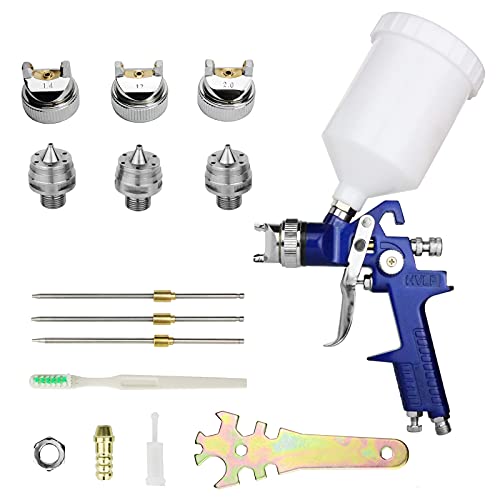
This is an air-powered gun, meaning it needs a compressor rather than plugging into a wall. That trade-off buys you finer control than most electric handhelds can offer, especially for automotive primer and base coats where finish quality counts. The 600cc cup holds enough material to cover a fender or a set of chair frames without constant refills.
Three nozzle-and-needle sets come in the box: 1.4mm for thinner finishes, 1.7mm as a middle ground, and 2.0mm for heavier primers. Swapping them takes minutes and covers nearly every common coating thickness you’ll encounter at home.
The Value In It
- Three tip sizes handle everything from clear coat to thick primer without extra purchases.
- 600cc capacity reduces refill interruptions on medium-sized panels.
- Air-fed atomization typically produces a smoother finish than entry electric guns.
Small Caveats
- You’ll need a compatible compressor, which adds cost if you don’t own one.
- Thorough cleaning after each session keeps the needle passages clear; dried paint inside the tip is the usual complaint.
Made For
Garage tinkerers and auto enthusiasts with compressor access who want one gun covering primer through topcoat.
Reach For A Different Pick When
Without a compressor, the corded LESONJOY 1000W sprayer delivers similar versatility straight from a wall outlet.
Tool-only sprayers make sense once you notice how many batteries sit charged in a Ryobi household. This TAIRDA accepts the full range of Ryobi 18V packs, from older P100 units through newer lithium models, so the ecosystem you’ve built does double duty. Click a pack in and start spraying; no cords, no compressor, no new charger.
The automatic spraying feature fires material as soon as you pull the trigger, moving noticeably faster than brushing or rolling on flat surfaces like shed walls or bookshelves. Compared with the DTEZTECH above, it trades the brushless motor for broader battery compatibility.
A Favorable Mix
- Works with a wide span of Ryobi 18V batteries, old and new.
- Automatic trigger action speeds up large flat surfaces considerably.
- Cordless layout makes ladder work and overhead spraying easier.
Points To Note
- No battery ships in the box, so first-time Ryobi users face an extra purchase.
- Runtime depends entirely on your pack’s amp-hours; smaller older cells may need swapping mid-job.
Right Fit For
Existing Ryobi owners handling weekend furniture and small-wall projects around the house.
Where A Sibling Pick Shines
Heavier commercial-style sessions suit the ENDOZER Professional HVLP set better, thanks to its sturdier metal construction.
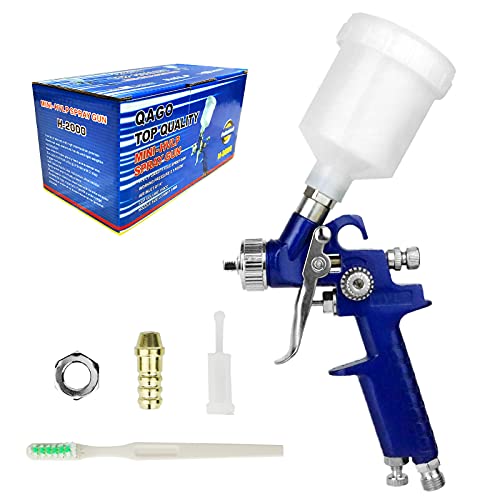
Gravity feed means the cup sits on top and paint flows down into the gun, so almost nothing pools and wastes at the bottom. On a 125ml cup that efficiency matters; you’re working with small batches of touch-up paint, lacquer, or craft finishes where every drop counts. The fine 1.0mm tip is built for thin materials and detail work rather than broad coverage.
This is the kind of gun you reach for on picture frames, model parts, and spot repairs on car trim. Against the Hotorda kit reviewed earlier, it sacrifices nozzle variety for precision and a lighter hand feel during long detailed sessions.
The Helpful Details
- Fine 1.0mm tip lays down controlled, thin coats on small surfaces.
- Gravity feed design cuts leftover paint waste in the cup.
- Lightweight build reduces wrist fatigue during close-up work.
Less Ideal Details
- The small cup means frequent refills on anything larger than a door panel.
- Single tip size limits it to thinner paints; thick primers will likely need dilution.
Whose Shelf It Belongs On
Hobbyists and touch-up painters doing fine automotive or craft finishing with a small compressor nearby.
Swap It Out When
Bigger coverage calls for the Hotorda HVLP kit, whose 2.0mm option and 600cc cup handle wide panels comfortably.
Material choice tells you where a gun sits in the market. This ENDOZER uses stainless steel nozzles and needles in three sizes (1.4, 1.7, and 2.0mm) plus a brass air cap, a combination that resists wear and corrosion far better than the plated alloys on budget guns. The 15-hole cap design aims for uniform atomization, which shows up as fewer streaks on glossy finishes.
The 600ml gravity cup and standard 1/4-inch NPT inlet with quick adapter mean it drops onto most shop compressors without fuss. Fluid and pattern controls let you tune output per panel, something casual sprayers rarely touch but finish-focused users adjust constantly.
Benefits That Matter
- Stainless nozzles and brass cap hold up to solvent-based coatings over time.
- Three tip sizes cover clear coats through heavier primers.
- Independent fluid and pattern knobs give precise control over fan shape.
- Quick-connect inlet speeds setup on standard compressors.
What To Weigh
- Requires an adequately sized compressor; weak airflow flattens the atomization quality.
- Full teardown cleaning after solvent-based paints takes some discipline.
Best Suited To
Serious DIYers and semi-pro painters chasing showroom-quality finishes on cars, cabinets, and furniture.
Consider Something Else When
Compressor-free convenience matters more than finish finesse; the Tilswall Shark700 later in this list plugs into a battery instead.
Wattage is the honest headline here. At 1000W, this corded unit pushes more consistent airflow than typical 400-600W handhelds, and that steadiness shows up on big surfaces like living room walls where a weaker motor sputters and leaves texture. Four copper nozzle sizes ship in the box, letting you move from broad wall coverage down to table and chair detail without changing tools.
The yellow body won’t disappear in a garage corner either. Cleanup is designed to be straightforward, which matters more than most first-timers expect; sprayers live or die by how fast they rinse out between colors.
Positive Takeaways
- High 1000W output maintains steady atomization across long sessions.
- Four copper nozzle sizes adapt from walls to furniture legs.
- Corded power means no battery swaps on all-day room repaints.
Potential Drawbacks
- The cord limits reach; an extension lead becomes part of the kit.
- More power means more overspray, so masking tape and drop cloths are non-negotiable.
Who Should Grab It
Homeowners repainting entire rooms or multiple pieces of furniture in one go, near a reliable outlet.
Not Your Match When
Tight budgets favor the WIBENTL sprayer next up, which covers similar ground with simpler specs.
First spray guns should be forgiving, and this WIBENTL is built around that idea. Assembly is deliberately simple, and the three spray patterns (horizontal, vertical, circular) are selected with a twist rather than disassembly. Brass nozzles in four sizes, from a fine 1mm up to a wide 3mm, cover both detail touches and broad surfaces, giving newcomers room to experiment without buying accessories.
Cleaning is the part beginners dread, and the design here breaks down quickly for rinsing. You may find the flow less forceful than the LESONJOY above, but for craft projects, small furniture, and accent walls, that gentler output is actually easier to control while learning.
Noteworthy Benefits
- Four brass nozzle sizes span fine detail to wide coverage.
- Pattern switching takes seconds, encouraging experimentation.
- Beginner-oriented assembly and cleanup lower the learning curve.
Room For Improvement
- Lower power output struggles with very thick, unthinned coatings.
- Corded operation ties you to outlet locations indoors and out.
The Right Fit
First-time sprayers working on crafts, small furniture flips, and single accent walls at home.
Another Choice May Suit
Exterior fence and deck stains call for the Gyfent airless kit further down, built for higher-pressure material.
Airless systems push paint at high pressure without compressed air, laying thick material fast. This Gyfent bundle rates for 3600 PSI and arrives genuinely complete: the gun, a 50-foot 1/4-inch NPT hose, six reversible tips (211 through 623), four extension wands, six filters, two nozzle seats, a wheeled attachment, and a 180-degree guide tool. Reversible tips matter practically; a quick flip usually clears a clog without stopping work.
That 50-foot hose is the quiet hero. Siding, fences, and garage exteriors get covered without dragging the pump around the yard. It fits most standard airless machines, making it a strong replacement or backup rig.
Strengths Worth Knowing
- 22-piece bundle covers nearly every accessory need out of the box.
- 50-foot hose reaches whole house exteriors from one pump position.
- Reversible tips clear blockages in seconds mid-job.
- Extension wands handle ceilings and high siding safely from the ground.
Trade Offs To Consider
- An airless pump is required; this kit doesn’t generate pressure itself.
- High-pressure overspray demands careful masking and protective gear.
Key Specs
Who Will Love This
DIYers with an airless pump tackling full exteriors, fences, and multi-room interiors in one season.
Look Elsewhere When
Lighter occasional use fits the Every Family kit next, which trims the bundle to essentials.
Where the Gyfent bundle goes maximalist, this Every Family set keeps the useful core. You get the 3600 PSI-rated gun, five reversible nozzles (211, 313, 415, 517, 623), five filters, and a 16-inch extension pole. For interior repaints, that’s honestly the sweet spot; the pole handles ceilings, the tip range covers walls and trim, and spare filters keep downtime short.
The nozzle guard is a small feature worth calling out. It shields the tip from knocks against ladders and doorframes, and bent tips are among the most common ways these guns get ruined. Compared with the Gyfent kit, you lose the long hose and extra wands but gain simplicity.
Advantages To Know
- Five reversible tip sizes suit most interior surfaces.
- Nozzle guard protects against everyday bumps and drops.
- 16-inch extension pole reaches ceilings without scaffolding.
- Spare filters minimize mid-project interruptions.
Details To Watch
- Needs a separate airless pump capable of matching its 3600 PSI rating.
- Filters need regular rinsing; neglected filters cause spitting patterns.
Who It Suits Best
Homeowners refreshing interior walls and ceilings with an existing airless machine.
Skip It When
Whole-exterior reach matters more; the Gyfent 22-piece kit adds the 50-foot hose and longer wands.
Tilswall builds the Shark700 around habits that keep sprayers alive. The included viscosity cup takes the guesswork out of thinning paint to the right consistency, which is the single biggest factor in whether a cordless gun sprays evenly or sputters. Pair it with a Dewalt 20V battery (not included) and you’ve got untethered spraying for furniture, fences, and interior touch-ups.
The brand also stresses cleaning within about 15 minutes of finishing, and that advice tracks with what owners commonly report: dried paint in the pickup tube is the main killer of handheld sprayers. Build the rinse habit and this gun rewards you.
Why It Works Well
- Viscosity cup removes guesswork from paint preparation.
- Dewalt 20V compatibility slots into an existing battery collection.
- Cordless format suits garages, gardens, and stairwells alike.
Worth Bearing In Mind
- Battery sold separately, adding cost for non-Dewalt households.
- Prompt cleaning after each session is essentially required to prevent clogs.
At A Glance
Built With In Mind
Regular DIY painters who want dependable cordless performance across furniture, fencing, and seasonal touch-up work.
Where Another Pick Suits Better
Finish-focused auto work favors the ENDOZER Professional HVLP set, whose brass and steel internals deliver finer atomization.
Choosing Between These Spray Guns Without Regret
Match The Power Source To Your Projects
Cordless models shine outdoors and on ladders, but they lean on batteries you may not own yet. Corded electric guns deliver unlimited runtime near an outlet, while air-powered HVLP guns need a compressor and reward you with finer finishes. Airless setups handle thick latex and big surfaces but demand strict safety habits.
Tip Size Decides Your Finish
Nozzle diameter controls how much material flows. Fine tips around 1.0-1.4mm suit thin lacquers and clear coats; mid-range 1.7-2.0mm handles primers and wall paint; wide 3mm-plus tips move heavy coatings fast. Buying a gun with multiple tips costs slightly more upfront and saves repeat purchases later.
Cleaning Effort Is Part Of The Deal
Every gun on this list performs only as well as its last rinse. Water-based paints flush out in minutes; oil-based materials need solvent and patience. Choose a model whose breakdown process you’ll actually follow, because neglected passages cause spitting patterns and uneven coverage within a few uses.
Key Considerations Across These Picks
Traps First Timers Fall Into
The classic error is skipping the viscosity check. Thick paint starves the nozzle and produces orange-peel texture, then gets blamed on the tool. Another slip: buying a compressor-dependent gun without owning a compressor, or choosing a battery-platform sprayer from the wrong ecosystem. Check compatibility before checkout.
Where The Extra Money Goes
Higher-tier guns spend their budget on metals and motors: brass caps, stainless needles, brushless drivetrains. Those parts resist wear from solvents and repeated teardowns, keeping the spray pattern true over years. Occasional users rarely notice the difference; weekly painters feel it immediately.
Frequently Asked Questions
Do automatic spray painting guns need a compressor?
Only air-powered HVLP models do. Cordless and corded electric versions run on batteries or wall outlets, while airless guns require a high-pressure pump.
Can these sprayers handle unthinned paint?
Most handheld electric models perform best with paint thinned to a pourable consistency. Airless systems rated at 3600 PSI typically spray standard latex straight from the can.
How soon should I clean my sprayer after use?
Ideally within 15 minutes of finishing. Dried paint inside the nozzle and pickup tube is the leading cause of clogged, uneven spray patterns.
Are battery-powered sprayers sold with batteries?
Several tool-only models, including the DTEZTECH, TAIRDA, and Tilswall picks here, ship without batteries. Confirm your platform’s compatibility before ordering.
Which type works best for kitchen cabinets?
A fine-tip HVLP gun gives the smoothest cabinet finish. The ENDOZER or Tosucs options in this list suit that kind of detail work well.
Bottom Line
Your project should pick the gun, not the other way around. Cordless models like the DTEZTECH and Tilswall Shark700 free you to roam the yard, while the ENDOZER and Hotorda guns reward compressor owners with finer finishes. For whole-house work, the Gyfent and Every Family airless kits move paint faster than any handheld can. Start with the surface in front of you, and the right choice tends to make itself.
