
A torn hem at 7 a.m. or a quilt that needs forty straight seams both come down to the same thing: a machine you can trust without fussing over settings. That’s what this list covers. You’ll find full-size mechanical and computerized models alongside pocket-sized handheld stitchers, plus one embroidery machine for anyone eyeing custom work. The goal is simple: match the right machine to how you actually sew.
How The Shortlist Stacks Up

Brother XM3700 Sewing Machine 37 Built-in Stitches

Brother CS7205 Computerized Sewing Machine (White)

Brother FB1757X Mechanical Sewing Machine

Xamanabu Dual Speed Handheld Sewing Machine
Verdanika Beginner Mini Sewing Machine (Black)

Ausenzup Cordless Handheld Sewing Machine

MEGLE FHSM-505 Household Sewing Machine
Rxmeili 12-Stitch Portable Sewing Machine

Poolin EOC07 Embroidery Machine
DRAWSKIN Portable Handheld Sewing Machine
A Closer Look At Each Pick
Thirty-seven stitches is a sweet spot. It’s enough variety to grow past basic hems into garment construction, decorative topstitching, and light quilting, without burying a newcomer under a screen full of options. The five included presser feet cover the jobs most home projects demand.
In a busy sewing room, that means switching from a zigzag hem to a zipper insertion takes minutes, not an afternoon of shopping for attachments. A built-in storage compartment keeps those feet from wandering off between sessions too.
The Value In It
- 37 built-in stitches span utility, decorative, heirloom, and quilting work, so one machine handles several project types
- Zigzag, zipper, blind stitch, buttonhole, and button feet arrive in the box, saving separate purchases
- Integrated accessory storage keeps small parts organized near the needle
- A sensible step up from entry-level machines once straight seams feel routine
Things To Consider
- Mechanical dial selection means no saved custom stitch combinations
- Owners commonly report threading takes practice during the first week, so keep the manual handy
Who Will Love This
Intermediate beginners ready to move beyond repairs into garments and quilting will get years of use here.
Where A Sibling Pick Shines
Total newcomers who want fewer choices may prefer the simpler Brother FB1757X instead.
Where the XM3700 stops at 37 stitches, this computerized model goes much further. A flip chart sits beside the needle showing every option at a glance, which beats scrolling menus mid-project. The wide table gives quilts and curtain panels real support as they feed through.
The lettering font deserves a mention too. Fifty-five alphanumeric stitches let you monogram tote bags, labels, and gifts without a separate embroidery setup, something none of the handheld picks on this list can attempt.
Notable Upsides
- 150 built-in stitches including 142 decorative, quilting, and utility patterns for serious creative range
- Eight one-step auto-size buttonhole styles produce consistent results across a whole shirt placket
- Alphanumeric font handles basic monogramming directly on the machine
- Eleven sewing feet expand technique options from piping to invisible zippers
- Wide extension table stabilizes bulky quilting work
Small Caveats
- Computerized controls add a learning curve compared with the dial-based FB1757X
- The larger footprint demands dedicated table space, a real factor in shared rooms
Right Fit For
Confident hobbyists and quilters who want room to grow without jumping to an embroidery machine.
Swap It Out When
Anyone still mastering straight seams will find the mechanical Brother FB1757X less intimidating day to day.
Seventeen stitches sounds modest next to the CS7205’s library, but for learning the craft, restraint helps. Every function lives on a physical dial, so there’s no menu navigation standing between you and your first seam. The free arm swings out for cuffs and pant legs, a detail experienced sewists use constantly.
An LED-lit work area makes evening mending easier on the eyes, and the reverse button lets you lock seams at both ends without backstitching by hand.
The Upside
- 17 built-in stitches cover garments, accessories, and home décor basics comfortably
- Free arm configuration simplifies sleeves, cuffs, and narrow circular seams
- LED lighting brightens the needle area for low-light workspaces
- Four-step buttonhole keeps a traditionally tricky task manageable for novices
Points To Note
- The four-step buttonhole requires manually rotating the dial between stages, slower than one-step systems
- Limited stitch count may feel restrictive within a year for ambitious sewists
Made For
First-time owners and occasional menders who value simplicity over an enormous pattern catalog.
Another Choice May Suit
Growing quilters should look at the Brother CS7205, whose wider table and bigger stitch set pay off quickly.
This palm-sized stitcher trades a bed and free arm for pure portability. Two fixed speed gears shape the experience: fast mode chews through long straight runs, while slow mode gives you control on curves and delicate corners. For a device this small, that dual-gear design matters more than raw power.
It works best as a companion tool rather than a primary machine. Think dorm-room hem fixes, costume adjustments before an event, or travel repairs where hauling a full-size unit isn’t realistic.
Everyday Advantages
- Two speed settings let you match pace to fabric and seam complexity
- Compact enough to live in a glovebox, desk drawer, or carry-on
- Ready to operate straight from the box with minimal setup
- Handles everyday mending tasks despite its miniature footprint
Less Ideal Details
- Handheld stitching produces less even seams than a bed-mounted machine, especially on long runs
- Thick fabrics like denim layers can strain the small motor, based on commonly reported behavior
Who Should Grab It
Students, travelers, and parents who need fast fixes more than finished garment construction.
Reach For A Different Pick When
Regular home projects call for the Verdanika mini machine, which adds a foot pedal and proper stitch dial.
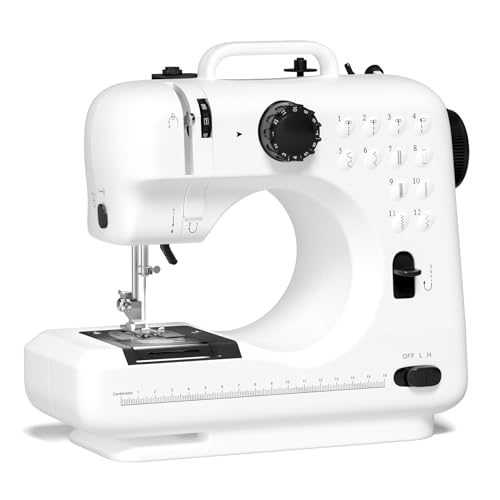
Mini machines usually force a compromise, but this one splits the difference nicely. Twelve built-in stitches sit behind clear guides for tension and selection, and you choose between traditional foot pedal control or a simple button start. That flexibility suits learners who haven’t yet coordinated hands and feet.
The manufacturer claims it moves from silk to denim, though in practice you may find very heavy layers slow things down. For curtains, cottons, and everyday repairs in a small apartment, it holds its own.
What Helps Most
- Foot pedal and button-start modes accommodate different comfort levels
- Two-speed control keeps beginners from outrunning their accuracy
- Clear printed guides reduce guesswork around tension and stitch choice
- Portable size fits dorm desks and cramped craft corners
Trade Offs
- Twelve stitches limit decorative ambition compared with the Brother CS7205
- Very thick fabric stacks may challenge the compact motor, a common report among mini-machine owners
At A Glance
Who It Suits Best
Apartment dwellers and first-time sewists wanting pedal-style control in a small package.
Look Elsewhere When
True portability matters more than features, then the battery-free Xamanabu handheld travels lighter.
Most handheld stitchers arrive bare-bones. This one ships as a genuine kit: eight thread spools, scissors, a measuring tape, needle threader, pins, an extension spindle, and even test fabric so you can confirm everything works before relying on it. That completeness removes the usual first-trip-to-the-store problem.
The stated limit is 1.8mm of fabric thickness, which covers handkerchiefs, aprons, pillowcases, and curtain panels. Anything harder or thicker falls outside its comfort zone, so temper expectations accordingly.
A Strong Showing
- Complete accessory bundle means nothing extra to buy before your first repair
- Cordless operation suits campsites, hotel rooms, and cars
- Test fabric included lets you practice before touching real garments
- Extension spindle supports larger thread spools
Details To Watch
- No battery ships in the box, so plan to supply your own before heading out
- The 1.8mm thickness ceiling rules out denim hems and layered canvas
Whose Shelf It Belongs On
Campers, RV travelers, and anyone building an emergency repair kit for the trunk.
Not Your Match When
Heavy fabric work belongs with the Verdanika mini, which claims denim capability outright.
The FHSM-505 packs features you’d normally associate with pricier desktop units. Automatic thread rewind saves fiddly winding by hand, double-thread construction produces sturdier seams than single-thread handhelds, and forward-plus-reverse sewing lets you lock every seam properly. An LED light and built-in thread cutter round out the workspace.
Two power supply modes and a hidden storage drawer make it genuinely household-friendly. Compared with the Verdanika, you gain reverse stitching and adjustable stitch length, two features that matter once projects get serious.
Where It Helps
- Automatic thread rewind eliminates tedious manual bobbin winding
- Double-thread, double-speed design yields stronger, faster seams
- Hand switch or foot pedal start adapts to your working style
- Adjustable stitch length fine-tunes results across fabric weights
- Hidden drawer stores needles and bobbins within reach
Things To Weigh Up
- Rotary wheel stitch selection takes a moment to learn positions
- Owners commonly note the lightweight body benefits from a stable, non-slip surface
Quick Facts
Best Suited To
Home menders tackling regular household projects who want desktop features at a mini price.
Consider Something Else When
Embroidery ambitions point toward the Poolin EOC07, a different category entirely.
The headline here is the bundled 42-piece kit. Thread, tools, and notions typically cost extra after buying a budget machine, so having them included changes the math for anyone starting from zero. The machine itself offers twelve essential stitches behind an intuitive dial, plus reverse sewing for reinforcing seams.
Speed handling mirrors the MEGLE FHSM-505: a low/high toggle for automated consistency, or the included foot pedal when you want rhythm control. Detail work and quick straight seams both have a path.
Reasons It Performs
- 42-piece accessory kit covers thread, tools, and supplies from day one
- Low and high speed toggle suits both careful detailing and fast seaming
- Foot pedal included for traditional precision control
- Reverse function reinforces seam ends against unraveling
Where It May Fall Short
- Decorative stitch variety trails computerized rivals like the Brother CS7205
- Portable-class build means lighter internal components than full-size machines
The Right Fit
Cost-conscious beginners who want a complete starter setup rather than a bare machine.
Skip It When
You already own notions and only need the machine itself, then the MEGLE FHSM-505’s extra features serve better.
Everything else on this list sews; the EOC07 embroiders. Its largest hoop spans roughly 15 by 7.9 inches, big enough for jacket backs and multi-design layouts with far fewer rehoops than compact machines demand. Three smaller hoops handle patches, caps, and left-chest logos.
The 7-inch touchscreen drives 200 built-in designs, and Wi-Fi plus USB transfer accepts your own files. Starter accessories ship included, which softens the usual entry cost into this category. For a side business producing custom orders, the extended area translates directly into higher-value work per session.
Practical Pluses
- 15 x 7.9 inch maximum area fits large designs and reduces rehooping interruptions
- Four hoops total cover garments, patches, and small custom accessories
- 200 built-in designs provide immediate project material
- Wi-Fi and USB transfer accept custom digitized files
- Large touchscreen simplifies design placement and editing
Factors To Consider
- Embroidery-only operation means pairing it with a sewing machine for construction work
- Hooping fabric correctly takes practice, a hurdle every new owner reports
Core Details
Perfect Match For
Home-business creators fulfilling custom embroidery orders and personalizing garments at volume.
Where Another Pick Suits Better
General garment sewing calls for the Brother CS7205, which stitches but doesn’t embroider.
Four AA batteries give this stitcher true cordless freedom, no outlet hunting in hotel rooms or campgrounds. Threading is designed to be painless, so a torn hem gets fixed in minutes rather than becoming a weekend project. It arrives as a complete kit and stores flat in a drawer.
Against the Ausenzup, you trade the bigger accessory bundle for simpler out-of-box threading. Both fill the same emergency-repair role, just with slightly different priorities.
Benefits That Matter
- Runs on 4 AA batteries for genuine cordless use anywhere
- Easy threading design gets you stitching immediately, no setup struggle
- Lightweight body slips into luggage, desk drawers, or car kits
- Handles clothes, pants, curtains, buttons, and quick alterations
Worth Bearing In Mind
- Battery costs add up with frequent use, unlike corded mini machines
- Stitch quality suits repairs, not showpiece garment construction
Essential Details
Built With In Mind
Busy households and frequent travelers who treat clothing repairs as five-minute jobs.
A Better Fit Elsewhere
Shoppers wanting bundled threads and tools should compare the Ausenzup handheld kit instead.
What Matters Most Before Choosing Automatic Stitching Machines
Match The Machine To Your Projects
Full-size mechanical and computerized models earn their keep on garments, quilts, and anything requiring consistent long seams. Handheld units shine at hems, buttons, and travel fixes. Buying a desktop machine for occasional button repairs wastes money and counter space, while expecting a handheld to construct a dress leads to frustration.
Count What’s In The Box
Accessory kits vary wildly. Some machines include five or eleven presser feet, others ship nearly empty, and several handhelds bundle threads, scissors, and test fabric. Factoring those extras into your decision often reveals which option delivers more usable value upfront.
Weight The Stitch Library Honestly
Twelve stitches covers most household needs. Thirty-seven opens decorative and quilting doors. One hundred fifty plus a monogramming font serves committed hobbyists. Choose the tier matching your next year of projects, not a fantasy version of yourself.
Mind Power And Placement
Battery-powered handhelds trade running costs for freedom. Desktop minis need a stable surface, since lightweight bodies vibrate during fast stitching. Plan the workspace before the purchase arrives.
Key Considerations Across These Picks
Traps First Timers Fall Into
The classic error is overbuying. A computerized machine with 150 stitches overwhelms someone still learning to thread a needle, and unused features don’t teach skills. The opposite trap bites too: grabbing the cheapest handheld for ambitious sewing plans, then discovering its limits mid-project. Read the fabric thickness limits carefully before committing.
When Paying More Pays Off
Higher-tier models buy automation and capacity. One-step buttonholes, automatic thread rewind, wide tables, and large embroidery hoops all convert directly into hours saved on real projects. Spend up once your current machine regularly frustrates you, not before.
Frequently Asked Questions
Can a handheld sewing machine replace a full-size one?
No, handhelds excel at quick repairs and small fixes. Garment construction and quilting still belong on a desktop machine.
How many built-in stitches does a beginner actually need?
Twelve covers hems, zigzag seams, and basic repairs comfortably. More stitches matter once decorative and quilting work enters your plans.
Do mini sewing machines handle denim?
Some claim to, including the Verdanika model above. Very thick layered seams remain challenging for any portable-class motor.
Is an embroidery machine worth it for home use?
For custom orders, personalized gifts, or a side business, absolutely. Occasional monogramming alone rarely justifies the investment.
What maintenance do these machines require?
Regular lint removal around the bobbin area and occasional oiling where the manual specifies. Handhelds mainly need fresh batteries and clean threading.
Closing Thoughts
Your best match depends entirely on honest self-assessment. Casual menders should start with a handheld like the DRAWSKIN or the kit-equipped Ausenzup. Growing hobbyists get the most mileage from the Brother XM3700 or the feature-loaded CS7205. And if custom embroidery is calling, the Poolin EOC07 stands ready. Whichever direction you lean, pick the machine that fits the projects already on your list, and it’ll earn its spot quickly.
