
Baking rewards precision, but the right equipment does half the work before you ever touch the oven. Whether you’re pulling sourdough loaves on weekends or decorating birthday cakes with kids underfoot, mismatched gear turns a fun session into a frustrating one. This roundup covers ten genuinely useful baking tools that solve real kitchen problems: sticky jars, uneven pans, guesswork doneness, and countertops dusted in flour. Each entry explains who it suits and where the honest trade-offs sit.
A Quick View Of The Lineup
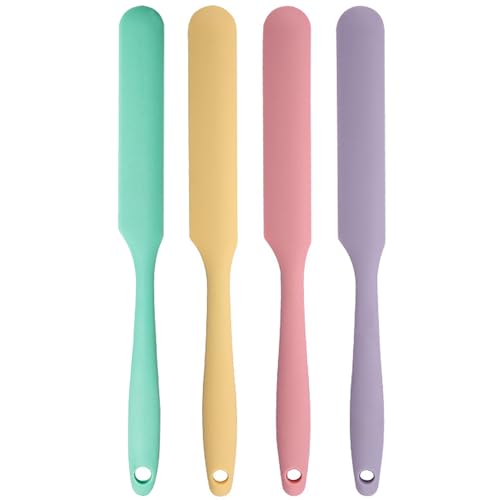
GZLT 4-Pcs Silicone Jar Spatula Set

HONGBAKE 9-Piece Nonstick Baking Pans Set (Gold)

Rondauno Cake Tester 2-Pack
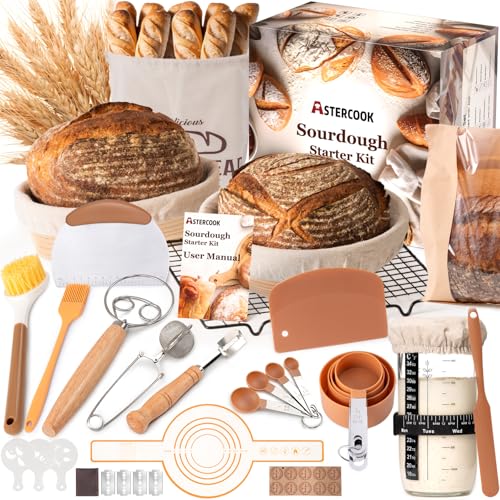
Astercook Sourdough Starter Kit with Banneton Baskets

TILUCK Stainless Steel Measuring Cups & Spoons Set

ChefAide 5-Piece Silicone Spatulas Set

Kootek 158-Piece Cake Decorating Kit

Spring Chef Large Dough Blender (Black)
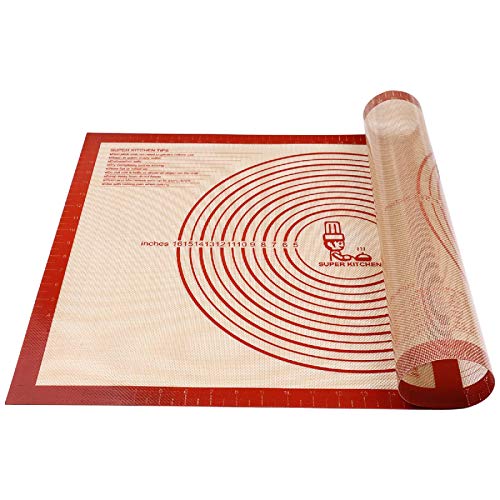
Folksy Super Kitchen Silicone Pastry Mat 28×20

Ecavria Stainless Steel Bench Scraper Set
A Breakdown Of The Leading Choices
Nut butter jars hide a stubborn last inch at the bottom, and ordinary spatulas simply can’t bend far enough to chase it. This four-piece set from GZLT pairs skinny, long-handled silicone heads with enough flex to sweep jars, bottles, and tall containers clean. The slim profile also doubles as a sourdough scraper, which makes it handy around wet dough.
Each spatula carries food-grade silicone rated for high oven temperatures, so you can stir hot fillings without watching the head soften. In most kitchens, that heat tolerance plus the narrow shape covers two jobs you’d otherwise need separate tools for.
Why It Works Well
- Skinny heads slide into narrow jar necks where wide spatulas stall out
- Heat-tolerant silicone handles hot caramel, custard, and stovetop stirring
- Long handles keep fingers clear of deep containers and hot pans
- Four pieces mean one can rest in the dishwasher while another works
Small Caveats
- The flexible tips are built for scraping, not heavy mixing, so stiff cookie dough may feel beyond their range
Who Will Love This
Home bakers tired of wasting the bottom third of every jar of honey, jam, or peanut butter.
A Better Fit Elsewhere
Broad-bowl mixing tasks suit the ChefAide 5-Piece set better, since its wider paddles fold batter faster than these skinny heads.
Starting from zero bakewise is expensive piece by piece, which is why nine-piece sets appeal to anyone furnishing a first kitchen. HONGBAKE bundles a cookie sheet with rack, cake pan, roasting pan, and muffin tin in a matching gold finish, all stackable for cramped cabinets. The diamond-textured base is the detail worth knowing about: that pattern promotes more even heating across the pan floor, so cookies brown uniformly instead of spotting dark in patches.
The nonstick coating releases cakes cleanly in typical home use, though gentle utensils are still wise. For most households, this single purchase replaces a slow, mismatched collection.
Everyday Advantages
- Diamond texture encourages even heat distribution across every pan
- Stackable design keeps a nine-piece collection inside one cabinet shelf
- Covered basics span cookies, cakes, muffins, and weekend roasts
- Matching gold finish looks intentional rather than accumulated
Things To Consider
- Nonstick coatings generally last longer when hand-washed, so dishwasher habits matter here
- Set buying means accepting sizes chosen for you rather than picking each pan individually
At A Glance
Made For
Newly independent cooks, wedding-registry shoppers, and anyone replacing a ragtag pan drawer in one move.
Where A Sibling Pick Shines
Already own good pans? The Kootek decorating kit adds a different skill set entirely without duplicating anything here.
Toothpicks work for doneness checks until they don’t: they’re short, they splinter, and fishing one out of a finished cake is nobody’s idea of fun. A cake tester is just a thin stainless probe you insert into the center; dry steel means done, wet batter means more time. Rondauno sells them as a two-pack in tough 18/8 stainless steel, the same corrosion-resistant grade used in quality cutlery.
Because nothing wears out, this is the rare tool you buy once. Cupcake batches benefit especially, since the extra length reaches the center of taller layers where toothpicks fall short.
Features That Help
- 18/8 stainless steel resists rust through years of washing
- Reusable design replaces boxes of disposable toothpicks
- Two testers let you check a layer cake and a batch of cupcakes back to back
- Thin probe leaves barely visible pinholes compared to a knife test
Points To Note
- It’s a single-purpose tool, so value depends on how often your oven meets cake batter
Whose Shelf It Belongs On
Frequent layer-cake and cupcake bakers who want an accurate, reusable doneness check instead of guesswork.
Swap It Out When
Occasional bakers may find the TILUCK measuring set more broadly useful, since accurate portions prevent many doneness problems in the first place.
Sourdough has a sneaky way of demanding one more tool every week, and buying piecemeal gets costly fast. Astercook compresses the whole journey into one box: a 9-inch round and a 10-inch oval banneton (the ridged basket that shapes loaves during their final rise), plus a starter jar, bread sling, dough whisk, scrapers, stencils, measuring tools, cooling rack, and bread bags. That spans feeding the starter through storing the finished loaf.
Two basket shapes matter more than beginners expect, since oval batards and round boules proof differently. You may find the stencil extras purely decorative, but the core pieces earn their place.
The Helpful Details
- Round and oval bannetons cover both classic loaf silhouettes
- Bread sling simplifies moving delicate proofed dough onto a hot surface
- Starter jar with lid supports weekly feedings without improvising containers
- Dough whisk cuts through sticky hydration levels a standard whisk struggles with
- Bread bags extend freshness once the loaf cools
Worth Noting
- Banneton baskets need proper drying between bakes to avoid mold, an upkeep step some owners overlook
- With this many components, expect to dedicate a drawer or bin to storage
Feature Rundown
Right Fit For
First-time sourdough bakers who want the complete workflow covered before their starter is even active.
Consider Something Else When
Experienced bakers with established baskets will get more mileage from the Ecavria scraper set below than duplicate kit contents.
Baking is chemistry with a apron on, and sloppy measurement is behind more failed recipes than any oven quirk. TILUCK’s set covers the standard range: four cups (quarter, third, half, and one full cup) plus six spoons running from an eighth teaspoon up to a tablespoon. Both halves use food-grade 18/8 stainless steel, the grade that shrugs off rust and won’t absorb odors from vanilla or spices.
Steel also matters for wet ingredients; plastic cups stain and retain garlic smells forever. In daily rotation, this is the kind of unglamorous tool you reach for every single bake.
The Upside
- Ten sizes cover virtually every recipe fraction you’ll encounter
- 18/8 stainless steel stays rust-free through dishwasher cycles
- Handles both dry flour and wet oil without staining or odor transfer
- No toxic-coating concerns that come with some coated plastics
Less Ideal Details
- No half-tablespoon or odd fractions, so very precise recipes occasionally require combining spoons
- Loose spoons tend to scatter in drawers unless ringed together
Quick Facts
Who Should Grab It
Anyone setting up a serious baking station, from students in shared kitchens to experienced cooks replacing warped plastic sets.
Reach For A Different Pick When
Decorators building a piping collection should look at the Kootek kit instead, since measuring precision alone won’t frost a cake.
Two-piece spatulas have a dirty secret: the seam where handle meets head collects batter, grease, and eventually grime no brush reaches. ChefAide sidesteps that with a seamless one-piece molded design across all five spatulas, so there’s literally nowhere for food to lodge and the whole tool goes in the dishwasher without worry. The silicone is food-grade and rated to withstand high cooking temperatures without melting or cracking.
Five different head shapes cover scraping bowls, folding egg whites, spreading frosting, and stirring sauces. Compared to the GZLT jar spatulas earlier in this list, these trade narrow reach for broader, general-purpose paddles.
Notable Gains
- Seamless construction eliminates the crevice where bacteria-friendly residue hides
- High heat tolerance suits stovetop curds and hot sugar work
- Five shapes handle folding, scraping, and spreading tasks in one grab
- Dishwasher-safe cleanup after messy batters
Where It May Fall Short
- Owners commonly report one-piece spatulas flex slightly more under thick dough than cored designs
- Five pieces is generous for small drawers, so storage space deserves a thought
Who Should Grab It
Everyday home bakers who want hygienic, low-maintenance spatulas covering all general mixing duties.
Another Choice May Suit
Deep-jar scraping remains the GZLT set’s territory; its skinny heads outperform these wider paddles in bottles and tall containers.
Nobody needs 158 pieces to frost a sheet cake, but aspiring decorators discover quickly that variety is how skills develop. Kootek’s kit centers on a revolving cake stand, then surrounds it with 49 standard piping tips, 8 Russian tips (those large nozzles that extrude complete flower shapes in one squeeze), 7 Korean nozzles, couplers, fifty disposable pastry bags, two reusable bags, flower nails, scrapers, angled and straight spatulas, a cleaning brush, and a cake pen.
The turntable alone changes practice sessions, letting you rotate the cake instead of walking around it. Honestly, the Russian tips are where beginners get their first impressive results fastest.
Key Advantages
- Revolving stand smooths borders and side frosting dramatically
- 64 nozzle styles span borders, petals, leaves, and one-squeeze flowers
- Disposable plus reusable bags balance convenience against waste
- Couplers let you swap tips mid-decorate without changing bags
- Cleaning brush unclogs fine-tip openings after buttercream sessions
Details To Watch
- Washing dozens of small tips by hand after each session is the real cost of ownership
- Beginners may find the sheer volume overwhelming without a storage plan
Built With In Mind
Hobby decorators moving beyond supermarket-style frosting who want room to experiment for years.
Not Your Match When
Bread-focused bakers get little from piping hardware; the Astercook sourdough kit matches their ambitions better.
Flaky pie crust lives or dies on cold butter cut into pea-sized bits, and doing that with two knives tires your hands before the filling even starts. A dough blender’s parallel metal blades press through cold fat and flour in seconds. Spring Chef builds its version with blades twice as thick as many budget models, which translates into less bending and a longer working life under firm pressure.
The larger head covers more bowl area per pass, so big-batch biscuit mornings go quicker. Soft-grip handles help too, since cutting butter is a pressing motion your palms feel.
Where It Helps
- Extra-thick metal blades resist bending through dense, cold butter
- Large head speeds up big batches of biscuits and double crusts
- Consistent pea-sized crumb produces flakier, more tender results
- Comfortable grip reduces hand fatigue during long mixing sessions
Trade Offs
- Butter packs into the tines, so a quick rinse right after use prevents dried-on cleanup later
- Single-purpose by design; it won’t substitute for whisks or spatulas elsewhere in your drawer
The Numbers That Matter
The Right Fit
Pie, scone, and biscuit enthusiasts who cut cold butter weekly and want a tool that survives the habit.
Skip It When
Stand-mixer owners already using a pastry cutter attachment can put their budget toward the Folksy mat instead.
Rolling cookie dough directly on a counter means flour everywhere and dough cemented to the surface. This oversized mat flips that equation: at 28 by 20 inches, it hosts a full batch of cookies or a large pizza crust in one session, and its non-stick silicone face releases dough with minimal flour. The printed measurements baked into the surface guide circle sizes without a ruler, a quiet feature you’ll lean on more than expected.
At roughly 0.7mm thick, it lies flat rather than curling at the edges like thinner mats sometimes do. Cleanup is a wipe with a cloth, then roll or hang it away.
A Few Highlights
- Extra-large footprint fits family-size batches without rotating dough
- Printed size guides remove guesswork from circles and rectangles
- Non-stick surface cuts down on wasted flour and stuck scraps
- Rolls up compactly, unlike rigid boards hogging cupboard space
Points To Keep In Mind
- Silicone mats shouldn’t meet sharp blades, so cutting pizza directly on top risks permanent gouges
- Large size demands a roomy counter or table to lie fully flat
Who It Suits Best
Cookie-baking families and pizza-night regulars working in modest kitchens that lack dedicated prep boards.
Look Elsewhere When
Precision portioning matters more than surface area? The TILUCK measuring set addresses accuracy this mat can’t.
A bench scraper is the flat steel card bakers use to divide dough, lift sticky portions off counters, and clean flour in one swipe; once you own one, it never leaves arm’s reach. Ecavria’s version measures 6.6 by 4.7 inches in thick 430-grade stainless steel that resists rust and holds its edge shape, with a measuring scale printed along the blade for portioning equal pieces. Two flexible PE plastic bowl scrapers round out the trio for getting every bit of dough out of mixing bowls.
Where the GZLT spatulas specialize in jars, this set owns the countertop. Bread, pizza, and pastry work all benefit.
Good Reasons To Consider
- Printed scale on the steel blade helps divide dough into even portions
- Extra-thick 430 stainless steel resists both rust and bending
- Flexible bowl scrapers rescue high-hydration dough that clings to walls
- Three pieces cover bench work and bowl work in one purchase
Factors To Consider
- The steel edge is not sharp but still deserves careful storage away from little hands
- Plastic scrapers can warp near high oven heat, so keep them off hot pans
Product Snapshot
Best Suited To
Weekly bread bakers and pizza makers who fight sticky dough on the counter and in the bowl alike.
Where Another Pick Suits Better
Complete beginners still assembling fundamentals may prefer starting with the HONGBAKE pan set, since no scraper matters without something to bake in.
What Matters Most Before Choosing Baking Tools
Match The Tool To Your Actual Baking Habits
The biggest mistake in this category is buying for the baker you imagine becoming rather than the one you are today. Weekend cookie bakers rarely need 64 piping nozzles, while sourdough devotees will use every piece of a proofing kit within a month. Look honestly at what comes out of your oven most often, then spend accordingly.
Materials Decide Longevity
Stainless steel grades such as 18/8 resist rust and odors, making them the sensible choice for anything touching wet ingredients. Food-grade silicone tolerates high heat and cleans easily, though one-piece designs outlast seamed ones. Coated metal pans reward hand-washing with years of extra life, a trade-off worth accepting for most households.
Size And Storage Reality
An oversized pastry mat or nine-piece pan set only works if your counters and cabinets can host it. Measure your workspace before ordering anything large, and favor stackable or rollable items in apartments and galley kitchens. Tools that store awkwardly tend to migrate to the back of the cupboard and stay there.
Start With Multipurpose, Then Specialize
Measuring sets, spatulas, and scrapers earn their keep across nearly every recipe, so build that foundation first. Specialty items like cake testers and dough blenders make sense once a specific hobby justifies them. That order saves money and drawer space simultaneously.
Key Considerations Across These Picks
Traps First Timers Fall Into
Shoppers often grab the largest kit available, then discover most pieces go unused and unwashed. Another common slip is ignoring material care requirements, like putting nonstick pans through harsh dishwasher cycles. Read care expectations before committing, and prefer versatile basics over novelty gadgets.
What Separates Premium From Basic
Higher-priced tools typically justify themselves through thicker metals, better steel grades, and thoughtful details such as printed scales or seamless molding. Those upgrades pay off for frequent bakers whose gear sees weekly action. Occasional bakers can usually stay comfortable in the budget tier without noticeable sacrifice.
Frequently Asked Questions
Are silicone spatulas safe for high-heat cooking?
Quality food-grade silicone handles typical stovetop and oven temperatures without melting. Always check the stated temperature rating on the specific product before exposing it to sustained high heat.
Do I really need a bench scraper for home baking?
It’s one of those tools that feels optional until the first sticky dough session. Bread and pizza bakers in particular find it becomes a daily-use item almost immediately.
How do I know when my cake is done baking?
Insert a thin tester into the center; a dry probe signals doneness while wet batter means more time. Checking early beats opening the oven repeatedly, which causes sinking.
Can nonstick bakeware go in the dishwasher?
Many coatings survive occasional cycles, but hand-washing extends their usable life considerably. Gentle sponges and mild soap protect the release surface best.
What should a beginner buy first?
Accurate measuring cups and spoons deliver more improvement per dollar than any gadget. Add a reliable spatula set next, then expand toward specialty tools as interests develop.
Bottom Line
The right baking tools quietly remove friction: cleaner jars, even browning, accurate portions, and dough that behaves. Start with the everyday essentials that match how often you actually bake, then add the specialized pieces your hobbies demand. Every item above earns its place in a real kitchen, not a fantasy one. Whichever direction you take, your future self at the counter will thank you.
