
Anyone who has ever snapped a craft stick mid-build knows the frustration of the wrong material. The right strips make bridge projects, model planes, and school dioramas come together cleanly instead of fighting you at every joint. This roundup covers ten options spanning thin sheets for skinning fuselages, square dowels for structural frames, and one long bamboo option for oversized builds, so you can match the material to the project instead of guessing.
A Closer Look At The Lineup
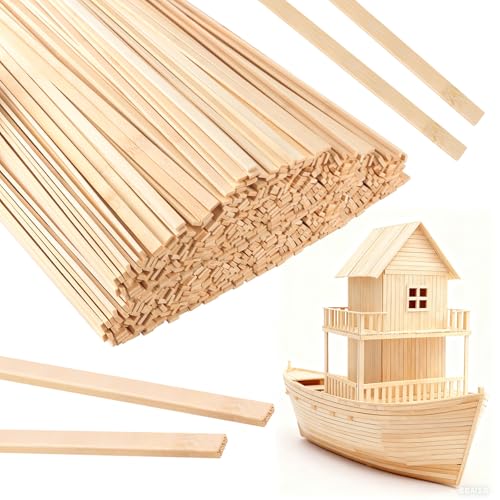
Fansunta Extra-Long Bamboo Craft Sticks, 300 Pack
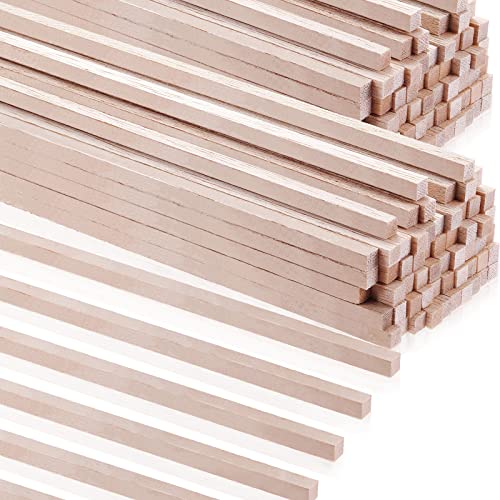
Yulejo Balsa Wood Sticks 1/8 x 1/8 x 12 Inch (60 Pieces)

Piklodo 222Pcs Balsa Wood Sticks Variety Pack

Craftiff Balsa Wood Sheets 1/8 Inch Thick 12 x 4 (5 Pack)

MUXGOA Unfinished Balsa Wood Sheets 150x100x2mm (20 Pcs)
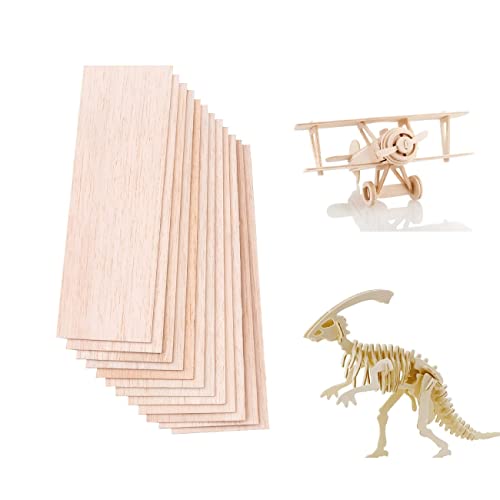
iUoczi Balsa Wood Sheets 1/16 x 4 x 12 Inch (12 Pack)

CRAFTIFF Balsa Wood Sheets 1/16 Thick 12×4 (Pack of 6)

WSICSE Balsa Wood Sticks 1/4 x 12 Inch Square Dowels (70 Pack)

GEKIXUTP Balsa Wood Sticks 1/8 x 12 Inch (250 Pcs)

GEKIXUTP Balsa Wood Sticks 1/4 x 12 Inch (75 Pcs)
More Details On Our Top Picks
Most craft sticks top out around six inches, which forces you to splice pieces together for anything bigger than a picture frame. At 15.7 inches long and about a third of an inch wide, these bamboo sticks let you span a whole poster board or build a trellis-style frame without a single joint. Bamboo is denser than balsa, so expect more resistance when cutting but noticeably less flex under load.
The 300-piece count changes how you plan a project. Teachers running group activities or anyone prototyping large structures can hand out dozens without counting sticks, and there’s still stock left for touch-ups.
A Few Highlights
- Nearly 16 inches of working length removes the need for spliced joints on wide layouts.
- 300 pieces supports classrooms, scout troops, or season-long hobby use without restocking.
- Bamboo construction holds up better than softwood when kids get enthusiastic with glue guns.
- Natural unfinished surface takes acrylic paint and marker directly with minimal prep.
Things To Consider
- Bamboo’s hardness means a sharp hobby knife or small saw works better than scissors, so plan cutting time accordingly.
- Being wider than typical balsa strips, they add visual bulk to delicate scale models.
Key Specs
Who It Suits Best
Teachers, camp leaders, and DIYers tackling poster-sized structures will get the most from this pack.
Where A Sibling Pick Shines
For fine-scale aircraft work where weight matters more than length, the Yulejo 1/8-inch square dowels are the lighter choice.
Consistency is what separates a pleasant first build from a frustrating one, and these Yulejo rods are cut to matching dimensions across the batch. Each strip measures roughly 0.12 by 0.12 inches over a 12-inch length, so trusses come out square without constant sanding to even things up. That uniformity matters most to someone assembling their first tower or glider frame.
The wood keeps its natural pale tone and visible grain, which means paint, marker, and wood stain all sit nicely on the surface. Sixty pieces is a comfortable starter quantity: enough to complete a real project with room for mistakes, without a drawer full of leftovers.
What Pays Off
- Precise, repeatable cuts keep joints aligned on geometric structures like bridges and cranes.
- Unfinished surface accepts decoration immediately, great for painted ornaments or labeled science displays.
- Soft balsa trims easily with a sharp knife, which suits younger builders under supervision.
Small Caveats
- At 1/8 inch square, these flex noticeably on spans longer than a foot, so brace longer runs.
- Only one width is included, unlike the Piklodo variety pack covered next.
The Right Fit
Students and first-time hobbyists working on school assignments or casual weekend builds fit this pack well.
Swap It Out When
Builders needing multiple thicknesses for one structure should reach for the Piklodo 222-piece variety set instead.
Real structures need different member sizes: thin braces, medium ribs, and chunky load-bearing columns. This Piklodo bundle solves that in one purchase with three widths of 12-inch square stock: 150 sticks at 1/8 inch, plus 36 each at 3/16 and 1/4 inch. Compare that to the single-width Yulejo pack above, and the advantage is obvious for anything with layered engineering.
In practice, that means a model bridge gets slender diagonal bracing from the thin stock and hefty compression posts from the thick stuff, all from one box. The square cross-sections also stack cleanly against each other, which speeds up glue-up considerably.
A Favorable Mix
- Three graduated widths cover bracing, framing, and primary structure without extra orders.
- The 150-piece thin-stock count leaves plenty of spares for the pieces that always snap.
- All sticks share a 12-inch length, simplifying cut lists and layout math.
- Square profiles butt together flush for tidy corner joints.
Worth Noting
- Sorting three sizes takes a few minutes of prep before any build starts.
- Thin balsa can warp slightly in humid storage, so a flat dry drawer helps preserve straightness.
Core Details
Made For
Hobbyists entering bridge-building competitions or anyone designing multi-part structures benefits most here.
Not Your Match When
Sheet-material tasks like hull planking call for the Craftiff 1/8-inch boards reviewed further down.
Strips handle frames, but sheet stock is what gives a model its skin, deck, or wing surface. These five Craftiff boards measure 11.8 by 4 inches at a sturdy 1/8-inch thickness, which is thick enough to hold screws and carve details yet still light enough for flying models. Balsa itself is the lightest commercial wood available, prized for exactly this strength-to-weight ratio.
The grain runs long and clean with no knots, and owners commonly report the sheets flex enough to wrap gently around curved forms like boat hulls. That flexibility opens up techniques that rigid plywood simply can’t manage.
Where It Excels
- 1/8-inch thickness balances rigidity with easy cutting using basic hand tools.
- Knot-free, smooth grain finishes beautifully with paint or clear coat.
- Boards float and insulate, handy for water-based diorama scenes.
- Five-sheet pack covers a full aircraft fuselage or several smaller builds.
Points To Note
- Thin balsa dents easily during handling, so store the pack flat away from heavy objects.
- The 4-inch width limits panel size, meaning seams on wider surfaces.
Quick Facts
Who Will Love This
Serious model aircraft and ship builders who need carveable structural sheet stock are the natural audience.
Reach For A Different Pick When
For thinner covering layers over an existing frame, the iUoczi 1/16-inch sheets below do the job with less added weight.
Ornament makers and scrapbook fans need small, thin panels more than structural lumber, and this MUXGOA set speaks directly to them. Twenty sheets at roughly 3.9 by 7.9 inches and just 2 mm thick cut down easily into tiles, tags, and mini signs. The size lands close to standard scrabble-tile projects and shadow-box accents, which is likely why crafters gravitate toward it.
Against the thicker Craftiff boards above, these trade stiffness for versatility: laser-friendly thinness, easy scissor-and-knife shaping, and a light creamy tone that photographs well for handmade-goods listings. For holiday ornament production runs, twenty blanks go a long way.
The Good Stuff
- Twenty-piece count supports batch crafting for markets or classroom gift projects.
- 2 mm thickness slices cleanly with household tools, no saw required.
- Natural grain adds warmth under stain or wood-burning designs.
Less Ideal Details
- At this thinness the sheets crack under bending, so handle curves carefully.
- Too flimsy for load-bearing parts in structural models.
Best Suited To
Handmade-card creators, ornament painters, and teachers prepping craft stations will find this pack hard to outgrow quickly.
Consider Something Else When
Structural model work needs the heft of the Craftiff 1/8-inch five-pack rather than these decorative panels.
Weight is everything in free-flight and rubber-band-powered aircraft, and a 1/16-inch sheet adds almost nothing while still forming a smooth skin. This twelve-pack from iUoczi delivers full 4-by-12-inch panels of solid balsa, not laminated plywood, which the maker highlights as a point of difference. Solid grain also means cleaner edges when you trim panels to shape.
Painters appreciate the smooth, unfinished face: a light sanding and a primer coat turns these into display-ready surfaces. Twelve panels typically outlast several airplane builds for a student, making the per-project cost quite low.
What It Does Well
- Featherweight 1/16-inch stock suits flight models where grams matter.
- Solid balsa construction, rather than plywood, sands and shapes uniformly.
- Twelve-panel volume stretches across multiple school terms.
- Smooth faces take pencil layout lines and paint without fuzzing.
Some Limits To Know
- This gauge punctures easily, so finished models need gentle storage.
- Listing details vary by variant, worth confirming the exact thickness before ordering.
Product Snapshot
Right Fit For
Student aviators and science-fair entrants building lightweight flyers get strong value from this pack.
Another Choice May Suit
Carvers needing thicker stock for whittling details should step up to the Craftiff 1/8-inch sheets.
Here’s a detail most brands ignore: shipping. Ultra-thin balsa arrives warped or cracked surprisingly often, and Craftiff addresses that with protective plastic packaging designed to keep these six sheets flat in transit. For a material this delicate, that packaging choice quietly saves half your order.
The sheets themselves share the same creamy, knot-free character as the brand’s 1/8-inch pack earlier in this list, just halved to 1.5 mm. Long, unbroken grain lines mean the wood bends around curved forms, think rounded nacelles or cylinder lampshades, without splitting along weak spots.
Features That Help
- Flat-pack protection reduces the warping complaints common with thin balsa shipments.
- Knot-free grain wraps smoothly around curved formers for rounded builds.
- Floatable and insulating, useful for pond-scene dioramas and heat-themed displays.
The Fine Print
- Six sheets is a modest count compared to the twelve-panel iUoczi pack.
- Keep sheets pressed under books in storage to maintain flatness over time.
Whose Shelf It Belongs On
Detail-oriented scale modelers who laminate thin skins over curved frameworks are the clearest match.
Look Elsewhere When
Larger volume needs at the same thickness point toward the iUoczi twelve-pack for better coverage.
When a structure has to carry actual weight, spaghetti-thin sticks fold and quarter-inch stock earns its place. This WSICSE set provides seventy square dowels at 1/4 by 12 inches, sized for the compression members of weight-bearing bridges and towers. The maker positions these as firmer than typical soft dowels, with a sanded, burr-free face and clearly visible grain.
Stiffness scales dramatically with cross-section, so these resist buckling where 1/8-inch sticks bow. Seventy pieces covers a competition build with enough left over for the inevitable rebuild after testing day.
The Practical Payoff
- Quarter-inch section handles compressive loads that thinner sticks buckle under.
- Smooth, splinter-free surfaces are safer for classroom handling.
- Takes paint and stain evenly for polished final presentations.
- Cuts cleanly to custom lengths with a sharp blade or fine saw.
Trade Offs To Consider
- Heavier per stick than 1/8-inch stock, a factor in weight-limited contests.
- One size only, so pair with a variety pack for bracing members.
The Numbers That Matter
Who Should Grab It
Engineering students and physics classes running stress-test challenges will put every stick to work.
Not Your Match When
Delicate decorative work calls for the GEKIXUTP 250-piece 1/8-inch set instead of this heavier stock.
Volume is the story here: two hundred fifty uniform 1/8-inch square dowels, each 305 mm long, ready for whatever the semester throws at them. Where the Yulejo pack earlier offered sixty sticks, this GEKIXUTP bundle quadruples that, which translates into freedom. You stop rationing sticks and start experimenting, because a failed truss costs pennies rather than a re-order.
Finish quality holds up too: the strips arrive burr-free with the original wood tone intact, so no splinter hunting before glue-up. Owners commonly note the consistent sizing across batches, which keeps lattice patterns even.
Real Benefits
- 250-stick supply absorbs trial-and-error without mid-project shortages.
- Burr-free, smooth faces protect hands during long building sessions.
- Matching dimensions simplify repetitive assembly of grids and trusses.
- Unfinished grain welcomes paint, marker, and stain equally.
Things To Weigh
- Single-width assortment again; grab the Piklodo mix for varied members.
- Store flat and dry, since thin balsa tends to cup in damp conditions.
Perfect Match For
Art teachers stocking a shared supply shelf and club advisors running recurring build sessions fit this pack perfectly.
Where Another Pick Suits Better
Strength-focused builders should compare the WSICSE quarter-inch dowels above for load-bearing roles.
