
A baritone acoustic sits lower and moodier than a standard six-string, which is exactly why songwriters, bedroom producers, and players chasing that rich low-end gravitate toward them. The catch is that most listings bury the details you actually care about, like scale length, tonewood choices, and whether extras are included. This roundup sorts through the noise, matching each instrument to the player it genuinely serves, so your first deep-voiced guitar doesn’t turn into an expensive lesson in guesswork.
The Essentials At A Glance

Fender California Debut Redondo CE Acoustic Guitar, Sunburst

Fender California Debut Redondo CE Acoustic Guitar, Black

Fender California Debut Redondo CE Acoustic Guitar, Natural
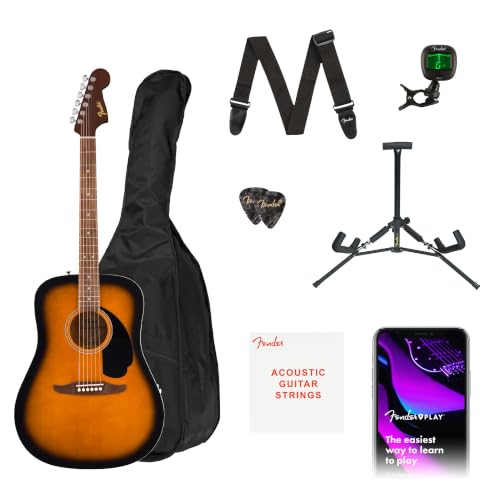
Fender California Debut Redondo Acoustic Guitar Pack, 2-Color Sunburst

Fender California Debut Redondo Acoustic Guitar, Sunburst

Fender California Debut Redondo Starter Kit, Natural

Blisstime Bone Bridge Saddle and Nut for Acoustic Folk Guitar
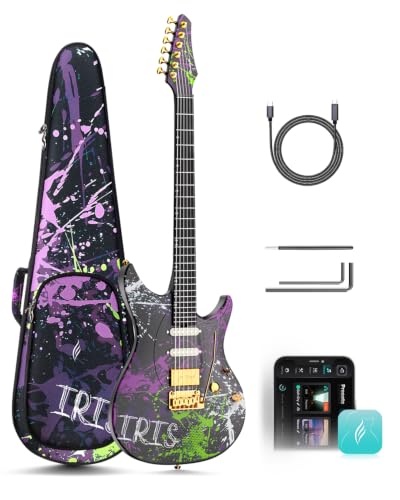
Enya Inspire Smart Electric Guitar, 39″ Carbon Fiber

Enya Shinichi Kobayashi Signature Loong Nova Go Sonic

Enya Nova Go Sonic Smart Electric Guitar, Built-in 10W Speaker
The Details Behind The Selections
The Redondo CE leans on laminate construction with a spruce top over sapele back and sides, a pairing chosen because it holds up well to humidity swings and daily handling. That matters most in shared apartments or dorm rooms where a delicate solid-top instrument feels like a liability. The sunburst finish gives it a vintage character without pushing the price into collector territory.
The 25.5-inch scale neck carries a slim profile, which shortens the stretch between frets and makes barre chords less punishing during those first months of practice. Players coming back after years away tend to appreciate that same comfort.
Positive Takeaways
- Laminate build resists cracking in dry or humid homes
- Slim neck profile eases finger fatigue for newer hands
- Spruce top delivers clear articulation on chords and fingerpicking
- Sunburst finish hides fingerprints and light wear better than gloss black
Things To Consider
- Laminate tops won’t open up tonally the way solid wood does over years
- Owners commonly report needing a basic setup out of the box for lowest action
Key Specs
Who It Suits Best
Newer players who want a dependable first steel-string with classic looks and forgiving playability.
Where Another Pick Suits Better
Travelers who need something nearly indestructible should look at the Enya Nova Go Sonic instead, thanks to its carbon fiber body.
Same guitar as the sunburst version above, different personality entirely. The matte black finish reads modern and understated, closer to what you’d see on an indie stage than in a folk circle. Underneath the paint sits the same laminate spruce-and-sapele recipe, so tone expectations stay identical.
In practice, this colorway suits players who record on camera or gig in smaller venues where looks carry weight. One honest note: dark finishes show dust and smudges more readily, so a quick wipe-down before playing becomes routine.
Real Benefits
- Black finish photographs well for content creators and livestreamers
- Identical comfortable neck and laminate durability as the sunburst model
- Holds resale appeal among players who prefer non-traditional acoustics
Worth Noting
- Dark bodies reveal dust and hand oils quickly between sessions
- Scratches stand out more visibly than on natural wood tones
Made For
Gigging beginners and content creators who want their instrument to match a darker, contemporary aesthetic.
Consider Something Else When
Traditionalists who prefer visible wood grain will likely connect more with the natural-finish Redondo CE reviewed next.
The natural finish closes out the CE trio, letting the spruce grain do the talking. Mechanically it mirrors its siblings: laminate body, slim 25.5-inch scale neck, steel strings tuned to standard pitch. What changes is how it ages visually, since lighter finishes tend to blend minor dings rather than broadcast them.
For households where the guitar lives on a wall hook or leans beside the couch, that low-maintenance appearance counts for plenty. You may find the natural version also blends better into living room decor than the bolder black option.
The Helpful Details
- Natural grain finish ages gracefully and hides small wear marks
- Same forgiving slim neck that makes early chord work manageable
- Laminate construction tolerates temperature shifts near windows or heaters
Trade Offs
- Less visual distinction for players who want a statement piece
Right Fit For
Home players who value a timeless look and fuss-free upkeep over flashy styling.
Not Your Match When
Anyone starting from absolute zero should weigh the Redondo Pack instead, since it bundles a gig bag, stand, and accessories in one purchase.
This pack solves the problem every new guitarist hits on day one: the guitar arrives, and nothing else does. Here you get the Redondo body built around a spruce top with basswood back and sides, plus a gig bag, a stand, and supporting accessories in a single box. The basswood back and sides sit slightly warmer than the sapele found on the CE models earlier in this list.
As a gift, it removes every excuse. No separate trip for picks, no wondering whether the floor is safe for an unbagged guitar.
What Helps Most
- Gig bag included means safe transport from day one
- Stand keeps the instrument accessible, which quietly boosts practice frequency
- Single purchase covers the usual first-month accessory list
- Slim C-shaped neck keeps early sessions comfortable
Minor Gripes
- Basswood back and sides project slightly less brightness than sapele equivalents
- Bundle accessories are entry grade; serious players eventually upgrade them
Feature Rundown
Best Suited To
Parents, gift-givers, and self-taught starters who want a complete, protected setup without piecing anything together.
Look Elsewhere When
Players who already own a bag and stand save money with the standalone Fender California Debut Redondo in sunburst, covered further down this list.
This is the original Debut Redondo, the one that established the formula the CE versions refined. Spruce top, basswood back and sides, laminate throughout, and that same slim 25.5-inch scale neck. Compared to item four’s pack, you’re buying the instrument alone, which suits anyone who already owns straps, bags, and stands from a previous guitar.
The sunburst finish remains the signature look of the line, and owners frequently mention how often people assume it costs far more than it does. That perception gap works in your favor.
Noteworthy Benefits
- Established design with a long track record among beginners
- Spruce top keeps chords articulate at low practice volumes
- Lightweight laminate body suits younger or smaller-framed players
Room For Improvement
- No bundled accessories, so factor in a strap and bag separately
- Factory string action sometimes runs high until adjusted, a common report among owners
Who Will Love This
Budget-focused learners replacing an old guitar or upgrading from a hand-me-down, who already own the basics.
A Better Fit Elsewhere
Complete novices with empty accessory drawers get more immediate value from the Fender Redondo Starter Kit in natural, up next.
Where the pack in slot four leans toward gifting, this starter kit positions itself as the practical choice for someone teaching themselves at home. The natural finish keeps things understated, and the underlying guitar follows the familiar Debut recipe: spruce top, basswood back and sides, slim comfortable neck at standard scale.
Kits like this earn their keep through consistency. Everything needed to start playing shows up together, matched and ready, which removes the decision fatigue that stalls a lot of first-time purchases.
Practical Pluses
- All-in-one format eliminates separate accessory shopping
- Natural finish suits shared living spaces and neutral decor
- Forgiving neck profile supports longer early practice sessions
- Laminate build handles being moved between rooms without worry
Points To Note
- Kit components prioritize convenience over long-term upgrade potential
- Experienced players will outgrow the included extras fairly quickly
Perfect Match For
Self-taught adults and teens setting up a first practice corner in an apartment or dorm.
Skip It When
Intermediate players chasing better hardware should consider the Blisstime bone saddle and nut set later in this list as a targeted improvement instead.
Swapping plastic or synthetic saddle and nut components for real cattle bone is one of the oldest tricks in the acoustic setup playbook. Bone transmits string vibration more efficiently, and many luthiers credit it with added clarity and sustain. This Blisstime pair targets right-handed six-string folk guitars, with a 72mm compensated saddle and a 43mm nut.
The honest caveat is fitment: these parts usually arrive slightly oversized on purpose, meaning sanding or filing to match your bridge slot. Handy players handle that at home; everyone else should budget a few dollars for a tech.
A Few Strong Suits
- Real bone density supports stronger vibration transfer than molded plastic
- Oversized blanks allow precise custom fitting to your specific guitar
- Low-cost way to sharpen tone on an entry-level instrument
Small Caveats
- Requires measuring and shaping, since stock dimensions rarely drop straight in
- Poor installation can cause buzzing, so patience or a technician helps
Quick Facts
Who Should Grab It
Hands-on hobbyists upgrading a budget acoustic like the Fender Debut Redondo without replacing the whole guitar.
Another Choice May Suit
Players unwilling to file and sand should skip hardware swaps and step up to the Enya Inspire Smart Guitar, which sidesteps traditional setup entirely.
The Inspire collapses an entire practice rig into one instrument: a 15-watt onboard speaker, Bluetooth pairing to the Enya Music app, twenty professional tones, and four customizable presets spanning clean, overdrive, crunch, and lead voices. An SSH pickup layout pairs crisp single-coil snap with humbucker muscle, covering everything from funk rhythm to heavier leads.
Apartment dwellers get obvious benefits here. No amp, no cables, no neighbor complaints at midnight, and the carbon fiber body ignores the humidity that tortures wooden guitars. Compared to the acoustic Fenders earlier in this list, this is a fundamentally different tool aimed at electric tones.
Where It Excels
- Onboard 15W speaker enables true amp-free practice anywhere
- App connectivity unlocks twenty tones plus custom preset storage
- Carbon fiber construction resists warping in damp basements or dry attics
- SSH pickups cover both bright cleans and driven lead sounds
Areas To Watch
- Onboard speaker output suits solo practice rather than band settings
- App-dependent features rely on keeping phone software current
Product Snapshot
Built With In Mind
Tech-comfortable players practicing in shared spaces who want electric versatility without owning an amplifier.
Reach For A Different Pick When
Those preferring pure unplugged simplicity will find the Enya Nova Go Sonic’s leaner feature set easier to live with day to day.
Signature models usually mean input from a working professional, and guitarist Shinichi Kobayashi’s name on this Loong Nova Go Sonic signals exactly that. The headline feature stays consistent with Enya’s smart line: an onboard speaker driving loaded presets and effects, with wireless playback of backing tracks straight through the instrument.
Its 10-watt output lands squarely in practice territory, ideal for solo sessions and small acoustic-leaning jams. In our view, the signature tuning and effect library give it an edge over the standard Nova Go Sonic for players who take their practice time seriously.
What Works In Its Favor
- Signature-model voicing shaped with a touring professional’s input
- Wireless backing track playback makes solo practice far less sterile
- Presets and effects run directly through the onboard speaker
- Self-contained design packs guitar, amp, and effects into one unit
Honest Caveats
- 10 watts fills a bedroom, not a rehearsal room with a drummer
- Smart features add charging and firmware habits to your routine
The Right Fit
Committed intermediate players building disciplined home practice routines around effects and backing tracks.
Swap It Out When
First-time buyers wanting maximum onboard volume should compare against the Enya Inspire’s stronger 15-watt speaker reviewed previously.
Strip away the signature branding from item nine and you land here: the core Nova Go Sonic experience at its most straightforward. Same 39-inch carbon fiber body, same 10-watt onboard speaker, same wireless connectivity for backing tracks and app-based presets. The carbon construction is the quiet hero for travelers, since airline overhead bins and trunk corners pose far less risk than they would to a wooden guitar.
You may find the simplified feature set refreshing rather than limiting. Fewer menus, fewer decisions, more playing.
What Pays Off
- Carbon fiber body survives travel conditions wooden guitars resent
- Integrated speaker removes amp logistics from every trip
- Wireless preset loading keeps practice varied without extra pedals
- Straightforward controls suit players who dislike menu diving
Softer Spots
- Speaker volume caps out well below amplified band contexts
- Battery-dependent features mean remembering to charge before outings
Core Details
Whose Shelf It Belongs On
Commuting players, van-lifers, and anyone whose practice happens in more than one zip code.
Where A Sibling Pick Shines
Homebound beginners focused purely on acoustic tone still get better value from the Fender California Debut Redondo CE in sunburst at the top of this list.
Factors Worth Weighing Before You Commit
Scale Length And String Tension
Scale length, the distance from nut to bridge, shapes both feel and tension. Longer scales tighten string feel and deepen the voice, while shorter ones ease finger strain. Players with smaller hands should favor slimmer neck profiles like the Fender Debut’s C-shape over chunkier alternatives.
Construction Materials
Solid wood ages and opens up tonally, but demands humidity care. Laminate bodies such as those on the Redondo series trade some resonance for real-world resilience. Carbon fiber, seen across the Enya range, goes further still and shrugs off climate entirely.
Bundles Versus Standalone
Starter kits bundle bags, stands, and accessories at a combined saving, though individual components trend basic. Buying standalone suits anyone replacing a worn-out guitar who already owns the supporting cast.
Matching Tool To Goal
Songwriters chasing low-end texture benefit most from dedicated baritone-style instruments, while practice-focused players may find smart guitars like the Enya line more motivating. Be honest about where you actually play.
Key Considerations Across These Picks
Traps First Timers Fall Into
The most common mistake is buying for looks alone, then fighting a neck shape your hands hate. Measure your grip honestly before choosing. Second trap: ignoring setup costs, since factory action often runs high and a basic adjustment transforms playability.
The Case For Spending Up
Higher-tier instruments buy better electronics, more stable materials, and refinements you feel daily rather than see on a spec sheet. The Enya Inspire’s stronger speaker and richer tone engine justify the step up for frequent players, while occasional strummers lose little sticking with entry options.
Frequently Asked Questions
What makes a baritone acoustic different from a standard acoustic?
It uses a longer scale length and typically thicker strings, producing a deeper overall pitch. The result is a darker voice suited to alternate tunings and atmospheric songwriting.
Are baritone acoustics harder for beginners?
The longer reach can challenge smaller hands initially. A slim neck profile and patient practice close most of that gap within weeks.
Do I need an amplifier for any guitar on this list?
None require one. The Fenders are fully acoustic, and both Enya smart models carry built-in speakers.
Can I install the Blisstime bone saddle myself?
Yes, with patience and basic sanding tools. Oversized blanks are intentional, allowing a precise fit, though a technician handles it faster.
How does carbon fiber hold up compared to wood?
It resists temperature and humidity swings far better than timber. Frequent travelers and garage-band environments favor it for that reason.
Wrap Up
Deep-voiced guitars reward patience, and the right pick depends less on specs than on where your playing actually happens. Apartment players lean toward the self-contained Enya smart guitars, home learners thrive with the forgiving Fender Debut Redondo line, and tinkerers get outsized joy from a simple bone saddle swap. Choose for the room you play in, not the room you imagine.
