
Learning drums at home comes with one stubborn problem: noise. The right starter kit solves that without draining your savings or swallowing your living room. This roundup covers ten beginner-friendly options, from roll-up pads that fit in a closet to full-size acoustic kits ready for a garage band. Whether you’re shopping for a curious seven-year-old or an adult finally chasing the hobby, there’s a sensible starting point below.
The Leading Options At A Glance
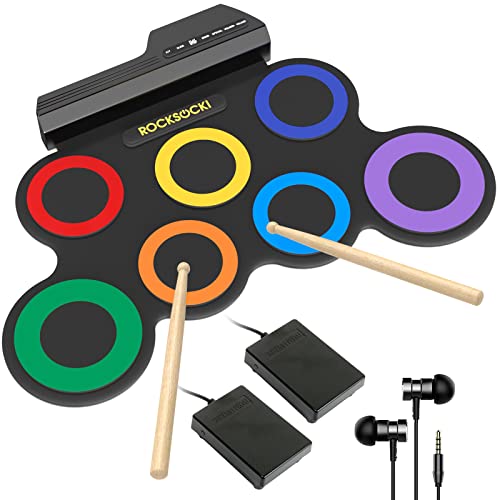
ROCKSOCKI 7-Pad Kids Roll-Up Electronic Drum Set

Ashthorpe 5-Piece Full Size Adult Drum Set with Remo Heads (Red)

Vediya Beginner Electric Drum Kit with Mesh Snare Pad

GrowDaily 12-Inch Drum Practice Pad and Stand Set

Sboet 9-Pad Roll-Up Electronic Drum Set
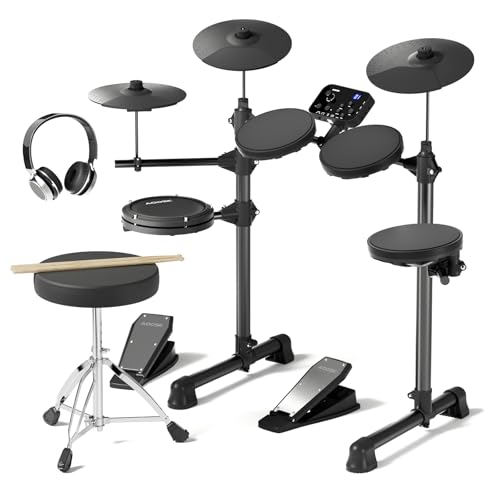
AODSK Electric Drum Set for Beginners (150 Sounds)

Ashthorpe 3-Piece Kids Drum Set with Adjustable Throne (Black)
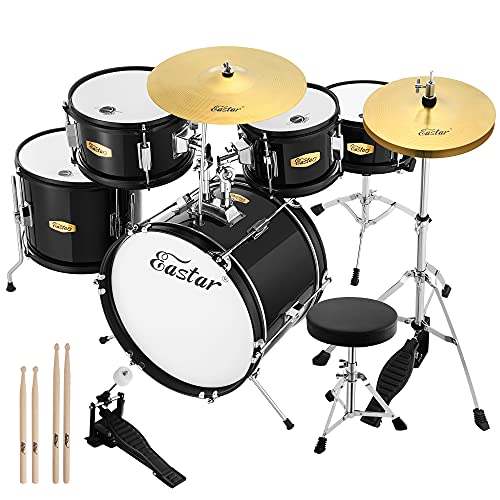
Eastar EDS-350MBK 16-Inch Junior Drum Kit

Donner DED-70 Electronic Drum Kit for Beginners

Donner Kids 14-Inch Junior Drum Kit (Blue)
A Breakdown Of The Leading Choices
Little hands need little targets, and this roll-up pad keeps every drum within easy reach. The seven-pad layout covers snare, hi-hat, two toms, ride, and crash, plus pedals for bass drum and hi-hat, so kids learn real kit geography from day one. Because it rolls up, storage is a drawer away rather than a corner of the living room.
Headphones come included, which matters when practice happens during a sibling’s nap. You may find the pads less responsive than a hard-shell kit, but for ages roughly three to eight, that trade-off rarely slows anyone down.
Where It Helps
- Roll-up design tucks into a shelf between sessions, no dedicated music corner required.
- Snare and hi-hat positions can swap sides, matching either handedness comfortably.
- Headphone support means quiet practice in shared homes and late evenings.
- Pedals introduce foot coordination early, building habits that transfer to full kits later.
Things To Consider
- Soft silicone pads won’t replicate acoustic rebound, so technique refinement comes later on a stiffer surface.
- The flexible mat can shift on slick floors; a rug underneath helps it stay planted.
Who It Suits Best
Preschool and early elementary kids taking their very first swings at rhythm, especially in homes where noise and floor space are both tight.
Where A Sibling Pick Shines
Older kids around nine to twelve get more from the Eastar EDS-350MBK junior kit, which offers real shells and tunable heads.
Most starter acoustic kits cut costs on the heads, and that’s where tone suffers first. This five-piece set skips that shortcut by fitting genuine Remo UT-series batter heads on every drum, the same brand many working drummers trust. The result is a warmer, more controlled sound right out of the box.
The full adult sizing means nothing needs replacing as skills grow, unlike junior kits that get outgrown in a year or two. Expect a garage, basement, or spare room commitment though, since an acoustic setup this size doesn’t fold away.
Reasons It Performs
- Remo UT-series heads deliver classic acoustic tone without an immediate upgrade purchase.
- Full-size dimensions suit teens through adults, so the kit stays relevant for years.
- Complete hardware package means bass pedal, stands, and sticks arrive together.
- Five pieces cover the standard rock and pop arrangement found in most lesson books.
- Striking red wrap gives it stage presence beyond typical starter black.
Worth Noting
- Heads will need periodic tuning as they settle, a normal part of acoustic ownership beginners should expect.
- No sound isolation exists here; neighbors and housemates hear everything.
Key Specs
Right Fit For
Adult beginners and returning players who want one acoustic purchase to last well past the learning curve.
Consider Something Else When
Apartment dwellers should look at the Donner DED-70 instead, whose mesh heads keep volume near silent.
Mesh heads are the reason electronic kits exist for apartment life. This Vediya pairs a 6.5-inch mesh snare with silicone tom pads, three cymbals, and a sound module loaded with 150 sounds across 15 drum kits, giving beginners room to explore styles before committing to one sound. Headphones and sticks ship in the box, so the first session starts minutes after unboxing.
The honest catch is the missing throne. You’ll supply your own seat, which some shoppers overlook until setup day. Compared with the pricier Donner DED-70 later in this list, you give up USB MIDI and lessons but keep most of the quiet-practice benefit.
Real-World Strengths
- Mesh snare responds closer to an acoustic head than rubber pads do, helping timing develop properly.
- 150 sounds and 15 kits let one player try jazz brushes, rock kits, and electronic tones without extra gear.
- Everything except a seat arrives included: module, pedals, cymbals, headphones, sticks.
- Quiet enough for evening practice in shared walls situations.
Small Caveats
- No throne in the package, so budget for a stool or drum seat separately.
- Silicone toms feel firmer than mesh under the sticks, which some players notice after long sessions.
- Cable management around the module takes a few minutes of tidying at setup.
Who Will Love This
Adults and older kids in apartments or dorms who want realistic feel without disturbing anyone nearby.
Another Choice May Suit
Total beginners on tighter budgets may prefer the Sboet roll-up pad, which trades realism for portability and simplicity.
Every drummer, regardless of skill, returns to rudiments, and a practice pad is the tool for that work. This 12-inch model layers high-resilience rubber over shock-absorbing cotton on a solid poplar base, aiming for something close to a real snare’s response while staying far quieter than any drum. At just over four pounds, it moves between rooms effortlessly.
The included stand sets it apart from lap-only pads, letting you rehearse at proper playing height. Six maple sticks come bundled too, enough to share or lose a few without drama.
Notable Gains
- Rubber-over-cotton construction absorbs stick impact, protecting wrists during long rudiment sessions.
- Adjustable stand brings the pad to proper height, reinforcing good posture from the start.
- Six maple sticks included, covering replacement needs for months of regular use.
Room For Improvement
- A single pad can’t teach limb independence; it complements a kit rather than replacing one.
- The rubber surface will show wear marks where the busiest stick patterns land.
At A Glance
Built With In Mind
Students drilling rudiments daily, or kit owners who want a silent warm-up option before band practice.
Reach For A Different Pick When
Players wanting melodies, backing tracks, and multiple sounds will get more mileage from the ROCKSOCKI roll-up electronic pad.
Where the ROCKSOCKI earlier in this list aims at the youngest players, the Sboet stretches the roll-up format toward older beginners with a ninth pad, built-in speakers, and a reported ten hours of playtime per charge. Nine surfaces cover toms, crashes, hi-hat, ride, snare, and bass, arranged like a scaled-down kit rather than a toy grid.
An AUX jack lets kids play along with their own music, which honestly does more for motivation than any demo song. Grandparents’ houses, hotel rooms, and backseats are all fair game since nothing here needs assembly.
A Few Strong Suits
- Built-in stereo speakers mean no amp or pairing fuss before playing.
- Roughly ten hours of battery life covers road trips and weekend visits easily.
- Nine pads plus two pedals mirror a real kit layout, easing any future upgrade.
- Seven timbres, ten demo songs, and nine rhythms keep practice varied.
Points To Note
- Flexible pads lack the rebound needed for advanced sticking techniques.
- Speaker volume, while handy, won’t fill a large room for group play.
Whose Shelf It Belongs On
Families who travel often, and kids aged roughly six to twelve who want drum time anywhere, not just at home.
Skip It When
A dedicated practice corner exists at home, because the Vediya mesh-snare kit delivers noticeably better feel for stationary use.
This is the pick for households that want the full electronic-kit experience without premium pricing. Four 6.5-inch pads and three 10-inch cymbals create a generous strike zone, and the whole rig sits on a sturdy metal frame that folds flat for storage. Unlike the Vediya kit reviewed earlier, a throne ships in the box along with headphones, sticks, module, and cables.
The 150-sound library leans acoustic in character, which suits learners practicing along with recorded music. Folding the frame down between uses takes a couple of minutes once you’ve done it a few times, a fair trade for reclaiming floor space.
Features That Help
- Foldable metal rack stores against a wall, solving the biggest objection to home drum kits.
- Throne, headphones, sticks, and cables all included, so nothing else blocks the first session.
- 150 sounds provide enough variety to match songs across genres.
- Oversized 10-inch cymbals give chokes and crashes a believable swing.
- Quiet pads allow night practice in apartments and shared homes.
Factors To Consider
- Rubber-style pads feel harder than the mesh heads on the Donner DED-70.
- Folding hardware adds a small setup ritual compared with permanently placed kits.
- Cymbal arms need occasional snug-checking as vibrations loosen fittings over months.
Feature Snapshot
Perfect Match For
Teen and adult beginners in shared spaces who want near-complete equipment in one purchase and don’t mind folding things away.
Where Another Pick Suits Better
Anyone prioritizing the most realistic stick response should step up to the Donner DED-70’s dual-layer mesh heads.
Some kids want to hit actual drums, not pads, and this three-piece junior kit answers that call without demanding a garage. The 14-inch bass drum anchors a compact footprint, joined by a mounted tom and a snare with internal wires and an adjustable tension knob, a detail usually reserved for pricier kits. An eight-inch crash cymbal, padded throne, sticks, and pedals complete the package.
Because everything scales down, young players reach every surface comfortably, which builds confidence faster than struggling with adult-sized gear. The honest trade-off is lifespan: most children outgrow it within a few years.
A Strong Showing
- Adjustable-tension snare teaches tuning basics, a rare touch at this level.
- Padded throne grows with your child through its adjustable height.
- Compact three-piece layout fits bedrooms and small play areas.
- Internal snare wires produce a genuine buzz response kids find satisfying.
Less Ideal Details
- Junior sizing means a replacement purchase once your child hits their teen years.
- Acoustic volume is unavoidable; consider practice limits in attached housing.
The Right Fit
Children roughly four to eight years old whose families want a true acoustic experience scaled to small frames and small rooms.
Swap It Out When
Kids already aged nine or older should start on the Eastar EDS-350MBK, whose 16-inch bass and five-piece layout offer more runway.
The step between toy kits and adult gear has a name, and it’s this Eastar. Cross-grained poplar shells resist splitting while projecting evenly, and the drumheads vary in thickness to balance attack and warmth across the five pieces. At 16 inches wide for the bass drum, it bridges the gap between the smaller Ashthorpe junior kit and full-size setups.
Owners commonly report that the hardware holds adjustment well through a school year of regular use, though checking lug tension monthly keeps everything honest. The metallic black finish hides fingerprints better than glossier wraps, a small mercy in a kid’s room.
What Makes Sense
- Cross-grained poplar shells deliver strength and even vibration without heavy weight.
- Variable-thickness heads balance bright attack with fuller low end.
- Five-piece layout mirrors adult kits, so learned habits carry forward directly.
- Adjustable throne accommodates growth spurts across several years.
Potential Sticking Points
- Assembly takes patience; plan on an unhurried hour for the first build.
- Acoustic loudness means neighbors become part of the practice schedule.
- Stock heads benefit from eventual upgrading as skills sharpen.
Core Details
Who Should Grab It
Kids aged roughly nine to twelve who’ve outgrown toy kits and show signs of sticking with drumming seriously.
Not Your Match When
Households needing silence should pivot to the AODSK electric kit, which keeps the neighborhood relationship intact.
Among the electronic options here, the DED-70 plays closest to an acoustic kit. Dual-layer mesh heads on four 6.5-inch pads rebound like tightened drum skins, and the three oversized 9-inch silicone cymbals swing believably under the sticks. USB MIDI opens recording and software-drum possibilities, while Type-C charging keeps the module powered conveniently.
The bundled Melodics lessons deserve mention for self-taught players, offering structured guidance many starter kits skip. Add a throne, headphones, sticks, and a durable metal rack, and the only thing left to arrange is practice time. In our view, this is where a beginner’s budget stops feeling compromised.
Advantages To Know
- Dual-layer mesh heads deliver authentic rebound, protecting technique development.
- USB MIDI connects to computers for recording and virtual-instrument play.
- Type-C charging simplifies power compared with proprietary adapters.
- 150 sounds span acoustic and electronic palettes for genre exploration.
- Melodics lessons included, adding structured learning value beyond hardware.
The Fine Print
- Mesh tension needs occasional adjusting to keep rebound consistent over months.
- Module features carry a short learning curve for total newcomers to electronics.
The Numbers That Matter
Made For
Committed beginners, teens and adults alike, who want apartment-friendly volume without sacrificing realistic playability or growth room.
Look Elsewhere When
Budget-conscious shoppers wanting the simplest possible start will find the ROCKSOCKI roll-up pad entirely adequate for casual exploration.
Five pieces, a hi-hat, and a cheerful blue finish make this Donner junior kit feel like a real band setup shrunk down for ages five through twelve. The 14-by-10 bass drum leads a layout that includes two fixed toms, a standalone snare, a floor tom, and both hi-hat and straight cymbal on their own stands. Nothing about the arrangement is simplified away, which matters for kids following along with lessons.
Two pairs of sticks ship alongside the throne and pedals, sparing you a separate accessories run. Compared with the Ashthorpe three-piece, this one simply offers more surfaces to grow into.
Everyday Advantages
- Full five-piece arrangement supports real song structures, not just free banging.
- Separate hi-hat and cymbal stands teach independent foot-and-hand coordination.
- Adjustable cushioned seat keeps posture comfortable across growth years.
Trade-Offs To Consider
- More pieces mean more assembly time and more floor space claimed.
- Fixed toms limit angle adjustments compared with fully mounted hardware.
Best Suited To
Elementary-aged children showing sustained interest, in homes with a corner to dedicate to a genuine junior kit.
A Better Fit Elsewhere
Smaller rooms or younger starters do better with the compact Ashthorpe three-piece kids kit reviewed earlier.
What Matters Most Before Choosing Basic Drum Sets
Acoustic Versus Electronic First
This decision shapes everything downstream. Acoustic kits teach authentic dynamics and tuning but announce themselves to the whole household, so they suit detached homes and committed players. Electronic kits trade some feel for headphone-only volume, making them the default answer for apartments and late-night practice. Match the choice to your living situation before comparing brands.
Size And Growth Room
Junior kits sized for young children get outgrown quickly, sometimes within two years. Measure your available floor space honestly, then buy the largest kit your player can comfortably reach. A tween wrestling with a child-sized bass drum develops awkward habits that take months to undo.
Included Accessories Count
Starter kits vary widely in what ships alongside the drums. Thrones, headphones, sticks, pedals, and cables add up fast when purchased separately, so a slightly higher-priced bundle often wins on total cost. Check the list carefully before assuming a lower sticker price is cheaper overall.
Feel Before Flash
Rebound quality determines whether technique transfers to better instruments later. Mesh heads and quality rubber pads preserve wrist mechanics, while flimsy mats can ingrain sloppy strokes. Prioritize how the playing surface responds over extra sounds or colors.
Key Considerations Across These Picks
Traps First Timers Fall Into
The most common mistake is buying for the moment instead of the next two years, leaving kids frustrated on undersized gear. Another frequent slip is ignoring volume reality: an acoustic kit in an apartment creates conflict no accessory fixes. Finally, skipping the accessories checklist leads to surprise purchases right when enthusiasm peaks.
The Case For Spending Up
Higher-tier kits earn their price through materials and longevity. Remo heads, cross-grained poplar shells, dual-layer mesh, and sturdy metal racks all extend usable life and improve the skills being built. Paying more upfront often costs less than replacing a compromise kit eighteen months in.
Frequently Asked Questions
Are electronic drum sets good for complete beginners?
Yes, especially for learning timing and basic coordination quietly. Their main limitation is softer rebound, so serious students eventually benefit from acoustic or mesh-head practice.
How much space does a basic drum set need?
A junior acoustic kit fits roughly a three-foot square corner, while full-size kits need closer to six feet. Roll-up electronic pads need only a table or floor spot.
Can adults learn on a kids’ drum set?
Adults can practice concepts on junior kits, but reach and durability fall short quickly. Full-size or electronic kits serve adult learners far better.
Do electronic drums require amplification?
Most beginner modules include headphone outputs and some have built-in speakers. External amps are optional, not required, for home practice.
How often do drum heads need replacing?
Casual players typically replace acoustic heads every year or two, sooner with heavy use. Electronic mesh and silicone pads last considerably longer with basic care.
Closing Thoughts
Choosing among these ten comes down to three questions: who’s playing, how much noise your home tolerates, and how long you want the kit to last. Match those answers to the profiles above and the decision mostly makes itself. Start where your situation points, and let the first year of playing tell you what the upgrade should be.
