
Whether you’re repairing a chair seat, wrapping a gift basket, or starting your first coil weave, the right material makes everything easier. This roundup covers ten supplies that handle real projects, from thick jute rope for cat furniture to wide rattan webbing for cabinet doors. Each entry explains what it does well, where it falls short, and which type of maker it suits.
A Fast Comparison Of The Options

Radix Rope Natural Jute Twine 8MM x 50FT

Corlcol 2LB Crinkle Paper Shred Filler (Brown Kraft)
Juilsioa 14″ Width Cane Webbing 3.3 Feet

Corlcol 200g Crinkle Paper Filler Grass Cushion (Diamond White)

Commonwealth Basket Flat Reed 1/2-Inch 1-Pound Coil
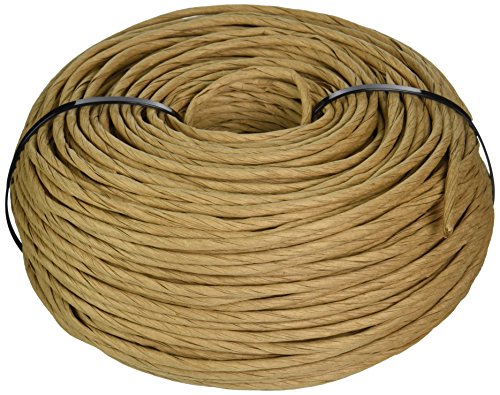
Commonwealth Basket Fibre Rush 5/32-Inch 2-Pound Coil

Craft County Coiling Cord 1/4 Inch 50 Feet

#1 Twisted Seagrass 3mm-3.5mm 14oz Coil

Weavemaster Round Reed 1 Pound Coil (#2)

Juilsioa 24″ Natural Square Cane Webbing 5 ft
Taking A Closer Look At The Options
Most twine in a craft drawer is too thin to survive a determined cat, and that’s the gap this roll fills. The 8mm thickness gives you a rope substantial enough to rewrap a scratching post, while the smooth finish stays kind to both paws and palms during long wrapping sessions.
The natural jute also earns its keep outside the pet corner. Gardeners tie tomatoes with it, macramé makers knot it into wall hangings, and rustic décor fans love its raw texture. One thing worth considering: you may find 50 feet disappears quickly on a full cat tree, so measure before committing.
A Strong Showing
- Thick 8mm strands hold up under repeated clawing better than standard craft string
- Sustainably sourced jute works indoors or out without special treatment
- Multiple lengths and a slimmer 5mm option let you match the roll to the project
- Gentle texture means fewer splinters for hands during extended wrapping
Things To Consider
- Natural fibers shed slightly at first, so keep a vacuum handy around fresh wraps
- Owners commonly report 50ft runs out fast on larger cat towers
Key Specs
Who It Suits Best
Cat owners refreshing scratching posts alongside casual DIYers who want one sturdy natural rope for several household jobs.
Another Choice May Suit
Traditional basket weavers after structural material should reach for the Weavemaster Round Reed coil instead, since jute lacks the rigidity reed provides.
A finished basket looks half empty until filler goes in, and this brown kraft crinkle shred is the quickest fix going. Two pounds is a serious amount, enough to line dozens of small gift bags or several large holiday hampers without rationing handfuls.
The kraft tone suits farmhouse and masculine-leaning gift styling especially well, sitting naturally against wood handles and woven bodies. Compared with the diamond-white Corlcol filler later in this list, this one reads more understated, so pick by occasion rather than quality.
The Good Stuff
- Two-pound volume covers a full season of gifting in most households
- Kraft brown flatters rustic, autumn, and everyday presentation styles
- Cushions fragile items inside shipping boxes as well as display baskets
Small Caveats
- Shred compresses during storage, so fluff it by hand before arranging
- Loose strands cling to clothing and carpet, a common gripe among regular users
Made For
Holiday gift assemblers and small-business shippers who go through filler quickly and want a versatile neutral shade.
Where A Sibling Pick Shines
For weddings and brighter spring presentations, the Corlcol Diamond White crinkle filler matches formal palettes more gracefully.
Cane webbing is pre-woven rattan sheet, sold flat and ready to press into a frame groove, and this 14-inch-wide cut fits smaller panels like cabinet inserts and side tables. The rattan arrives in its original undyed tan, so it blends with existing mid-century pieces instead of fighting them.
It bends and shapes easily once dampened, which matters when you’re easing a sheet into curved grooves. The honest limitation here is coverage: at roughly 3.3 feet of length, one roll handles a single modest project, whereas the wider 24-inch version from the same brand later in this list suits bigger furniture work.
Where It Helps
- Light yet tough rattan presses into grooves without cracking
- Undyed natural color holds its tone over years of daily handling
- Flexible enough for gently curved frames once soaked in water
Points To Note
- Requires soaking and careful trimming, so budget extra prep time on first use
- Short length means ordering carefully sized cuts for anything beyond small panels
Right Fit For
DIYers restoring small cane surfaces such as stool seats, door inserts, and decorative shelving accents.
Reach For A Different Pick When
Larger chair backs and bench tops call for the Juilsioa 24-inch square webbing roll, which offers far greater coverage per piece.
Where the brown kraft version earlier in this list leans rustic, this diamond-white shred goes formal. At 200 grams, roughly seven ounces, it fills a handful of medium gift baskets or bridesmaid boxes, which is plenty for a single wedding or shower.
The grass-like cushion streamer adds height and sparkle behind wrapped treats, candles, and glassware. In our view, white filler photographs beautifully, a real advantage if you post finished baskets online or send them as client gifts.
What Pays Off
- Bright white lifts pastel and metallic gift color schemes instantly
- Crinkled texture props delicate items upright inside deep baskets
- Suits weddings, birthdays, and holiday tables equally well
Less Ideal Details
- Seven ounces covers fewer baskets than the two-pound kraft option
- White shows dust over time, so store it sealed between events
Feature Snapshot
Who Will Love This
Wedding planners, bridesmaids, and hosts assembling elegant gift baskets for showers, parties, and seasonal table displays.
Swap It Out When
High-volume holiday assembly favors the Corlcol 2LB Brown Kraft filler, whose larger quantity keeps costs and trips reasonable.
Flat reed is the workhorse of traditional basket weaving, and half an inch wide is the classic beginner width because it lies flat and forgives uneven tension. Roughly 185 feet come on this one-pound coil, which translates to several market baskets or a couple of chair-seat jobs.
You soak it in warm water before weaving so it becomes pliable, then it dries stiff again in the finished piece. New weavers often start here precisely because mistakes pull out cleanly while the reed stays damp.
The Practical Payoff
- Half-inch width builds walls quickly, ideal for a first complete basket
- About 185 feet supports multiple practice projects from one coil
- Rehydrates reliably whenever a strand cracks mid-weave
Room For Improvement
- Strand lengths within the coil vary, requiring splicing on bigger pieces
- Needs soaking space and drying time, so plan projects around prep
Who Should Grab It
Complete beginners learning stake-and-strand technique, plus teachers stocking a classroom craft supply.
Consider Something Else When
Round spokes and rim work call for the Weavemaster Round Reed coil, whose cylindrical profile suits structural elements better than flat stock.
Fibre rush is a man-made paper product twisted to imitate natural rush, and it has quietly replaced the real thing on most chair seats because it weaves consistently and resists splitting. This coil carries two pounds, about 210 feet of 5/32-inch rush, enough for a standard dining chair seat with room for error.
Compared with the twisted seagrass coming up next, fibre rush holds a cleaner twist and a more even color straight out of the package. Chair restorers favor it for kitchen chairs that see daily wear, since the surface wipes down easily.
Bright Spots
- Uniform paper-fiber twist produces tidy, consistent seats
- Two-pound coil leaves surplus for repairs and second chairs
- Serves double duty as weavers, stakes, and trim in basketry
The Fine Print
- Paper fiber dislikes prolonged moisture, so avoid outdoor seating projects
- Thin 5/32-inch gauge takes longer to cover a large seat than wider materials
Core Details
Built With In Mind
Chair-caners refinishing dining sets and weavers who want one reliable synthetic rush for mixed projects.
Look Elsewhere When
Anyone chasing an authentic aged patina will prefer the VIRC Twisted Seagrass coil, which darkens to tan naturally over time.
Coiling is the oldest basket technique there is: you spiral a core material and stitch each wrap to the row below. This quarter-inch cord exists purely to be that core, giving coiled bowls and fiber sculptures a firm backbone that won’t collapse as you build upward.
The fun starts when you wrap it. Yarn, jute, hemp, fabric strips, whatever suits your palette gets wound around the core before coiling, so one 50-foot length becomes a fully custom piece. Unlike the pre-woven webbing sheets elsewhere on this list, this cord rewards freeform creativity rather than precise restoration work.
What Works In Its Favor
- Quarter-inch diameter creates sturdy walls for sculptural bowls and trivets
- Accepts nearly any wrapping material, from yarn to recycled textiles
- 50 feet supports a generous centerpiece-size project
Things That May Matter
- It’s a core only, so you’ll need wrapping materials and a needle separately
- Coiling by hand is slow; impatient makers may find the pace testing
Whose Shelf It Belongs On
Intermediate crafters exploring sculptural fiber art and anyone who enjoys meditative, hand-paced making.
Skip It When
First-timers wanting fast visible progress usually get further with the Commonwealth Basket Flat Reed coil and a simple woven pattern.
This twisted seagrass arrives green and slowly mellows to a warm tan with age and light, which is exactly why restoration enthusiasts seek it out. The 3mm to 3.5mm thickness mimics traditional rush closely, and a 14-ounce coil suits smaller seats, trims, and basket accents.
Plan quantities carefully: a large chair seat reportedly consumes around three pounds, so this coil covers accent work or a compact stool rather than a full dining chair. That trade-off is the price of working with genuine plant fiber rather than paper substitute.
Strong Points
- Natural aging to tan delivers the vintage look synthetics can’t copy
- Authentic twisted construction reads convincingly beside antique pieces
- Works for both chair seats and decorative basketry details
Potential Sticking Points
- Large seats need roughly three pounds, meaning multiple coils for big jobs
- Natural fiber varies slightly strand to strand in color and thickness
The Right Fit
Restorers touching up vintage stools and weavers adding authentic botanical detail to handmade baskets.
A Better Fit Elsewhere
Full dining-chair rebuilds go smoother with the Commonwealth Basket Fibre Rush coil, whose two-pound supply and uniform twist reduce splicing.
Every woven basket needs a skeleton, and round reed is what forms the spokes and stakes that hold the shape. What sets this listing apart is the range: nine numbered diameters from 1.75mm up to 7.5mm, so one brand covers delicate trims through chunky handle stock.
The #2 size featured here measures 1.75mm across, a fine gauge suited to small baskets and tight weaves, and thinner coils stretch further, with #2 offering roughly 1,100 feet per pound according to published figures. Strand lengths run three to ten feet, so plan some overlap joints on larger frames.
The Case For It
- Nine diameter choices let you match gauge to any pattern precisely
- Fine #2 gauge yields exceptional footage, around 1,100 feet per pound
- Serves wicker furniture repair as readily as new basket construction
Details To Watch
- Individual strand lengths vary between three and ten feet within a coil
- Requires soaking like any natural reed before it bends cleanly
The Numbers That Matter
Perfect Match For
Serious hobbyists building baskets from scratch and repair people matching existing wicker gauges.
Not Your Match When
Total beginners often find the flat half-inch reed from Commonwealth Basket easier to control than fine round stock.
Twenty-four inches wide changes what cane webbing can do. Where the narrower 14-inch Juilsioa sheet earlier in this list handles small inserts, this five-foot roll covers full chair backs, bench tops, and headboard panels in one continuous piece, no seams needed.
The square hexagonal weave is the pattern everyone pictures in mid-century furniture, and the undyed Southeast Asian rattan keeps its natural honey tone for years. It’s light, flexible when dampened, and surprisingly resistant to squeezing and pressure once installed, though cutting to exact frame dimensions takes patience and a sharp blade.
What It Does Well
- Five-foot length spans large furniture surfaces without joining strips
- Undyed rattan resists fading through long-term daily use
- Bends smoothly around gentle curves after soaking
- Finished panels bring that sought-after retro character to plain pieces
Factors To Consider
- Wide rolls need accurate measuring, since miscuts waste expensive material
- Installation requires spline, grooved frames, and some carpentry confidence
Product At A Glance
Who It Suits Best
Furniture restorers and woodworkers upgrading cabinets, benches, and headboards with authentic woven cane surfaces.
Where Another Pick Suits Better
Smaller decorative projects cost less with the Juilsioa 14-inch webbing sheet, which wastes less material on compact frames.
What To Weigh Before Choosing Your Materials
Match The Material To The Job
Structural work demands reed or cane, both of which stiffen as they dry and hold a basket’s shape for decades. Filler paper and twine serve finishing and utility roles instead, so buying them expecting load-bearing strength leads to disappointment. Write down the project first, then shop.
Soaking And Prep Change Everything
Natural materials like flat reed, round reed, and rattan webbing need warm-water soaking before they bend without cracking. Budget a soaking basin, towels, and patience into every session. Skipping this step is the fastest route to split strands and wasted coils.
Buy For The Whole Project, Not The First Hour
Coil weights translate directly into coverage: a pound of fine round reed stretches over a thousand feet, while a large rush chair seat eats three pounds of seagrass. Estimating generously up front beats pausing mid-project for a second order.
Key Considerations Across These Picks
Traps First Timers Fall Into
The most common slip is ordering the wrong gauge. Reed sizes follow a numbering system, not intuition, so check the millimeter measurement against your pattern rather than guessing. A second frequent mistake is skipping soak time, which turns pliable fiber into kindling.
When Paying More Pays Off
Higher-cost webbing rolls earn their price through width and length, since seamless panels look better and install faster than joined strips. Similarly, thicker jute and larger coils cost more per unit but prevent the frustration of running short halfway through a cat tower or gift season.
Frequently Asked Questions
Do I need to soak reed before weaving?
Yes, natural reed and cane become flexible only after a few minutes in warm water. Dry reed snaps at the bend, wasting material.
How much flat reed does one basket require?
A typical market basket uses roughly half of a one-pound coil. Larger floor baskets may consume the entire roll.
Can jute twine be used outdoors?
Natural jute handles garden tying well but degrades faster in constant wet weather. Treated synthetics last longer in exposed settings.
Is cane webting hard to install yourself?
Basic installation needs a grooved frame, rubber spline, and a spline roller. Most patient DIYers manage their first panel in an afternoon.
What’s the difference between rush and reed?
Rush is a twisted fiber used for wrapped chair seats, while reed is flat or round material woven over and under. Baskets typically use reed; classic seats use rush.
Closing Thoughts
Start with the project in front of you, whether that’s a sagging chair seat, an empty gift hamper, or a first attempt at a woven bowl. Every material here solves a specific problem well, and none of them asks for more than basic tools and a little patience. Measure twice, order once, and enjoy the quiet satisfaction of making something with your own hands.
