
Basket weaving rewards patience like few crafts do, and the right kit removes nearly every obstacle between you and a finished piece. Whether you want a quiet evening project, a classroom activity, or a way to teach a child something tactile, a well-built kit supplies the reed, needles, and instructions so you can focus on technique. This roundup sorts ten options by skill level, method, and group size, so you can match one to your hands, your space, and your goals without guesswork.
The Leading Options At A Glance

Coiled Pine Needle Basket Weaving Kit

VIRC Introduction Basket Weaving Kit (5 Baskets)

Traditional Craft Kits Beginner Basket Kit Set of 6

Traditional Craft Kits Wicker Basket Kit for Beginners

Traditional Craft Kits Twined Basket Kit, Gathering Style

Kids Sampler Basket Kit

Traditional Craft Kits Coiled Basket Kit for Beginners

Cherokee Double Wall Basket Kit

VIRC Camp Basket Kit (Makes 20 Baskets)
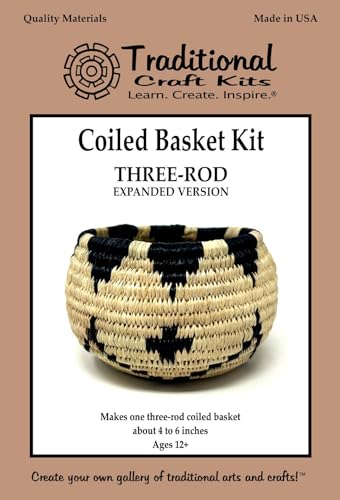
Coiled Basket Kit Expanded Version
A Breakdown Of The Leading Choices
Coiling means spiraling a bundle of material and stitching wrap after wrap around it, and pine needles make that process smell as good as it feels. This kit ships California pine needles, palm raffia for binding, a steel needle, and a coiling gauge that keeps your bundle thickness even as the spiral grows.
The finished basket lands around four to six inches wide, sized for a desk or nightstand. Because you shape your own design rather than follow a fixed pattern, this one suits anyone who wants creative freedom from day one.
Practical Advantages
- Natural pine needles give the finished piece a pleasant scent and an authentic traditional look.
- The included coiling gauge helps you hold consistent thickness, which is where most first coils go wrong.
- You design the shape yourself, so no two baskets from this kit ever look identical.
- A steel needle handles hundreds of stitches without bending the way cheaper tapestry needles often do.
- Raffia binds smoothly and takes dye well if you later want color accents.
Things To Consider
- Coiling is slow, stitch-heavy work; expect several relaxed evenings rather than one afternoon.
- Pine needles are brittle when dry, so many owners lightly soak or dampen them before stitching begins.
Who It Suits Best
Patient crafters who enjoy repetitive, meditative handwork and want a scented, one-of-a-kind decorative basket.
Where A Sibling Pick Shines
Weavers who prefer structured patterns over freeform design will get faster satisfaction from the Traditional Craft Kits Coiled Basket Kit for Beginners, which follows a set small-project format.
Most starter kits teach one basket and stop there, which leaves you guessing whether you actually learned anything transferable. VIRC’s introduction set bundles five of its easiest classic designs, complete with hardwood handles and hoops plus enough reed and cane to finish every one of them.
The illustrated step-by-step sheets come from over three decades of refining how beginners absorb the craft, and that shows in how the sequence builds. You finish five pieces, and by the third your hands start anticipating the weave before the instructions mention it.
The Practical Payoff
- Five separate projects mean real repetition, which is the fastest route from clumsy to confident.
- Hardwood handles and hoops add structure, so early mistakes are easier to spot and correct.
- Illustrated instructions reduce the squinting-at-text problem common to text-only craft guides.
- Reed and cane are supplied generously, leaving margin for the inevitable first-attempt tangles.
Worth Noting
- Round reed dries out between sessions, so owners commonly re-soak leftover material before resuming work.
- All five baskets lean classic in style; anyone wanting sculptural freedom should look elsewhere.
At A Glance
Made For
Adults starting basketry from zero who learn best by repeating a technique across several small wins.
Swap It Out When
Group leaders outfitting a whole class will find far better value per person in the VIRC Camp Basket Kit, which supplies twenty weavers at once.
Where the VIRC introduction set drills one family of techniques, this six-basket collection deliberately spreads across all four fundamentals of basketry: three coiled variations plus plaiting, twining, and wicker. Projects run small, from about 2.5 to 4 inches, which keeps frustration low while vocabulary high.
Everything arrives in a storage bag: paper fiber rush, palm raffia, hemp twine, pine needles, clothespins, and tapestry needles. Your kitchen already owns the rest, since scissors and a bowl of water round out the tool list. For a sampler curriculum in one purchase, nothing else here covers this much ground.
A Strong Showing
- Four distinct weaving methods in one box let you discover which style suits your hands before committing deeper.
- Small project sizes mean each finish arrives quickly, keeping motivation steady.
- The storage bag keeps loose fibers and needles corralled between sessions.
- Clothespins act as extra fingers, holding coils while you stitch.
- Mixed materials, from rush to raffia to twine, teach how different fibers behave under tension.
- Household-only tool requirements mean you can start the hour the box arrives.
Minor Gripes
- Breadth comes at a cost: none of the six projects goes deep enough to master its method fully.
- Small finished dimensions limit usefulness; these read as decor, not daily carriers.
- Juggling four techniques in sequence can feel scattered for someone who prefers mastering one thing at a time.
Right Fit For
Curious beginners who want a guided tour of every major basketry style before choosing a specialty.
Another Choice May Suit
Weavers already drawn to coiling specifically will progress further with the Coiled Basket Kit Expanded Version, which stacks three rod-count methods in depth.
Some kits try to teach everything; this one teaches one thing well. Wicker weaving, the familiar over-and-under rhythm most people picture when they hear “basket,” gets a dedicated single-project kit here. The result measures roughly four inches wide and two inches tall, small enough to finish in a sitting or two.
Supplies include fiber split, fiber rush, and a clothespin to anchor work in progress, and the only extras you bring are scissors and a pencil. Compared with the six-basket sampler above, this trades variety for focus, and for many first-timers that trade is worth making.
Real Benefits
- The classic over-under pattern is the most intuitive entry point in all of basketry.
- A compact footprint makes this an easy coffee-table or travel project.
- Minimal supply list keeps setup time near zero.
Softer Spots
- One basket per kit means the learning ends when the weaving does; repetition requires a second purchase.
Best Suited To
Total newcomers testing whether basketry clicks for them before investing in larger sets.
Reach For A Different Pick When
Anyone craving more practice volume per dollar should choose the VIRC Introduction Basket Weaving Kit, whose five projects extend the learning curve considerably.
Twining is among the oldest basket-making methods on record, practiced across cultures for thousands of years, and this gathering-style kit teaches its open form. Instead of rigid rows, two elements twist around each other as they climb, producing a flexible, airy weave suited to gathering-style baskets about seven inches wide.
Fiber rush and hemp twine arrive in a storage bag, and the tool list stays charmingly short: scissors and a standard kitchen fork, which helps tighten the twists. Next to the wicker kit’s rigid grid, open twining feels almost organic, and that contrast is exactly why technique explorers enjoy it.
Bright Spots
- Open twining produces a distinctive flexible texture no other kit in this roundup replicates.
- A seven-inch finished width gives you the largest single basket among the Traditional Craft Kits entries here.
- Hemp twine holds knots firmly, so loose stitches stay put once tensioned.
- The fork-assisted tightening trick makes even spacing achievable for untrained hands.
Small Caveats
- Twisting two elements simultaneously demands more coordination than simple over-under weaving, and some first attempts come out uneven.
- An open weave collects dust, so finished pieces need occasional gentle cleaning.
- Fiber rush can fray at cut ends; sharp scissors matter more here than elsewhere.
Quick Facts
Who Will Love This
Crafters fascinated by traditional and cross-cultural techniques who want their first basket to carry visible history.
Not Your Match When
Weavers who want a dense, sturdy utility basket will prefer the Cherokee Double Wall Basket Kit, whose closed construction suits everyday handling better.
Children watch adults weave and immediately want in, and this VIRC sampler answers that pull with kid-scaled bases in four shapes: round bases at four and five inches, a five-inch square, and a five-by-eight oval. Decorative beads thread onto #3 round reed, giving young weavers a color-and-pattern payoff that plain reed never offers.
Like the rest of VIRC’s line, it carries three decades of instruction refinement behind its illustrated steps. Four base shapes mean a child can weave several distinct baskets, and the bead element keeps attention anchored through the slower stretches.
Notable Gains
- Four different base shapes turn one kit into multiple visibly different projects.
- Beads add creative expression that keeps younger hands engaged longer.
- #3 round reed is thick enough for small fingers to grip without cramping.
Points To Note
- Younger children usually need an adult nearby for the first basket, especially during soaking and border work.
- Leftover reed should be stored flat and away from heat, or it tends to curl and crack.
Who Should Grab It
Parents and grandparents introducing a craft-minded child, roughly elementary age and up, to hands-on weaving.
Look Elsewhere When
Leaders organizing a whole troop or classroom should step up to the VIRC Camp Basket Kit, built to supply twenty participants economically.
The full-size pine needle kit at number one is lovely, but its four-to-six-inch canvas can intimidate a first coil. This beginner edition shrinks the ambition to a 2.5-inch fragrant basket, which is a smart pedagogical move: less material in play means fewer places for tension to drift.
Natural pine needles, hemp twine, and a steel stitching needle come packed together, and your household contributes water, a hand towel, and scissors. Think of it as the training-wheels version of coiling, sized for a single focused afternoon.
Where It Excels
- The small 2.5-inch scale lets beginners finish fast and learn the stitch rhythm without fatigue.
- A steel needle stands up to the repeated piercing coiling demands.
- Pine needles lend the same natural scent as the larger kit at a lower commitment level.
- Only household tools are needed, so there is nothing extra to buy.
Honest Caveats
- At 2.5 inches wide, the finished piece is strictly decorative; nobody is storing keys in it.
Built With In Mind
Hesitant first-time coilers who want a low-stakes proof of concept before tackling bigger spirals.
Consider Something Else When
Once the technique clicks, graduates should move to the Coiled Basket Kit Expanded Version to learn multiple rod-count methods properly.
This VIRC design earns its reputation through structure: two woven walls, one inside the other, built from #2 round reed paired with smoked reed for a two-tone effect. The finished basket runs about six inches wide and four inches tall, a genuinely useful size for desks and entry tables.
VIRC positions it as one of its most popular patterns, aimed at ages fourteen and up, and the very detailed pattern sheet supports multicultural study projects as well as solo crafting. Against the airy twined basket earlier in this list, the double wall delivers density and presence that open weaves cannot.
Notable Upsides
- The double-wall construction creates a sturdy, substantial basket with real shelf presence.
- Two reed shades produce visual depth without any dyeing work on your end.
- A detailed pattern makes the technique approachable despite its apparent complexity.
- Six by four inches yields a basket you will actually keep using.
- The design carries genuine cultural and educational value for study settings.
Areas To Watch
- Weaving two aligned walls takes longer than single-wall projects, so budget multiple sessions.
- Fine #2 reed is thinner than the #3 used in kids’ kits and asks for a lighter touch.
The Right Fit
Intermediate weavers, or confident teens fourteen and older, ready for a structured multi-session challenge with cultural depth.
Skip It When
Complete novices will find the gentler pacing of the VIRC Introduction Basket Weaving Kit a kinder place to start.
Group crafting lives or dies on simplicity, and this bulk kit was engineered for exactly that setting. Twenty pre-drilled four-inch wood bases, beads, one shared pattern, and enough #3 round reed for twenty baskets arrive together, using plain-weave construction with a simple round reed border.
Camps, schools, and vacation programs have run this same pattern year after year, which tells you the instructions hold up with mixed-skill groups and minimal supervision. One leader can demonstrate the weave once, circulate, and let twenty people work at their own pace.
Key Advantages
- Pre-drilled wood bases remove the hardest setup step for large groups of novices.
- One shared pattern simplifies teaching: everyone works the same weave at once.
- Beads let each participant personalize an otherwise uniform project.
- Thick #3 round reed tolerates inexperienced grip strength well.
Trade Offs
- All twenty baskets share one pattern, so there is no variety for repeat participants.
- Buying twenty baskets’ worth of materials makes little sense for solo crafters.
- Reed needs soaking ahead of each session, which adds prep work for the organizer.
Feature Snapshot
Whose Shelf It Belongs On
Camp directors, teachers, and youth-group leaders planning a hands-on activity for a dozen to twenty participants.
A Better Fit Elsewhere
A single household with one interested child gets better value from the Kids Sampler Basket Kit, scaled to individual use.
Once basic coiling feels automatic, the next frontier is rod count: how many core bundles sit beneath each wrap. This expanded Traditional Craft Kits edition teaches one-rod, two-rod, and three-rod coiling side by side, letting you compare how each changes the basket’s look and flexibility while building a finished piece of roughly four to six inches.
Three-rod coiling in particular opens the door to complex decorative designs that single-rod work simply cannot render. It is the deepest single-technique education in this entire roundup, and it assumes you already know the fundamental stitch.
Useful Strengths
- Three rod-count methods in one kit deliver a genuine progression path, not a single static lesson.
- Comparing methods directly teaches why coilers choose each variant for specific designs.
- The four-to-six-inch finished size matches the flagship pine needle kit’s usable output.
- Advanced decorative patterning becomes reachable within a single purchase.
- It extends skills learned in the beginner coiled kit rather than repeating them.
The Fine Print
- True beginners may find three simultaneous methods overwhelming; the starter coiled kit is the gentler on-ramp.
- Multi-rod wrapping is slow, detail-oriented work that punishes rushed stitching with visible irregularity.
Core Details
The Ideal Match
Weavers who have completed a beginner coiled project and want a structured path toward intricate, professional-looking coil work.
Where Another Pick Suits Better
Anyone still learning the basic stitch belongs with the Traditional Craft Kits Coiled Basket Kit for Beginners until the fundamentals feel automatic.
Choosing Between These Basket Weaving Kits
Match The Method To Your Temperament
Each weaving style has a personality. Wicker’s over-under rhythm suits people who like visible, steady progress, while coiling rewards those content with hundreds of small identical stitches. Twining sits between them, demanding coordination but yielding a soft, flexible result. Choose the method that matches how you like to work, because enjoyment determines whether basket two ever happens.
Count Your Projects Before You Commit
Single-basket kits cost less up front but end abruptly, while multi-project sets like the VIRC five-basket introduction or the six-kit sampler spread the learning curve across weeks. Repetition is genuinely how the craft sticks, so most first-timers are better served by a set than by a lone project.
Check What Your Kitchen Already Owns
Nearly every kit here expects you to supply scissors, a bowl of water, or both. Soaking reed and pine needles before weaving prevents cracking, and a towel protects your table. None of this adds cost, but knowing it ahead of time saves a stalled first session.
Size The Kit To The Group
Solo crafters waste money on bulk kits, and group leaders waste time splitting single-project boxes. Twenty-person camp kits, family samplers, and solo starters each exist for a reason; buy for the headcount you actually have.
Key Considerations Across These Picks
Traps First Timers Fall Into
The most common mistake is buying an advanced kit on the strength of its beautiful product photos, then stalling halfway through. Start smaller than your ambition suggests. A second trap is skipping the soak: dry reed cracks, and cracked reed ruins tension. Finally, resist judging your first basket too harshly; unevenness fades fast by project three.
Where The Extra Money Goes
Higher-priced kits buy breadth and depth: more projects, multiple techniques, or premium natural materials such as California pine needles and hardwood bases. That spend pays off for committed learners who would otherwise repurchase repeatedly. Casual dabblers get equal satisfaction from a modest single-basket starter, so upgrade only when the habit has proven itself.
Frequently Asked Questions
Do basket weaving kits suit complete beginners?
Yes, most kits in this roundup were designed specifically for first-time weavers. Look for illustrated instructions and a small first project, both of which flatten the early learning curve.
How long does a typical kit take to finish?
A small wicker or beginner coiled basket generally takes one to three relaxed sessions. Larger or multi-wall designs, like the Cherokee double wall, realistically span several evenings.
Do I need special tools beyond the kit?
Almost never. Scissors, a bowl of water for soaking fibers, and occasionally a kitchen fork cover nearly every kit listed here. Some coiling kits also suggest a hand towel to protect your lap.
Can children use these kits safely?
Kid-focused sets like the Kids Sampler Basket Kit use thicker reed and simple patterns suited to younger hands. Adult supervision helps with soaking and finishing steps, and the camp kit works well for supervised groups.
What is the difference between coiling and twining?
Coiling wraps a continuous spiral bundle with stitching, producing dense, sculptural baskets. Twining twists two working elements around upright spokes, creating a softer, more flexible weave.
Closing Remarks
Every option here can put a handmade basket on your shelf; the differences lie in pace, scope, and who is holding the needle. Solo beginners should lean toward the VIRC introduction set or the wicker starter, families toward the kids’ sampler, and technique-hungry hobbyists toward the expanded coiling kit. Whichever you choose, clear an evening, soak your materials, and let the rhythm do what rhythm does.
