
Buying batting by the roll changes how you sew. Instead of running out mid-project or paying packaged prices every time inspiration strikes, you keep a generous supply on hand and cut only what a project needs. That matters whether you’re finishing king-size quilts on a longarm machine, braiding jelly roll rugs at the kitchen table, or rewrapping sagging sofa cushions over a weekend.
The catch is that rolls vary wildly in fiber content, width, loft, and intended use, and picking wrong means wasted money and frustrating seams. This guide sorts ten of the most useful options into clear categories: cotton and blend quilt battings for stitch definition lovers, polyester bolts for volume work, pre-cut strip rolls for rug makers, and Dacron wraps for upholstery repair. Each pick below explains who it genuinely suits and where it falls short, so you can match the roll to your actual projects rather than guess.
A Quick View Of The Lineup
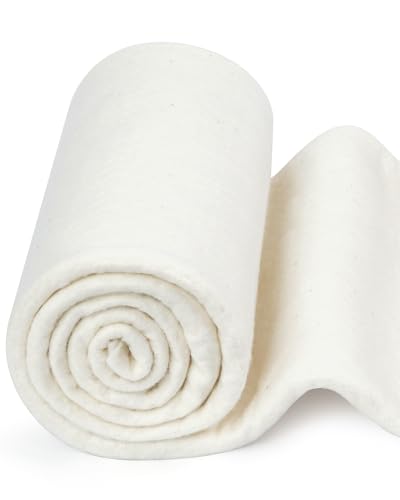
FIVEIZERO Natural Cotton Quilt Batting 47″ x 1 Yard

Yamamine Jelly Roll Batting Strip 2 1/2 Inch, 2 Rolls

Mountain Mist 80/20 Cotton Poly Blend Batting 96″ x 30 Yd

SIMOND STORE 80/20 Quilt Batting 108″ x 540″

Hobbs Heirloom Premium 80/20 Cotton/Poly Blend Batting Roll

LEEQHRRY Dacron Polyester Cushion Wrap Batting

West Bay 6 Rolls Jelly Roll Batting Strips with Tube Maker

The Warm Company Soft & Bright Polyester Quilt Batting 90″ Bolt

HOMBYS Dacron Upholstery Batting 48″ Wide x 5 Yards

Pellon Nature’s Touch 80/20 Quilt Batting Roll, Low Loft
Why These Options Stand Out
Most first-time quilters don’t need thirty yards sitting in a closet. This FIVEIZERO roll gives you a single-yard cut of all-natural cotton at a standard 47-inch width, which lines up neatly with baby quilts, potholders, coasters, and small wall hangings. Because it arrives pre-cut and vacuum-packed, there’s no wrestling a bulky bolt across your cutting table.
Natural cotton breathes well and drapes softly, so finished pieces feel cozy rather than stiff. In our view, that makes this an easy starter choice before you commit to bulk buying.
Points In Its Favor
- Pure natural cotton feels breathable against skin, a real plus for baby blankets and lap quilts.
- The 47-inch width covers twin and even king layouts when pieced, giving smaller rolls surprising reach.
- Vacuum packing keeps storage footprint tiny between craft sessions.
- Larger multi-yard sizes exist if your first project snowballs into something bigger.
Things To Consider
- A single yard runs out fast on anything larger than a throw, so plan purchases ahead.
- Cotton can shrink slightly after washing, a behavior common to unblended natural fibers worth pre-washing around.
Key Specs
Who Should Grab It
Newcomers testing their first quilt pattern, plus crafters making potholders, cushions, and coaster sets where one clean yard is plenty.
A Better Fit Elsewhere
Quilters producing piece after piece will get far more mileage from the Mountain Mist 80/20 blend’s 30-yard roll below.
Jelly roll rugs live or die by consistent strip width, and cutting batting strips by hand is tedious, uneven work. Yamamine solves that with two continuous rolls of 2.5-inch cotton-blend fleece batting, fifty yards each, ready to feed straight into your sewing machine alongside fabric strips.
Rug makers commonly report that pre-cut cores cut hours off prep time and produce noticeably rounder braids. Compared with the West Bay kit later in this list, this set skips the accessories and keeps things simple, which some makers prefer.
Strengths Worth Knowing
- 100 total yards handles several full-size rugs before you reorder.
- The precise 2.5-inch width matches standard jelly roll fabric strips, so seams stay aligned.
- Cotton-blend fleece stays soft underfoot once braided and stitched.
Worth Noting
- No tools included, unlike some competing kits, so tube-making accessories come separately.
- Strips arrive tightly rolled and may need time to relax flat before use, based on widely reported experience with shipped rolls.
Made For
Rug braiders and jelly roll enthusiasts who already own their tools and want dependable, uniform batting cores in quantity.
Consider Something Else When
First-time rug makers may find the West Bay six-roll kit more helpful, since it bundles a tube maker ruler and awl with its strips.
An 80/20 blend means eighty percent cotton for softness and twenty percent polyester for resilience, and that ratio is why this fiber has been a studio staple for decades. Mountain Mist needle-punches and thermally bonds its batting without added resin or glue, so nothing stiff interferes with your needle. The cream color sits quietly under both light and dark tops.
With roughly a quarter to three-eighths inch of loft and good stitch definition, it suits everything from bed quilts to wall pieces. Quilting or tying at intervals of six inches or less keeps the fill stable long-term.
Real-World Strengths
- Blended fibers hold loft wash after wash better than pure cotton tends to.
- Needles smoothly by hand or machine, a genuine timesaver on dense free-motion designs.
- The 96-inch width fits queen and king backs with fewer seams to hide.
- Thirty yards covers a serious run of family quilts before restocking.
Small Caveats
- Storage takes commitment; a 30-yard bolt needs dedicated shelf space away from moisture.
- Loft is moderate rather than plush, so puffy comforters call for a different fill.
At A Glance
Whose Shelf It Belongs On
Dedicated home quilters who finish multiple bed-sized projects yearly and want one reliable, forgiving batting for all of them.
Swap It Out When
Longarm professionals chasing maximum crispness may prefer the Pellon Nature’s Touch low-loft roll reviewed near the end of this list.
Where the Mountain Mist roll above measures 96 inches wide, this SIMOND STORE bolt stretches to 108 inches, enough to back most king quilts in one piece with no center seam. Fifteen yards of length at 100 GSM, a weight measure meaning grams per square meter, keeps the layer thin and flexible while still warm.
The warm-white tone disappears under light and dark fabrics alike, which matters when pale sashing would otherwise show a shadowy backing line. You may find the thin profile ideal for summer quilts; stacking layers adds thickness where wanted.
Benefits That Matter
- Resin-bonded, lightly needle-punched construction resists clumping and shifting through repeated washing.
- Extra width saves assembly time on large quilts and works for crib bedding and cushion padding too.
- Layerable thin design lets you dial comfort up or down per project.
Points To Note
- At 100 GSM it’s deliberately slim; anyone wanting a lofty winter quilt should look elsewhere or double up.
- Storing fifteen yards flat without creasing takes some planning.
Right Fit For
Busy sewists and small quilting businesses that burn through batting quickly and value wide coverage per dollar spent.
Not Your Match When
Quilters who prize heritage brand pedigree over raw yardage will likely lean toward the Hobbs Heirloom roll coming up next.
Hobbs built its reputation on consistency, and Heirloom is among the brand’s most requested battings. The formula pairs natural USA-grown cotton with fine polyester, delivering more loft and less weight than traditional all-cotton fills. For heirloom quilts destined to be handed down, that combination earns its premium positioning.
The 96-inch by 30-yard format matches the Mountain Mist roll dimensionally, so switching brands doesn’t change how you load a longarm frame. What changes is the hand feel; many quilters describe Heirloom as softer right out of the package, though individual results vary with fabric choices.
Notable Gains
- Higher loft with lighter weight gives finished quilts gentle puff without heaviness.
- USA-sourced cotton appeals to makers who track material origins.
- Trusted brand consistency helps when matching older projects to new supplies.
Trade Offs
- You pay a brand premium compared with similar-spec generic blends like the SIMOND STORE roll.
- Thirty yards is a big commitment for occasional quilters.
Who Will Love This
Serious quilters entering shows or gifting heirlooms, where batting quality visibly affects drape and stitch relief.
Look Elsewhere When
Budget-driven volume sewists get comparable dimensions and performance per dollar from the SIMOND STORE 108-inch bolt earlier in this list.
Upholstery work needs a different animal entirely: Dacron, a resilient polyester wadding wrapped around foam to soften corners and stop fabric from rubbing raw against hard edges. This LEEQHRRY wrap runs about half an inch thick, enough to round out seat cushions, cornices, and headboard panels without changing their shape dramatically.
Because polyester sheds water quickly and resists abrasion, wrapped cushions hold up in daily-use furniture. Makers also put it to unexpected work, from tank filtration media to holiday display padding, which says something about its versatility.
A Strong Showing
- Half-inch thickness smooths foam edges so covers slip on cleanly.
- Abrasion-resistant fibers extend cover fabric life by reducing friction wear.
- Quick-drying polyester suits pieces that see spills or humidity.
- Handles odd jobs beyond upholstery, including crafts and seasonal decor.
Honest Caveats
- Thickness is fixed, so deep-cushion builds may need doubled layers.
- Polyester traps less air than cotton, a consideration for quilted bedding projects.
Best Suited To
DIY upholsterers refreshing dining chairs, bench pads, and cornice boards where a modest, even wrap does the heavy lifting.
Another Choice May Suit
Larger furniture rebuilds benefit from the HOMBYS 48-inch-wide roll further down, whose extra coverage suits full sofa cushions.
This West Bay bundle thinks one step ahead of the Yamamine set reviewed earlier. Alongside six rolls of roughly 2.25-inch cotton-blend batting, fifty yards apiece for 300 total, you get a tube maker ruler, a quilt awl, and printed instructions, effectively a starter workshop for braided rug projects.
The slightly narrower 2.25-inch strip suits tighter braids, though it differs from the 2.5-inch standard, so check your pattern before committing. Pre-cut widths again spare you hours at the rotary mat, which is where most rug enthusiasm quietly dies.
A Favorable Mix
- 300 combined yards supports multiple large rugs or shared crafting sessions.
- Included tube maker and awl remove the usual tool-buying guesswork for newcomers.
- Uniform factory-cut strips braid more evenly than hand-cut alternatives tend to.
Softer Spots
- The 2.25-inch width won’t match patterns written for 2.5-inch cores.
- Instructions are basic, so complex techniques still rely on outside tutorials.
Quick Facts
The Right Fit
Craft groups and hobbyists starting braided rug projects who want materials and tools arriving together in one box.
Reach For A Different Pick When
Experienced rug makers locked into the 2.5-inch standard will find the Yamamine two-roll set aligns better with existing patterns.
All-polyester batting answers a different brief than the 80/20 blends dominating this list. Soft & Bright from The Warm Company is needle-punched for strength, which means the fibers are mechanically interlocked so they resist shifting, tearing, and bunching through quilting and laundering. Longarm operators value that stability when fabric moves fast under the needle head.
The 90-inch by 25-yard bolt comfortably covers comforters and oversized quilts, and because polyester holds no moisture, finished pieces dry faster than cotton-filled ones. Warm Company also offers narrower and wider bolt configurations, useful when studio shelving dictates size.
Why It Works Well
- Needle-punched structure keeps fill evenly distributed across years of washing.
- Lightweight feel suits summer quilts and allergy-sensitive households, since polyester contains no plant proteins.
- Smooth finish feeds cleanly through both domestic machines and longarm frames.
- Multiple bolt sizes let you match stock to available storage.
Less Ideal Details
- Bearding, where fibers poke through loose-weave tops, is a known polyester risk with very open fabric.
- Less breathable than cotton in hot climates, a trade-off worth weighing for year-round bedding.
Feature Snapshot
Built With In Mind
Longarm quilting services and production sewists who need stable, predictable polyester by the bolt week after week.
Where A Sibling Pick Shines
Quilters wanting natural-fiber breathability in the same wide format should compare the Pellon Nature’s Touch cotton blend closing this list.
Full sofa rebuilds eat narrow batting fast, and that’s where HOMBYS earns its place here. At 48 inches wide with five yards of length, one roll wraps several large seat and back cushions, whereas the LEEQHRRY wrap earlier in this list suits smaller chair-scale jobs.
The medium-thick Dacron serves three quiet jobs at once: it buffers friction between foam core and cover fabric, helps the cover hold its shape instead of stretching baggy, and adds a rounded, tailored silhouette to flat foam. Cutting is straightforward with scissors or a rotary blade, and school projects and home decor builds take to it equally well.
Features That Help
- Generous 48-inch width wraps deep sofa cushions without piecing.
- Elasticity keeps covers taut and slows the baggy look cushions develop over time.
- Easy cutting makes quick work of curved corners and custom shapes.
What To Weigh
- Five yards covers one substantial couch refresh, not a whole living room, so measure first.
- Polyester fill compresses somewhat over years of heavy seating, a normal trait of Dacron wraps.
Who It Suits Best
Home decorators tackling sofa or loveseat recoveries who want one appropriately sized roll rather than cobbling narrow strips together.
Where Another Pick Suits Better
Chair seats, benches, and cornices need less material, making the LEEQHRRY cushion wrap the leaner buy for those smaller jobs.
Scrim is a thin stabilizing layer needle-punched into batting, and it’s the reason this Pellon roll behaves so predictably under tension. The 80/20 cotton-poly blend uses ultra-clean cotton bonded to that scrim, adding strength and cutting stretch, which longarm frames demand when fabric loads pull in every direction.
At just 1/16 inch of loft, stitches read crisply and quilts drape flat, the look competition judges reward. Summer-weight projects benefit too, since the thin profile breathes easily. Against the Mountain Mist roll’s quarter-to-three-eighths inch loft, this is the flatter, sharper-detailed sibling.
What Works In Its Favor
- Scrim reinforcement reduces stretching during high-speed machine and longarm work.
- Ultra-low loft showcases dense custom quilting patterns beautifully.
- 96-inch width spans king quilts and reduces seam count on wide backs.
- Thin, airy build suits warm-weather quilts and lightweight throws.
Possible Compromises
- Minimal loft disappoints anyone chasing a puffy, traditional hand-quilted look.
- Thirty-yard rolls suit studios more than occasional hobbyists.
Core Details
Perfect Match For
Longarm professionals and precision-minded quilters who want every feather and crosshatch line rendered sharp and flat.
Skip It When
Cozy winter comforter makers should choose the Hobbs Heirloom roll instead, whose higher loft delivers that plump, snuggly finish.
Choosing Wisely: What Actually Matters Before You Buy
Match Fiber To Project
Cotton breathes and drapes naturally, making it the default for bed quilts and anything touching skin. Polyester brings resilience, quick drying, and lower cost, which is why upholstery wrappers and high-volume sewists favor it. Blends split the difference, and the exact ratio tells you which parent it favors.
Think about washing habits too. Cotton shrinks a touch and softens with age, while polyester holds shape but can beard through loose-weave tops. Your fabric choice interacts with this decision more than most beginners expect.
Width And Loft Do The Real Work
A 96-inch roll backs most queens seamlessly; 108 inches reaches kings without piecing. Every seam you avoid is time saved and a visual flaw prevented, so measure your typical largest project before choosing width.
Loft controls personality. Thin fills like Pellon’s 1/16-inch profile sharpen stitch detail, while quarter-inch-plus blends add gentle puff. There’s no universally correct answer, only what suits the quilt in front of you.
Buy For Your Actual Volume
Thirty-yard bolts reward people who finish projects monthly and punish closets that host one quilt a year. Honest self-assessment here saves real money and storage headaches. Smaller cuts like the FIVEIZERO yard exist precisely for the rest of us.
Key Considerations Across These Picks
Traps First Timers Fall Into
The classic mistake is ordering a giant roll before confirming your machine handles wide batting, or buying 2.5-inch strips for a pattern written around 2.25 inches. Check strip width and roll dimensions against your patterns and frame capacity first. Storage gets overlooked too; a 30-yard bolt needs dry, pest-free space, not a damp basement corner.
The Case For Spending Up
Brand-name battings like Hobbs and Pellon charge more for consistency: even loft, clean cotton, and predictable behavior on a longarm. Casual crafters rarely notice that difference, but show quilters and professionals do. Paying extra pays off precisely when your reputation rides on the finished result.
Frequently Asked Questions
Can I use upholstery Dacron batting for quilts?
Technically yes, though it’s optimized for wrapping foam rather than quilting. Quilt-specific battings offer better stitch definition and drape for that purpose.
How much batting does a king-size quilt need?
A standard king top runs roughly 105 by 110 inches, so a 108-inch-wide roll covers it in one pass. Budget a few extra inches on all sides for loading margin.
Do pre-cut jelly roll batting strips really save time?
Most rug makers say yes, since cutting dozens of uniform strips by hand is slow and error-prone. Factory-cut widths also braid more evenly.
Should cotton batting be pre-washed?
Many quilters pre-wash to preempt shrinkage, especially with all-natural cotton. Blends with polyester typically shrink less and often go straight into the quilt.
What does “scrim” mean in batting descriptions?
It’s a thin stabilizing substrate needle-punched into the fibers to add strength and reduce stretch. Scrim-backed batting handles longarm tension and dense quilting more reliably.
Closing Remarks
The right roll comes down to honest math: what you make, how often, and how big. Small-space crafters have the FIVEIZERO yard; rug makers have Yamamine or West Bay; serious quilters choose among Mountain Mist, SIMOND STORE, Hobbs, and Pellon based on loft and budget. Whichever direction you lean, measuring your next three projects before ordering beats guessing every time.
