
Anyone who has strung hundreds of tiny seed beads by hand knows the wrist ache that comes with it. A bead spinner takes that repetitive work off your hands: you fill a bowl with beads, spin it, and let a curved needle catch them one after another. This roundup covers manual wooden bowls, electric models with speed control, plus the needles, funnels, and bead assortments that round out a serious beading setup.
Your Options, Compared

hobbyworker Wooden Bead Spinner with 2 Big Needles & 8000 Seed Beads
Xmada Electric Bead Spinner with 2 Beading Needles

Xmada Electric Bead Spinner (Black Walnut)
Xmada Electric Bead Spinner (Pink)
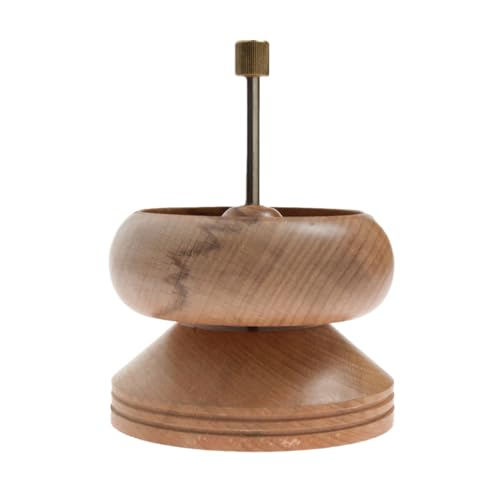
SE Standard Wooden Bead Spinner with Knob JT-BS04

PH PandaHall 320 Pcs Green Acrylic Leaf Beads

Myartype 2-in-1 Clay and Seed Bead Spinner (Pink)

Xmada Beading Funnel Kit with 2 Tools

MTLEE 10 Pcs 4 Inch Stainless Steel Curved Beading Needles

MegaCast Wooden Bead Spinner with Needle
The Strengths Of Each Pick
This is the pick that removes every excuse to get started: the wooden bowl, two large-eye needles, 8000 seed beads, and a small surprise gift pack all arrive in one box. You can sit down at your craft table tonight and string a full bracelet without ordering anything else.
The bowl spins by hand, so there’s no cord to manage and nothing to plug in. For someone working through an evening of necklace or waist chain projects, that quiet manual operation is part of the appeal.
Notable Upsides
- Everything ships together, so beginners avoid mismatched needle-and-bead purchases.
- The smooth inner wall keeps seed beads circulating without jamming or knotting your thread.
- Large-eye needles are easier to thread than standard beading needles, especially under lamp light.
- Wood construction wipes clean and stores easily on a shelf between sessions.
- Suited to bracelets, necklaces, and waist chains alike.
Things To Consider
- Manual spinning means your hand does the work; long sessions may tire some users compared with the electric Xmada models later in this list.
- Keep the bowl dry and dust-free, since debris inside can slow the beads’ rotation over time.
Who It Suits Best
A first-time jewelry maker or gift shopper who wants one complete package instead of piecing tools together.
Reach For A Different Pick When
Crafters producing bracelets in bulk will move faster with the Xmada Electric Bead Spinner’s adjustable motor.
Where the hobbyworker kit relies on your wrist, this Xmada model puts a motor in charge. Beads circulate automatically past the curved needle, which means your hands stay free to guide the thread. Sellers making waist bead strands or repairing necklaces in volume tend to notice the difference within the first project.
You also get bidirectional rotation with speed adjustment, so delicate glass seed beads can run slower while sturdy pony beads take a faster spin. Assembly is straightforward, and the kit includes two needles plus seed beads to start.
Real Benefits
- Automatic rotation lets you hold the needle steady instead of cranking a bowl.
- Speed adjustment protects fragile beads from bouncing out of the bowl.
- Reversible direction helps you find the circulation pattern that catches beads most consistently.
- Included needles and seed beads mean fewer separate orders.
Small Caveats
- An electric unit needs outlet access and occasional cleaning around the spindle where dust collects.
- Some owners report a short learning curve finding the right needle angle against moving beads.
Made For
Jewelry sellers and hobbyists who churn out multiple bracelets per sitting and want motorized consistency.
A Better Fit Elsewhere
Occasional crafters who string beads a few times a year may prefer the simpler SE JT-BS04 manual bowl.
This is the same motorized concept as the Xmada spinner above, dressed in black walnut rather than a plain finish. The dark grain looks at home on a shared living room table or a styled craft-room shelf, which matters more than you’d think when your tools stay out between sessions.
Functionally, you still get automatic bead flow past a curved needle, adjustable speed, and reversible rotation. Two needles and seed beads come in the box, so the upgrade is largely about materials and aesthetics rather than new capability.
What Pays Off
- The walnut finish resists looking worn the way painted plastic eventually does.
- Motorized spinning handles long waist-bead strands without hand fatigue.
- Speed control suits both tiny seed beads and larger clay beads.
Points To Note
- Wood finishes benefit from a dry cloth wipe-down; avoid soaking the bowl when cleaning.
- You’re paying for appearance alongside function, and the pink variant below delivers identical mechanics.
Feature Snapshot
The Right Fit
Design-conscious crafters who want their tools to look as considered as their finished pieces.
Swap It Out When
Budget-focused shoppers get the same performance from the MegaCast Wooden Bead Spinner at a friendlier entry point.
Pink everything has taken over the clay bead scene, and this variant exists squarely for that crowd. Mechanically it mirrors the black walnut version: automatic rotation, adjustable speed, bidirectional spin, two curved needles, and starter seed beads in the package.
The honest difference is purely visual. In our view, that’s a legitimate reason to choose it if your workspace leans pastel, but nobody should expect different results from the motor itself.
Advantages To Know
- The finish coordinates with popular clay bead palettes and pink tool sets.
- Full electric functionality matches the pricier walnut version exactly.
- Curved needle design catches beads smoothly once you set the right angle.
Honest Caveats
- Lighter colored surfaces show bead dust more readily, so plan on a quick brush-out after each session.
- As with any electric spinner, keep liquids away from the base during use.
Who Should Grab It
Teens and trend-focused makers building matching pink craft stations who still want serious stringing speed.
Where A Sibling Pick Shines
Anyone indifferent to color should grab the black walnut Xmada version for its more durable-looking finish.
The SE JT-BS04 strips the category back to essentials: a turned wooden bowl, a textured spindle knob, and nothing else to learn. Fill it halfway, twist the knob, and dip your needle into the swirling beads. That simplicity is exactly why it has stayed relevant for years.
Its broad compatibility stands out too. Unlike kits tuned around specific seed bead sizes, this bowl works across various bead types, which suits crafters who jump between glass, acrylic, and metal spacers in a single project.
The Value In It
- Universal bead compatibility means one bowl serves your whole stash.
- The textured knob gives a confident grip even with slightly damp or lotioned fingers.
- No electronics, no cords, no batteries to fail years down the road.
Trade Offs To Consider
- It ships as a bare tool, so budget separately for needles and beads.
- Hand twisting caps your pace compared with the motorized Xmada units.
Best Suited To
Intermediate hobbyists with an existing needle collection who value a dependable, no-frills bowl.
Another Choice May Suit
Total beginners lacking supplies will find the hobbyworker all-in-one kit a smoother starting point.
Not every entry here is a machine, and this one feeds your machines instead. The PandaHall assortment delivers 320 transparent green leaf-shaped acrylic beads spread across eight distinct styles, roughly 40 of each. They slot naturally into spring earrings, botanical bracelets, and nature-themed charm mixes.
At around 16 by 15.5 millimeters with holes between 1.2 and 2 millimeters, they thread comfortably onto standard beading wire and pair well with the curved needles used in the spinners above. Acrylic keeps them light enough for dangle earrings without stretching ear wires.
Everyday Perks
- Eight leaf shapes add variety without buying eight separate packs.
- Transparent green reads fresh in spring and summer color stories.
- Generous quantity supports multi-piece sets and matching earrings-plus-bracelet projects.
Less Ideal Details
- Acrylic scratches more readily than glass, so store them away from metal findings that could abrade the surface.
- Leaf silhouettes skew seasonal; they’ll feel out of place in winter palettes for many makers.
Whose Shelf It Belongs On
Earring designers and seasonal craft sellers building botanical collections for spring markets.
Not Your Match When
Makers needing neutral everyday spacers will get more mileage from classic seed bead assortments.
Flat clay beads and round seed beads behave very differently in a spinning bowl, which is why most spinners favor one or the other. The Myartype solves that split with two operating modes in a single pink machine, so switching from a heishi bracelet to a seed bead anklet doesn’t require swapping equipment.
For anyone who owns both bead types, that consolidation saves shelf space and money compared with buying dedicated machines. Needles and thread arrive included, covering the consumables side of the equation too.
Reasons It Performs
- Dual modes handle flat clay discs and spherical seed or pony beads without jams.
- One purchase replaces two single-purpose devices.
- Included thread and needles make it genuinely project-ready.
Details To Watch
- Two-mode mechanisms carry slightly more parts to keep clean than a basic bowl.
- The pink housing won’t suit every desk aesthetic.
Quick Facts
Perfect Match For
Versatile makers who alternate between trendy clay bead bracelets and traditional seed bead work weekly.
Skip It When
Single-focus seed bead artists already served well by the Xmada electric spinner don’t need the second mode.
A funnel sounds almost too simple next to motorized spinners, yet it sidesteps the one skill a spinner demands: holding a needle at the right angle in moving beads. With this kit, you pour beads along the funnel and they feed directly onto your string, no spinning technique required.
The package includes two funnels, two beading needles, and two bead stoppers, giving you a spare of everything. Xmada claims a five-inch clay bead strand takes under a minute, which tracks with how little handling each bead receives.
Key Advantages
- No learning curve: pouring beats needle-angle practice on day one.
- Bead stoppers prevent finished sections from sliding off mid-project.
- Duplicate tools mean a dropped funnel never halts your session.
Worth Noting
- Funnels suit straight runs better than intricate patterns requiring selective bead placement.
- Very small seed beads may need a steadier pour than chunky clay beads demand.
Right Fit For
Children, classroom groups, and absolute newcomers making their first stretchy clay bead bracelets.
Look Elsewhere When
Makers working with fine seed beads at volume will get cleaner results from the MTLEE curved needles paired with a proper spinner bowl.
Every spinner owner eventually bends or loses a needle, usually mid-project. This ten-pack of four-inch curved needles in stainless steel ends that interruption. The curve matches the arc beads follow inside a spinning bowl, letting the tip skim the surface and catch beads efficiently.
The big eye opening accepts thicker threads and elastic cord that standard narrow-eye needles reject, a quiet advantage for stretch bracelet makers. Ten pieces also leave room to dedicate one needle per active project instead of re-threading constantly.
Good Reasons To Consider
- Ten needles cost less heartache than one lost needle on deadline.
- Stainless steel resists bending during normal spinner contact.
- Oversized eyes simplify threading for anyone with less-than-perfect close-up vision.
- Four-inch length keeps fingers away from fast-moving beads.
Factors To Consider
- Curved needles are specialist tools; they replace nothing in ordinary hand sewing.
- Owners commonly report tips dulling after heavy use against gritty bead holes, so inspect yours periodically.
Built With In Mind
Regular spinner users who want a durable backup stock rather than emergency single replacements.
Consider Something Else When
Casual crafters who string occasionally may find the two needles bundled with the Xmada electric spinner entirely sufficient.
The MegaCast follows the classic two-part recipe: a weighted base with a shaft, and a bowl whose bottom hole seats onto it. Fill the bowl half to two-thirds, give it a twirl, and run your hooked wire or the included needle flat through the swirling beads.
Compared with the SE JT-BS04 reviewed earlier, this one bundles a needle, closing the gap for anyone starting from zero. The design is deliberately plain, and that’s its strength: fewer parts mean fewer things to break or misplace.
Where It Helps
- Two-piece assembly detaches quickly for compact drawer storage.
- Included needle makes it usable the day it arrives.
- Half-to-two-thirds fill guidance takes the guesswork out of loading.
Softer Spots
- The unadorned finish lacks the polish of the Xmada walnut bowl for display-minded setups.
- Wire-hook technique takes a few tries before beads climb consistently.
Who Will Love This
Budget-conscious DIYers testing whether a spinner fits their workflow before committing to an electric model.
Another Choice May Suit
Serious production beaders should step up to the Myartype 2-in-1 for motorized speed across both clay and seed beads.
Choosing Between These Stringing Tools
Manual Versus Electric First
Decide how often you’ll actually string before anything else. Manual wooden bowls like the SE and MegaCast cost less, store anywhere, and never need an outlet, but your wrist sets the pace. Electric models such as the Xmada spinners pay for themselves in comfort once projects become weekly rather than occasional.
Bead Size And Type Compatibility
Seed beads, pony beads, and flat clay discs all circulate differently inside a bowl. Check that your chosen spinner’s needle curve and bowl depth match your dominant bead size, since a needle tuned for 11/0 seed beads may skip right past chunky acrylics.
What Ships In The Box
Some listings bundle needles, thread, and thousands of starter beads; others ship a bare bowl. Bare tools suit anyone with a stocked supply drawer, while complete kits save first-timers from ordering three things separately and hoping they match.
Storage And Upkeep Realities
Wooden bowls want dry storage and a periodic wipe-out to keep dust from slowing bead flow. Electric bases need cord management and occasional cleaning around the spindle. Neither is demanding, but both reward a minute of care after each session.
Key Considerations Across These Picks
Traps First Timers Fall Into
The most common mistake is buying a spinner before checking needle eye size against your favorite thread. A needle that rejects your elastic cord turns a time-saver into a paperweight. Another frequent slip: filling the bowl too deep, which actually slows circulation rather than speeding it up.
The Case For Spending Up
Higher-priced electric models buy consistent motor speed, direction reversal, and finishes that age gracefully. Anyone completing more than a couple of projects monthly will feel that difference in their hands, and the dual-mode Myartype shows how one thoughtful upgrade can replace two separate tools.
Frequently Asked Questions
How full should a bead spinner bowl be?
Most manufacturers recommend filling between half and two-thirds full. Overfilling crowds the beads and actually slows the spinning motion you’re relying on.
Do bead spinners work with clay beads?
Round and flat clay beads need different handling, which is why dual-mode machines like the Myartype exist. A standard seed bead spinner may struggle with wide, flat heishi-style discs.
Can I use regular sewing needles in a spinner?
Straight sewing needles lack the curve that lets the tip ride through swirling beads. Curved beading needles, like the MTLEE four-inch set, match the bowl’s motion far more reliably.
Is an electric spinner worth it over manual?
For occasional crafters, a manual wooden bowl handles the job nicely. High-volume makers making bracelets or waist beads regularly usually find the motor pays for itself in reduced hand fatigue.
How do I stop beads from scattering everywhere?
Start at lower speeds until you’ve found a comfortable needle angle, and keep the bowl centered on your work surface. A shallow tray underneath catches any escapees.
Wrap Up
Your best choice comes down to volume and bead style. Beginners get the smoothest start from the hobbyworker complete kit, steady hobbyists will appreciate the SE JT-BS04’s simplicity, and busy makers should look hard at the Xmada electric models or the dual-mode Myartype. Whichever route you take, a good spinner turns hours of tedious threading into an afternoon of actually designing. Happy stringing.
