
Starting calligraphy is equal parts exciting and confusing: dozens of nib sizes, ink types, and pen styles all compete for your attention before you’ve written a single letter. The right beginner kit removes that friction by bundling compatible tools together, so your first practice session feels like progress instead of a supply run. This roundup covers seven well-matched options, from traditional dip pens and feather quills to modern brush markers and traceable practice pads. Whether you’re addressing wedding envelopes, journaling, or just learning a new skill at the kitchen table, there’s a set here shaped for how you actually want to learn.
The Picks In Brief
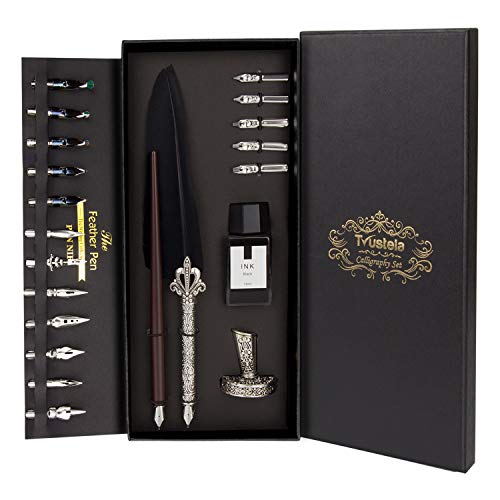
Trustela Beginner Calligraphy Set with Feather Quill & 19 Nibs

Daisy Blue Calligraphy Practice Pad, 120 Sheets

June & Lucy Calligraphy Kit with Workbook

GETHPEN Calligraphy Brush Pen Set, 10 Sizes

Ooly Calligraphy Duo Double-Ended Pens, Set of 12

Mont Marte Calligraphy Set, 32 Piece

Plotube Calligraphy Pen Set with 11 Nibs & 7 Inks
A Breakdown Of The Leading Choices
A wooden dip pen, a feather quill, nineteen nibs, and an assortment of inks arrive packed in a gift-ready box, which makes this Trustela kit feel like a proper ceremony rather than a bag of loose supplies. For someone sitting down to try copperplate or Gothic lettering for the first time, having every stroke weight within reach removes the guesswork that usually stalls beginners.
One practical note worth knowing upfront: new nibs ship coated in protective oil so they resist corrosion in transit, and most owners report the first session goes better after a quick cleaning with warm water and a drop of dish soap. Skip that step and ink tends to bead off the metal instead of flowing.
Real Benefits
- Nineteen interchangeable nibs let you move from hairline strokes to broad swashes without buying anything else.
- The gift box presentation means it works straight away as a present for a creative friend or family member.
- Wooden and feather pen bodies give you two distinct grip feels to discover which suits your hand.
- Ink included in the box, so the first practice page needs no extra shopping trip.
Honest Caveats
- Dip pens demand re-dipping every few words, which some newcomers find slower than marker-based kits.
- Nibs need rinsing and drying after each session to prevent rust, a small maintenance habit to adopt.
Key Specs
Who Will Love This
Complete beginners who want the full traditional dip-pen experience in a single unboxing.
Where A Sibling Pick Shines
The Mont Marte Calligraphy Set suits learners who prefer refillable cartridge pens over dipping into open ink bottles.
Tools teach your hand nothing on their own; repetition does the real work. This Daisy Blue pad takes that idea seriously with 120 traceable lettering pages sized at 8.5 by 11 inches, large enough to practice full alphabet rows comfortably at a desk. The matte-finish cover keeps it looking tidy on a shelf between sessions.
Tracing is the training wheels of lettering: you follow pre-printed letterforms until the shapes settle into muscle memory, then graduate to blank paper. Anyone who has stalled out staring at empty guide sheets will recognize why this approach clicks where freehand practice often doesn’t.
Real-World Strengths
- Traceable letters remove the intimidation of deciding letter shapes yourself while you’re still learning.
- The full 8.5 x 11 inch format gives generous room for practicing connected words, not just single characters.
- 120 sheets translate to weeks of regular practice before you need a replacement.
- Works alongside any pen from this list, from markers to dip nibs.
Points To Note
- It contains no pens or ink, so budget for a separate writing tool if this is your first purchase.
- Heavy wet inks may show through thinner pages depending on the pen you pair with it.
Made For
Self-taught learners who want structured daily drills rather than hunting for printable worksheets online.
Consider Something Else When
The June & Lucy Calligraphy Kit fits anyone who wants a workbook bundled with matching marker pens in one package.
Modern calligraphy leans on brush pens rather than steel nibs, and this June & Lucy kit is built around exactly that style. You get six marker pens across four tip sizes, from extra-fine up through a flexible brush tip, paired with water-based pigmented black ink. The hardcover workbook is bound with a gold spiral, a detail that matters more than it sounds because the book lays flat while both hands stay busy.
Compared with the Daisy Blue practice pad, this option bundles instruction and tools together, which shortens the path from unboxing to first finished word. The introduction walks through hand lettering basics in plain language, so total novices aren’t left decoding technique videos on their own.
Well-Handled Touches
- Four distinct tip sizes cover delicate details and bold headline strokes in one set.
- The gold spiral hardcover lies flat on a desk, keeping practice pages stable during long sessions.
- Water-based pigmented ink flows smoothly and suits the forgiving nature of brush lettering.
- An easy-to-follow intro section means zero prior experience is required.
Small Caveats
- Marker pens have finite lives; heavy daily practice means replacing them sooner than a steel nib would wear out.
- The palette is black only, so colorful projects require adding pens later.
Feature Snapshot
The Right Fit
Newcomers drawn to modern brush lettering for journals, planners, and greeting cards.
Swap It Out When
Anyone wanting a wider color range should look at the Ooly Calligraphy Duo set instead.
Ten tip configurations in a single black-ink lineup is the whole pitch here, and it’s a strong one. Alongside standard brush tips, GETHPEN includes a 1mm angled chisel and a 2mm flat nib, giving you traditional italic-style edges and modern brush flexibility side by side. Archival ink, meaning pigment formulated to resist fading and water damage over time, makes finished pieces suitable for framing or card-making.
Where the June & Lucy kit stops at four sizes, this set keeps going, which appeals to learners who already know they’ll stick with lettering and want headroom to grow. The trade-off is that ten options can overwhelm someone still figuring out what a brush tip should feel like.
Bright Spots
- Tip range from extra-fine lines to sweeping flourishes supports everything from signatures to illustrations.
- Archival, fade-resistant black ink holds up on paper, canvas, and greeting cards alike.
- Angled and flat tips introduce traditional scripts without a separate nib purchase.
- No dipping or refilling, so practice sessions start the moment you uncap a pen.
Things To Weigh Up
- Brush tips can fray with heavy pressure, a commonly reported issue with felt-tip lettering pens.
- Black-only palette limits decorative project work until other colors are added.
Quick Facts
Who Should Grab It
Hand-lettering hobbyists planning to sell or display their work, where ink permanence genuinely counts.
Another Choice May Suit
Total beginners may find the gentler six-pen June & Lucy kit a calmer place to start.
Twelve colors, twenty-four usable tips, zero mess: the Ooly Duo set flips the traditional calligraphy formula entirely. Each double-ended marker pairs a 2.0mm chisel tip, the kind that produces classic thick-and-thin strokes, with a 3.0mm brush tip for softer, bouncier modern lettering. Flip the barrel and you’ve switched styles mid-page without swapping tools.
This is the pick for bullet journals, scrapbook headings, and handmade cards where black ink alone won’t cut it. Compared with the GETHPEN set’s professional archival focus, Ooly trades permanence for playfulness, and for casual crafting that’s usually the right trade.
Strong Points
- Two tip styles per pen effectively double your stroke options across twelve barrels.
- The colorful range brightens journals, planners, and seasonal crafts instantly.
- Marker format means no ink bottles, no spills, and no cleanup after practice.
- Chisel and brush ends let you compare traditional and modern lettering back to back.
Less Ideal Details
- Felt tips wear down faster than metal nibs under firm pressure, so a light touch extends their life.
- Fixed tip sizes offer less range than the ten-size GETHPEN lineup.
Right Fit For
Casual crafters decorating journals, cards, and school projects who value color over formality.
Skip It When
Learners chasing formal scripts such as Copperplate will get truer results from the Trustela dip pen set.
Thirty-two pieces cover the classic calligraphy education end to end: four refillable pens, five nibs, twenty ink cartridges, an ink pump, and two booklets covering both introduction and exercises. Cartridge-fed pens split the difference between dip pens and markers, since you get consistent ink flow without constantly re-dipping.
The included nib selection targets traditional scripts, Roman, Round Hand, Italic, Gothic, and Uncial, which gives structure to your learning in a way loose assortments don’t. Against the Trustela kit’s romantic quill presentation, Mont Marte reads as the more studious classroom option, and its exercise booklet reinforces that tone.
The Good Stuff
- Twenty cartridges keep you writing for months without shopping for refills.
- Nibs are chosen for named historical scripts, so lessons map directly onto your tools.
- The pump lets you fill pens from bottled ink once cartridges run dry.
- Refillable bodies mean the pens themselves last far longer than disposables.
Worth Bearing In Mind
- Cartridge systems occasionally skip on the first stroke after sitting idle; priming solves it.
- Five nibs offer less experimental range than Trustela’s nineteen-piece spread.
- Only black ink is included, so colored work needs separate purchases.
The Numbers That Matter
Who It Suits Best
Students of traditional letterforms who want guided exercises and dependable cartridge pens.
Reach For A Different Pick When
Decorative color projects point toward the Ooly Duo set, whose twelve hues suit expressive work better.
Some kits are bought to be used; this one is bought partly to be admired. Plotube packages a wooden dip pen, an antique brass holder, eleven nibs (two golden, ten stainless steel), seven water-soluble ink bottles, and a beginner’s manual inside a black presentation box. On a desk it reads like something from a stationer’s cabinet, and that character carries into gifting occasions beautifully.
Functionally it mirrors the Trustela set’s dip-pen approach but adds color variety the Trustela kit doesn’t match. Water-soluble ink cleans up easily, though it also means finished work should stay away from moisture.
A Few Strong Suits
- Seven ink colors invite experimentation beyond standard black lettering.
- Eleven nibs span stainless and golden finishes for varied stroke weights and looks.
- The antique brass holder adds genuine vintage character to the writing experience.
- A luxury black gift box makes it present-ready for holidays and exchanges.
Details To Watch
- Open ink bottles demand a stable desk and careful capping to avoid stains.
- Water-soluble formulas mean completed artwork needs dry storage to survive.
Core Details
Built With In Mind
Gift-givers and vintage-stationery fans who want a display-worthy kit that still teaches real technique.
Not Your Match When
Mess-averse beginners working in small shared spaces will find the marker-based June & Lucy kit easier to live with.
What Matters Most Before Choosing Beginner Calligraphy Sets
Match The Tool To The Script
Traditional scripts like Italic and Copperplate belong to dip pens and steel nibs, while modern bounce lettering lives in brush markers. Buying against your intended style is the fastest route to frustration, so decide what you want to write before deciding what to buy.
Count The Consumables
Ink cartridges, marker tips, and nibs all wear out. A set with twenty cartridges or refillable bodies stretches further than one with three disposable pens, even when the upfront contents look similar. Check what gets replaced, not just what arrives.
Consider Your Workspace
Dip pens and open ink bottles reward a dedicated desk with good light and patience; markers forgive a coffee-table practice habit. Apartment dwellers and parents practicing around kids generally report happier results with capped pens.
Weight The Learning Support
A booklet, traceable pad, or spiral-bound workbook turns scattered practice into a curriculum. Beginners who follow structured lessons tend to stick with the hobby longer than those freestyling from blank paper.
Key Considerations Across These Picks
Traps First Timers Fall Into
The most common mistake is buying a gorgeous dip pen set and expecting instant results; nib control takes weeks of drills. Another frequent slip is skipping nib prep, since factory oils make fresh nibs repel ink until cleaned. Finally, many shoppers buy tools without any practice material, then stall with nothing to write on.
Where The Extra Money Goes
Higher-tier sets spend on nib quantity, ink capacity, and packaging. Eleven nibs versus three means more stroke weights to explore, and bottled or cartridge ink beats a single sample pot. Pay up when you’re committed to the hobby; start small when curiosity is still unproven.
Frequently Asked Questions
Do I need both a dip pen and markers to learn?
No. One system is enough to build solid technique, though many hobbyists eventually enjoy owning both since each produces a distinctly different letterform.
How long before my handwriting improves?
Most learners see noticeable control gains after a few weeks of regular short sessions. Consistency matters far more than session length.
Are these sets suitable as gifts?
Several, including the Trustela and Plotube kits, ship in presentation boxes designed for gifting. Marker sets also work well for younger recipients thanks to their low mess.
What paper works best with calligraphy ink?
Smooth, heavier-weight paper resists bleeding and feathering. Standard printer paper tends to absorb ink unevenly and frustrates beginners.
Can left-handed writers use these kits?
Yes, though left-handers often prefer marker sets to avoid dragging a hand through wet dip-pen ink. Nib angle adjustments help with traditional tools.
Closing Thoughts
Every set here solves the same problem differently: Trustela and Plotube lean traditional and giftable, Mont Marte structures the learning, and the marker kits from June & Lucy, GETHPEN, and Ooly lower the barrier to daily practice. Start with the style of lettering you actually want to write, add a practice pad if your kit lacks one, and let the first few imperfect alphabets be part of the fun. Your future envelopes, journals, and cards will thank you for starting.
