
Learning to knit or crochet from scratch is easier when everything arrives in one box. The right starter kit saves you the guesswork of matching yarn weights to needle sizes and gives you a guided first project instead of a pile of loose supplies. This roundup covers seven beginner knitting kits and crochet sets suited to different learners: adults picking up a relaxing hobby, kids building fine-motor skills, and anyone who wants video instruction alongside printed steps. Each entry below breaks down what’s inside, where it falls short, and who it genuinely fits.
A Side-By-Side Look

kgxulr Tulip Crochet Kit for Beginners

Katech Crochet Kit for Beginners, Adults, Kids
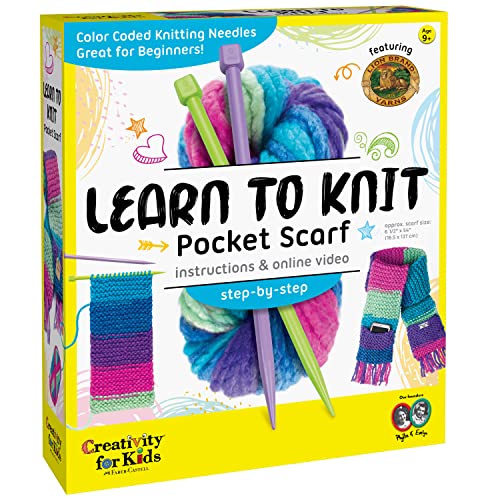
Creativity for Kids Learn to Knit Pocket Scarf

Aeelike Knitting Kit for Beginner Adult, Dishcloth Set

CraftLab Beginner Knitting Kit with Wool Yarn

Joyclub Crochet Kit 6 Animal Family

Katech Knitting Needles Set for Beginners
The Strengths Of Each Pick
This kit centers on a single tulip project, which is exactly the kind of narrow focus that helps a first-timer finish something. Everything needed comes bundled: six yarn colors, stuffing fiber, stitch markers, two hooks including a 2.5 mm soft-shank option, wires for shaping stems, a blunt-eye needle, and an instruction booklet backed by video tutorials.
The wire components are the interesting part here. They let you build flowers that hold their shape on a desk or shelf rather than flopping flat, which makes the finished piece feel more rewarding than a practice swatch.
Noteworthy Benefits
- Video tutorials walk each step, so you’re not decoding written abbreviations alone at midnight.
- Six yarn colors mean mistakes in one ball don’t derail the whole project.
- Stitch markers help you track rounds, a habit worth building early.
- Finished tulips make small gifts, giving your learning a purpose beyond practice.
Small Caveats
- Hook colors ship randomly, so you can’t choose a specific shade.
- One project means limited repetition once the tulip is done; owners often move on quickly.
Who Will Love This
Total crochet beginners who want one charming, achievable outcome instead of a drawer of unused supplies.
Another Choice May Suit
The Joyclub Crochet Kit 6 Animal Family suits learners who want six projects to repeat stitches across rather than a single build.
Where the kgxulr kit covers one project, this Katech set plays the long game. You get nine soft-grip hooks spanning 2.0 to 6.0 mm, twenty skeins of yarn, a storage bag, a smaller carry pouch, and printed instructions. That hook range matters more than it sounds: thinner hooks suit fine yarns, thicker ones work chunky stitches, and having both keeps you from buying replacements after week one.
In a busy household, the two-bag setup earns its keep. Supplies stay sorted between sessions instead of migrating into couch cushions, and multiple people can share the kit without fighting over one hook size.
Useful Strengths
- Nine ergonomic hook sizes cover nearly every common yarn weight you’ll encounter as a learner.
- Twenty yarn skeins support many practice sessions before restocking.
- Dedicated storage bag keeps hooks, yarn, and accessories organized between projects.
- Soft handles reduce hand fatigue during longer evening sessions.
- Works for adults and kids sharing one set.
Things To Consider
- The sheer volume can overwhelm someone who just wants one simple first project.
- Yarn skeins are smaller than standalone balls, so larger finished pieces need combining strands.
Feature Snapshot
Right Fit For
Families or solo crafters planning to stick with crochet beyond a single weekend attempt.
Swap It Out When
The Aeelike Knitting Kit for Beginner Adult fits better if you want knitting needles rather than crochet hooks and a quick dishcloth result.
This one targets kids roughly nine and up, and the design choices show it. Chunky self-striping yarn hides uneven tension, color-coded needles remove the guesswork of matching sizes, and the pocket scarf format gives young makers a wearable result with built-in storage for small treasures.
Compared with the adult-oriented Katech sets, everything here is scaled down deliberately: fewer decisions, bigger stitches, faster visible progress. For a child whose attention span runs shorter than a full scarf, that pacing difference is the whole point.
What Helps Most
- Chunky yarn works up quickly, so kids see progress within the first sitting.
- Self-striping color changes make even sloppy rows look intentional.
- Pockets in the finished scarf add a playful payoff kids actually use.
- Color-coded needles simplify tool selection for brand-new knitters.
Worth Noting
- Adults wanting fine-gauge projects will find the chunky yarn limiting.
- Younger children under the suggested age range may struggle with needle coordination, based on commonly reported feedback.
Quick Facts
Made For
Kids around nine or older trying knitting for the first time, ideally with a parent nearby for the initial rows.
Look Elsewhere When
The CraftLab Beginner Knitting Kit with Wool Yarn suits older kids and adults ready for three different projects instead of one scarf.
Dishcloths are the unsung hero of learn-to-knit kits. They’re small, they tolerate mistakes, and unlike a scarf that sits unfinished for months, a cloth gets used the day it comes off the needles. Aeelike builds its Color B set around that idea, pairing super-soft cotton yarn with both bamboo and metal single-pointed needles plus supporting accessories.
The dual needle material is a smart teaching detail. Bamboo grips slippery cotton yarn and slows stitches down for learners, while metal glides faster once your hands relax. Having both lets you graduate naturally without another purchase.
The Practical Payoff
- Cotton yarn produces washable, genuinely useful kitchen items rather than shelf decorations.
- Bamboo needles offer grip that keeps beginner stitches from sliding off.
- Metal needles reward growing speed with smoother glide.
- Tapered points suit all yarn types, extending usefulness past the included cotton.
Points To Note
- Dishcloth-scale projects won’t satisfy anyone dreaming of sweaters right away.
- Cotton yarn lacks stretch, which some new knitters find less forgiving on tight rows.
Details At A Glance
Who Should Grab It
Adults who want their first knitting attempts to end in practical household items, not abandoned swatches.
Reach For A Different Pick When
The Katech Knitting Needles Set for Beginners serves better once you’re committed enough to want eleven straight and nine circular needle sizes.
Variety is this kit’s selling point. Inside you’ll find four balls of teal blue wool yarn, a pair of 9-inch 5 mm straight needles, a yarn needle, and a step-by-step booklet guiding you through three distinct projects: a scarf, fingerless gloves, and a small bunny. Moving between those shapes teaches casting on, working flat, decreasing, and seaming, which is a broader skill base than any single-project kit offers.
The 5 mm needle size hits a comfortable middle ground too, big enough to see stitches clearly but not so chunky that finer details become impossible later.
Practical Advantages
- Three projects build progressively different skills instead of repeating one stitch pattern.
- Wool yarn has natural elasticity, making uneven tension less obvious while you learn.
- The bunny project introduces shaping, a genuine stepping stone toward toys and garments.
- Compact contents make this an easy gift for a curious friend.
Some Limits To Know
- One needle size limits yarn choices until you buy additional pairs.
- Four yarn balls may run short on the scarf depending on your row tension, a commonly reported concern with fixed-yarn kits.
Whose Shelf It Belongs On
Adults and teens who learn best through variety and want a gift-ready box covering several weekends of stitching.
Not Your Match When
The Creativity for Kids Pocket Scarf kit fits younger children better, thanks to its chunkier yarn and simpler single-project structure.
Repetition is how muscle memory forms, and this Joyclub box is built around that principle. Six animals, each roughly 3.5 inches tall, wait inside: an owl, fox, chick, dinosaur, whale, and axolotl. Where most beginner crochet kits deliver one figure and stop, six builds let you redo tricky stitches until they click, then watch your sixth animal come out visibly cleaner than your first.
The video instruction deserves specific mention because it covers both left-handed and right-handed crocheting. Lefties routinely struggle with mirrored tutorials, so that inclusion removes a real barrier.
Reasons It Performs
- Six projects provide repeated practice, the fastest route to consistent stitch quality.
- Left- and right-handed videos serve crocheters most kits ignore.
- Small 3.5-inch figures finish quickly, keeping motivation high.
- A completed animal family makes a charming display or gift set.
Factors To Consider
- Amigurumi involves working in continuous rounds, which some absolute beginners find harder than flat rows at first.
- Tiny pieces mean small parts; households with very young children should store finished animals thoughtfully.
Core Details
Who It Suits Best
Adult beginners drawn to cute collectible results who benefit from doing the same stitches six times over.
Consider Something Else When
The kgxulr Tulip Crochet Kit suits anyone intimidated by round-based amigurumi who prefers a flatter, structured flower project.
This is the toolkit you grow into rather than out of. Eleven pairs of straight metal needles run from 2 mm up to 8 mm at 25 cm lengths, and nine circular pairs span 2.5 mm through 10 mm. Circular needles, for the uninitiated, connect two tips with a cable and handle wide projects like blankets far more comfortably than straights ever could.
Against the Aeelike kit’s two needle materials, this set trades bamboo grip for sheer coverage. Serious learners will appreciate never pausing a project to order a missing size.
What Pays Off
- Twenty needle pairs cover virtually every standard pattern requirement.
- Circular needles open up hats, blankets, and seamless garments from day one.
- Metal construction glides smoothly once your tension settles.
- Interchangeable-style short tips at 4.53 inches give flexibility across hand sizes.
Trade-Offs To Consider
- No yarn is included, so you’ll source materials separately for each project.
- Metal needles can feel slick for total beginners still developing tension control.
- The full set needs proper storage to keep pairs matched, a common maintenance note among owners.
Technical Reference
The Right Fit
Committed beginners and returning knitters who already own yarn and want a complete needle library in one purchase.
Where A Sibling Pick Shines
The CraftLab Beginner Knitting Kit with Wool Yarn remains the better entry point for someone who wants yarn and instructions bundled together.
What Matters Before Choosing Beginner Knitting Kits
Match The Project To Your Patience
A kit’s first project determines whether you finish or quit. Small items like dishcloths and 3.5-inch animals complete in hours, while scarves demand weeks of steady attention. Honest self-assessment here prevents a drawer full of half-done work.
Needle Material Changes Everything
Bamboo grips yarn and slows stitches down, which helps shaky beginner hands. Metal glides faster but punishes loose tension. Cotton yarn behaves differently from wool, too: cotton has no stretch, so uneven rows show more. Kits like the Aeelike set include both needle types precisely because learners transition between them.
Instruction Format Counts As Much As Contents
Printed booklets alone leave many first-timers stuck on abbreviations like “k2tog.” Video tutorials, especially ones covering both left- and right-handed technique as Joyclub does, close that gap. Decide whether you learn by watching or reading before committing.
Think Past Week One
Single-project kits teach beautifully but end abruptly. Sets with multiple projects or generous hook and needle ranges keep momentum going. Spending slightly more upfront often costs less than assembling supplies piecemeal later.
Key Considerations Across These Picks
Traps First Timers Fall Into
The most common mistake is buying a kit whose project doesn’t match your attention span, then abandoning it mid-scarf. Another frequent misstep: ignoring needle material entirely and struggling with slippery metal needles before your hands have learned tension. Read what’s actually inside the box, not just the photo.
What Separates Premium From Basic
Higher-tier kits pay for breadth: more hook sizes, more yarn skeins, dual-format instructions, and storage solutions. That breadth matters once you’ve caught the crafting bug. For a tentative first attempt, a focused single-project kit delivers better value; for a committed hobbyist, the fuller sets repay the difference within a month.
Frequently Asked Questions
Can a complete beginner really learn from a kit alone?
Yes, especially kits with video tutorials. Printed guides work too, though watching someone form each stitch speeds up the learning curve considerably.
Is knitting or crochet easier to start with?
Crochet uses one hook and forgiving single-stitch construction, so many find it quicker initially. Knitting takes slightly longer to coordinate but offers broader project options later.
How much yarn do I need for a first project?
A dishcloth or small animal typically uses one to two skeins. Scarves generally need three or four, which is why bundled kits pre-measure their yarn.
Are these kits suitable for children?
The Creativity for Kids scarf kit targets ages nine and up specifically. Adult-oriented kits work for supervised older kids, but smaller hooks and finer yarn frustrate younger hands.
Do I need to buy anything else after the kit?
For single-project kits, yes, eventually. Multi-project sets like the Katech needle collection usually carry you through several months of learning before additions make sense.
Closing Remarks
Every kit here solves the same core problem differently: removing friction from your first stitches. Match the project scale to your patience, check the instruction format against how you learn, and pick the bundle that matches your commitment level. Whichever box lands on your doorstep, the first wobbly row is the hardest one, and it only happens once.
