
Starting a new craft hobby usually stalls at the same point: the machine on your table fights you instead of helping. Threading jams, cryptic dials, and designs that never load properly are enough to shelve the whole project by week two. The seven machines below were chosen because they lower that barrier, whether you want to hem pants, monogram towels, or eventually sell embroidered hats at a market stall. Some sew only, some embroider only, and one does commercial-grade work, so matching the tool to your actual goals matters more than any spec sheet. Each review breaks down what the machine handles well, where it asks for patience, and who should honestly look at a different option on this list.
The Lineup, Simplified

Brother CS7205 Computerized Sewing Machine

PooLin EOC06 Embroidery Machine, 11×7.9 Embroidery Area

Brother FB1757X Mechanical Sewing Machine

Poolin EOC05 Embroidery Machine for Beginners

Smartstitch S-1001 Embroidery Machine with 10 Needles
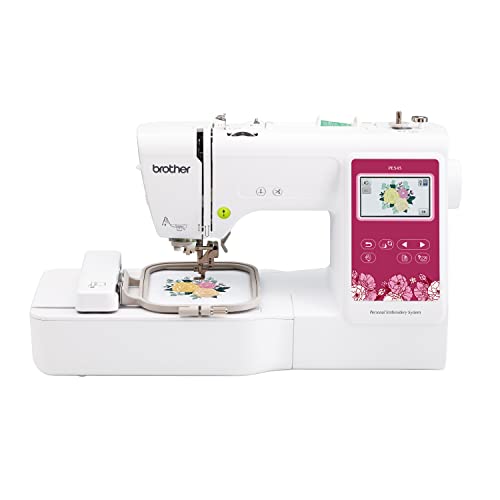
Brother PE545 Wireless Embroidery Machine

Brother Skitch Single-Needle Embroidery Machine
More On The Choices That Made The List
The CS7205 is the kind of machine that grows with you rather than getting outgrown. A flip chart sits on the body showing every built-in stitch at a glance, which means less menu-diving mid-project and fewer wrong-stitch surprises. Compared with the mechanical Brother FB1757X later in this list, it trades simplicity for range.
In a busy sewing room, that range pays off quickly. Utility stitches handle garment repairs, decorative options dress up hems, and quilters get dedicated stitching plus an extension table that supports bulky fabric weight.
Everyday Perks
- Roughly 150 built-in stitches cover utility, decorative, and quilting work without add-on purchases.
- Eight one-step auto-size buttonhole styles produce consistent closures even on wobbly first attempts.
- A lettering font with 55 alphanumeric stitches lets you monogram names directly on projects.
- The included wide table stabilizes large quilts and curtain panels that would drag off a standard bed.
- Eleven presser feet arrive in the box, so zippers, blind hems, and walking-foot jobs need no extra shopping.
Things To Consider
- Computerized models carry more electronics than dial machines, so keeping it away from humid basements is wise.
- The feature depth can feel overwhelming during your first week; the manual deserves an actual read.
Key Specs
Who It Suits Best
New sewists who want one machine to carry them from pillowcase repairs into quilting without an upgrade cycle.
Where A Sibling Pick Shines
Total beginners intimidated by menus will find the dial-driven Brother FB1757X far gentler to learn on.
Most entry-level embroidery machines lock you into a small hoop, and that ceiling shows up fast once you try jacket backs or large tote panels. The EOC06 sidesteps that with three frame sizes, topping out at an 11-by-7.9-inch field. That’s room enough for back-of-shirt lettering in a single hooping.
The 7-inch touchscreen handles design selection and editing on the machine itself, while USB and wireless transfer cover files from your computer. Two hundred built-in designs give you something to stitch the day it arrives, before you ever buy a digitized file.
What Helps Most
- Three hoop sizes (11×7.9, 7.9×7.9, and 5.5×5.5 inches) match the frame to the project instead of forcing splits.
- Wireless and USB file transfer means no card readers or constant cable juggling.
- The large touchscreen makes positioning and previewing designs straightforward for first-timers.
- 200 preloaded designs provide immediate practice material and gift-ready motifs.
Small Caveats
- This unit embroiders only; garment construction still needs a separate sewing machine such as the CS7205.
- Larger hoops demand generous clear workspace, worth measuring before it lands on a cramped desk.
- Owners commonly report spending time learning the touchscreen menu logic during the first several sessions.
Feature Snapshot
Made For
Crafters ready to move beyond 4×4 hoops and personalize jackets, bags, and home textiles seriously.
Consider Something Else When
First-time embroiderers on a tighter budget get a friendlier landing with the Poolin EOC05 reviewed below.
There’s a real argument for starting mechanical. Turn a dial, press the pedal, watch the seam form; nothing hides behind a screen. The FB1757X follows that philosophy with 17 built-in stitches, enough for garments, mending, and simple home décor without decision fatigue.
An LED-lit work area helps enormously when threading needles or unpicking seams under evening light, and the narrow detachable arm lets you sew cuffs and sleeves in a loop. Where the CS7205 offers breadth, this Brother offers calm, and plenty of learners genuinely prefer that.
What Works In Its Favor
- Dial-based stitch selection keeps the learning curve short and the control panel uncluttered.
- LED lighting brightens the needle zone for accurate seam following in dim rooms.
- The removable sleeve arm handles tubular sewing tasks like cuffs and children’s clothing.
- A reverse lever locks seam ends without hand-tying threads.
Points To Note
- Buttonholes take four manual steps here, slower and less forgiving than the CS7205’s one-step system.
- Seventeen stitches won’t satisfy decorative or quilting ambitions for long.
Right Fit For
Menders, occasional garment sewers, and anyone who wants to learn fundamentals on a low-cost, low-distraction machine.
Swap It Out When
Quilters and stitch collectors should step up to the Brother CS7205, whose wider table and larger library match those goals.
Poolin clearly designed the EOC05 around one question: what does a first-time embroiderer actually need on day one? The answer arrives in the box, since two hoops and a starter kit come bundled alongside the machine itself. You won’t stall waiting on accessories.
The 4-by-9.25-inch field suits shirts, hoodies, and bags without overwhelming a spare-room desk, and the 7-inch touchscreen walks you through placement. WiFi and USB both move designs onto the machine, mirroring its bigger sibling, the EOC06, at a more approachable scale.
Why It Works Well
- Two included hoops plus a starter kit remove the usual second-shopping trip.
- The tall, narrow 4 x 9.25-inch area fits sleeves, chest logos, and bag panels naturally.
- WiFi transfer skips cables entirely once your network is set up.
- Touchscreen guidance shortens the path from unboxing to a finished motif.
Worth Bearing In Mind
- Embroidery-only design means pairing it with a sewing machine for construction work.
- The elongated hoop shape suits narrow placements better than square patches, depending on your project mix.
Quick Facts
Who Will Love This
Home users brand new to embroidery who want guided setup and every essential accessory included.
Another Choice May Suit
Crafters planning oversized jacket-back designs will outgrow this field quickly and should look at the PooLin EOC06 instead.
Everything else on this list is a hobby machine wearing training wheels. The S-1001 is not. Ten needles mean ten thread colors loaded at once, so multi-color logos run start to finish without you standing there swapping spools. At up to 1,200 stitches per minute, output moves at shop speed.
The 9.5-by-14.2-inch field handles flat goods, caps, and finished shirts, and automation does the tedious parts: trimming threads, changing colors, lubricating itself, and flagging breaks before they ruin a run. Laser positioning marks the exact stitch origin, which saves fabric on paid orders.
The Upside
- Ten needles eliminate color-change downtime across complex, multicolor designs.
- Automatic trimming and color changes let long runs proceed unattended.
- Thread-break detection catches failures early, protecting expensive blanks.
- The self-lubrication system cuts routine maintenance chores considerably.
- Physical buttons added to the touchscreen speed up repeat operations.
Potential Sticking Points
- Commercial features carry a real learning curve; expect study time before production-quality results.
- Its footprint and noise level suit a garage or studio better than a shared living space.
- Multi-needle threading takes practice, and owners commonly report a fumbly first few setups.
Core Details
Whose Shelf It Belongs On
Sellers producing embroidered merchandise in volume, or committed hobbyists planning a side business.
Reach For A Different Pick When
Weekend crafters will find the Brother PE545 far easier to live with and dramatically simpler to store.
Brother’s PE-series has long been the default recommendation for first embroidery machines, and the PE545 adds wireless design transfer to that familiar formula. Send a design from your computer over your home network, and the machine queues it up; no memory cards, no walking files over on a stick.
The 4×4 hoop covers monograms, small logos, and children’s items, which is honestly where most beginners spend their first year. An LCD screen guides layout, and 135 built-in designs plus ten fonts mean personalization starts immediately.
What Stands Out
- Wireless transfer streamlines getting custom designs onto the machine.
- 135 built-in designs and 10 fonts cover monogramming and gifting without extra purchases.
- Ten frame patterns add borders and shapes around lettering.
- The compact footprint tucks onto a desk or closet shelf between sessions.
Less Ideal Details
- The 4×4 field limits you to smaller motifs; large designs require rehooping and splitting.
- Compared with the Poolin EOC05, you give up the bundled starter kit and taller hoop shape.
Best Suited To
Gift makers and monogram enthusiasts working mostly on towels, onesies, and small personalization projects.
Not Your Match When
Volume producers should skip ahead to the Smartstitch S-1001, whose ten needles and larger field exist for exactly that workload.
The Skitch takes a different bet than every other machine here: your phone is the interface. Designs are created and edited in Brother’s Artspira app, then sent to the machine over Bluetooth, skipping USB entirely. For crafters who already sketch and plan on a phone, that workflow feels natural.
Being single-needle keeps the hardware simple and the price approachable, though it also means color changes happen manually. In our view, that trade suits casual creators far better than production-minded ones.
Practical Pluses
- Bluetooth pairing with the Artspira app removes cable clutter from the design workflow.
- In-app creation tools let you build and edit designs before sending them to stitch.
- Single-needle simplicity keeps setup and maintenance light for occasional users.
A Few Limitations
- The app is required to drive the machine, so a weak phone habit becomes a weak embroidery habit.
- Manual color changes slow down multicolor projects noticeably next to the Smartstitch S-1001.
- Feedback on this model is more mixed than on Brother’s established PE line, worth weighing carefully.
The Right Fit
Phone-first hobbyists decorating small items casually, especially those short on desk space.
Look Elsewhere When
You want proven reliability and built-in design libraries; the Brother PE545 delivers both with a longer track record.
Factors That Matter Before You Commit
Match The Machine To Your Actual Projects
Sewing and embroidery are different skills requiring different hardware, and only combo-style machines do both. List five projects you realistically want to finish this year. Hemming trousers points toward the CS7205 or FB1757X; personalized towels point toward the PE545 or a Poolin model. Buying for an imagined future hobby is how machines end up gathering dust.
Hoop Size Sets Your Ceiling
The embroidery area determines what fits in a single hooping, and rehooping mid-design tests both skill and patience. A 4×4 field handles monograms happily but struggles with jacket backs. Measure the largest item you truly want to decorate, then choose a machine whose field covers it.
Workspace And Storage Reality
Multi-needle units like the S-1001 need a dedicated corner, stable footing, and tolerance for operational noise. Compact single-needle machines slide into a closet. Honest measurement of your available space prevents an expensive return shipment.
Key Considerations Across These Picks
Traps First Timers Fall Into
The most common error is buying a commercial machine for a hobby that may fade, or a basic mechanical unit for ambitions that include quilting and lettering. Another frequent misstep is ignoring included accessories; a bundle with hoops and feet saves real money later. Read the accessory list before comparing headline features.
When Paying More Pays Off
Higher-tier machines earn their cost through automation: auto thread trimming, color changes, and larger fields all convert directly into hours saved. Casual users rarely recoup that premium. Anyone selling finished pieces typically does, since unattended run time is billable capacity.
Frequently Asked Questions
Do I need separate machines for sewing and embroidery?
Yes, unless you buy a combination model. Every embroidery-only pick here pairs well with a dedicated sewing machine like the Brother CS7205.
Is a mechanical machine harder for beginners?
Mechanical models are actually simpler to learn because controls are physical dials. They offer fewer stitches, which some learners find clarifying rather than limiting.
How large should my embroidery hoop be?
Match the hoop to your most ambitious planned design. Chest logos fit 4×4 fields comfortably, while jacket backs generally need 7 inches or more of height.
Can I transfer my own designs to these machines?
All the embroidery picks accept custom files via USB, and several add WiFi or Bluetooth transfer. Design files typically come from digitizing software or marketplace purchases.
How much maintenance do these machines require?
Regular lint removal around the bobbin case and periodic oiling where specified keep any model running smoothly. Multi-needle commercial units benefit from their automated lubrication systems.
Closing Thoughts
Choosing among these seven comes down to honesty about your goals. Mend and make clothes: the Brother CS7205 or FB1757X will serve you well. Personalize gifts: the PE545 or either Poolin earns its spot on your desk. Chase a small business: the Smartstitch S-1001 is built for exactly that leap. Start with the projects you know you’ll finish, and the right machine on this list will meet you there.
