
Learning to sew shouldn’t feel like assembling furniture in the dark. The right starter machine handles hemming, mending, and first garment projects without fighting you at every turn. This roundup covers seven options that suit different budgets, spaces, and skill goals, from full-size mechanical workhorses to palm-sized portables you can stash in a dorm drawer.
The Picks In Brief

Brother XM3700 Sewing Machine with 37 Stitches

Dechow Portable Mini Sewing Machine Kit

Brother FB1757X Mechanical Sewing Machine

Ninonly Mini Portable Sewing Machine 12 Stitches

Janome MOD-15 Sewing Machine with 15 Stitches
Stoigeld SM-725 Beginner Sewing Machine Kit
Xamanabu Beginner Sewing Machine with 6 Feet
The Picks, Examined More Closely
Most entry-level machines top out around a dozen stitches, so the XM3700’s 37 built-ins give you real headroom to grow. Garment seams, decorative topstitching, heirloom work, and light quilting all sit within reach without upgrading hardware.
The five included presser feet cover the jobs beginners actually attempt: zippers, blind hems, buttonholes, buttons, and general zigzag work. A built-in storage compartment keeps those feet from wandering off into a junk drawer.
Advantages To Know
- 37 stitch options mean the machine won’t outgrow your skills in six months
- Zigzag, zipper, blind stitch, buttonhole, and button feet ship in the box, saving separate purchases
- Onboard accessory storage keeps small parts organized between sessions
- Suits quilting and heirloom techniques that simpler machines can’t handle
Things To Consider
- More stitches mean more dials to learn, which can slow down your very first week
- Owners commonly report that keeping the bobbin area lint-free matters more as stitch count rises
Key Specs
Who Will Love This
Ambitious beginners who already know they want to move past pillowcases into garments and quilting.
Where A Sibling Pick Shines
Total newcomers who want fewer decisions may prefer the Brother FB1757X’s leaner 17-stitch layout.
Starting a new hobby usually means three extra shopping trips for thread, fabric, and notions. Dechow bundles the essentials: a foldable storage bag, fabric pieces, and twelve thread colors arrive together, so your first project can start the day the box opens.
Power flexibility is the other draw. You can run it from an AC adapter at a desk or switch to four AA batteries for quick repairs away from an outlet. The manufacturer recommends reading the manual and watching the guidance video before use, which is honest advice worth following.
The Good Stuff
- All-in-one kit removes the guesswork of buying supplies separately
- Dual power supply works plugged in or on batteries
- Foldable storage bag makes cleanup and travel simple
Small Caveats
- Batteries are not included, so plan ahead for cordless use
- Mini machines like this one generally struggle with heavy denim or layered canvas
- The learning curve rewards patience; skipping the tutorial video tends to cause threading frustration
Made For
First-time sewists who want everything in one purchase and mostly plan to mend and craft lightweight fabrics.
Swap It Out When
If garment construction is the goal, the Janome MOD-15 offers sturdier feed and adjustable stitch length.
Where the XM3700 leans generous, the FB1757X leans simple. Seventeen built-in stitches cover the fundamentals, and a four-step buttonhole walks you through the process one stage at a time rather than automating it blindly.
Two details matter more than they sound. The free arm lets you sew cuffs, sleeves, and pant hems by sliding fabric around a narrow post instead of wrestling a flat bed. And LED lighting over the needle area reduces eye strain during evening sessions, something anyone who has squinted at dark navy thread will appreciate.
A Favorable Mix
- 17 stitches hit the essentials without overwhelming a newcomer
- Free arm simplifies sleeve, cuff, and hem work
- LED work light improves visibility on dark fabrics
- Reverse button reinforces seams at the start and end of each line
Points To Note
- The four-step buttonhole takes longer than one-step automatic versions
- Decorative stitchers may find the selection limiting within a year or two
Quick Facts
Right Fit For
Learners who want a dependable mechanical machine for clothing repairs and first home décor projects.
Reach For A Different Pick When
Hobbyists planning elaborate decorative work should step up to the Brother XM3700’s wider stitch library.
Desk space is the constraint nobody mentions until the machine arrives. This Ninonly unit is sized to sit alongside a laptop without crowding anything, and a built-in handle plus lightweight frame make it easy to carry between rooms, dorms, or an RV trip.
Twelve stitches give it more range than most micro machines, and dual power modes (AC adapter or batteries) keep it usable anywhere. In practice, this category shines for quick fixes: a torn seam, a shortened curtain, a scout badge patch. You may find the smaller body less stable under fast, long runs of stitching than a full-size model like the Janome MOD-15.
Notable Upsides
- Compact footprint fits crowded desks and shared living spaces
- Carry handle supports genuine portability between locations
- Two power modes allow outlet-free sewing on the go
- 12-stitch selection exceeds typical mini-machine basics
Worth Bearing In Mind
- Lightweight builds can shift slightly during aggressive stitching
- Large or thick projects are better suited to a full-size machine
Details At A Glance
Who Should Grab It
Students, RV travelers, and apartment dwellers who need occasional mending power in minimal space.
Another Choice May Suit
Sewists tackling weekly garment projects will get more stability from the Stoigeld SM-725’s larger frame.
Janome has decades of reputation behind its name, and the MOD-15 carries that pedigree into the entry tier. Fifteen built-in stitches include a four-step buttonhole, enough to handle a full wardrobe of beginner projects without gimmicks.
The standout spec is the five-piece feed dog system, the toothed mechanism beneath the needle that pulls fabric through evenly. More contact points generally mean smoother feeding on tricky materials, which translates directly into straighter seams for less-experienced hands. Adjustable stitch length adds control that fixed-length budget machines simply don’t offer.
Noteworthy Benefits
- Five-piece feed dogs promote even fabric movement and cleaner seams
- Adjustable stitch length adapts to delicate or sturdy materials
- Established brand with broad parts and service familiarity
- Four-step buttonhole builds transferable technique
Things To Weigh Up
- No automatic needle threader mentioned, so threading stays manual
- Owners commonly report regular bobbin-area cleaning keeps performance consistent
Core Details
Who It Suits Best
Committed beginners who’d rather buy once properly than replace a toy-grade machine next year.
Consider Something Else When
Shoppers wanting bundled accessories at a lower commitment level may find the Dechow kit more appealing.
The SM-725 arrives loaded: twenty fabric pieces and thirty-two spools of thread come standard, which means practice material costs nothing extra. At roughly 10.3 by 9.5 by 4.4 inches and 4.2 pounds, it’s easy to carry yet feels more planted than the Ninonly mini during stitching.
Twelve built-in stitches and two speed settings (high and low) round out the package. The low-speed mode deserves special mention for teaching, since it gives nervous hands time to guide fabric before committing to faster work.
Everyday Perks
- 20 fabric pieces and 32 thread spools eliminate starter-supply shopping
- Low-speed setting builds confidence for total novices
- 4.2-pound weight balances portability with stability
- Sized well for teaching kids or gifting
Honest Caveats
- Manufacturer specifies thin cotton, linen, and light wovens only; denim and canvas are off the menu
- Compact household build isn’t intended for commercial or heavy-duty workloads
The Right Fit
Budget-minded starters, parents teaching children, and gift-givers who want a complete ready-to-sew package.
Look Elsewhere When
Anyone planning jeans or upholstery repairs should choose the Janome MOD-15 for its stronger feed system.
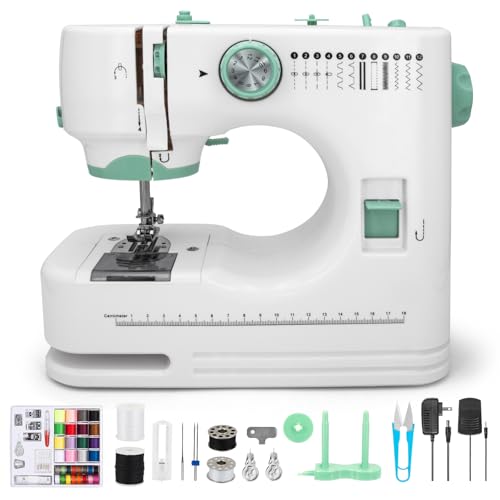
Some people hate foot pedals. Others find push-button sewing too jerky. Xamanabu solves the argument by offering both: a pedal for gradual, analog speed control, and a push-button mode with two fixed speeds for hands-free starts.
Twelve stitches and six presser feet give this machine unusual versatility for its class, letting you tackle zippers, hems, and buttonwork without buying attachments separately. Compared with the Stoigeld SM-725, you trade the bundled fabric-and-thread kit for broader control options, a trade many adults will prefer.
The Upside
- Foot pedal and push-button operation suit different comfort levels
- Gradual pedal adjustment helps with delicate curves and corners
- Six included feet expand project range immediately
- High/low button speeds simplify early practice runs
Points To Keep In Mind
- Two control systems add a short learning curve of their own
- As with most compact machines, very thick layered fabrics remain a stretch
Feature Snapshot
Whose Shelf It Belongs On
Adult learners who value speed control finesse and want attachment variety without extra purchases.
Not Your Match When
Kids and classroom settings benefit more from the Stoigeld SM-725’s simpler two-speed setup and bundled supplies.
What Matters Most Before Choosing Beginner Sewing Machines
Match the Machine to Your Projects
Hemming pants and patching bags demand far less than garment construction. Count the stitches you’ll realistically use: a dozen covers mending, while quilting and decorative work justify 30-plus. Buying capacity you won’t touch just complicates the dial panel.
Weight and Footprint Are Real Trade-Offs
A 4-pound mini slides into a closet but vibrates more at speed. Full-size models stay planted yet claim permanent table space. Measure where the machine will actually live before ordering.
Feed Quality Beats Feature Lists
The feed dogs, the small teeth that pull fabric under the needle, determine whether seams run straight. Janome’s five-piece system shows why this spec deserves attention over flashy extras.
Power Flexibility Matters in Small Homes
Battery-plus-adapter designs let you sew anywhere, though batteries drain quickly on long sessions. Frequent users should prioritize consistent AC power.
Key Considerations Across These Picks
Traps First Timers Fall Into
The classic error is buying a heavy-duty industrial machine “to grow into,” then abandoning it because threading feels intimidating. Start approachable. The second trap: ignoring fabric limits. Compact machines specify light wovens for a reason, and forcing denim through them bends needles and breeds frustration.
Where The Extra Money Goes
Higher-tier models spend their budget on metal internals, smoother motors, and features like adjustable stitch length and automatic buttonholes. Those upgrades pay off once you sew weekly. For occasional mending, a basic kit machine does the job honestly.
Frequently Asked Questions
How many stitches does a beginner actually need?
Twelve to fifteen covers nearly every starter project, including hems, seams, and zigzag finishing. Extra decorative stitches matter only for quilting or embellishment ambitions.
Can these machines handle denim?
Lightweight minis generally cannot, and manufacturers say so explicitly. Full-size mechanical models like the Janome MOD-15 manage occasional denim with the right needle.
Do I need a foot pedal?
It depends on preference rather than skill. Pedals offer gradual control, while push-button modes with fixed speeds suit people with limited mobility or cramped desks.
How much maintenance do beginner machines require?
Brush lint from the bobbin area after every few projects and oil only where the manual directs. Skipping this is the most common cause of skipped stitches.
Is a bundled kit worth it?
For absolute beginners, yes, since matching thread and practice fabric remove decision fatigue. Experienced sewists usually already own better supplies.
Closing Thoughts
Every machine here solves the same problem differently: getting comfortable fabric under a needle without intimidation. Ambitious learners should lean toward the Brother XM3700 or Janome MOD-15, while casual menders and space-limited households get honest value from the compact kits. Choose based on the projects you’ll actually finish this year, not the ones you imagine someday.
