
A child’s first violin shapes how lessons feel for months. The wrong size frustrates small hands, a poorly set-up bridge kills motivation, and a missing accessory means another errand before practice even starts. Every outfit below arrives as a complete kit, so the first session can happen the day the box opens.
An Overview Of The Picks

Cecilio 1/2 Size Solid Spruce Maple Violin Kit

Cecilio 4/4 Full Size Violin Set with Case
Pyle 3/4 Size Acoustic Violin Set with App Tuner

PHOENIX 4/4 Full Size Violin Kit with Stickers

PHOENIX 4/4 Solid Wood Violin Set, Two Bows

Crafteem Spruce and Maple Solid Wood Violin Outfit

Crafteem 1/4 Green Colored Violin Outfit
The Details Behind The Selections
The half-size format is what makes this Cecilio worth a look. A 1/2 violin suits children roughly seven to nine years old, and the hand-carved solid spruce top paired with maple back and sides gives it a warmer voice than laminate student fiddles usually manage.
In a weekly lesson setting, that tonewood construction matters more than any accessory. Kids who stick with classical training or branch into fiddle tunes both get a responsive instrument that grows with their ear.
A Few Strong Suits
- Solid carved spruce top projects a fuller tone than plywood bodies at this level.
- Maple fingerboard and boxwood pegs turn smoothly, which helps small hands stay in tune during practice.
- Nickel-plated fine tuners make pitch adjustments quick enough for a child to do alone.
- Optional damage coverage handles drops and broken parts with no repair cost beyond the plan itself.
Things To Consider
- Boxwood pegs can slip slightly in dry winter air; a peg compound fixes it in minutes.
- You may find the included bow needs extra rosin before the first real session.
Key Specs
Who It Suits Best
Elementary-age students in structured lessons who need a properly scaled instrument with genuine tonewood sound.
A Better Fit Elsewhere
Older teens and adults should step up to the Cecilio 4/4 Full Size Violin Set instead, since half-size instruments cramp a grown player’s reach.
Where the 1/2 model above targets younger kids, this one covers the other end of the age range. It’s a full 4/4 outfit aimed at teens and adults starting out, and the bundle includes the case, bow, rosin, and shoulder rest, so nothing else needs buying before lesson one.
The honest read is that this sits firmly in entry-level territory, and that’s exactly its appeal. Owners commonly report the pre-installed strings hold up well through the first months of daily practice, which is when most cheap bows and strings tend to give up.
Practical Pluses
- Everything ships together: case, bow, rosin, and shoulder rest, no separate shopping trip needed.
- Pre-strung setup means the instrument plays out of the box rather than after a shop visit.
- Clear, projecting tone that holds its own in group beginner classes.
- Damage plans covering drops and breakdowns add peace of mind for school backpacks and car rides.
Small Caveats
- The stock strings are serviceable but upgrading them within a year noticeably improves response.
- Shoulder rests are personal-fit items; some players swap the included one quickly.
Made For
Teen and adult beginners who want a single complete purchase that survives the first year of lessons.
Where A Sibling Pick Shines
Players chasing richer tonewood character should compare the PHOENIX 4/4 Solid Wood Violin Set, whose alpine spruce construction outclasses this budget build.
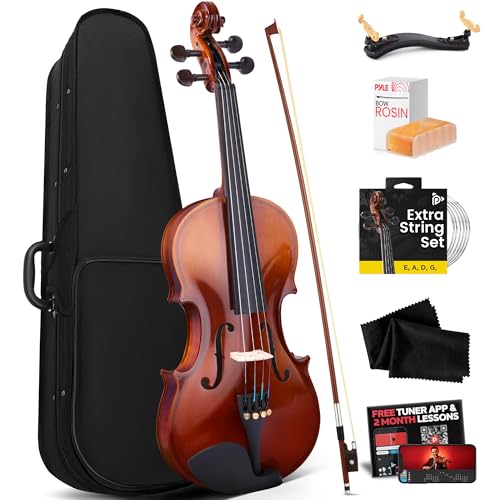
This Pyle leans hard into self-guided learning. Alongside the usual case, bow, spare strings, and rosin, the kit bundles a mobile app tuner and two months of lessons, which turns a living room into a makeshift studio for families without a local teacher.
The 3/4 size bridges the gap between the Cecilio 1/2 above and full-size instruments, fitting kids around ten to twelve or smaller-framed adults. Its glossy finish over a flamed veneer looks sharper than most student gear, though appearance never changes how a violin plays.
Good Reasons To Consider
- App-based tuner plus two months of lessons remove the biggest barrier for unschooled parents.
- Carbon fiber tailpiece holds tuning stability better than basic hardwood fittings.
- Lightweight foamed triangle case is easy for a ten-year-old to carry to school.
- Spare strings included, so a snapped E string doesn’t end a practice week.
Points To Note
- Plywood body with veneer won’t resonate like the solid-wood PHOENIX kits later in this list.
- Dyed hardwood fingerboard wears faster than ebony under heavy daily use.
- App lessons require a phone or tablet nearby, which some households find distracting.
Quick Facts
Right Fit For
Families without a local teacher who want guided structure built directly into the purchase.
Swap It Out When
A child already enrolled in private lessons gets more long-term value from the Crafteem Spruce and Maple Outfit’s solid-wood body.
Setup friction kills more beginner momentum than anything else, and this PHOENIX kit attacks that directly. The bridge comes pre-installed, strings arrive adjusted, and the bow is pre-rosined, so the first note happens minutes after unboxing.
Ebony fingerboard, pegs, and chin rest give it harder-wearing fittings than the dyed hardwood on the Pyle above. Fingerboard stickers map note positions visually, a small touch that speeds up early scale work considerably for adult learners juggling practice with everything else.
Everyday Perks
- Truly play-ready out of the box: bridge set, strings tuned, bow rosined.
- Ebony fittings resist wear from years of daily fingering.
- Fingerboard stickers accelerate note recognition during the first months.
- Generous spares: extra strings, second bridge, two rosin cakes, mute, tuner, shoulder rest.
Honest Caveats
- The sticker residue can leave marks on the fingerboard once removed; gentle cleaning handles it.
- You may find the included rosewood bow lighter than what advancing players eventually prefer.
Details At A Glance
Whose Shelf It Belongs On
Adult students and older teens committed to a regular practice routine who value convenience and durable fittings.
Consider Something Else When
Growing players ready for finer materials should move to the PHOENIX Solid Wood Set with its alpine tonewoods and dual bows.
This is the step-up option in the PHOENIX line, and the difference starts with the wood. Alpine-sourced spruce and maple, selected for straight even grain with no knots or repairs, follows the material tradition behind classic Italian instruments. Sensitive, responsive pronunciation is the practical payoff.
Two bows ship in the box, an ironwood octagonal stick and a rosewood companion, letting a player discover which weight feels right. Compared with the standard PHOENIX kit reviewed earlier, this one trades sticker-style learning aids for genuinely higher-grade materials.
What Helps Most
- Select alpine spruce and maple deliver noticeably more dynamic range than entry-level builds.
- Two different bows let you match stick weight to your developing technique.
- Complete spares package: extra strings, bridge, twin rosin, tuner, mute, and case.
- Hand-finished workmanship supports years of advancement without an immediate upgrade.
Worth Bearing In Mind
- Fine-grain tonewood needs consistent humidity; a case humidifier protects it through dry winters.
- No fingerboard stickers here, so absolute novices lose the visual note guides.
- The premium positioning makes sense mainly for committed students, not casual dabblers.
Best Suited To
Advancing students past the squeaky stage who want an instrument that won’t limit their progress for several years.
Not Your Match When
Total first-timers on a tight budget get more practical support from the Crafteem Spruce and Maple Outfit with its finger tape and learning accessories.
Crafteem built this outfit around a simple idea: give a beginning kid every tool a teacher would otherwise assign separately. Solid spruce and maple construction anchors the sound, while the accessory pack adds finger tape, a cleaning cloth, and shoulder support alongside the expected bow and rosin.
The maple fingerboard is a nice middle ground, smoother than dyed hardwood yet less costly than ebony. In a busy household where practice happens between dinner and homework, having the tape pre-cut and the cloth included removes two small frictions that quietly matter.
What Pays Off
- Solid tonewood body produces a warm, even voice suited to both kids and adults.
- Finger tape included, so pitch placement is visible from day one.
- Cleaning cloth encourages the wipe-down habit that keeps varnish healthy.
- High-quality bow feels stable in a child’s grip during long scales.
Room For Improvement
- Owners commonly report the case padding runs thin compared with pricier outfits.
- Only one rosin cake ships, unlike the double supplies in the PHOENIX kits.
Core Details
Who Will Love This
Kids enrolled in formal lessons whose teachers expect finger markers, good hygiene habits, and a dependable tonewood instrument.
Reach For A Different Pick When
Youngest players aged four to six will handle the Crafteem 1/4 Green Colored Outfit more comfortably thanks to its smaller scale.
Getting a four-year-old excited about practice is half the battle, and a green violin does that work for free. Beyond the color, this 1/4-scale outfit mirrors the thoughtful accessory approach of the full-size Crafteem above: five colors of fingering tape, a lightweight hard case, bow, rosin, and a shoulder rest all in one box.
Spare strings, an extra bridge, and doubled rosin acknowledge reality, since small children break things. The VLC100C delivers rich tones for its size, and the colored tape system turns abstract pitch into something a kindergartner can actually see.
Reasons It Performs
- Five-color fingering tape makes note positions visual and fun for very young learners.
- Doubled consumables mean a snapped string or worn rosin never stalls practice week.
- Lightweight hard case sized for small shoulders and short walks to lessons.
- Vivid green finish keeps reluctant practicers engaged.
- Shoulder rest included, sparing parents a separate fitting purchase.
Less Ideal Details
- Colored finishes show chips more readily than traditional varnish, so careful storage helps.
- The 1/4 scale fits only the smallest players; measure arm length before ordering.
Feature Snapshot
Perfect Match For
Preschool and kindergarten beginners whose enthusiasm depends on an instrument that looks as playful as they feel.
Another Choice May Suit
Children around eight needing a larger frame will fit the Cecilio 1/2 Size Kit far better than this compact scale.
What Matters Most Before Choosing Beginner Violins For Child
Size Comes Before Everything Else
Violin sizing follows fractions, from tiny 1/16 instruments up to full 4/4. Arm length determines the correct size, and a teacher can measure it in seconds. An oversized violin forces bad posture and wrist strain, while an undersized one gets outgrown within a year. Measure first, then shop.
Tonewood Versus Laminate
Solid carved spruce tops vibrate more freely than laminated plywood, producing warmer, more resonant tone. Laminate resists dents and humidity swings better, which suits rough handling by very young kids. Committed students benefit from solid wood almost immediately.
Setup Quality Decides Playability
A badly seated bridge or high string action makes any violin miserable to play. Kits advertising pre-installed bridges and adjusted strings save a trip to a luthier, often costing more than the difference between kits.
Accessories Add Real Value
Rosin, a shoulder rest, spare strings, and fingering tape each cost money separately. Bundles that include them reduce startup friction, especially for families unsure whether interest will last.
Key Considerations Across These Picks
Traps First Timers Fall Into
The most common mistake is guessing size from age charts alone, since children vary widely. Another is skipping the shoulder rest, which causes neck tension within weeks. Parents also frequently buy the cheapest option available, then pay again when warped pegs or a collapsed bridge force a replacement mid-year.
Where The Extra Money Goes
Higher-tier kits spend on tonewood selection, ebony fittings, and hand finishing. Those upgrades translate into better projection, steadier tuning, and an instrument that still serves well three years in. For a child showing sustained interest, spending up once beats replacing twice.
Frequently Asked Questions
How do I know which violin size my child needs?
Measure the child’s arm from neck to palm and compare it against a standard sizing chart. A music teacher can confirm the fit in person within a minute.
Are colored violins lower quality than traditional ones?
Finish color has no effect on sound production. Quality depends on the wood, fittings, and setup underneath the paint.
Do these kits really play straight out of the box?
Models with pre-installed bridges and adjusted strings generally do. Budget kits sometimes need minor tuning and rosin application first, which takes minutes.
How often do beginner violins need restringing?
Frequent players typically replace strings every six to twelve months. Worn strings sound dull and go out of tune faster.
Is a solid wood body worth it for a total beginner?
For a child under six or a casual dabbler, laminate holds up fine. Students past the first year hear and appreciate the tonal difference quickly.
Closing Remarks
Sizing correctly matters more than brand loyalty, and every kit here removes at least one startup headache. Match the fraction to your child’s arm, weigh solid wood against durability, and let the accessory bundles carry the rest. The right first violin is simply the one your child picks up willingly tomorrow.
