
Hand weaving looks intimidating from the outside, but a good starter loom flattens the learning curve fast. The right frame keeps warp threads taut, fits small hands, and turns an afternoon of screen time into something a child can actually finish. This roundup covers seven beginner-friendly options, from bare wooden frames to fully stocked potholder kits, so you can match the tool to the maker instead of guessing.
A Closer Look At The Lineup
MIKIMIQI Wooden Multi-Craft Weaving Loom Large Frame

IQKidz Weaving Loom Kit with 224 Craft Loops

LYKTRIX Small Wooden Weaving Loom Kit 9 x 11 Inch
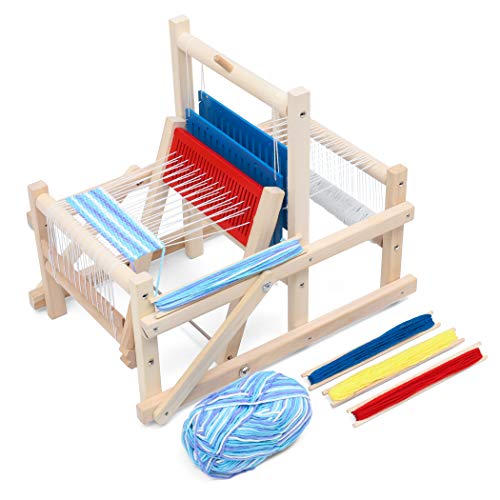
LAVIEVERT Wooden Multi-Craft Weaving Loom DIY

Inventive Weaving on a Little Loom by Syne Mitchell

DDAI Potholder Weaving Loom Kit Portable Box

National Geographic Wooden Loom Weaving Arts and Crafts Kit
Meet The Standout Selections
This is the plainest loom here, and that’s its appeal. The wooden frame measures roughly 9.85 by 15.75 inches, which gives a child enough working area for a scarf or a small wall hanging without overwhelming a kitchen table.
Because it follows traditional over-under weaving rather than peg-and-loop construction, it teaches technique that transfers later to bigger looms. Adults helping kids will appreciate how little setup is involved; there’s nothing to assemble beyond stringing the warp.
Practical Pluses
- The large frame surface accommodates longer projects like scarves, so finished pieces feel substantial rather than token-sized.
- Traditional weave structure builds real hand-eye coordination that carries over to advanced looms down the road.
- No batteries, no plastic parts, just wood, which means fewer things to break in a busy craft drawer.
- Lightweight enough for a child to move it to a desk or lap without help.
Things To Consider
- You supply your own yarn, so budget for a ball or two of worsted weight before the first session.
- Wooden frames this simple can splinter at the corners after rough handling, according to commonly reported owner feedback, so a quick sanding now and then helps.
Key Specs
Who It Suits Best
Children and patient adults who want a genuine introduction to traditional weaving rather than a one-afternoon toy.
Where A Sibling Pick Shines
The LYKTRIX Small Wooden Weaving Loom Kit bundles yarn and instructions, which suits younger children who want to start weaving the moment the box opens.
Where the MIKIMIQI frame asks you to bring your own materials, the IQKidz kit arrives ready to go. You get a solid loom base with reinforcement pieces, heart-shaped pegs that slot in for assembly, and 224 nylon loops spread across eight rainbow colors.
The potholder format is forgiving for small hands; loops stretch over pegs instead of requiring precise thread tension. In our view, that makes this the easiest first win for a five-to-eight-year-old who loses interest quickly when results are slow.
Real-World Strengths
- 224 loops mean several complete potholders per kit, so siblings can each finish their own piece without a supply run.
- Nylon fiber loops have real softness and stretch, giving finished potholders a textured, comfortable feel.
- The reinforced frame resists warping, a common failure point on cheaper peg looms.
- Replaceable heart-shaped pegs keep the kit usable even after a few get lost under the couch.
Small Caveats
- Peg-and-loop weaving teaches a narrower skill set than thread-based frames, so motivated older kids may outgrow it within a year.
- Loops left stretched on pegs for weeks tend to lose elasticity, based on widely reported owner behavior, so store them relaxed.
Feature Snapshot
Made For
Families with kids roughly ages five through twelve who want colorful, quick-finish potholder projects with zero extra shopping.
Swap It Out When
Choose the National Geographic Wooden Loom Weaving Arts and Crafts Kit instead for a child ready to graduate from loops to actual yarn techniques.
The LYKTRIX splits the difference between the bare MIKIMIQI frame and the loop-heavy IQKidz kit. It’s a compact pine loom at about 9 by 11 inches, but unlike the MIKIMIQI, it ships with instructions and enough yarn to start immediately.
The polished pine surface matters more than it sounds. Six-year-olds grip these frames constantly, and a smooth, burr-free edge is the difference between a calm crafting hour and a splinter complaint.
Strong Points
- Detailed instructions let a child begin weaving the same day the box arrives, no separate yarn purchase needed.
- Natural polished pine with no burrs protects small fingers during long sessions.
- The 9-by-11-inch footprint stores easily on a bookshelf between projects.
Points To Note
- The smaller working area limits project length, so ambitious scarf plans belong on the larger MIKIMIQI frame.
- Yarn quantity is sized for starter projects; a second skein may be needed once enthusiasm takes hold.
Right Fit For
Children ages six to twelve trying weaving for the first time at home, where a contained, all-in-one kit beats sourcing supplies separately.
Another Choice May Suit
The IQKidz Weaving Loom Kit with 224 Craft Loops suits younger or less dexterous kids, since stretching loops over pegs demands less precision than threading yarn.
This is the most grown-up wooden option on the list. Unfolded, the frame spans about 15 by 12.6 inches, yet it folds down to roughly 20.5 by 11 by 3.1 inches, sliding into a closet or under a bed when the dining table needs reclaiming.
Setup involves two screws and four anti-slip stickers, plus four string shuttles and a ball of string in the box. That shuttle count is genuinely useful; tapestry work goes faster when you can run multiple colors at once instead of rethreading a single shuttle every row.
Why It Works Well
- The folding design solves the storage problem that kills most hobby momentum in small apartments.
- Four shuttles support multicolor tapestry and wall hanging work without constant rethreading.
- Anti-slip stickers anchor the frame to smooth tabletops during vigorous weaving.
- A generous unfolded work area handles bigger compositions than any other frame here except the MIKIMIQI.
Worth Noting
- Assembly, though simple, adds a step the one-piece frames skip, and loose screws are worth checking periodically.
- The included string ball is a starting ration only; serious tapestry work will consume your own yarn stash quickly.
Core Details
Built With In Mind
Older kids, teens, and adults in apartments who want tapestry capability without dedicating permanent space to a loom.
Reach For A Different Pick When
Total beginners under ten will find the LYKTRIX Small Wooden Weaving Loom Kit less fiddly, since it skips assembly entirely.
Not every entry here is hardware. Syne Mitchell’s book covers the rigid-heddle loom, a simple frame that uses a slotted plastic or wood bar (the heddle) to lift alternate warp threads automatically, making plain weaving dramatically faster than finger-managed over-under work.
Pair it with any frame above and you’ve effectively bought a course. It’s aimed at beginners but pushes well past them, which is exactly what separates a passing interest from a lasting hobby.
What Helps Most
- Covers rigid-heddle technique from first thread to projects beyond beginner level, so the reference stays useful for years.
- Available digitally, readable on any device, handy mid-project at the loom.
- Explains the heddle concept clearly, demystifying the one mechanism that confuses most new weavers.
Honest Caveats
- It’s a book, not equipment; you’ll still need a loom, and none of the kits here include a true rigid heddle.
- The depth may overwhelm a child under ten, whose attention suits the kit formats better.
Whose Shelf It Belongs On
Adult beginners and teens committed to learning weaving properly, especially those planning to buy a dedicated rigid-heddle loom next.
Not Your Match When
Shoppers wanting a same-day gift for a young child should pick the DDAI Potholder Weaving Loom Kit instead, which needs no reading at all.
The DDAI kit mirrors the IQKidz formula, sturdy frame, hook, step-by-step instructions, and 224 stretchy loops in eight bright colors, but wraps everything in a pink carrying case. That case is the whole story for certain households.
Grandparents’ houses, hotel rooms, long car rides: a self-contained craft kit that packs up mid-project earns its keep. Compared to the IQKidz, you’re trading essentially identical contents for portability, so choose on where the weaving will happen.
What Earns Its Place
- The portable case holds the frame, loops, and hook together, so nothing scatters across a back seat.
- An upgraded, easy-to-assemble frame stays stable while kids pull loops tight.
- Step-by-step instructions mean a child can work independently after one supervised session.
- Eight vivid loop colors make each finished potholder look deliberate rather than random.
Less Ideal Details
- Like the IQKidz, it’s loop-based, so the skills plateau earlier than with yarn-and-frame weaving.
- The pink case styling narrows its gift appeal depending on the child.
Quick Facts
Best Suited To
Kids ages six to thirteen who craft in multiple locations, or families needing a tidy, grab-and-go activity for trips.
Consider Something Else When
Stationary home crafters get better value from the IQKidz Weaving Loom Kit, which offers the same loop count without paying for the case.
The Blue Marble-made National Geographic kit is the most structured option here. Everything needed for three distinct projects ships in one box: a sturdy wooden loom, yarn, and the accompanying tools, guided by instructions written specifically for children.
That project count changes the experience. Instead of one open-ended frame, a child works through three graduated pieces, each teaching a new technique. For parents who dread the “now what?” moment after the first weave, the built-in curriculum is worth a lot.
A Strong Showing
- Three planned projects give weeks of progression rather than a single afternoon of activity.
- Kid-friendly instructions teach core techniques step by step, building confidence alongside skill.
- All-in-one packaging means zero supplemental purchases before the first thread.
- The recognizable brand name makes it an easy, trusted-feeling gift choice.
Factors To Consider
- Once the three projects are done, you’re buying more yarn to keep going, unlike the loop kits’ larger consumable supply.
- Yarn-based weaving demands slightly steadier hands than peg loops, so the youngest crafters may need adult help early on.
Product At A Glance
Perfect Match For
Gift-givers and parents of kids roughly seven and up who thrive with clear instructions and a defined path from first stitch to finished set.
Look Elsewhere When
A child who prefers free-form creativity over guided steps will get more mileage from the LAVIEVERT Wooden Multi-Craft Weaving Loom and its open tapestry format.
What Matters Most Before Choosing Beginner Weaving Looms
Frame Type Shapes Everything
Loop-based potholder looms use stretchy bands over pegs, delivering fast wins for ages five to nine. Yarn-and-thread frames take longer per project but teach genuine weaving technique. Match the mechanism to the child’s patience level, not the photo on the box.
Size Versus Storage
A 15-inch frame like the LAVIEVERT handles ambitious tapestries but demands table space and a storage plan. Smaller 9-by-11-inch frames fit shelves and laps. Measure where the weaving will actually happen before committing.
Consumables Decide Longevity
The cheapest-looking kit often costs more over time once yarn runs out. Loop counts (224 in both IQKidz and DDAI kits) and bundled yarn determine how many sessions survive before a restock trip.
Instructions Are the Real Product
For children, the manual matters as much as the frame. Look for step-by-step guides written for kids, like the National Geographic kit’s three-project sequence, rather than a single diagram sheet.
Key Considerations Across These Picks
Traps First Timers Fall Into
The classic error is buying a large traditional frame for a five-year-old. Fine motor skills aren’t there yet, frustration follows, and the loom retires to a closet. Start with loops, upgrade later. Another slip: ignoring storage. An unfolded frame living on the kitchen counter gets resented within a week.
Where The Extra Money Goes
Higher-priced kits fund consumables and curation: more loops, quality yarn, tested instructions, branded polish. Paying up makes sense for gifts and multi-child households. For a solo trial run, a basic frame plus one yarn ball answers the interest question honestly.
Frequently Asked Questions
What age is right for a first weaving loom?
Most children handle peg-and-loop potholder looms from around age five. Yarn-based frames suit ages seven and up with occasional adult help.
Do these kits include everything needed to start?
The IQKidz, DDAI, LYKTRIX, and National Geographic kits ship complete with materials. The MIKIMIQI and LAVIEVERT frames require your own yarn.
How long does a beginner project take?
A single potholder typically fills one relaxed afternoon. Larger tapestry pieces on a big frame can span several sessions.
Can adults learn on these looms?
Absolutely, though the Syne Mitchell rigid-heddle book paired with a proper frame offers more depth for grown-up learners.
How do I clean and maintain a wooden loom?
Wipe dust off with a dry cloth and check screws periodically on folding models. Store loops unstretched to preserve elasticity.
Closing Remarks
Every loom here lowers the barrier to a craft that rewards patience beautifully. Match the format to the maker’s age and attention span, keep consumables in mind, and the first finished piece usually sells the hobby on its own. Happy weaving.
