
Pyrography looks intimidating from the outside, but the right starter kit flattens the learning curve fast. The problem most newcomers hit is buying a pen that overheats thin basswood or lacks the tips to try anything beyond straight lines. This roundup covers seven options that solve that, from a simple lettering kit to dual-pen stations that grow with your skills. One of them isn’t even a burner at all, and for some crafters it’s the smarter first purchase.
The Leading Options At A Glance

Afantti Wood Burning Pen Kit with Letters & Stencils

Tekchic 60W Wood Burning Kit with 20 Wire Tips

YIHUA 939D-II Pyrography Pen Station (Green)
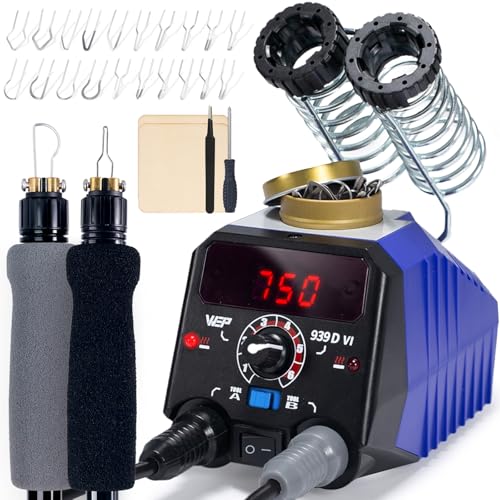
WEP 939D-VI Dual Pen Wood Burning Kit

ACRSIKR Adjustable Temperature Wood Burning Kit

K KERNOWO 32Pcs Wood Carving Kit with Storage Bag

FIRElood LH20 Wood Burning Kit with 30 Wire Tips
The Strengths Of Each Pick
The Afantti kit removes the blank-page problem that stalls most first attempts. With 26 letter stamps and 8 stencils in the box, you can trace a finished design on day one instead of freehanding something wobbly.
The pen offers two power settings: 30W suits wood burning, while the lower 15W setting is tuned for leather. That split matters more than it sounds, because leather scorches quickly at wood-level heat. The rubberized handle insulates against warmth during longer sessions, which you’ll appreciate around the twenty-minute mark of your first sign project.
What It Does Well
- Dual power modes let you switch between wood and leather without guessing at temperature
- Letter stamps make personalized signs and name tags achievable immediately
- Heat-shielded ergonomic grip stays comfortable through extended crafting sessions
- Stencils give structure to early practice pieces
Things To Consider
- Two fixed power levels offer less fine control than dial-adjustable stations like the YIHUA below
- Tip changes require cooling time, so plan pauses between designs
Key Specs
Who Will Love This
Total newcomers who want guided results on wood or leather from their very first evening.
Where A Sibling Pick Shines
Crafters ready for precise temperature dials will get more mileage from the YIHUA 939D-II station.
Wire-nib burners behave differently from solid-point pens: the thin nichrome-style wire heats almost instantly and cools just as fast, so line quality feels more responsive. The Tekchic runs at 60 watts, enough headroom for smooth strokes on denser hardwood where weaker pens drag.
An adjustment knob lets you dial heat precisely rather than cycling presets, and the digital voltage readout takes the guesswork out of repeating a setting next session. For anyone moving up from a basic craft-store pen, that repeatability alone changes how consistent your shading becomes.
Everyday Advantages
- Fast heat response keeps lines crisp when drawing continuously
- Voltage knob allows fine-grained temperature matching per wood species
- Twenty wire tips cover lettering, shading, texture, and outline work
- Strong wattage handles hardwoods without bogging down
Small Caveats
- Wire nibs are delicate; owners commonly report bending them if stored loose, so use the case
- No second pen, so switching between broad fills and fine detail means swapping tips
Made For
Budget-minded beginners who want wire-tip responsiveness without paying station prices yet.
Another Choice May Suit
Hobbyists wanting simultaneous broad and detail pens should look at the WEP 939D-VI instead.
This is the pick that grows with you. The YIHUA 939D-II pairs two distinct pens: a solid-point drawer running 200 to 480 degrees Celsius, and a wire-nib detailer spanning 250 to 750 degrees. Both can run at once, which sounds gimmicky until you’re filling backgrounds with one hand while detailing edges with the other.
A temperature display shows your exact setting, and the station reaches target heat in roughly two to three minutes. Twenty nibs plus solid points ship in the box, alongside a stable holder and two scrap boards for practice. Compared with the single-pen Tekchic, this setup trades portability for genuine workflow flexibility.
Real Benefits
- Dual pens support both tip technologies simultaneously
- Wide combined range covers delicate leather work through deep wood charring
- On-screen temperature readout makes settings repeatable across sessions
- Practice wood included, so you can start immediately
- Pens run individually or together depending on the task
Points To Note
- A desktop station needs dedicated bench space, unlike handheld-only kits
- Two to three minutes of warm-up adds patience to short sessions
Product Snapshot
Right Fit For
Committed hobbyists with a craft desk who want one machine covering every pyrography technique.
Swap It Out When
Occasional crafters working at the kitchen table will find the lighter ACRSIKR kit easier to store.
Where the YIHUA splits its two pens by tip type, the WEP 939D-VI focuses both pens on wire-nib work with an A/B toggle between them. Heat spans 250 to 750 degrees Celsius (482 to 1382 Fahrenheit), adjusted through a knob with an LED indicator confirming your level.
The accessory list reads like someone actually burns wood: two detachable pens, a dual-barrel holder, a tin for tip storage, tweezers, a screwdriver, spare screws, and two wood blanks. Detachable pens are the quiet advantage here, since a worn cord no longer retires the whole unit. Leather artists get full-range coverage too, making this a strong crossover tool.
Everyday Perks
- A/B toggle switches pens instantly mid-project
- Detachable pen design simplifies future repairs and replacements
- Tip collector tin keeps twenty nibs organized and protected
- LED feedback confirms temperature at a glance
- Tweezers make hot tip swaps safer
Less Ideal Details
- Both pens are wire-nib type, so there’s no solid-point option for broader fill strokes
- Small parts like screws and tweezers are easy to misplace without a dedicated drawer
Details At A Glance
Who Should Grab It
Intermediate pyrographers working across wood and leather who value organized, repairable gear.
Reach For A Different Pick When
Beginners wanting simpler solid-point handling may prefer the approachable Afantti kit.
Not everyone needs a bench station, and this ACRSIKR pen respects that. It’s lightweight with an ergonomically shaped handle designed to stay comfortable at odd angles, which helps when you’re hunched over a small coaster project late into the evening.
The adjustable temperature gives you some material flexibility, and the bundled tip assortment covers typical small projects. Beyond burning, the same body accepts soldering, leather-cutting, and hot-knife attachments, turning one purchase into a small workshop. The honest trade-off: it won’t match the precision of the FIRElood’s digital control, but for casual use that gap rarely matters.
What Pays Off
- Multi-function design covers burning, soldering, leather cutting, and hot-knife tasks
- Lightweight body reduces hand fatigue during angled work
- Generous tip selection suits assorted small crafts
Worth Bearing In Mind
- Adjustable but not digitally displayed, so exact temperatures take trial and error
- Built for smaller projects; large panels will feel slow compared with higher-wattage picks
Whose Shelf It Belongs On
Casual crafters tackling coasters, ornaments, and occasional repairs rather than gallery pieces.
Consider Something Else When
Ambitious shade-heavy artwork calls for the FIRElood LH20’s finer temperature control.
Here’s the curveball: no electricity required. Whittling, the hand-carving cousin of pyrography, teaches you grain direction and form in ways a hot pen never will, and many burners eventually add carving to their repertoire. This 32-piece set equips that path completely.
You get four whittling knives, five detail knives, six basswood blocks, a spoon blank, four beginner templates, and step-by-step instructions explaining each tool. Basswood is the standard learner wood because it cuts cleanly with minimal resistance. Everything packs into a storage bag, so unlike the bench stations above, this travels to porches and campsites happily.
A Few Strong Suits
- Nine knives total span rough shaping through fine detailing
- Six basswood blocks plus a spoon blank mean real material to practice on
- Templates and written guidance remove first-project guesswork
- Storage bag keeps sharp tools contained and portable
Honest Caveats
- Blades need periodic stropping to stay keen, a maintenance habit new carvers must learn
- Sharp tools demand careful storage away from children
Quick Facts
Who It Suits Best
Beginners who prefer quiet, screen-free crafting and want to understand wood before adding heat.
Not Your Match When
Crafters set on burned line art should stick with the Tekchic 60W burner instead.
Shading is where most beginner work falls apart, and temperature precision is usually why. The FIRElood LH20 answers with a digital display and a ceiling near 700 degrees Celsius on a 110V supply, giving you repeatable numbers instead of knob positions. Light tonal passes sit around 250 degrees, darker rendering climbs from there, and the readout lets you log what worked.
Thirty wire tips arrive in the box, the largest assortment in this lineup, covering textures the smaller kits simply can’t attempt. In our view, ambitious beginners who already know they love the craft will skip a tier or two and land here directly.
Useful Highlights
- Digital temperature display enables exact, repeatable settings
- Heat ceiling near 700°C handles demanding hardwoods
- Thirty wire tips support advanced texture and gradient work
- Suited to detailed pictorial rendering, not just lettering
Factors To Consider
- 110V rating means overseas users need a compatible power setup
- Thirty tips create an organization chore; label the storage slots early
Technical Reference
Built With In Mind
Dedicated beginners pursuing portrait-grade shading who want pro-level control from the start.
Look Elsewhere When
Simple sign-making and stencil tracing remain cheaper and easier with the Afantti kit.
What Matters Most Before Choosing Beginner Wood Burning Kits
Tip Type Shapes Everything
Solid-point tips screw into the pen and hold heat steadily, making them forgiving for outlines and stamping. Wire nibs are thin resistance wires that respond almost instantly to temperature changes, which is why detail artists favor them. Beginners often do better starting solid-point, then graduating to wire once their hand steadies.
Temperature Control Determines Ceiling
Fixed-power pens like the Afantti limit you to preset levels, which is fine for softwoods and leather. Adjustable knobs add flexibility, and digital displays add repeatability. Match the control style to how seriously you expect to pursue shading work.
Workspace And Storage Reality
Stations such as the YIHUA and WEP need permanent desk space, a holder, and ventilation. Handheld kits tuck into a drawer. Measure your actual crafting area honestly before choosing, since an awkward setup quietly kills momentum.
Material Range
Wood and leather behave differently under heat. Confirm any kit you shortlist explicitly supports both materials before committing, especially for gift personalization projects.
Key Considerations Across These Picks
Traps First Timers Fall Into
The most common mistake is buying on tip count alone. Thirty tips with weak wattage still drag on hardwood. Another trap is ignoring warm-up and cool-down times; solid-point pens stay hot long after switching off, so keep a ceramic dish nearby for safe resting.
Where The Extra Money Goes
Higher-tier kits spend on dual pens, detachable cords, digital regulation, and metal holders. Those features pay off once you’re burning weekly. Casual monthly crafters rarely notice the difference, so spend accordingly rather than aspirationally.
Frequently Asked Questions
Is wood burning safe for complete beginners?
Yes, with basic precautions. Work in a ventilated area, rest hot pens on a stand, and keep fingers behind the tip at all times.
What wood should I practice on first?
Basswood is the standard choice because it burns evenly with minimal grain interference. Most kits here include practice blocks for exactly that reason.
Can these kits burn leather as well as wood?
Several can, including the Afantti and WEP options. Leather needs lower temperatures than wood, so adjustable or dual-mode heat matters.
How long does a typical first project take?
A simple traced design on a coaster usually takes 30 to 60 minutes. Plan shorter sessions initially while your grip and heat control develop.
Do I need special ventilation?
Reasonable airflow is enough for occasional hobby use. Open a window or work near a fan, since smoke accumulates during longer shading sessions.
Closing Thoughts
Every kit here solves the same problem differently: the Afantti guides you, the Tekchic and ACRSIKR keep costs low, the YIHUA and WEP grow into serious hobbies, the K KERNOWO skips heat entirely, and the FIRElood delivers studio-grade control. Match the tool to how often you’ll actually sit down and burn. Start where your budget and curiosity meet, and let the craft pull you upward from there.
