
Learning to knit or crochet from a blank page is frustrating. Vague YouTube videos, mismatched yarn weights, and hooks that slip out of your hands can kill a new hobby before the first row is done. A well-built starter kit removes that friction: matched materials, clear instructions, and a project small enough to finish in a weekend. This roundup covers seven options for adults, kids, and gift-givers, spanning traditional needle knitting, loom knitting, and amigurumi-style crochet. Each one earns its place for a different reason, and each has trade-offs worth knowing before you commit.
The Choices Worth Comparing

kgxulr Tulip Crochet Kit for Beginners

Katech Crochet Kit for Beginners, Adults, Kids
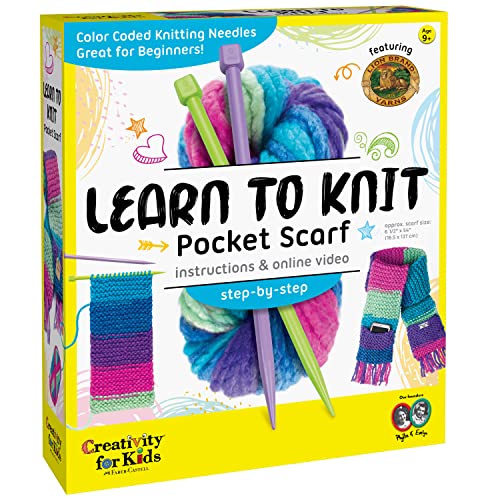
Creativity for Kids Learn to Knit Pocket Scarf

Aeelike Knitting Kit for Beginner Adult, Dishcloth Set

CraftLab Knitting Kit with Wool Yarn and Needles

Hapinest Learn to Knit Hat and Scarf Loom Kit

Joyclub Crochet Kit for Beginners, 6 Animal Family
Why These Options Stand Out
The kgxulr kit centers on a single tulip project, which keeps the first attempt focused instead of overwhelming. Everything ships in one box: six yarn colors, a 2.5 mm soft-shank hook plus a double-ended backup, stitch markers, a blunt-eye needle, wire stems for shaping petals, fiberfill stuffing, a printed booklet, and video tutorials you follow along at your own pace.
In practice, that structure suits someone who learns by watching rather than reading diagrams. The wire stems are a nice touch too, since finished flowers hold their shape instead of flopping over. Compared with the bulkier Katech set later in this list, this one trades quantity for a tighter, guided experience.
Real-World Strengths
- Video tutorials walk you through every stitch, so you’re never guessing from static diagrams alone.
- Two hooks (soft-shank 2.5 mm and a double-ended spare) mean a dropped or damaged tool doesn’t stall your project.
- Iron wire stems let finished tulips stand upright, turning practice stitches into displayable results.
- Stitch markers prevent the classic beginner mistake of losing count mid-row.
Small Caveats
- Hook colors ship randomly, so don’t expect to pick your favorite shade.
- One flower project means limited variety once you’ve completed it; you’ll need new patterns to keep going.
Made For
Adults and teens picking up a crochet hook for the very first time who want a short, satisfying project with visual instruction.
Where A Sibling Pick Shines
The Katech Crochet Kit offers nine hook sizes and twenty yarn skeins, a better match once you’re ready to explore multiple projects beyond flowers.
Where the kgxulr kit narrows its focus, Katech goes wide. You get nine ergonomic soft-grip hooks spanning 2.0 mm to 6.0 mm, twenty skeins of yarn, two storage bags, printed instructions, and a full spread of accessories. That hook range matters more than it sounds: yarn weight and hook size have to match, and having every common size means you can follow almost any free pattern online without buying anything else.
The soft handles reduce hand fatigue during long sessions, something worth considering if arthritis or grip strength is a concern. For households with both an adult learner and a curious kid, one box covers everyone.
The Good Stuff
- Nine hook sizes cover fine thread work through chunky yarn, eliminating future tool purchases for most starter patterns.
- Twenty yarn skeins give you enough material to practice, unravel, and retry without rationing.
- Ergonomic grips keep fingers comfortable through hour-long sessions.
- Dedicated storage bags keep hooks and yarn organized between sessions.
Things To Consider
- The sheer volume can overwhelm a true first-timer; some owners report setting half of it aside initially.
- Acrylic-style yarns in large quantities take up real shelf space, so plan storage accordingly.
Feature Snapshot
Who Will Love This
Committed beginners who already know they want crochet as a lasting hobby and want tools that outlast the first project.
Skip It When
Total newcomers wanting a single guided project will find the kgxulr Tulip Kit’s focused format less intimidating.
This kit targets kids roughly nine and up, and the design choices show it. Chunky self-striping yarn hides uneven tension, color-coded needles make following instructions simpler, and the pocket scarf format gives young makers a wearable result with built-in storage for small treasures. Self-striping yarn deserves a quick note: its color changes do the visual work, so early mistakes blend in rather than standing out.
Parents commonly report that the confidence boost matters as much as the skill. Finishing something you can actually wear, even lumpy, keeps kids engaged far longer than practice swatches ever will.
A Few Highlights
- Chunky yarn works up fast, so kids see progress within the first sitting rather than after weeks.
- Color-coded needles pair directly with the instructions, cutting down on confusion.
- The finished scarf has pockets, giving the project a playful function beyond “something Grandma made”.
Worth Noting
- Single-project scope means the kit ends when the scarf does; additional yarn comes separately.
- Younger children under nine may find standard needle coordination genuinely difficult despite the friendly design.
Right Fit For
Kids around nine and older working toward their first wearable, ideally with a parent nearby for the initial rows.
Another Choice May Suit
Children aged eight to twelve who struggle with two-handed needle work often get further with the Hapinest loom kit reviewed below.
Dishcloths are the unsung hero of learning to knit. They’re small, forgiving, useful even when imperfect, and cotton yarn survives repeated washing while you improve. The Aeelike set leans into exactly that: soft cotton yarns, smooth single-pointed needles in both bamboo and metal, plus the supporting accessories needed for everyday practice.
The dual needle materials are the interesting part. Bamboo grips yarn and slows stitches down, which helps shaky beginners; metal glides faster once your hands settle. Having both lets you discover your preference without a second purchase. The tapered tips also play nicely with most yarn types you’ll encounter early on.
Benefits That Matter
- Bamboo and metal needle pairs let you compare grip versus speed and learn what suits your hands.
- Cotton dishcloth projects produce items you’ll actually use daily in the kitchen.
- Smooth, well-tapered points catch fewer stitches and cause fewer dropped-loop frustrations.
- Accessories cover the small extras beginners usually forget until they need them.
Potential Sticking Points
- Dishcloths won’t excite anyone hoping for a scarf or garment as a first finish.
- Some owners note the instruction booklet assumes basic patience with written patterns rather than video guidance.
Quick Facts
Who Should Grab It
Adult learners who value practical results and want to build core knit-and-purl skills on small, washable projects.
Swap It Out When
Anyone wanting a wearable first piece should look at the CraftLab kit, which builds a scarf, gloves, and a stuffed bunny instead.
Three finished pieces come out of this box: a scarf, a pair of fingerless gloves, and a small stuffed bunny. That progression is deliberate. The scarf teaches long rows and consistency, the gloves introduce shaping, and the bunny adds seaming and stuffing. By the end, you’ve touched most foundational techniques without ever leaving the kit’s instructions.
You get four balls of teal wool yarn, 9-inch straight needles in a 5 mm size, a yarn needle, and a step-by-step booklet. The 5 mm pairing with worsted-weight yarn is a comfortable middle ground, big enough to see your stitches clearly but not so bulky that precision becomes impossible.
Practical Advantages
- Three escalating projects teach progressively harder skills in a logical order.
- Wool yarn feels substantial and holds stitch definition well for learning.
- The 5 mm needle size balances visibility and control for adult hands.
- Works equally well as a self-purchase or a gift for a craft-curious friend.
Points To Keep In Mind
- Four yarn balls is generous for the scarf but tight across all three projects, depending on your tension.
- One fixed needle size limits pattern flexibility once the booklet projects run out.
Who It Suits Best
Teens and adults who want variety from day one and prefer finishing several distinct items over repeating one project.
Consider Something Else When
Younger crafters between eight and twelve typically do better with the Hapinest loom kit, whose peg-based method sidesteps needle coordination entirely.
Loom knitting changes the mechanics completely. Instead of coordinating two needles, you wrap yarn around pegs on a round plastic frame and lift loops over with the included hook. For kids whose hands haven’t settled into fine motor rhythm yet, that difference is often the line between quitting and finishing. The Hapinest kit includes the round loom, six acrylic yarn skeins, a crochet hook, a yarn needle, two faux fur pom poms, and an illustrated booklet sized for young attention spans.
The hat-and-scarf pairing gives a choice of first project, and the pom poms add a payoff moment kids genuinely enjoy. Beyond the craft itself, parents frequently mention the fine motor and tactile benefits as a quiet bonus.
What Stands Out
- Peg-based wrapping eliminates the two-handed needle coordination that stalls many young beginners.
- Six yarn skeins support both a hat and a scarf with room for a redo.
- Faux fur pom poms turn a simple beanie into something kids proudly wear.
- Builds dexterity and tactile awareness alongside the crafting itself.
Less Ideal Details
- Loom knitting teaches a different technique than needle knitting, so skills don’t transfer directly.
- Acrylic yarn can split or pill faster than natural fibers with heavy handling.
At A Glance
Perfect Match For
Children aged eight to twelve, especially those frustrated by traditional needles or drawn to quick, tangible wins.
Reach For A Different Pick When
An adult wanting transferable needle skills should choose the Aeelike dishcloth set, since loom habits don’t carry over to standard knitting.
Repetition is how muscle memory forms, and this Joyclub box is built around that idea. Six small animals, roughly 3.5 inches each, wait inside: an owl, fox, chick, dinosaur, whale, and axolotl. Where most beginner kits deliver one project and stop, six attempts at the same core stitches mean visible improvement by animal three or four. Amigurumi, the Japanese term for small stuffed crochet figures, rewards exactly this kind of looped practice.
Video tutorials support the process, and the small scale keeps each win close together. The honest caveat: tiny pieces demand decent hand control, so total novices may want a larger first project elsewhere before tackling these.
The Helpful Details
- Six projects create built-in repetition, the fastest route to actually internalizing stitches.
- Roughly 3.5-inch figures finish quickly, delivering frequent completion satisfaction.
- Video instruction covers left- and right-handed crocheting, a rarity worth noting.
- The finished family makes a charming desk or shelf display.
Details To Watch
- Small-scale work strains eyes and fingers; some owners suggest good lighting is essential.
- Stuffing and tight stitching take practice, so early animals may look rougher than the photos suggest.
Whose Shelf It Belongs On
Adults and older teens committed to learning crochet properly, who benefit from repeated practice more than one-off novelty.
Not Your Match When
Someone wanting a single large, fast project fits the CraftLab scarf-and-gloves kit better than six miniature figures.
What Matters Most Before Choosing Beginners Knitting Kits
Match The Technique To The Person
Needle knitting, loom knitting, and crochet are three different motor skills. Adults generally adapt to needles or hooks quickly, while children under ten often succeed faster with a loom because the frame holds the stitches for them. Start where the hands are, not where the ambition is.
Check What’s Actually Inside
A complete kit should include yarn, tools, notions like stitch markers and needles, and instructions in a format you’ll use. Video tutorials suit visual learners; booklets suit people who work offline. Count the yarn supply against the listed projects, since running short mid-project is a common frustration.
Think About The Second Project
The best starter kits leave you with usable tools afterward. Adjustable hook sets and quality needles keep earning their place in your craft drawer, while single-project kits end the moment the yarn runs out.
Weave In Realistic Expectations
First pieces come out lumpy. Kits with chunky or self-striping yarn disguise early unevenness better than thin, smooth yarns, which is why several picks here favor them deliberately.
Key Considerations Across These Picks
Traps First Timers Fall Into
The biggest mistake is buying a kit with no plan for help. Written patterns alone defeat many beginners, so prioritize video support or a patient friend. Another trap: choosing a delicate yarn for a first project. Thin yarn shows every wobble, while chunky fibers forgive them.
Why Top Tier Costs More
Higher-priced kits buy range and longevity. Nine hook sizes, twenty yarn skeins, and proper storage cost more to include than one hook and one ball, but they eliminate repeat purchases. Paying up makes sense once you know the hobby will stick; for a tentative first try, a smaller kit is the smarter entry point.
Frequently Asked Questions
Is knitting or crochet easier for a total beginner?
Most people find crochet slightly easier to start because one hook manages a single active stitch. Knitting requires holding multiple live stitches, which raises the stakes of a dropped loop.
Can kids really learn from these kits without adult help?
Children aged nine and up usually manage with video-guided kits, though the first session goes smoother with an adult nearby. Younger kids do markedly better with loom-based options.
How long does a typical beginner project take?
A dishcloth or small animal might take a few evenings, while a scarf stretches across a week or two of casual work. Chunky yarn cuts those timelines noticeably.
Do I need extra supplies beyond what’s in the box?
For the listed projects, no. Once you branch into outside patterns, you may need scissors, extra markers, or different hook sizes depending on the pattern.
Are these kits suitable as gifts?
Several, particularly the CraftLab and Creativity for Kids sets, are packaged and structured with gifting in mind. Just match the recipient’s age and patience level to the kit’s difficulty.
Closing Thoughts
Every kit here solves the same problem differently: removing the guesswork from a brand-new craft. Match the format to the hands doing the work, whether that’s a loom for an eight-year-old, a guided tulip for a cautious first-timer, or a six-animal practice run for someone serious about crochet. Whichever direction you lean, starting with matched materials and clear instruction beats piecing supplies together on your own. Pick the one that fits your situation, and enjoy the slow, satisfying rhythm of making something by hand.
