
Pyrography looks intimidating from the outside, but the right starter kit flattens the learning curve fast. The problem most newcomers hit is buying a tool that fights them back: tips that wobble, heat that won’t hold steady, or a pen too heavy to control on fine lines. This list covers seven options built around real first-timer needs, from a no-heat gel pen you can practice with at the kitchen table to dual-pen stations that grow with your skills. Each one earns its spot through specific features, not marketing gloss.
The Picks In Brief

1DFAUL Wood Burn Paste Pen Kit 4OZ

Tekchic 60W Wood Burning Kit with 20 Wire Tips

YIHUA 939D-II Pyrography Pen Station (Green)
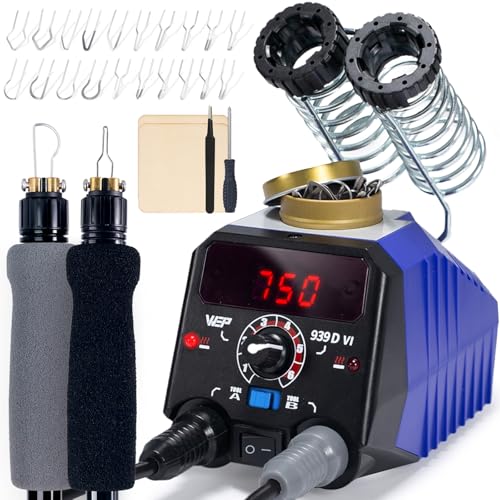
WEP 939D-VI Dual Pen Wood Burning Kit

WEP 939D-II 2-IN-1 Wood Burning Kit 86-IN-1

Adjustable Temperature Wood Burning Kit for Adults

ArtSkills Wood Burning Kit for Beginners – 48 Piece Set
More On The Choices That Made The List
Most kits on this list put a hot iron in your hand on day one. The 1DFAUL takes a different route entirely: you draw your design with a chemical burn paste, then apply heat afterward with a separate heat gun. That separation is what makes it such a gentle entry point, since there’s no live tip to scorch a line by accident.
The double-sided marker suits small wood pieces and fine patterns, and the process works best on untreated boards. Families tend to like this format because the drawing stage feels like ordinary crafting.
Everyday Perks
- You sketch your design first and burn later, so mistakes happen on paper, not in charred wood.
- The double-sided pen handles both small blanks and detailed linework without swapping tools.
- Results develop quickly once heat is applied, which keeps impatient beginners engaged.
- It doubles as a shared family activity since no one holds a hot tool while drawing.
Things To Consider
- You’ll need a heat gun separately, as the kit relies on external heat to activate the paste.
- Untreated, unfinished wood only; sealed or varnished surfaces won’t take the gel properly.
Who It Suits Best
Anyone nervous about handling a heated pyrography pen, especially households crafting with kids under close supervision.
Swap It Out When
If you want traditional iron-on-wood technique, the Tekchic 60W kit gives you an actual burner with adjustable heat.
Wire-nib pens are the detail artist’s choice because the thin nichrome wire heats fast and cools fast, letting you draw almost like with a pencil. The Tekchic runs at 60 watts, which is genuinely punchy for this price bracket, and its quick heat response means less waiting between strokes. Compared with the gel approach of the 1DFAUL kit, this is real pyrography technique from your very first session.
The voltage adjustment knob lets you dial heat precisely, so soft basswood and dense hardwood each get the setting they need. Twenty wire tips cover shading, lines, and texture work out of the box.
Reasons It Performs
- The 60-watt element recovers heat quickly, so long shading passes stay consistent instead of fading mid-stroke.
- Precise voltage control means you can match temperature to wood density rather than fighting one fixed setting.
- Twenty included wire nibs give you shading, scripting, and detailing options without extra purchases.
Small Caveats
- Wire nibs are delicate; owners commonly report bending them if the pen gets stored loose in a drawer.
- There’s no digital readout here, so finding your ideal setting takes a little trial on scrap wood.
At A Glance
Made For
Beginners who already know they want proper wire-nib technique and want strong power without paying station prices.
Another Choice May Suit
Shoppers wanting a temperature display and two simultaneous pens should step up to the YIHUA 939D-II station.
Here’s where the category splits into hobby territory. The YIHUA 939D-II ships two different pens: a solid-point drawer for broad fills and stamping, plus a wire-nib detailer for fine lines. Both can run at the same time or solo, which changes how you work, since you’re not constantly swapping tips mid-project the way you would with the single-pen Tekchic.
The solid-point side adjusts from 200 to 480 degrees Celsius with a temperature display, reaching setting in roughly two to three minutes. The wire-nib pen climbs far hotter, up to 750 degrees, for crisp dark burns. A stable holder, twenty nibs, solid points, and two scrap wood pieces round out the package.
What Makes Sense
- Two independent pens mean background fills and fine detailing happen back-to-back without tip changes.
- The temperature display removes guesswork, so repeatable settings become possible across sessions.
- The 250 to 750 degree wire-nib range handles everything from pale tinting to deep black linework.
- A stable pen holder keeps hot tips off your desk, which matters more than beginners expect.
Points To Note
- A station occupies permanent bench space, unlike a plug-in pen you can tuck into a drawer.
- Two to three minutes of warm-up per session adds friction compared with faster-heating rivals.
Feature Snapshot
Right Fit For
Committed beginners who’ve burned through a basic pen and want room to grow without rebuying anything.
Reach For A Different Pick When
Desk space is tight or budget comes first; the WEP 939D-II 86-in-1 bundles similar versatility more cheaply.
The WEP 939D-VI competes directly with the YIHUA station above, and the deciding difference is workflow speed. Its A/B toggle lets you switch between the two detachable pens instantly, so a shading pass and a detail pass flow together without unplugging anything. Heat spans 250 to 750 degrees Celsius, adjusted through a knob with an LED indicator confirming your setting.
Beyond wood, this kit is explicitly suited to leather burning, which widens what you can make with one purchase. The accessory loadout is generous: twenty wire nibs, a dual-barrel holder, tweezers, a screwdriver, spare screws, a tip collector tin, and two practice wood pieces.
Bright Spots
- The A/B toggle switches pens instantly, keeping momentum during multi-step designs.
- Leather compatibility expands your project range beyond plaques and signs.
- An LED indicator confirms your chosen temperature at a glance.
- The dual-barrel holder parks both pens safely while they’re hot.
Less Ideal Details
- With twenty nibs plus tools, organization takes discipline; the tin helps, but tips still wander in busy workshops.
- Knob-based adjustment lacks a numeric display, so exact repeatability depends on your own notes.
Core Details
Who Will Love This
Crafters splitting time between wood signs and leather goods who value uninterrupted workflow over a numeric readout.
Where A Sibling Pick Shines
Anyone prioritizing a visible temperature display will prefer the YIHUA 939D-II, which shows settings digitally.
Eighty-six pieces is a lot of box for a starter kit, and the WEP 939D-II earns its value badge by making nearly all of it useful. You get both pen types, fifty-one solid-point tips for stamping and texture work, twenty wire nibs for linework, two letter-and-number stencils, pliers, a screwdriver, sponge, tip sleeves, and two unfinished wood blanks ready to burn.
The soft-grip pens are detachable, and the top-mounted holder keeps everything within reach. For a beginner still figuring out whether they prefer bold stamped designs or delicate script, owning both tip families from day one is the fastest way to find your style.
Where It Delivers
- Seventy-one combined tips let you experiment freely before committing to any one technique.
- Letter and number stencils get personalized signs done on your first afternoon.
- Soft-grip pen bodies reduce hand fatigue during longer practice sessions.
- Two included wood blanks mean zero delay between unboxing and your first burn.
A Few Limitations
- Sorting and storing seventy-plus tips takes real effort; the tin helps but won’t prevent clutter entirely.
- Quantity over refinement applies here, as some niche tips may sit unused for months.
Quick Facts
Who Should Grab It
Undecided beginners who want maximum technique exposure per dollar before investing in a premium station.
Not Your Match When
Minimalists after a lean, focused setup will find the ArtSkills 48-piece kit far easier to manage.
Not every beginner wants a dedicated pyrography station eating desk space. This ACRSIKR kit leans portable and versatile: the pen is lightweight with an ergonomic handle shaped to stay comfortable at odd angles, which matters when you’re hunched over a small coaster trying to trace a curved line. Adjustable temperature gives you control across different woods and materials.
The tip selection stretches past burning into soldering, leather cutting, and hot-knife cutting, effectively four tools sharing one handle. For apartment dwellers or anyone with a crowded craft corner, that consolidation is the whole appeal.
Everyday Wins
- The lightweight body and ergonomic grip reduce wrist strain during angled detail work.
- One handle covers burning, soldering, leather cutting, and hot-knife tasks, replacing several single-purpose tools.
- Adjustable temperature adapts to soft and hardwood alike.
Trade Offs
- It’s aimed at smaller projects, so large sign work will feel slow compared with the WEP stations.
- Jack-of-all-trades design means none of its functions match a dedicated tool’s finesse.
Best Suited To
Hobbyists working on small crafts in limited space who appreciate one adaptable tool over a full bench setup.
Look Elsewhere When
Fine-art detail is the goal; the Tekchic 60W with its twenty wire nibs draws cleaner lines than a generalist pen.
Everything else on this list assumes an adult at the table. The ArtSkills kit is designed for ages eight and up, and it shows in thoughtful ways: five blank wooden plaques, traceable designs, transfer paper, and even watercolor paints with brushes for finishing burned pieces in color. It’s a complete craft afternoon in one box, closer to the guided experience of the 1DFAUL gel kit than the bare-bones pro tools.
The burner pen accepts five interchangeable tips covering thick strokes, broad coverage, thin lines, and fine details, enough range to teach real stroke control without overwhelming a young artist.
What Works In Its Favor
- Traceable designs and transfer paper remove the blank-page problem that stalls new artists.
- Five tip shapes teach stroke variety, from bold fills to hairline detail.
- Watercolor paints add a finishing step that makes finished plaques feel genuinely complete.
- Five wood plaques provide multiple practice runs without shopping for blanks.
Points To Keep In Mind
- Adult supervision stays essential whenever the heated pen is in use, regardless of the age rating.
- Five tips limit advanced technique exploration compared with the WEP 86-in-1’s seventy-plus.
Product At A Glance
Whose Shelf It Belongs On
Families introducing kids to pyrography, or gift-givers wanting a self-contained creative set for a craft-curious tween.
Consider Something Else When
An adult pursuing serious technique should start with the YIHUA 939D-II station instead of a youth-oriented set.
What Matters Most Before Choosing Beginners Pyrography Kits
Pen Type Shapes Everything
Solid-point pens use brass tips that heat slowly and suit bold fills, stamping, and texture work. Wire-nib pens use thin resistance wire that heats in seconds and excels at fine lines and shading. Your artistic instincts should drive this choice more than any spec sheet, since forcing a mismatch makes every session frustrating.
Temperature Control Separates Tools From Toys
Fixed-temperature pens lock you into one heat level, which works until you switch from pine to oak and scorch everything. Adjustable dials solve that; displays with actual numbers make settings repeatable. Casual crafters can live with a knob, while anyone chasing consistent results across projects will want a readout.
Match The Kit To Your Space And Schedule
A desktop station like the YIHUA demands permanent bench space but rewards daily practice. Plug-in pens and the gel-paste approach pack away into a drawer, fitting occasional weekend sessions in shared living areas. Honest self-assessment here prevents an expensive purchase from becoming shelf decoration.
Accessories Are Real Money
Tips, stencils, practice wood, and holders bought separately add up quickly. Kits bundling seventy-plus pieces cost more upfront but often beat assembling the same collection piecemeal, especially while you’re still discovering which techniques you actually enjoy.
Key Considerations Across These Picks
Traps First Timers Fall Into
The classic error is buying raw power before basic skill, ending up with a 750-degree station and scorched first attempts. Another common slip: ignoring wood preparation, since treated or painted boards burn poorly and smell worse. Start on cheap unfinished scraps, always.
What The Higher Tier Buys
Stations costing more deliver dual pens, wider ranges, and digital displays. That translates to faster workflows and repeatable results, worth it once you’re burning weekly rather than occasionally.
Frequently Asked Questions
Is pyrography safe for complete beginners?
Yes, with sensible precautions like ventilation and a stable rest for hot pens. The gel-paste option removes the hot-tool risk almost entirely for the drawing phase.
What kind of wood works best for burning?
Unfinished, untreated softwoods like basswood and pine burn cleanly and evenly. Sealed, painted, or pressure-treated wood should never be burned due to fumes and poor results.
Do I need a heat gun with a gel paste kit?
Yes, products like the 1DFAUL require external heat to activate the burn paste. Any standard heat gun works for this purpose.
How long does a typical beginner project take?
A simple traced design on a small plaque usually takes thirty minutes to an hour including setup. Larger shaded artwork can span several sessions.
Can these kits also burn leather or gourds?
Higher-temperature wire-nib kits like the WEP 939D-VI handle leather well. Always test on scrap material first, since lower-temperature pens may struggle with denser surfaces.
Closing Thoughts
Seven kits, seven different paths into the same craft. Pick the 1DFAUL if heat makes you hesitant, the ArtSkills for family crafting, the Tekchic for affordable wire-nib technique, or a WEP or YIHUA station once commitment sets in. Whichever lands on your bench, start with scrap wood, keep expectations modest, and let the first few crooked lines teach you more than any guide can.
