
Big brushes earn their keep on the jobs small ones can’t finish. Fencing a backyard, sealing a deck, or rolling paste onto wallpaper backing all go faster with a wide head that holds plenty of coating. This roundup covers seven options across chip brushes, wall brushes, and oversized paddles, so you can match width and bristle type to the work in front of you.
A Fast Comparison Of The Options

Genixart Double Thick Chip Paint Brush 3 Inch

GACDR 1 Inch Flat Paint Brushes, 12 Pack

EORTA Flat Art Paint Brushes Set Assorted Sizes
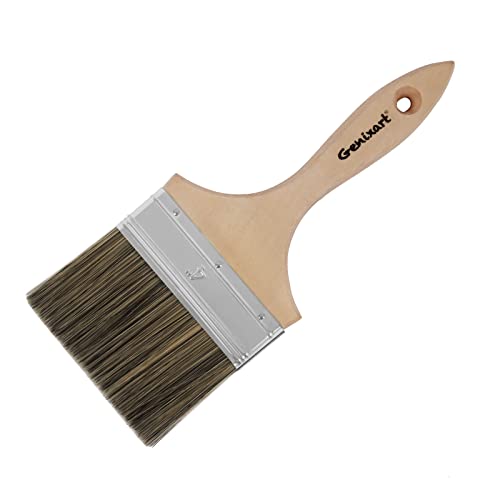
Genixart Double Thick Chip Paint Brush 4 Inch

Bates- 4 Inch Soft Tip Paint Brush for Walls

Magimate 8 Inch Large Paddle Paint Brush

Bates- Chip Paint Brushes 6 Pack, 1″-3″
A Breakdown Of The Leading Choices
A chip brush is the disposable workhorse of the painting world, and this one leans into that role with a double-thick bristle bed. The extra density means each dip carries more stain or varnish, which matters when you’re working a long fence line and don’t want to reload every few boards.
The 3-inch flat profile suits edges, rails, and medium panels. In our view, it’s the sensible entry point of the two Genixart widths here if your project mixes detail work with broad strokes.
Where It Helps
- Double-thick fill holds more coating per pass, cutting reload trips on fence boards
- Handles stains, varnishes, limewash, and paste without switching tools
- Low cost per brush makes tossing it after a sticky oil-based job painless
- 3-inch width balances speed with enough control for rails and trim boards
Things To Consider
- Chip-style construction means some shedding is common over long sessions; a quick pre-comb helps
- Treat it as semi-disposable rather than a keeper brush you’ll clean and store
Key Specs
Who It Suits Best
Weekend DIYers staining fences, shutters, or garden furniture who want a cheap brush they can use hard and discard.
Swap It Out When
For full-size interior walls with latex paint, the Bates- 4 Inch Soft Tip brush gives you finer tip control and easier cleanup.
Twelve identical 1-inch flats sound repetitive until you realize how often craft projects stall because every brush is dirty or ruined. With this many on hand, you can dedicate one per color and keep moving through an acrylic session without rinsing between shades.
The aluminum double-crimped ferrule, the metal band that clamps bristles to the handle, is the detail worth noting here. Double crimping grips tighter than a single fold, so heads resist loosening once water-based paints soak in. Compared with the EORTA set below, you trade size variety for sheer quantity of one useful width.
Notable Gains
- Double-crimped aluminum ferrules keep bristle heads attached through repeated washings
- One brush per color eliminates mid-project cleaning breaks for acrylic work
- Flat 1-inch edge lays down broad strokes and fills shapes quickly on canvas or wood
Small Caveats
- A single narrow width limits you on large fills; pair it with a wider paddle brush for backgrounds
- Synthetic craft-grade bristles won’t hold a sharp point the way a quality round brush does
Who Will Love This
Classroom teachers, hobby painters, and parents stocking a craft bin where brushes disappear constantly.
Another Choice May Suit
Anyone wanting multiple sizes in one purchase will get more range from the EORTA assorted set instead.
Starting out in acrylics or watercolors usually means guessing which brush sizes you’ll actually reach for. This six-piece set answers that by covering six different widths in one black-handled lineup, letting you experiment before committing to pricier singles.
Nylon bristles, a synthetic filament that springs back well and cleans easily, make these forgiving for beginners since dried mistakes rinse out more readily than from natural hair. Where the GACDR pack floods you with one size, EORTA spreads its value across variety, which suits someone still finding their stroke.
Notable Upsides
- Six distinct sizes cover everything from fine lines to broad washes in one purchase
- Nylon filaments clean up with warm soapy water and dry fast between sessions
- Wood handles with a plain black finish feel neutral and balanced in hand
- Low commitment makes it easy to replace individual worn brushes guilt-free
Points To Note
- Cleaning matters here: letting paint dry in the ferrule shortens brush life noticeably, so wash promptly
- Entry-level bristle softness means less snap-back than premium artist brushes
Feature Snapshot
Right Fit For
Beginners and students building a first brush kit for canvas, paper, or school art projects.
Look Elsewhere When
Volume users burning through one reliable width will find better economy in the GACDR 12-pack.
This is the bigger sibling of the Genixart 3-inch reviewed earlier, adding a full inch of width for jobs measured in square feet rather than board feet. Deck spindles become three-stroke work instead of five, and a fence panel goes down noticeably quicker when each pass covers more lumber.
The same double-thick bristle bed carries heavy coatings like masonry sealer and limewash without starving halfway down a board. The honest trade-off: that width gets clumsy near window frames or tight corners, so most people keep a narrower brush alongside it.
Noteworthy Benefits
- 4-inch span slashes pass count on decks, siding, and fence panels
- Thick bristle load suits viscous products like paste, limewash, and thick varnish
- Same economical chip-bristle formula as its smaller sibling, sized up
Less Ideal Details
- Too wide for precision edging; expect to switch brushes near trim and corners
- Chip-bristle shedding can show in smooth gloss finishes, so reserve it for rougher surfaces
Whose Shelf It Belongs On
Homeowners tackling seasonal exterior maintenance, from fence re-staining to concrete sealers, who value speed over finesse.
Reach For A Different Pick When
Interior wall and trim work calls for the tapered-tip control of the Bates- 4 Inch Soft Tip brush instead.
Unlike the Genixart chip brushes earlier in this list, this one is built to be cleaned and kept. The synthetic filament bristles are designed to carry a heavier paint load, which translates into fewer dips and fewer visible streaks on large wall sections.
The standout attribute is the thinner tip at the business end. That taper is what lets you cut a clean line where a wall meets ceiling or trim, the task that separates a tidy paint job from a sloppy one. Compatibility spans both latex and oil-based paints and stains, so one brush covers most indoor repainting scenarios.
What Makes Sense
- Tapered tip gives sharper cutting control along ceilings, corners, and trim lines
- Thick synthetic fill holds more paint, reducing streaks on broad walls
- Works with both latex and oil-based coatings, covering nearly any interior job
- Washes clean easily, making it a reusable keeper rather than a throwaway
Practical Considerations
- Only one brush per package, so a whole-room job may warrant buying two
- Synthetic tips need prompt washing after oil-based use to stay soft
Core Details
Made For
DIY repainters and careful homeowners who want crisp edges on interior walls without hiring a pro.
Not Your Match When
Rough exterior timber and disposable convenience favor the Genixart 4 Inch chip brush instead.
Eight inches of brush face changes what a brush can do. Wallpaper paste, gesso priming, limewash, and stucco coatings all demand spreading power no handheld brush provides, and this paddle delivers it in one tool. Think of it less as a paintbrush and more as a hand-held squeegee with bristles.
Manufacturer guidance lists compatibility stretching from acrylic and latex through epoxy, polyurethane, enamel, and chalk paint, which makes it genuinely versatile despite its specialized shape. Compared with the Bates wall brush above, this isn’t for cut-in work at all; it exists purely to move volume across big, flat areas fast.
Positive Points
- 8-inch face spreads paste, primer, and limewash across walls in very few passes
- Compatible with an unusually wide range of coatings, from epoxy to chalk paint
- Serves double duty in art studios for gesso and large-format priming
- Rinses clean for reuse with water-based materials
Trade Offs To Consider
- Far too wide for trim, corners, or any detailed work; you’ll still need a standard brush alongside
- Full-head loads of paste get heavy over long overhead sessions
The Numbers That Matter
Who Should Grab It
Renovators hanging wallpaper, whitewashing brick, or priming large canvases who need serious spreading width.
Consider Something Else When
Standard wall painting with clean edges points you back to the Bates- 4 Inch Soft Tip brush.
Most households don’t need one perfect brush; they need several decent ones in different widths. This six-pack splits evenly between 1-, 2-, and 3-inch chip brushes, so a touch-up jar, a stair rail, and a fence section each get a properly sized tool from the same box.
The wooden handles give more comfort and control than bare utility sticks, and the soft synthetic bristles lay coatings on smoothly across paints, stains, and finishes. Against the single-width GACDR craft pack, this set skews toward home maintenance, though it handles craft duty fine too.
Everyday Perks
- Three sizes in one box cover touch-ups, trim, and broad surfaces alike
- Soft bristles apply stains and finishes evenly without heavy streaking
- Wooden handles offer a comfortable, controlled grip during longer sessions
- Low replacement cost suits glue, resin, and one-off messy jobs
Worth Bearing In Mind
- Chip-bristle construction sheds slightly on very smooth gloss surfaces
- No single brush here matches the refined tip of a dedicated wall brush
Quick Facts
Who Should Grab It
General homeowners wanting a ready drawer of brushes for random paint, stain, and adhesive jobs.
Where A Sibling Pick Shines
Dedicated interior wall finishing rewards the Bates- 4 Inch Soft Tip’s tapered tip over these generalists.
What Matters Most Before Choosing Big Paint Brushes
Match Width To The Surface
Width is the whole point of a big brush, but bigger isn’t automatically better. A 3-inch head handles fence rails and furniture nicely, while decks and siding justify 4 inches or more. Anything past 6 inches belongs to specialty spreading work like paste and primer.
Oversizing costs you control. Wide heads get unwieldy near corners, so plan on keeping a narrower brush in the same session.
Bristle Type And Coating Chemistry
Synthetic filaments suit water-based latex and acrylics because they don’t absorb water and soften. Natural and chip bristles tend to carry thicker, oilier products such as stains, varnish, and limewash more comfortably.
Check compatibility before committing. Epoxy and polyurethane demand tougher filaments than a basic craft brush offers.
Disposable Versus Keeper Construction
Chip brushes are meant to be used hard and tossed, which is genuinely convenient for messy adhesives and one-coat stains. Keeper brushes with crimped ferrules and quality filaments cost more upfront but repay you across many cleaned-and-stored uses.
Decide based on how often you paint. Frequent repainters should invest in keepers; occasional project-doers lose nothing with disposables.
Handle Comfort For Long Sessions
A fence day means hundreds of strokes, and a thin unfinished handle wears on your grip. Wooden or contoured handles reduce fatigue noticeably over multi-hour jobs.
Key Considerations Across These Picks
Wrong Turns To Avoid
The most common slip is buying one giant brush for everything. An 8-inch paddle can’t cut a ceiling line, and a 1-inch craft brush will never finish a deck. Buy for the dominant surface, then add one complementary size.
Another frequent miss: ignoring cleanup. Oil-based coatings left drying in any bristle ruin the brush, cheap or expensive.
The Case For Spending Up
Higher-tier brushes charge for filament quality, ferrule crimping, and tip shaping. Those details show up as fewer streaks, sharper edges, and bristles that survive dozens of wash cycles.
For a single weekend stain job, budget chip brushes do the work. For rooms you’ll repaint repeatedly, the upgrade pays for itself in finish quality.
Frequently Asked Questions
What size brush works best for painting fences?
A 3- to 4-inch flat brush covers fence boards efficiently without becoming unmanageable. Double-thick bristles help carry stain deeper into rough grain.
Can I use one brush for both latex and oil-based paint?
Synthetic-filament brushes like the Bates wall brush are rated for both. Just clean thoroughly between coatings, since residue transfers chemistry problems.
How do I stop a new brush from shedding?
Flick and comb the dry bristles firmly before first use to release loose fibers. A brief pre-wet also settles stray hairs on chip brushes.
Are cheap chip brushes worth buying at all?
Absolutely, for stains, glues, and one-off messy jobs where cleanup isn’t worth the effort. Their low cost is the feature.
How should I store paint brushes between projects?
Wash fully, reshape the bristles, and hang or lay them flat to dry. Never store a brush standing on its bristles.
Wrap Up
Wide brushes are simple tools, but matching width, bristle, and build quality to your actual project saves real time and frustration. Fence and deck work favors the Genixart pair, interior walls reward the Bates soft-tip, and paste-heavy renovations need the Magimate paddle. Start with the surface in front of you, and the right brush follows naturally.
