
Dark finishes never go out of style, and a guitar in black or deep red makes a statement before you play a single note. This roundup covers seven solid options spanning beginner bundles, classic double-cutaway designs, and modern rock machines. Whether you’re a parent shopping for a first instrument or a player chasing that cherry-red SG look, there’s a fit here for your budget and skill level.
A Snapshot Of The Selections
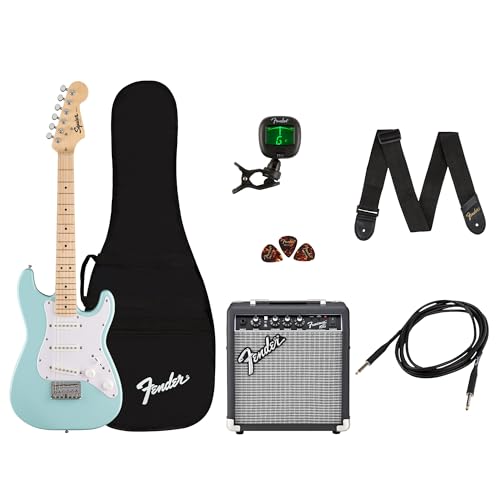
Fender Mini Stratocaster Beginner Guitar Kit with Amp (Daphne Blue)

Fender Squier Debut Stratocaster Kit Seafoam Green

Epiphone SG Special Electric Guitar (Cherry)

Epiphone SG Special Electric Guitar (Black)

Ibanez GRG131DX Electric Guitar (Black Flat)

Leo Jaymz 39 Inch Solid Body Electric Guitar (Navy Blue)

Leo Jaymz 39 Inch Solid Body Electric Guitar (Purple Burst)
Taking A Closer Look At The Options
A scaled-down Stratocaster paired with a small practice amplifier, this kit removes every excuse not to start playing today. The shorter body and reduced scale suit younger students and anyone who finds full-size guitars unwieldy.
The single-coil pickup layout with five-way switching gives beginners real tonal variety to explore, something most starter packs skip. Compared with the Squier Debut kit below, this one leans more compact and kid-oriented rather than adult-first.
What Works In Its Favor
- Reduced-size body keeps small hands comfortable during long practice sessions
- Five-way switching teaches tonal control from day one
- Bundled Frontman 10G amp means no separate purchase needed
- C-shaped maple neck feels familiar when upgrading later
Things To Consider
- Shorter scale limits reach for players with larger hands
- Owners commonly report single-coil setups benefit from occasional string and setup attention
Who It Suits Best
Children, teens, and petite-framed adults starting their first electric guitar journey at home.
Where A Sibling Pick Shines
Grown-up beginners get more room to grow with the Fender Squier Debut Stratocaster Kit’s full-size body and wider accessory set.
This is the kit that thinks of everything: guitar, Frontman 10G amp, padded gig bag, strap, cable, picks, a stand, and spare strings. Nothing else to order, nothing missing on day one.
The slim C-shaped neck and lightweight body make it approachable for all ages, and the included Fender Play lesson subscription gives structure to those first frustrating weeks. Where the Mini Strat above targets smaller frames, this one serves the whole household.
Useful Highlights
- Nine-piece bundle covers every accessory a new player needs
- Fender Play lessons turn aimless noodling into guided progress
- Lightweight body reduces shoulder fatigue during standing practice
- Slim neck profile eases chord transitions for beginners
- Three single-coil pickups deliver classic Strat versatility
Small Caveats
- Availability has fluctuated, so check current stock status
- The bundled gig bag offers light padding only, worth upgrading for frequent travel
At A Glance
Made For
Households buying one shared instrument for teens and adults learning together.
Consider Something Else When
Smaller children under ten will handle the Fender Mini Stratocaster Kit’s reduced body far more comfortably.
That translucent cherry finish over the carved SG body is the look half of rock history was built on. Unlike the beginner kits earlier in this list, this is a standalone instrument aimed at players ready to commit.
Twin open-coil humbuckers push thicker, hotter signal than the single coils on the Squier models, which suits distortion-driven styles. The Tune-o-matic bridge with stopbar tailpiece transfers string vibration efficiently into the body, and owners widely report it holds tuning well once properly stretched.
The Good Stuff
- Humbucking pickups resist the background hum that plagues single coils in noisy rooms
- Tune-o-matic bridge plus stopbar tailpiece supports strong sustain
- SlimTaper D-profile neck plays fast without hand strain
- Iconic double-cutaway body grants easy upper-fret access
Points To Note
- No amp or accessories included, budget separately
- The glossy finish shows fingerprints, a quick wipe after sessions keeps it sharp
Feature Snapshot
Right Fit For
Intermediate-leaning beginners and garage-band players chasing classic rock and blues tones.
Not Your Match When
Total newcomers needing an amp in the box should start with the Fender Squier Debut Stratocaster Kit instead.
Same proven SG platform as the cherry version above, dressed in stealthy black with chrome hardware. The alder and maple laminate body keeps weight manageable, a real advantage during three-hour rehearsals where heavier guitars dig into your shoulder.
You still get the two open-coil humbuckers and the LockTone Tune-O-Matic bridge with stopbar tailpiece, a combination that simplifies string changes while supporting solid sustain. The rosewood fingerboard adds a slightly warmer feel under the fingers than bare maple.
Where It Delivers
- Lightweight laminate body stays comfortable through long sets
- Stopbar tailpiece makes restringing quicker than floating designs
- Chrome hardware resists tarnish with basic care
- Humbucker pairing handles high-gain tones cleanly
Worth Noting
- Laminate construction may resonate slightly less than solid slabs, though most players won’t notice at stage volume
- Sold as guitar only, plan for an amp and cable
Who Will Love This
Rhythm players in hard rock and punk bands who want a reliable, lightweight workhorse.
Reach For A Different Pick When
Shredders wanting a tremolo arm should step up to the Ibanez GRG131DX covered next.
Ibanez builds the GRG line specifically for players whose taste runs loud. The matte black flat finish, black hardware, and aggressive double-cutaway silhouette announce its intentions immediately.
Inside sit two high-output Infinity R humbuckers, pickups designed to drive an amp into saturation with less pedal help than the Epiphone SG Special requires. The bolt-on GRG maple neck is slim and fast, and the synchronized tremolo lets you add subtle pitch movement, a feature none of the fixed-bridge picks here offer.
A Few Highlights
- Infinity R pickups deliver hot output suited to drop-tuned riffing
- Synchronized tremolo opens up vibrato and dive effects
- Fast maple neck favors lead playing and wide bends
- Matte finish hides smudges better than gloss alternatives
Details To Watch
- Tremolo bridges need periodic spring adjustment, owners commonly report a short settling period
- Flat black edges can show wear at contact points over years of heavy use
Quick Facts
Who Should Grab It
Metal, hard rock, and alternative players who want maximum output per dollar spent.
Swap It Out When
Blues and classic rock players will find the warmer voice of the Epiphone SG Special (Cherry) a better tonal match.
Leo Jaymz packs a surprising amount of traditional specification into an entry-level price bracket. The 24.75-inch scale matches Gibson-style instruments, giving slightly looser string tension and easier bending than the longer Fender-scale guitars earlier in this list.
The DC-style double-cutaway body uses poplar, a lightweight tonewood common at this tier, topped with a maple bolt-on neck and laurel fretboard carrying 22 frets. In our view, the generous fret count and flatter 14-inch fingerboard radius make upper-register lead work friendlier than you’d expect at this level.
What Makes Sense
- 22 frets extend melodic range past many rivals
- Flatter 14-inch radius aids low-action lead playing
- Shorter 24.75-inch scale eases stretches for smaller hands
- Poplar body keeps overall weight down
Some Limits To Know
- Newer brand with less-established long-term reliability track record
- Laurel fretboards benefit from occasional conditioning to stay smooth
Core Details
Whose Shelf It Belongs On
Cost-conscious students and hobbyists who want real specs without stretching the wallet.
Another Choice May Suit
Players wanting brand heritage and resale confidence should weigh the Epiphone SG Special (Black).
Mechanically identical to the navy sibling above, this version trades restraint for a purple burst finish that photographs beautifully under stage lights. Same poplar body, same maple bolt-on neck, same 22-fret laurel board with the player-friendly 24.75-inch scale.
Choosing between the two comes down purely to aesthetics, since the build and dimensions match exactly. For gigging musicians building a visual identity, or anyone tired of sunburst sameness, the burst top delivers personality at entry-level cost.
Standout Benefits
- Purple burst finish stands out on any stage backdrop
- Identical spec sheet to the navy version, proven layout
- Double-cutaway body balances well on a strap
- Flatter fingerboard radius supports clean fast runs
Factors To Consider
- Burst finishes vary slightly between units, expect minor shade differences
- Bolt-on neck joints occasionally need a setup check after shipping
Product At A Glance
The Right Fit
Performers and content creators who want an instrument with genuine visual presence.
Look Elsewhere When
Understated tastes belong with the matte Ibanez GRG131DX instead.
What Matters Most Before Choosing Black And Red Electric Guitars
Scale Length Shapes Everything
Scale length, the distance from nut to bridge, determines string tension and feel. Shorter 24.75-inch scales like the Leo Jaymz models bend easier, while longer Fender-style scales offer tighter, snappier response. Match this to your hand size and preferred genre.
Pickup Type Sets Your Tone Ceiling
Single-coil pickups sound bright and articulate but can pick up electrical hum near fluorescent lights. Humbuckers run hotter and quieter, making them the default for rock and metal. Decide your primary genre first, then let pickups follow.
Bundles Versus Standalone Instruments
Kits like the two Fender packs include amps and accessories, ideal when starting from zero. Standalone guitars such as the Epiphone and Ibanez models assume you already own an amplifier. Buying the wrong category wastes money either way.
Weight And Body Comfort
A five-pound difference matters enormously during hour-long practices. Lightweight poplar and laminate bodies favor younger players and standing performers, while heavier solid bodies often sustain a touch longer seated.
Key Considerations Across These Picks
Traps First Timers Fall Into
The most common mistake is buying a professional-grade guitar for a student who quits within months. Start honest about commitment level. Another frequent slip: forgetting the amplifier entirely when ordering a standalone instrument, leaving an unplayable guitar arriving at the door.
What Separates Premium From Basic
Higher-tier instruments spend more on woods, hardware durability, and factory setup quality. That translates to fewer tuning headaches, smoother fretwork, and better resale value. Paying up makes sense once skills outgrow the starter gear, usually within the first year of steady practice.
Frequently Asked Questions
Are darker finishes harder to maintain?
Matte black hides fingerprints well but can show wear at contact points over time. Gloss finishes wipe clean easily yet reveal every smudge between polishes.
Do beginner kits include everything needed to play?
The Fender bundles ship with an amp, cable, strap, picks, and strings. Standalone guitars require purchasing an amplifier separately.
Is a shorter scale easier for kids?
Yes, reduced scale lengths lower string tension significantly. The Mini Stratocaster’s compact design suits players under roughly ten years old best.
Can humbuckers handle clean tones too?
They can, though they sound warmer and less sparkling than single coils. Rolling back the volume knob tames them nicely for softer passages.
How often does a new guitar need a setup?
Most instruments benefit from a professional setup within the first few months. Seasonal humidity changes also shift neck relief over time.
Closing Thoughts
Seven guitars, three distinct philosophies: complete beginner bundles, timeless classics, and modern rock hardware. Match the instrument to the player’s age, genre, and existing gear before anything else. The right choice is the one that gets played daily, not the one with the longest spec sheet. Start there, and the music follows naturally.
