
Faded black jeans are a quiet wardrobe problem. The fit still works, the fabric still holds up, but the color has washed out to a tired charcoal that no longer matches anything. A good dye brings that pair back from the back of the drawer without a shopping trip.
This roundup covers seven ways to do it: powders for full garment dyeing, liquids for washing-machine jobs, a spray for spot restoration, and markers for touch-ups. Each entry breaks down where it performs, where it falls short, and who should reach for it instead of a neighbor on this list.
The Main Contenders

HI-TECH Big Can Black Spray Dye 15oz

Qualia All Purpose Powder Fabric Dye Black 1 Pack

Qualia All Purpose Powder Fabric Dye Black 3 Pack
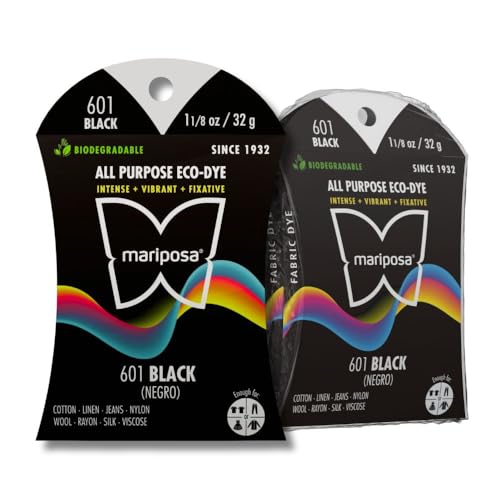
Black Fabric Dye 3-Pack All-Purpose Eco-Dye

Craft County Rit Dye 8 Oz Liquid Fabric Dye Black

Gain-Art Dual-Tip Black Fabric Markers

Rit All-Purpose Liquid Dye Black 3-Pack
The Picks, Examined More Closely
Spray dye works differently from a soak: you aim it at trouble spots rather than dunking the whole garment. That makes this HI-TECH can a natural fit for knee fade, thigh shine, or a hem that has gone gray while the rest of the jean still looks decent.
The 15oz volume gives you roughly a third more product than a standard aerosol, which matters when you’re restoring several pairs or tackling carpet and vinyl alongside denim. Owners commonly report the finish holds texture well, so the fabric doesn’t end up feeling painted over.
Why It Works Well
- Oversized 15oz can stretches across multiple repair sessions before you need a replacement
- Adjustable fan tip narrows for seams and widens for broad panels, cutting down blotchy overspray
- Flexible bonded coating resists cracking and rubbing off through normal wear
- Suitable indoors and out, so garage projects and patio furniture share one can
Things To Consider
- Aerosol application takes practice; light, layered passes beat one heavy coat on textured denim
- Ventilation and masking matter more here than with a sink dye, since mist travels
Key Specs
Who It Suits Best
DIYers doing spot restoration on jeans, car interiors, or faded upholstery who want one can to handle all of it.
Where Another Pick Suits Better
For an even, whole-garment color change in a bucket or washer, the Rit All-Purpose Liquid Dye Black 3-Pack handles full immersion far better than any aerosol can.
Powder dye is the old-school route: dissolve, heat, soak, rinse. This single box of Qualia targets natural fibers like cotton, wool, silk, and linen, which covers most classic denim constructions. One box handles up to two smaller garments, so a lone pair of faded jeans fits comfortably within its capacity.
In our view, the appeal here is simplicity. There’s no sprayer to master and no fixative step to remember, just a hot bath and some stirring. The concentrated formula means a little powder goes a long way toward deep black.
Useful Highlights
- Ultra-concentrated pigment delivers rich black without using the whole box on one item
- Works across cotton, wool, silk, linen, and wood surfaces, giving it life beyond the laundry room
- Compact packaging stores easily in a craft drawer until the next fading emergency
Points To Note
- Natural fibers only; synthetic blends and stretch denim with high polyester content take color unevenly
- Hot-water soaking means gloves and a dedicated pot or stainless sink are part of the routine
At A Glance
Made For
First-time dyers refreshing one or two cotton-heavy garments at home without investing in bulk supplies.
A Better Fit Elsewhere
Anyone planning to re-dye a whole stack of black denim will burn through boxes fast; the Qualia 3 Pack version of this same dye is the smarter buy for that job.
This is the same Qualia powder as the previous entry, sold as a three-box bundle. The chemistry hasn’t changed: ultra-concentrated black pigment aimed at cotton, wool, silk, and linen. What changes is the math, since three boxes cover roughly six small garments or a couple of larger denim pieces with room to spare.
Households with several people wearing black tend to go through dye faster than expected, because every wash cycle leaches a little color. Keeping spare boxes on hand turns a seasonal chore into a five-minute decision. You may find the shelf life generous too, since dry powder keeps well in a cool cupboard.
Where It Excels
- Three-box supply handles a family’s worth of faded black clothing in one order
- Same concentrated formula as the single pack, so color consistency stays predictable between batches
- Lower cost per box compared with buying singles repeatedly
Small Caveats
- Overkill for a one-time project; unused boxes sit around unless you dye regularly
- Still limited to natural fibers, so polyester-blend jeggings won’t take the color evenly
Right Fit For
Busy households and thrift-flippers who re-dye black garments often enough to justify stocking up.
Swap It Out When
A single pair of jeans is all you’re rescuing; the Qualia 1 Pack does that job without leaving surplus behind.
Where the Qualia powders focus on natural fibers, this three-pack casts a wider net, listing cotton, linen, wool, rayon, silk, and viscose among its targets. Rayon and viscose show up in softer, drapey denim alternatives, so that broader compatibility genuinely matters for modern wardrobes.
The formula leans earth-friendly and non-toxic, which makes a difference in homes with kids or pets wandering near the utility sink. Three pounds of fabric coverage across the set translates to roughly three pairs of adult jeans, depending on weight. High-fixation pigments are designed to lock in during the bath rather than bleeding out over later washes.
A Few Highlights
- Covers rayon and viscose alongside standard cotton and linen, reaching fabrics other picks skip
- Gentle ingredient profile suits shared living spaces and sensitive skin concerns
- Three-pound total capacity handles multiple garments or one heavy-duty batch
Honest Caveats
- Being a generic brand, batch-to-batch shade consistency is less documented than name-brand rivals
- Powder format still demands hot water, gloves, and a dedicated vessel you won’t cook with afterward
Quick Facts
Who Will Love This
Households wanting a gentler dye that still reaches tricky semi-synthetic fabrics like viscose and rayon.
Consider Something Else When
Brand familiarity tops your list; the Rit All-Purpose Liquid Dye Black 3-Pack carries decades of documented results across nearly every fiber type.
Liquid dye skips the dissolving step entirely, which is why so many crafters keep a bottle of Rit on the shelf. Pour it into a washing machine, plastic tub, or stainless sink, add the garment, and stir. An 8oz bottle suits a mid-size load or a couple of pairs of jeans in a top-loader.
The liquid format also opens creative doors that powders don’t. Dip-dye gradients, tie-dye patterns, and ombre hems all work better when you can control pour volume precisely. Pairing it with Rit ColorStay fixative, available in bundle form, helps the black hold through subsequent washes, something worth considering for garments worn weekly.
Where It Helps
- No mixing or dissolving; straight from bottle to bath in seconds
- Works in a washing machine, plastic container, or stainless-steel sink depending on your setup
- Liquid control suits dip-dye and pattern techniques that powders handle awkwardly
- Bundle option adds ColorStay fixative to extend color life between re-dyes
Trade Offs
- Single 8oz bottle may run short for large loads or heavyweight denim, requiring a second bottle
- Spills stain quickly, so careful pouring near countertops is part of the deal
Feature Snapshot
Who Should Grab It
Crafters experimenting with techniques beyond plain re-dyeing, especially anyone comfortable working in a machine or utility sink.
Reach For A Different Pick When
You want maximum bottles per order for repeated whole-load dyeing; the Rit All-Purpose Liquid Dye Black 3-Pack delivers more volume upfront.
Markers occupy a different niche entirely: they don’t dye a garment, they paint it. That distinction matters for jeans, because a marker can darken a frayed pocket edge, trace a scuffed seam, or add deliberate design work without touching the rest of the fabric. No buckets, no heat baths, no waiting.
The dual-tip layout does the heavy lifting. A 1mm fine tip draws crisp lines and lettering, while the brush tip fills broader areas and shades larger patches. Beginners get a low-stakes entry point into fabric customization, since mistakes stay localized to wherever the pen touched. These pens also travel well, slipping into a bag for on-the-go repairs.
Noteworthy Benefits
- Fine 1mm tip handles outlines, signatures, and tight seam work with precision
- Brush tip covers wider scuffs and fills small faded patches faster than line-drawing alone
- Permanent ink bonds to shirts, canvas, hats, and textiles beyond denim
- Zero setup; uncapping a pen beats heating a dye bath for a two-inch blemish
Less Ideal Details
- Pen strokes can’t match the uniform saturation of a full dye bath on large panels
- Ink layers may feel slightly stiffer than surrounding fabric until broken in through wear
Whose Shelf It Belongs On
Students, parents, and casual crafters fixing small blemishes or personalizing clothes without any wet-work mess.
Another Choice May Suit
Whole-garment fading calls for a soak instead; the Qualia All Purpose Powder Fabric Dye Black 1 Pack restores overall color far more evenly than any pen can.
Rit’s name carries weight in this category for good reason: the all-purpose liquid formula accepts cotton, linen, silk, wool, rayon, ramie, nylon, and most blends. Compared with the Craft County single bottle earlier in this list, you’re getting three times the volume of the same familiar liquid, ready for washing-machine batches.
That breadth solves a real problem. Modern jeans rarely contain one fiber; a cotton-elastane blend or a nylon-trimmed pair needs a dye willing to engage mixed content. Beyond apparel, the same bottles coordinate home décor fabrics and rescue laundry accidents, which stretches the value of a three-pack considerably.
The Case For It
- Compatible with an unusually wide fiber list, including nylon and ramie that niche dyes reject
- Three bottles support full washing-machine loads rather than single-garment tubs
- Ready-to-pour liquid removes measuring and dissolving guesswork entirely
- Handles shoes, accessories, and décor textiles in addition to denim
What To Weigh
- Stretchy synthetic-rich denim may need a dye formulated specifically for synthetics to reach full depth
- Liquid spills demand quick cleanup on porous counters and grout lines
Core Details
Best Suited To
Laundry-room pragmatists who want one dependable dye covering every fabric their household throws at it.
Not Your Match When
Targeted spot repair is the goal; the HI-TECH Big Can Black Spray Dye aims color exactly where it’s needed without soaking the whole garment.
What Matters Most Before Choosing Black Fabric Dyes For Jeans
Match The Format To The Job
Powders suit controlled hot-water baths and deliver deep saturation on natural fibers. Liquids pour straight into a machine or tub and favor speed. Sprays and markers handle localized damage. Deciding whether the whole garment needs color or just a worn patch eliminates half the options immediately.
Know Your Fiber Content
Check the care label before ordering anything. Cotton, linen, wool, and silk accept most all-purpose dyes readily. Polyester, elastane, and dense synthetic blends resist standard formulas, and no amount of extra soak time fully compensates. Stretch denim with high elastane content often ends up a shade lighter than pure-cotton pairs treated identically.
Plan For Capacity And Repeat Use
A single pair of jeans needs far less dye than a household’s entire black wardrobe. Single boxes and 8oz bottles cover one-off rescues economically. Multi-packs lower the per-use cost and keep spares on hand, which pays off once you realize how quickly black fades under regular washing.
Factor In Cleanup And Safety
Every wet dye method requires gloves, a dedicated vessel, and surface protection. Non-toxic and gentler formulations ease concerns in homes with children or pets, though ventilation and prompt spill cleanup remain sensible regardless of the label.
Key Considerations Across These Picks
Traps First Timers Fall Into
The most common error is buying a dye incompatible with the fabric blend, then blaming the product. Read the fiber content first, always. Second, skipping the pre-wash leaves oils and softener residue that block even absorption, producing patchy results that look worse than the original fade.
Where The Extra Money Goes
Higher-capacity packs and fixative bundles cost more upfront but reduce cost per garment substantially. Fixatives in particular extend color life between re-dyes, meaning fewer annual dye sessions. Frequent dyers recover that premium within a few cycles; one-time users generally shouldn’t bother.
Frequently Asked Questions
Can these dyes restore faded black jeans to their original depth?
Most all-purpose formulas bring cotton denim back to a deep, wearable black. Heavily worn areas with thinning fabric may absorb slightly less color than surrounding material.
Do I need hot water for powder dyes?
Yes, heat helps pigment bond to natural fibers. Warm-to-hot water produces noticeably deeper results than cold soaks.
Will dye transfer onto other clothes in the wash?
Freshly dyed garments can bleed for the first few washes. Wash them separately initially, or use a fixative to lock color in sooner.
Are fabric markers a substitute for dye?
No, markers paint specific spots rather than saturating fabric. They excel at scuffs, seams, and designs, not whole-garment color restoration.
How long does a dyed pair of jeans hold its color?
With proper setting and gentle washing, expect months of solid color before gradual fading resumes. Cold washes and inside-out drying slow the process considerably.
Closing Thoughts
Faded black denim is one of the easiest wardrobe problems to solve at home, and the right product depends mostly on scope. Spot damage points toward the HI-TECH spray or Gain-Art markers, while whole-garment revival favors the Qualia powders or either Rit liquid. Match the format to the fabric, prep properly, and those gray knees disappear for the price of a coffee run.
