
Faded black jeans, a sun-bleached couch cushion, a gray hoodie that used to be your favorite: black fabric dyes solve one of the most common wardrobe and home problems there is. The catch is that not every dye suits every material, and choosing wrong means blotchy results or color that washes out in two cycles. This roundup covers seven options across sprays, powders, and liquids, so you can match the product to the job instead of guessing. Whether you restore upholstery on weekends or just want to rescue a few tees, there’s a fit here for you.
A Closer Look At The Lineup

HI-TECH Big Can Black Spray Dye 15oz Restorer

RIT Dye Color Selection with Color Fixative

Qualia All Purpose Powder Fabric Dye Black 1 Pack

Qualia All Purpose Powder Fabric Dye Black 3 Pack
Black Fabric Dye 3-Pack Eco-Dye Powder Black (601)

Craft County Rit Dye 8 Oz. Liquid Fabric Dye Black

Rit Dyes Dark Green Liquid 8 oz. Bottle Pack of 6
A Closer Look At Each Pick
This one skips the dye bath entirely and goes straight to the surface, which makes it the odd one out here. The 15-ounce can holds roughly a third more product than standard spray dyes, so covering a worn car seat or a faded carpet patch takes fewer passes and fewer cans.
The snorkel-style nozzle adjusts its fan pattern, which matters more than it sounds. Narrow streams handle seams and trim; wider fans cover flat vinyl without streaking. It bonds as a flexible coating rather than sitting stiffly on top, so carpet pile keeps its texture.
What Stands Out
- Extra-large 15oz can stretches further on big jobs like seat backs and rugs
- Adjustable fan tip lets you switch between detail work and broad coverage mid-project
- Flexible finish resists cracking where fabric bends, such as armrests and door panels
- Works indoors and out, so patio cushions and auto interiors share one can
Things To Consider
- Ventilation matters: owners commonly report strong fumes during application, so open windows and mask up
- It coats rather than penetrates, so heavily textured weaves may show slight stiffness up close
Key Specs
Made For
DIYers restoring car interiors, RV flooring, or furniture who need coverage that survives daily contact.
Where Another Pick Suits Better
Garment work calls for the Craft County Rit Dye liquid instead, since washing-machine dyeing treats whole clothes more evenly than any aerosol can.
The smart part of this listing isn’t the dye alone, it’s the pairing. You get a Rit dye in your chosen shade plus ColorStay Fixative, a rinse solution that helps freshly dyed fibers hold onto their pigment through the first few washes. That second bottle answers the question every first-timer asks: will it bleed onto everything else in the laundry?
In practice, the workflow stays simple. Dye your garment, then run the fixative through right after, before anything touches other clothing. Tie-dye fans get particular value here, since multi-color projects are where bleeding does its worst damage.
What Works In Its Favor
- Fixative included, so you’re not making a second trip to lock the color in
- Reduces bleeding and fading, protecting whites already living in your laundry basket
- Works immediately after dyeing or tie-dye sessions with no extra equipment
Worth Noting
- You’ll still need a dye vessel, hot water, and gloves; nothing else ships in the box
- Results depend heavily on fiber content, and synthetics often take Rit shades lighter than cotton does
Who Should Grab It
Anyone attempting a first dye project who wants the aftercare step handled from day one.
A Better Fit Elsewhere
Shoppers who already own fixative and just want concentrated powder should look at the Qualia All Purpose Powder Fabric Dye Black 1 Pack instead.
Compared to the liquid Rit options later in this list, powder dye trades convenience for concentration. One box of this ultra-concentrated formula handles a meaningful batch of natural fiber, and the manufacturer states results develop in about half an hour. That speed matters when you’re dyeing between laundry loads rather than dedicating an afternoon.
Natural fabrics are clearly the target. Cotton, wool, silk, and linen absorb it well, and the brand even lists wood among compatible materials, which opens up craft uses beyond clothing. Smaller items like kids’ t-shirts can be done two at a time from a single box.
Positive Takeaways
- Ultra-concentrated pigment delivers deep black without using multiple packets
- Fast processing time fits dyeing into an ordinary evening at home
- Broad natural-fiber compatibility covers most wardrobes and linens
- Compact box stores easily in a craft drawer until the next project
Minor Gripes
- Powder requires careful dissolving; undissolved granules are a common cause of spotting, so stir thoroughly
- Synthetic blends fall outside its sweet spot compared to all-purpose liquids
At A Glance
Right Fit For
Occasional dyers refreshing one or two natural-fiber pieces at a time.
Consider Something Else When
Planning a whole closet overhaul points you toward the Qualia 3 Pack, which cuts the per-box cost on bigger batches.
Same formula as the single box above, bought three at a time. That’s the entire difference, and it’s a meaningful one: black is the shade people redye most often, since faded denim and gray-washed cotton never stay fixed permanently. Keeping spare boxes on hand turns a one-off experiment into a repeatable routine.
The math works out simply. Each box dyes up to 600g of fabric in roughly 30 minutes, and smaller garments can go two per box. A three-pack therefore covers a seasonal refresh of jeans, tees, and towels without reordering mid-project.
Useful Highlights
- Three boxes support large batches or multiple sessions without a reorder gap
- Identical concentration and 30-minute processing as the single pack
- Handy for upcycling thrifted finds back to rich black
Small Caveats
- Storage is on you: keep unused boxes sealed and dry, since clumped powder dissolves poorly
- Overkill for a single garment, where the 1 Pack avoids leftover inventory
Who Will Love This
Regular upcyclers and households that redye school clothes, workwear, or linens several times a year.
Not Your Match When
One-time users testing the waters are better served by the Qualia single box, which costs less upfront and wastes nothing.
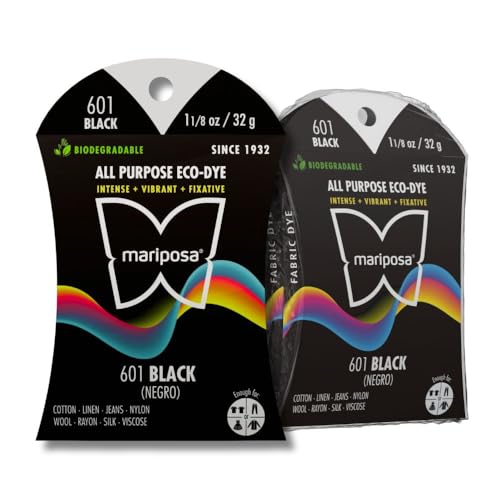
Where the Qualia packs chase concentration, this generic-brand trio chases gentler chemistry. The formula leans on biodegradable, non-toxic ingredients while still claiming high fixation, meaning the pigment binds firmly instead of rinsing down the drain. For homes with kids, pets, or septic systems, that ingredient list carries real weight.
Capacity sits at three pounds of fabric across the set, which lands between the Qualia boxes and a full laundry load. Fiber coverage is impressively wide: cotton, linen, denim, rayon, wool, viscose, and silk all appear on the label, giving it reach that pure-natural formulas lack.
A Favorable Mix
- Non-toxic, biodegradable composition suits sensitive households and regular indoor use
- Handles seven-plus fiber types, including rayon and viscose that many powders skip
- Three-pound total capacity covers a decent stack of garments per purchase
- High-fixation design aims for color that survives repeated washing
Points To Note
- Unbranded products vary batch to batch, so checking recent feedback before a big project is a sensible habit
- Eco formulas sometimes trade a little depth of shade versus conventional dyes on dense denim
Quick Facts
Best Suited To
Eco-conscious shoppers dyeing mixed-fiber loads who prioritize ingredient transparency over brand names.
Look Elsewhere When
Maximum depth on heavy denim matters most, and the Craft County Rit Dye liquid has the stronger track record there.
Liquid dye removes the measuring-and-dissolving step entirely, and that’s why this bottle earns a permanent spot in many craft rooms. Pour it into a washing machine, a plastic tub, or a stainless sink, add fabric and hot water, and the process runs itself. No granules, no stirring, no stray specks on pale fabric.
The 8-ounce format gives you room to experiment too. Tie-dye patterns, dip-dye gradients, and ombre work all benefit from a pourable medium you can dilute or layer. Rit’s shade library runs wide, so matching future projects to this black stays easy.
Notable Gains
- Pours directly into machine, bucket, or sink with zero prep beyond hot water
- All-purpose absorption suits clothing, décor, and craft blanks alike
- Supports tie-dye, dip-dye, and layered techniques thanks to the liquid format
- Available singly or in multi-packs, plus bundles with ColorStay Fixative
Trade Offs
- Liquid splashes, and black stains on grout or countertops are widely reported, so lay down protection first
- Deep black on thick denim may need double the quantity per the brand’s own guidance for dark shades
Feature Snapshot
The Right Fit
Busy households that want reliable black without fussing over powder measurements.
Skip It When
Your project is strictly natural-fiber and budget-driven, where the Qualia powder concentrates more pigment per dollar.
Honesty first: this six-pack is dark green, not black. It earns its place because deep greens behave like near-blacks in practice, reading almost neutral on denim and canvas while adding subtle character that true black flattens. Crafters mixing custom shades also value it, since dark green blended with other Rit tones produces rich forest and charcoal effects.
Each 8-ounce bottle colors around two pounds of dry fabric under normal conditions, and the brand recommends doubling the quantity for very dark results. Six bottles mean you won’t ration a scarce supply halfway through a batch of napkins or curtains.
Notable Upsides
- Six-bottle supply supports large or repeated projects without restocking
- Same trusted Rit liquid format as the black pick above, so techniques transfer directly
- Doubles as a blending base for custom charcoal and forest tones
Room For Improvement
- It’s green, so anyone expecting true black will be disappointed; check the shade name carefully before ordering
- Bulk volume needs cool, sealed storage to keep unused bottles fresh between projects
Core Details
Who It Suits Best
Teachers, camp counselors, and crafting groups running bulk dye activities on a shared budget.
Another Choice May Suit
Anyone needing genuine black should head straight to the Craft County Rit Dye liquid, which delivers the same format in the correct shade.
What Matters Most Before Choosing Black Fabric Dyes
Match The Format To The Job
Spray dyes coat surfaces, which suits upholstery, carpet, and vinyl but rarely garments. Powders concentrate pigment for deep shades on natural fibers, while liquids pour easily into washing machines and suit mixed loads. Decide what you’re dyeing before deciding on the bottle.
Know Your Fiber
Natural fibers such as cotton, wool, silk, and linen accept dye readily. Synthetics like polyester resist water-based dyes and often come out pale no matter how much product you use. Blends land somewhere in between, so read the care tag first and temper expectations accordingly.
Plan For Aftercare
Color loss usually happens in the first few washes, not the dye bath. A fixative product, cold-water cycles, and washing dyed items separately for the first few rounds all extend the result. Skipping these steps is the most common reason people blame the dye itself.
Size Your Purchase Honestly
One box typically handles a couple of garments; a full closet refresh needs multiples. Buying too little mid-project means matching a new batch to an old shade, which rarely lines up exactly. Estimate your fabric weight first, then buy slightly over.
Key Considerations Across These Picks
Traps First Timers Fall Into
The biggest mistake is ignoring fiber content, followed closely by skipping the fixative step and washing dyed items with the family laundry too soon. Undissolved powder causes spotting, and unventilated spray work leaves fumes lingering. Read the label, prep the space, and start with a test garment.
When Paying More Pays Off
Higher-tier spending buys concentration, capacity, and aftercare. Bundles with fixative, oversized cans, and multi-packs all reduce cost per project once you dye regularly. Occasional users gain little from bulk; frequent dyers waste money on singles. Match quantity to your real calendar, not your ambitions.
Frequently Asked Questions
Do black fabric dyes work on polyester?
Most all-purpose dyes struggle with pure polyester because synthetic fibers resist water-based pigment. Expect muted results unless the product specifically states synthetic-fiber compatibility.
How long does dyed fabric take to process?
Powder formulas like Qualia develop in roughly 30 minutes. Liquids vary by method, though hot water and longer soak times deepen the final shade.
Will dyed clothes bleed in the wash?
Some bleeding is normal early on, especially with blacks. Using a fixative, washing separately, and choosing cold cycles dramatically reduces it.
Can I dye fabric in my washing machine?
Yes, and liquid dyes such as Rit are designed for it. Clean the machine afterward with a hot cycle and bleach wipe-down to avoid tinting future loads.
How much dye do I need for a pair of jeans?
A single packet or half a bottle usually covers one pair. Very dark shades often call for double the standard quantity for full saturation.
Closing Thoughts
Black fades faster than any other shade, which is exactly why keeping one of these dyes on hand pays off. Match the format to your material, respect the fiber content on the tag, and give the color a proper fixative and a few solo washes. Start small with a single garment, learn how your chosen formula behaves, then scale up to the bigger packs once the results convince you.
